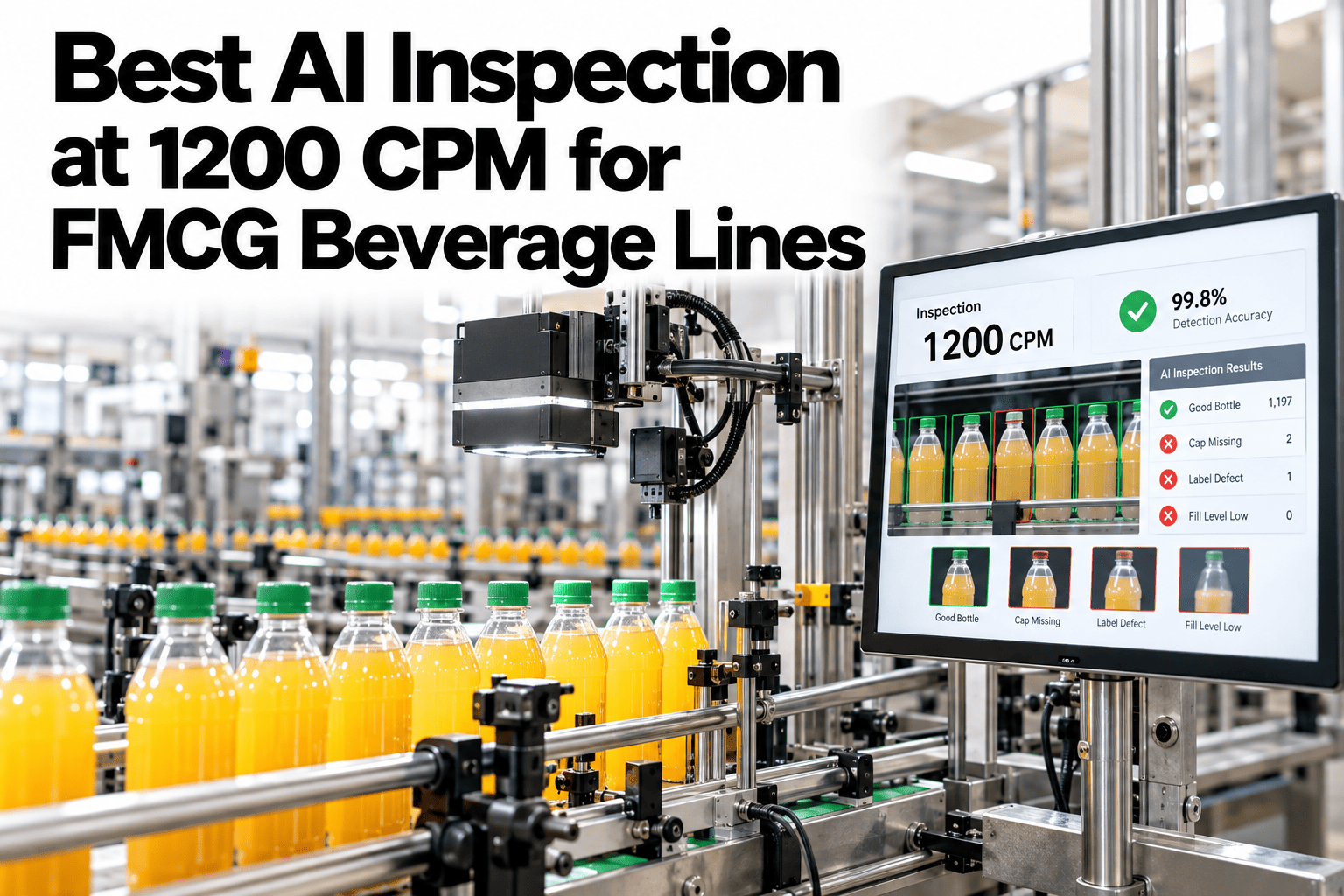
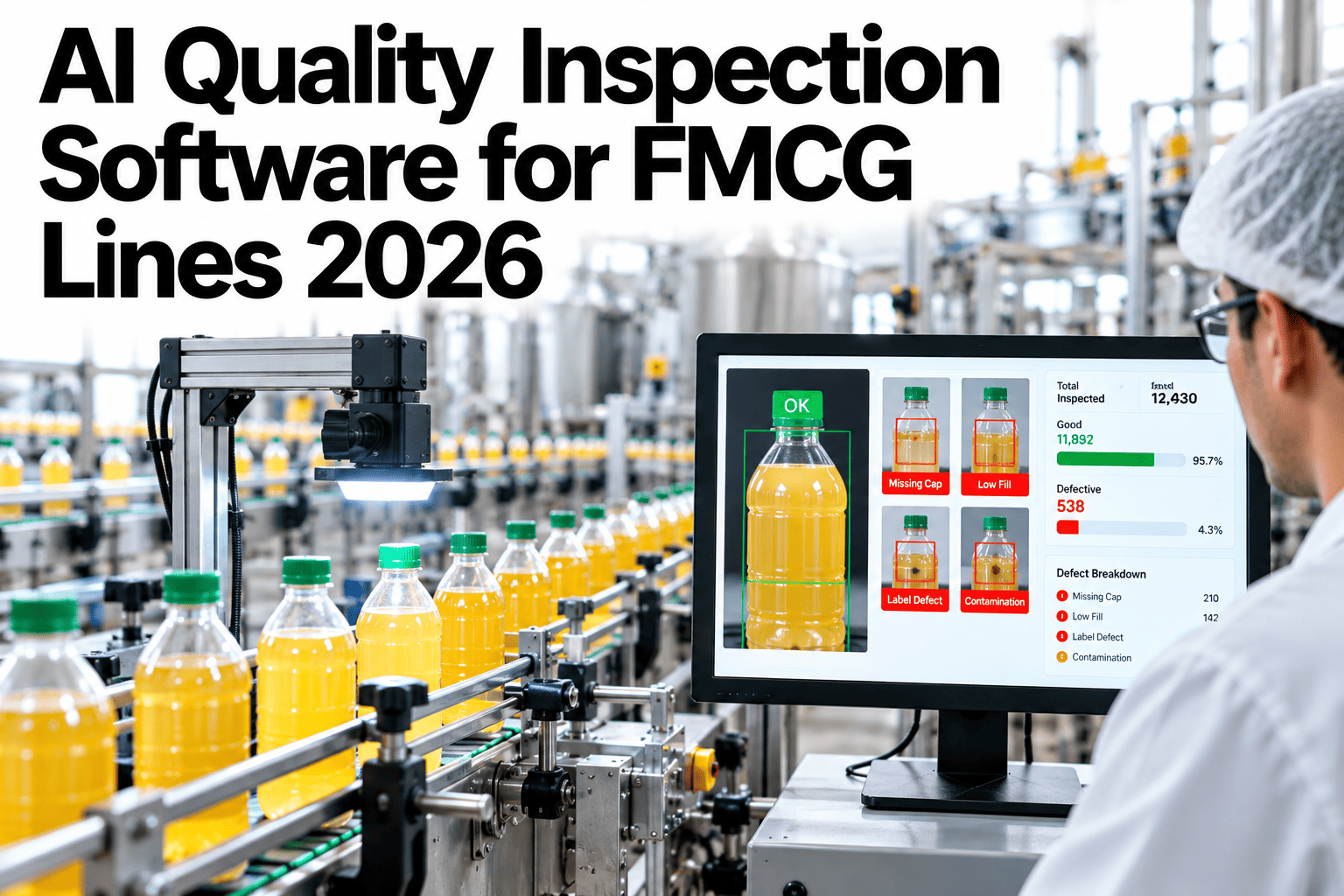
At 1,200 containers per minute, a bottling or canning line moves twenty containers every second, leaving about 50 milliseconds for each one. Inspecting at that pace is a systems problem that combines fast cameras, strobe lighting, short processing times and a reliable reject mechanism. Getting any part wrong means missed defects or false rejects at very high volume. This guide explains the architecture that can keep pace. To test it against your own line, you can review a high-speed inspection design with our team.
AI quality vision for beverage lines
Keep AI Inspection in Step With 1,200 Containers a Minute
iFactory AI works with fast beverage lines through careful lighting, edge computing and precise reject timing designed around your container and speed.
The speed in numbers
1,200 per minute20 per secondAbout 50 ms each
The timing budgetTwenty Containers a Second Leaves Very Little Time
Line speed sets a hard limit on inspection. Every step has to fit inside the same few milliseconds.
1,200
Containers per minute
50 ms
Time for each container
Tight
Margin for imaging, inference and reject
Time per container = 1,000 ms / 20 per second = 50 ms
Where the time goesA Typical Split of the 50 Millisecond Budget
Every stage claims a share of the budget. This split is an illustrative design example, not a measured result.
25 percent: Capture and transfer
Strobe flash, exposure and moving the image to compute.
35 percent: Inference
Running the model on the image.
20 percent: Decision and signal
Combining results and sending the reject command.
20 percent: Safety margin
Buffer for variation so timing never slips.
Many systems overlap stages in a pipeline, so each container is imaged while the previous one is being processed.
Hardware stackFour Layers That Must Work Together
Cameras
Fast sensors and lenses matched to the field of view and speed.
Lighting
Strobe or controlled lighting that freezes motion and highlights defects.
Compute
Edge processors sized for the model and the frame rate.
Reject system
Fast, accurate ejection synchronised with the conveyor.
A weakness in any layer limits the whole system. Strong cameras cannot make up for poor lighting or slow rejects.
Check Whether Your Line Speed Fits AI Inspection
Share your container type, line speed and layout and see how iFactory AI would design inspection at your pace.
Inspection stationsSix Places on a Beverage Line Where Vision Adds Value
Beverage lines have several natural inspection points. Each needs its own lighting and camera view.
Fill level
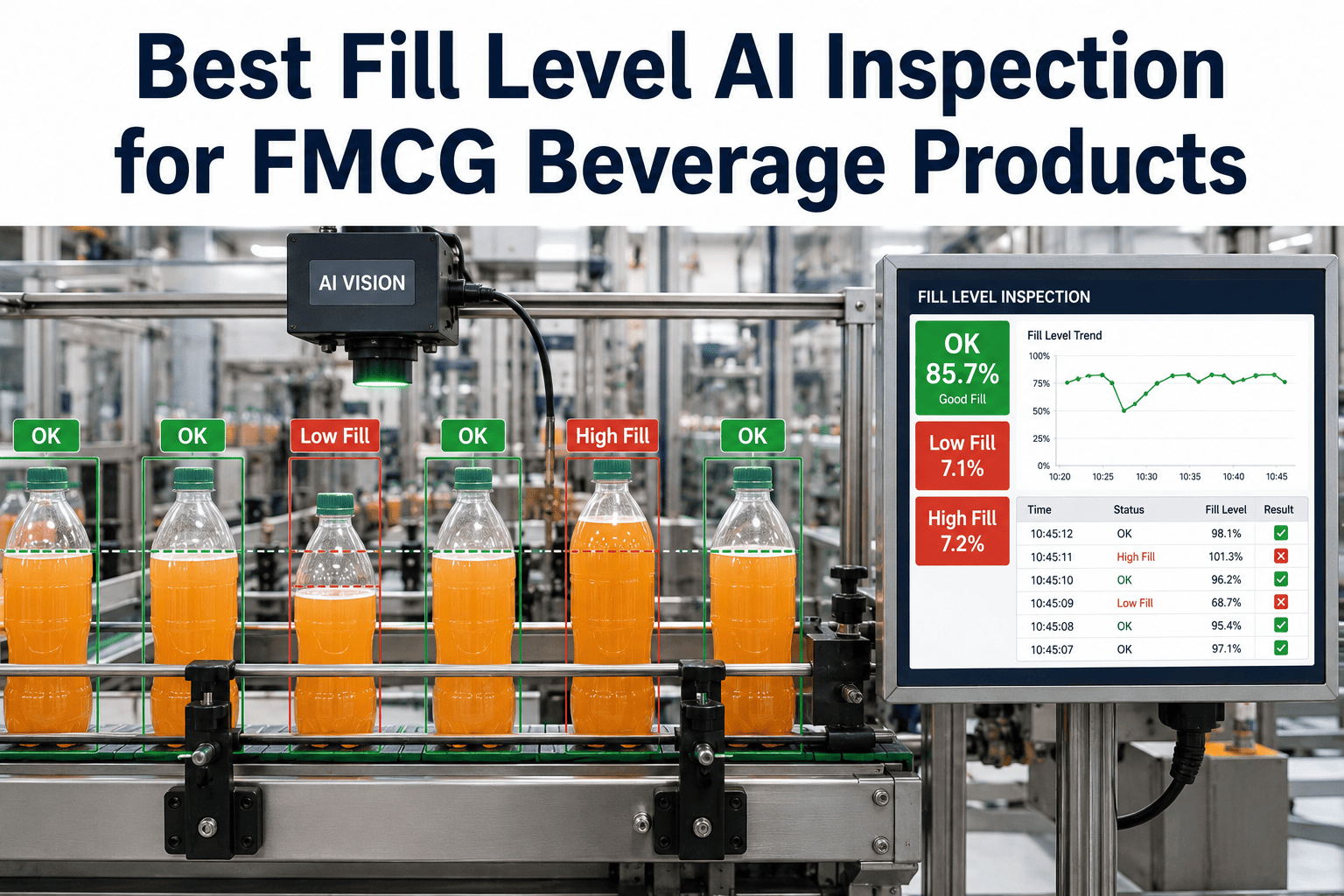
Checks that every container is filled to the right height.
Cap and closure
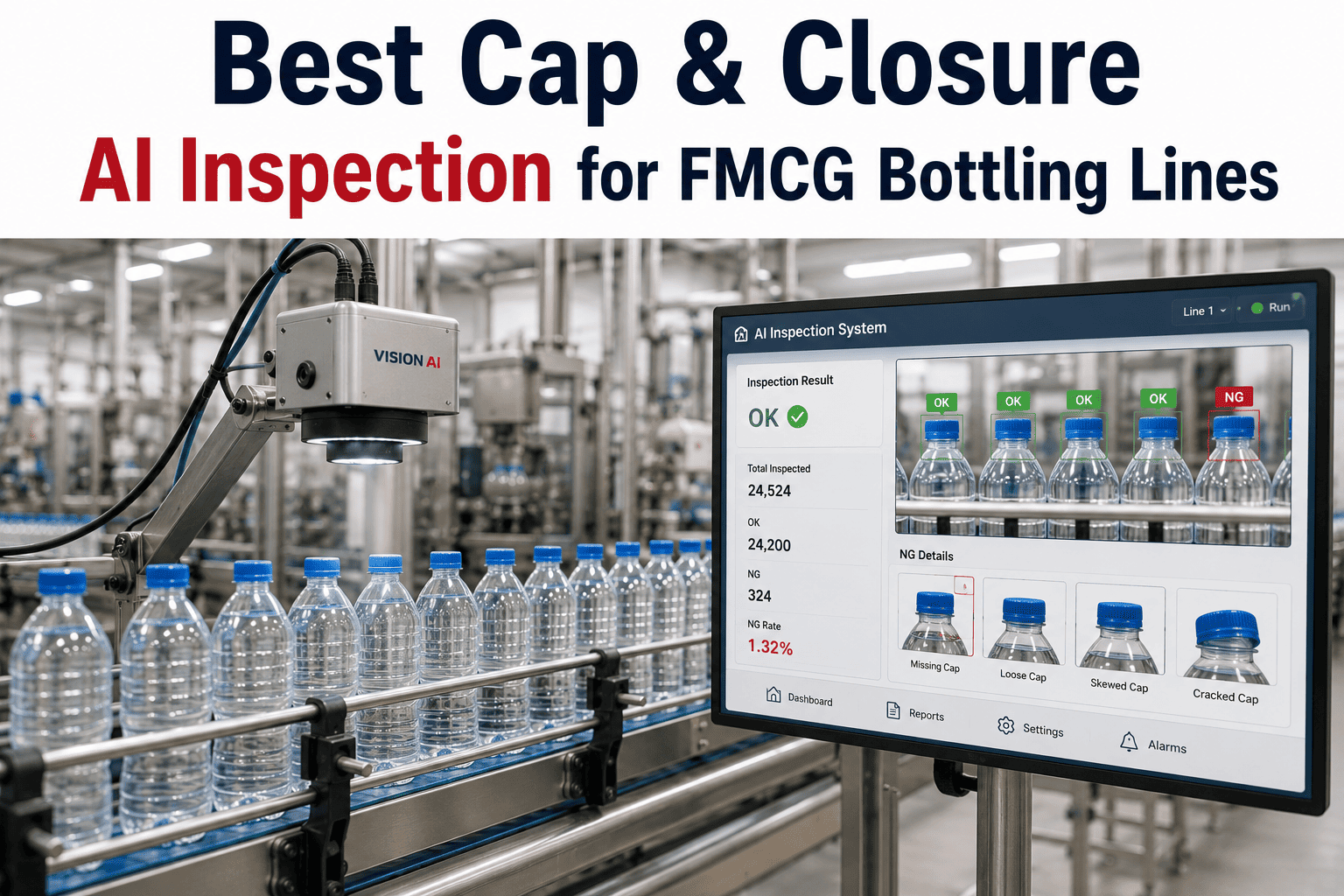
Checks presence, position and seal on caps and ends.
Label and print
Checks placement, legibility and codes.
Sidewall
Checks dents, scratches and contamination on the container wall.
Base and neck
Checks hard-to-see areas for chips, cracks and defects.
Seams and ends
Checks can seams and ends for forming defects.
Choose stations by cost of defect and by what the process can actually produce, not by what is easiest to image.
Container checksWhat to Look For on Each Container Type
| Container | Typical checks | Main challenge |
|---|
| Glass bottle | Fill level, cap, label, glass defects | Reflections and transparency |
| PET bottle | Fill level, cap, label, shape | Light transmission varies |
| Aluminium can | Seam, dents, print, end condition | Shiny, curved surface |
| Carton or pack | Print, seal, damage | Folds and lighting angle |
Lighting is usually the hardest part for reflective containers. To explore solutions, ask our team about lighting for glass and cans.
Inference architectureKeep Decisions at the Edge to Save Time
Sending images to a distant server adds delay. At this speed, inference usually runs at the line.
Cameras and strobesPosition triggerLine speed signal
Edge inference unit
Reject controllerLine PLCQuality records
Reject synchronisationFour Steps to Remove the Right Container
Detecting a defect is only half the job. The reject must remove that exact container.
1
Trigger
A sensor marks the container at the camera.
2
Track
The system follows its position along the line.
3
Decide
The result arrives before the container reaches the ejector.
4
Eject
The ejector fires at the right moment.
Always verify rejection with a confirmation sensor, so failed ejections raise an alert instead of passing silently.
Reliability at speedWhat Separates a Fragile Design From a Robust One
Fragile design
Lighting drifts and is never checked
Timing has no margin
Results depend on a remote server
Failures pass containers silently
Robust design
Lighting monitored and calibrated
Timing margin built in
Local edge decisions
Failures stop the line or raise an alert
Plan for dust, vibration, condensation and temperature swings. Beverage lines are wet, loud and unforgiving.
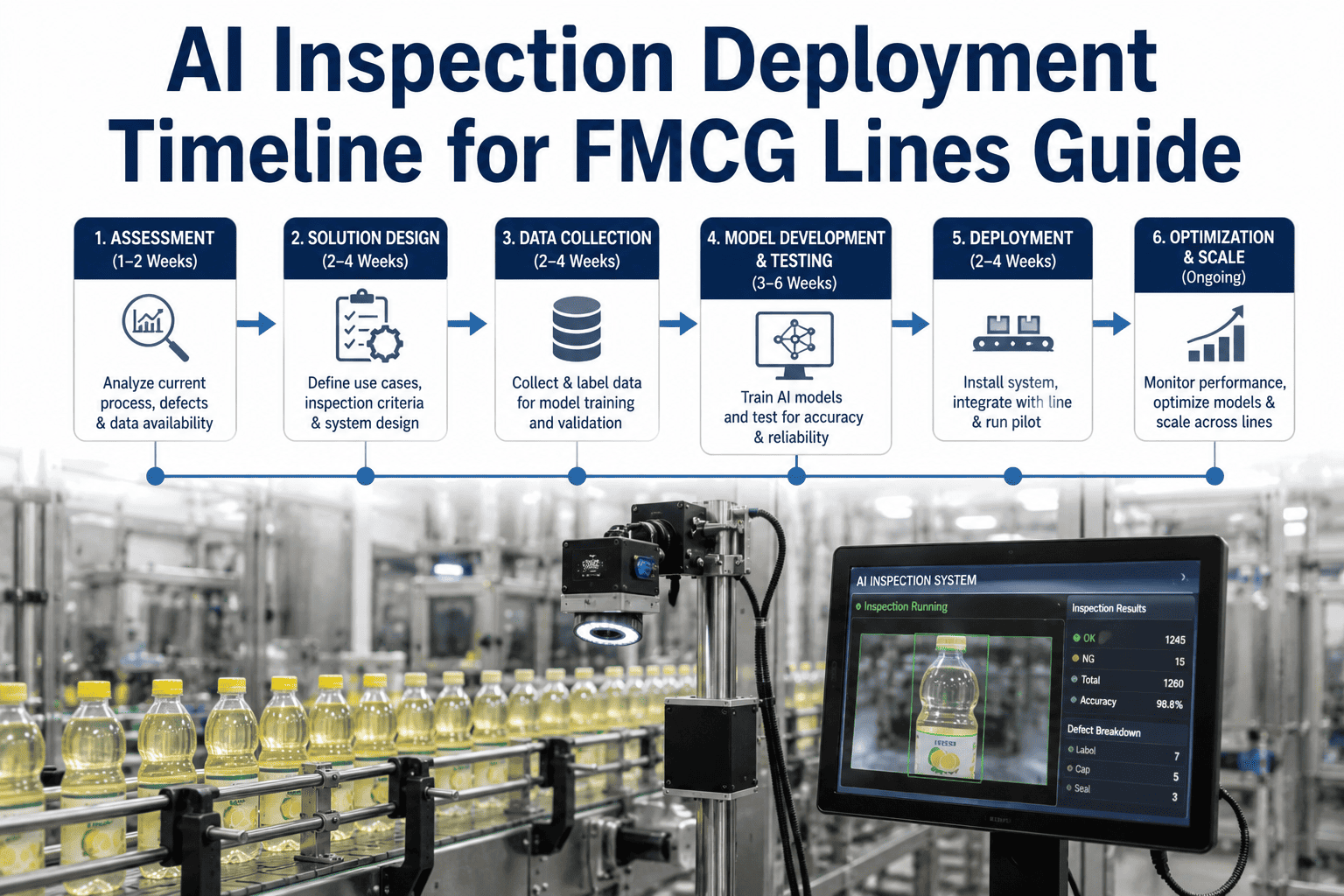
RolloutProve the Design in Three Phases and Check the List
Phase 1
Study the line, containers and defect types, then agree timing targets.
Phase 2
Install one station and run in monitor mode without rejecting.
Phase 3
Enable rejection, verify with samples and add more stations.
Container types and line speed documented
Defect list ranked by cost
Lighting and camera layout reviewed
Timing budget calculated
Reject mechanism and confirmation sensor
Owner from quality, production and maintenance
Expert reviewWhat a Packaging Line Engineer Would Check First
Expert review
At very high speed, success is decided by timing and lighting rather than by model alone. Validate the whole chain on real containers at real speed.
VerdictFeasible with careful design, edge computing and validated reject timing.
Watch forDemos at slower speeds and designs with no timing margin.
Do nextCalculate your timing budget and test lighting on real containers.
Frequently asked questionsWhat Beverage Teams Ask About High-Speed AI Inspection
Can AI really inspect at 1,200 containers per minute?
It can be done with the right combination of fast cameras, strobe lighting, edge computing and reject timing, but the design must be validated on your line. At about 50 milliseconds per container, every stage needs a margin, so a speed test with your real containers is essential.
Review a timing example.
Do we need special lighting?
Usually yes. Strobe or controlled lighting freezes motion and brings out defects, particularly on reflective glass and cans where ordinary lighting creates glare. The right lighting often matters more than the choice of camera, so it should be tested early on real containers.
Ask about lighting design.
What happens if a camera or reject fails?
A robust system raises an alert or stops the line when a camera, trigger or ejector fails, so defective containers do not pass silently. A confirmation sensor after the ejector checks that rejected containers really left the line. These safeguards should be tested before go-live.
Discuss failure handling.
Can one system cover several checks?
Often yes, but each check needs the right view and lighting, so most lines use several cameras or stations that feed one decision system. Common checks include fill level, closure, label, sidewall and base. Start with the checks that prevent the costliest defects.
Ask about station planning.
How do we confirm it keeps up with the line?
Run in monitor mode first, log timing for every container and compare results with seeded samples at full line speed. Look at the slowest cases, not just the average, because a few late results can cause missed rejects. Repeat the check after any change to the line.
Plan a speed validation.
Built for the fastest lines
Inspect Every Container Without Slowing the Line
Book a session with iFactory AI to review your containers, speed and layout and see how high-speed inspection could be designed for your plant.