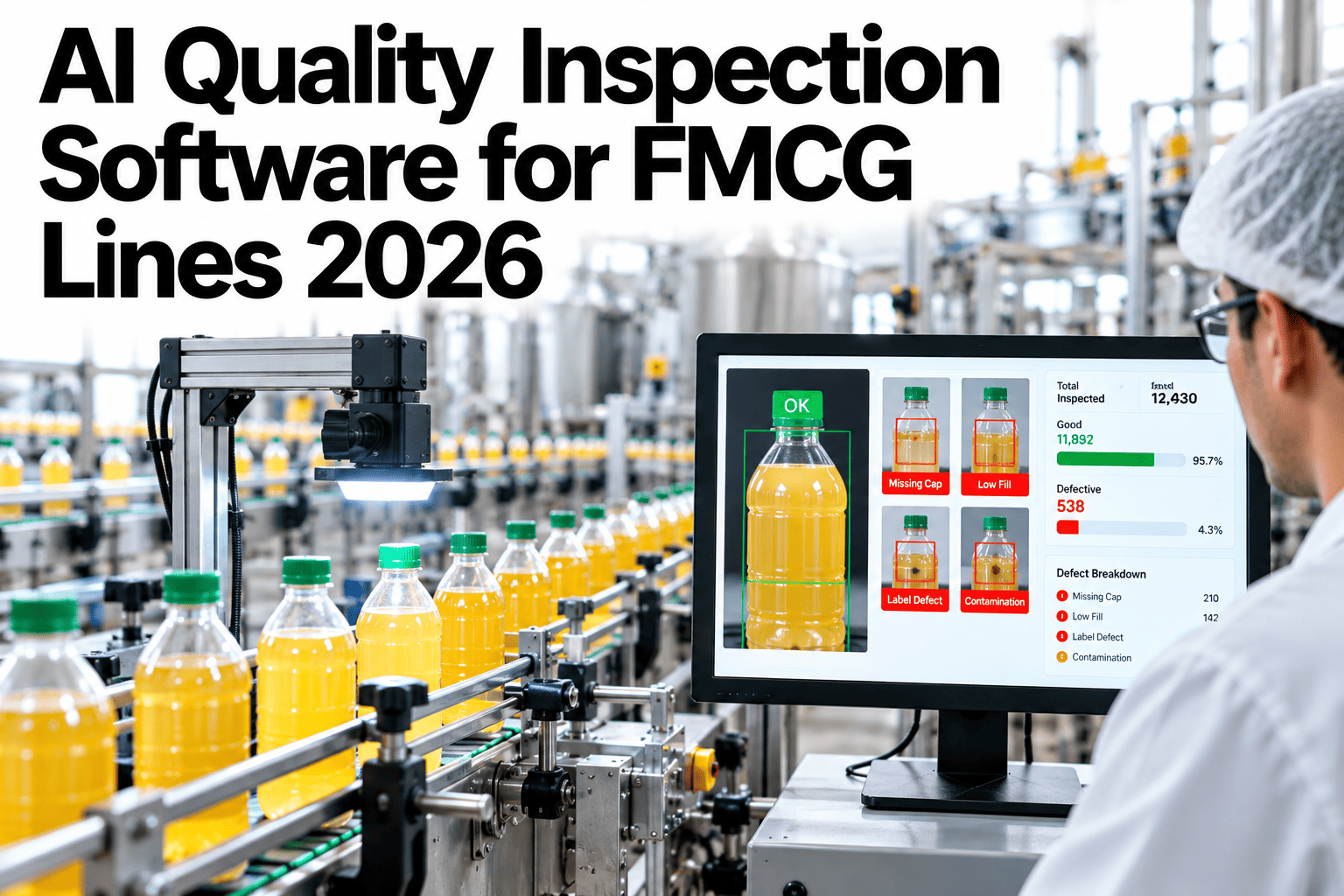
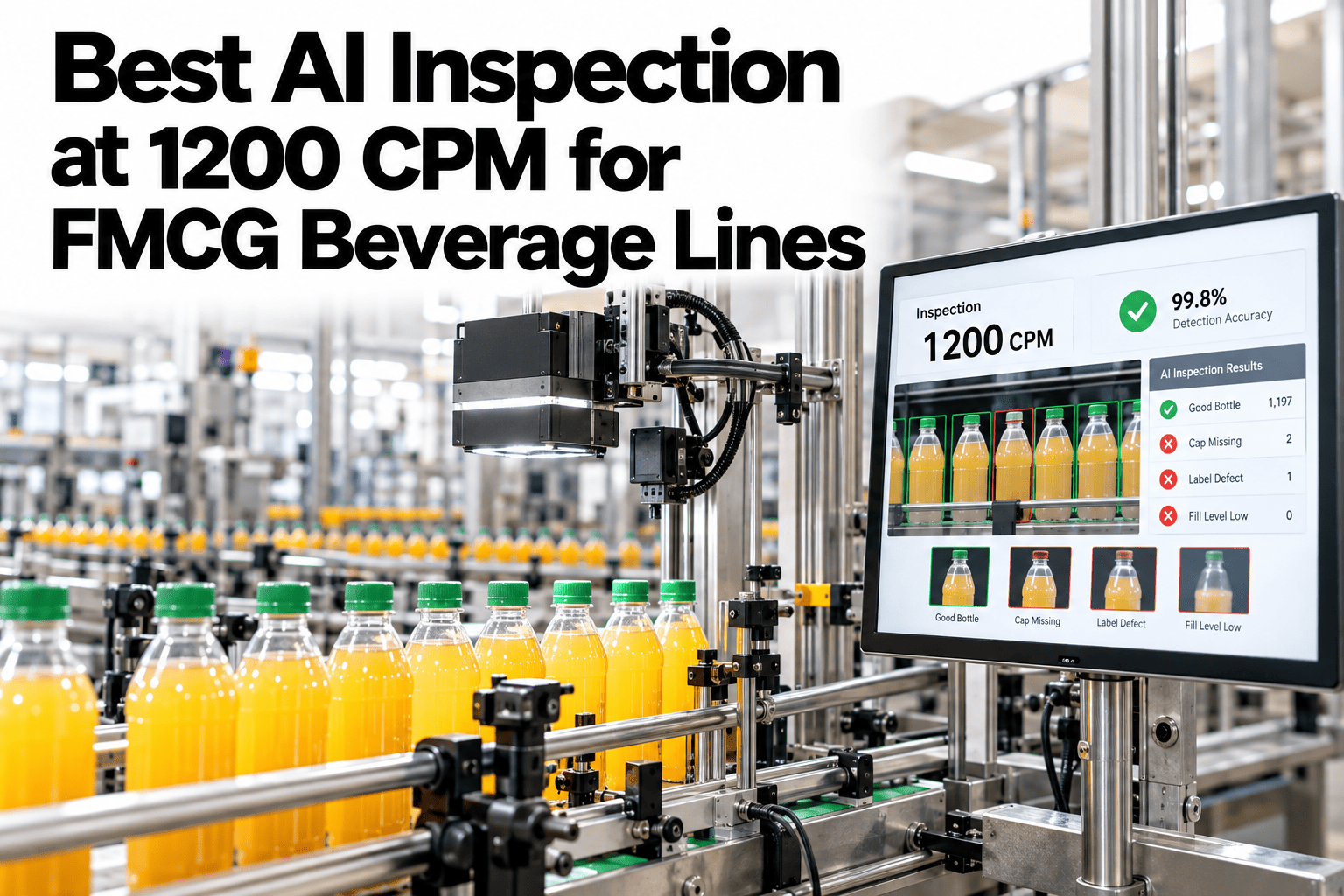
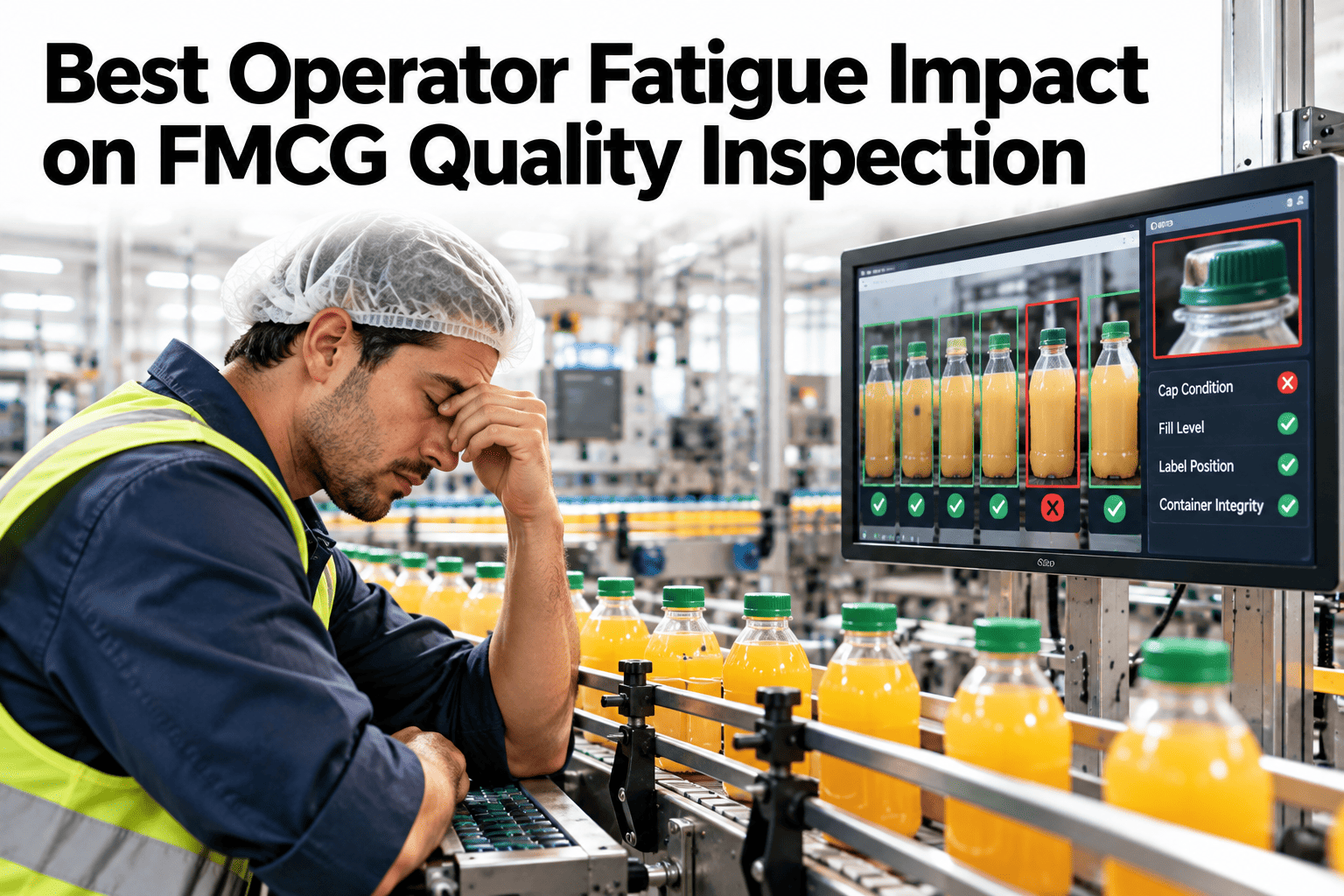
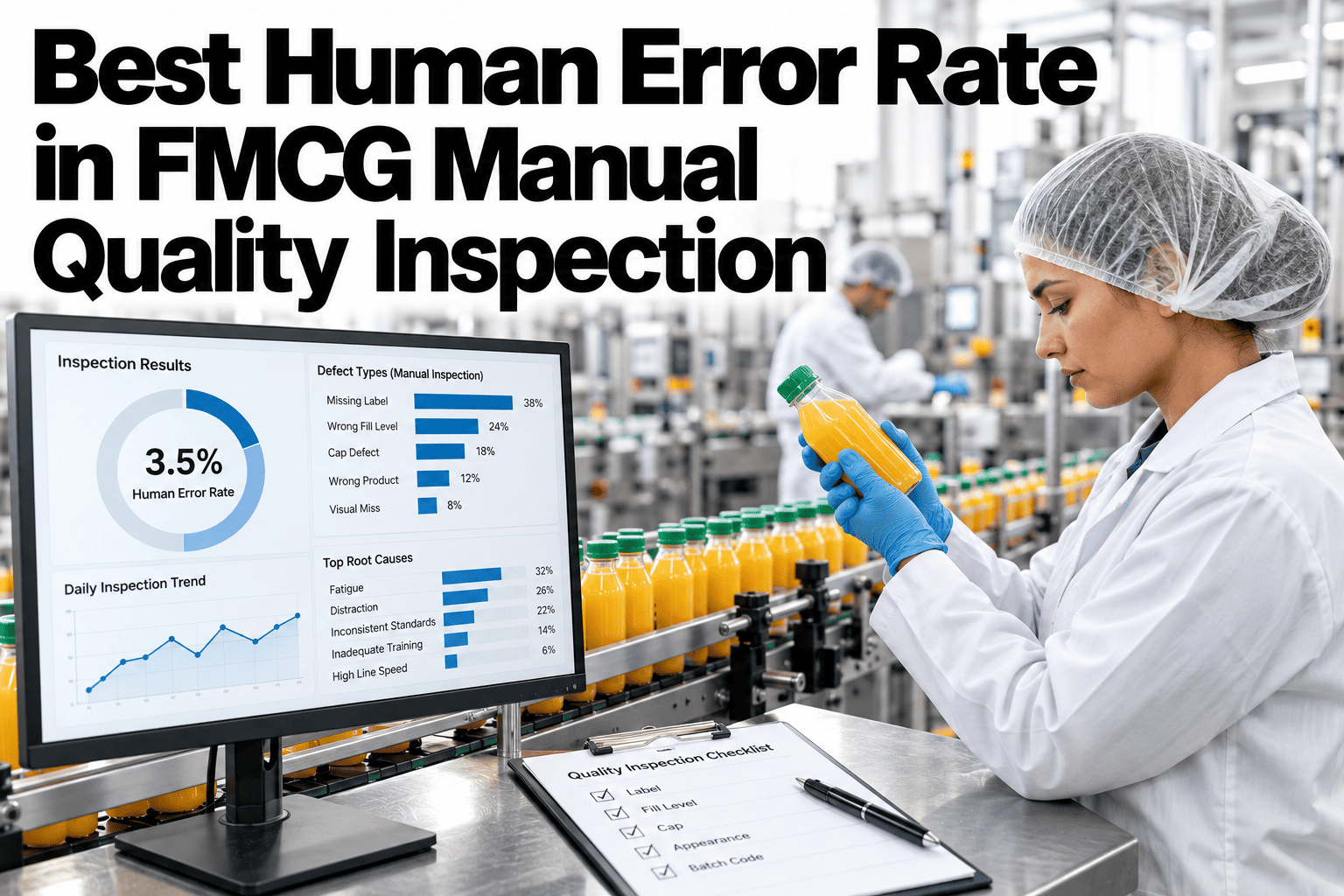
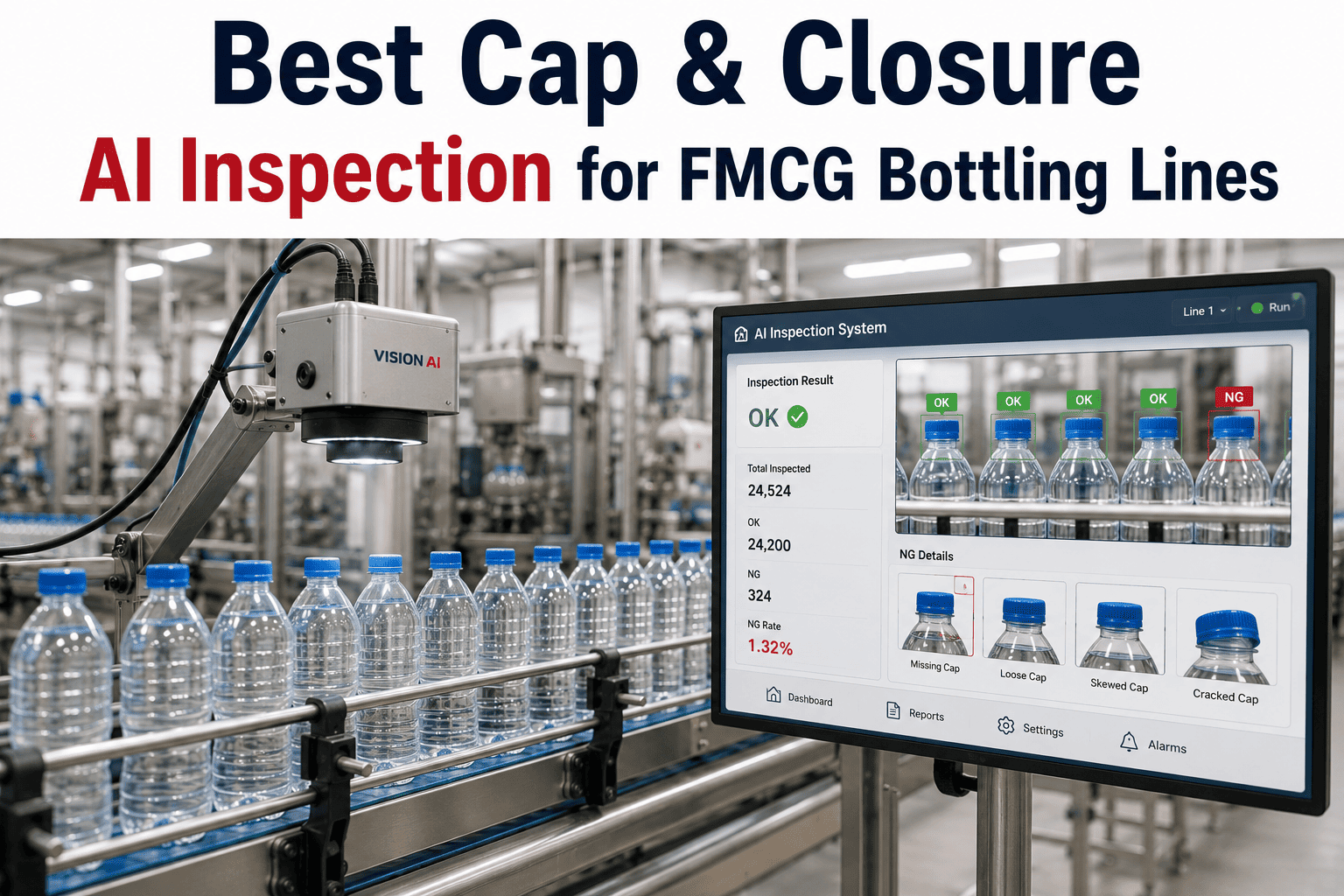
Manual inspection on a fast FMCG line asks people to spot tiny defects in products that pass in a blur, hour after hour. AI vision quality inspection software replaces that strain with cameras and models that check every item for packaging, print, fill and product defects at line speed. Vendors often quote accuracy above 99 percent at speeds up to 600 products per minute, but real results depend on your product, lighting and defect types. To test the claim on your own samples, you can run a sample review with our team.
AI quality vision and line-speed detection
Replace Fatigued Manual Checks With AI Inspection Built for FMCG Line Speeds
iFactory AI inspects packaging and product on the line, flags defects as they happen and keeps a record of every decision.
What line speed demands
600 products per minute10 per secondAbout 100 ms per item
The inspection problemWhy Manual Inspection Struggles on Fast Lines
People are good at judgment but poor at repeating the same visual check thousands of times at speed.
Speed
Items pass faster than eyes can follow
Repetition
The same scan every second for hours
Subtle defects
Small print or seal faults look almost normal
Variation
Different inspectors, different calls
Sampling helps, but it only tells you about the items you looked at. Defects in the other items still ship.
What gets checkedSix Common Inspection Tasks for AI Vision on FMCG Lines
Typical FMCG lines use AI vision at several points. The exact checks depend on your product and pack.
Fill level and presence
Checks that containers are filled and complete.
Caps and seals
Checks closure position, tamper bands and seal quality.
Labels and print
Checks position, legibility, date and batch codes.
Pack contents
Checks counts and the presence of all components.
Surface and damage
Checks dents, scuffs, tears and leaks.
Orientation and fit
Checks items are placed and packed correctly.
Not every defect suits vision. Hidden contamination, for example, may need other inspection methods.
The speed mathWhat 600 Products per Minute Means for Inspection Time
Line speed sets a hard time budget for every item. The arithmetic is simple and unforgiving.
Less
Time left for imaging, inference and reject
Time per item = 60 seconds / products per minute = 60 / 600 = 0.1 seconds
Test AI Inspection on Your Own Line Samples
Send samples of good and defective products and see how iFactory AI would inspect them at your line speed.
How it worksFour Steps From Trigger to Reject
Every inspected item follows the same short path.
1
Trigger
A sensor detects the product at the camera position.
2
Capture
Lighting and cameras take the image.
3
Inspect
The model decides pass or fail and logs the result.
4
Reject
A failed item is removed at the right moment.
Timing between inspection and rejection has to be exact, or the wrong item leaves the line.
Manual versus AIWhere Each Approach Is Strong
The aim is not to remove people but to use them where they add the most value. This comparison is directional.
Manual inspection
Consistency between shifts
Judgment on unusual cases
AI inspection
Consistency between shifts
Judgment on unusual cases
These bars are illustrative. Measure both methods on your own samples.
Reading accuracy claimsFour Questions to Ask About Any Accuracy Figure
A single accuracy figure rarely tells the whole story. Dig into how it was measured.
Which defects?
Accuracy on easy defects may hide weakness on subtle ones.
How many samples?
Small test sets give unreliable results.
What false reject rate?
High accuracy with many false rejects still wastes product.
At what speed?
Results at slow speed may not hold at full line speed.
Ask to see results on your own products, not a generic demo. To plan a fair test, ask our team for a trial design.
Evaluation checklistCompare AI Inspection Vendors on the Points That Matter
| Criterion | What to ask | Warning sign |
|---|
| Line speed | Tested at your real speed and product | Only slow-speed demos |
| Defect coverage | Which defects were tested and how | Vague claims of detecting everything |
| False rejects | Rate measured on good product | Only miss rate is quoted |
| Changeover | How new products are trained | Long retraining for each SKU |
| Records | Images and decisions stored and searchable | No traceability |
RolloutProve It on One Line, Then Scale
Phase 1
Collect samples and define the defects that matter most.
Phase 2
Run beside manual inspection and compare results.
Phase 3
Switch rejection on, then extend to more lines.
Defect list ranked by cost
Good and bad product samples
Line speed and layout documented
Reject mechanism available
Acceptance targets agreed
Owner from quality and production
Expert reviewWhat a Packaging Quality Lead Would Check First
Expert review
Strong results start with good images and honest testing. If lighting and product presentation are poor, no model will fix that.
VerdictStrong for repeatable visual defects when tested on real product at speed.
Watch forAccuracy figures without false reject rates or defect lists.
Do nextRun a side-by-side trial and compare misses and false rejects.
Frequently asked questionsWhat FMCG Teams Ask About AI Quality Inspection
Is 99 percent accuracy realistic?
It can be for well-defined defects under good, stable conditions, but results vary by product, defect type, lighting and line speed. A single figure can hide weak spots, so ask for miss and false reject rates on your own samples. Validate any claim on real product before you rely on it.
Test accuracy on your products.
Can it keep up with 600 products per minute?
Systems are built for high speeds, but the design has to fit your line. At 600 products per minute each item has about 100 milliseconds, so lighting, cameras, processing and reject timing must all fit inside that time. A speed test on your real line confirms it.
Ask about speed requirements.
How long does it take to add a new product?
It depends on how different the new product is. Good platforms reuse existing models and settings, so a new colour or size takes far less effort than a new package type. Ask vendors how many sample images are needed and how long retraining takes.
See a changeover example.
Will it replace our inspectors?
It takes over the repetitive checking of every item, while people focus on exceptions, audits, root causes and improvement work. Inspectors also help the system improve by confirming or correcting borderline calls. Most plants find the role shifts rather than disappears.
Ask about operator roles.
What records does it keep?
It can store images and results for each inspected item or for flagged events, with time, line and batch information. These records help with customer complaints and audits because you can show exactly what the system saw and decided. Retention periods are set to match your policies.
See inspection records in a demo.
Check every item, every shift
See AI Inspection Working at Your Line Speed
Book a session with iFactory AI to test your packaging and product samples, review accuracy honestly and plan a pilot on your fastest line.