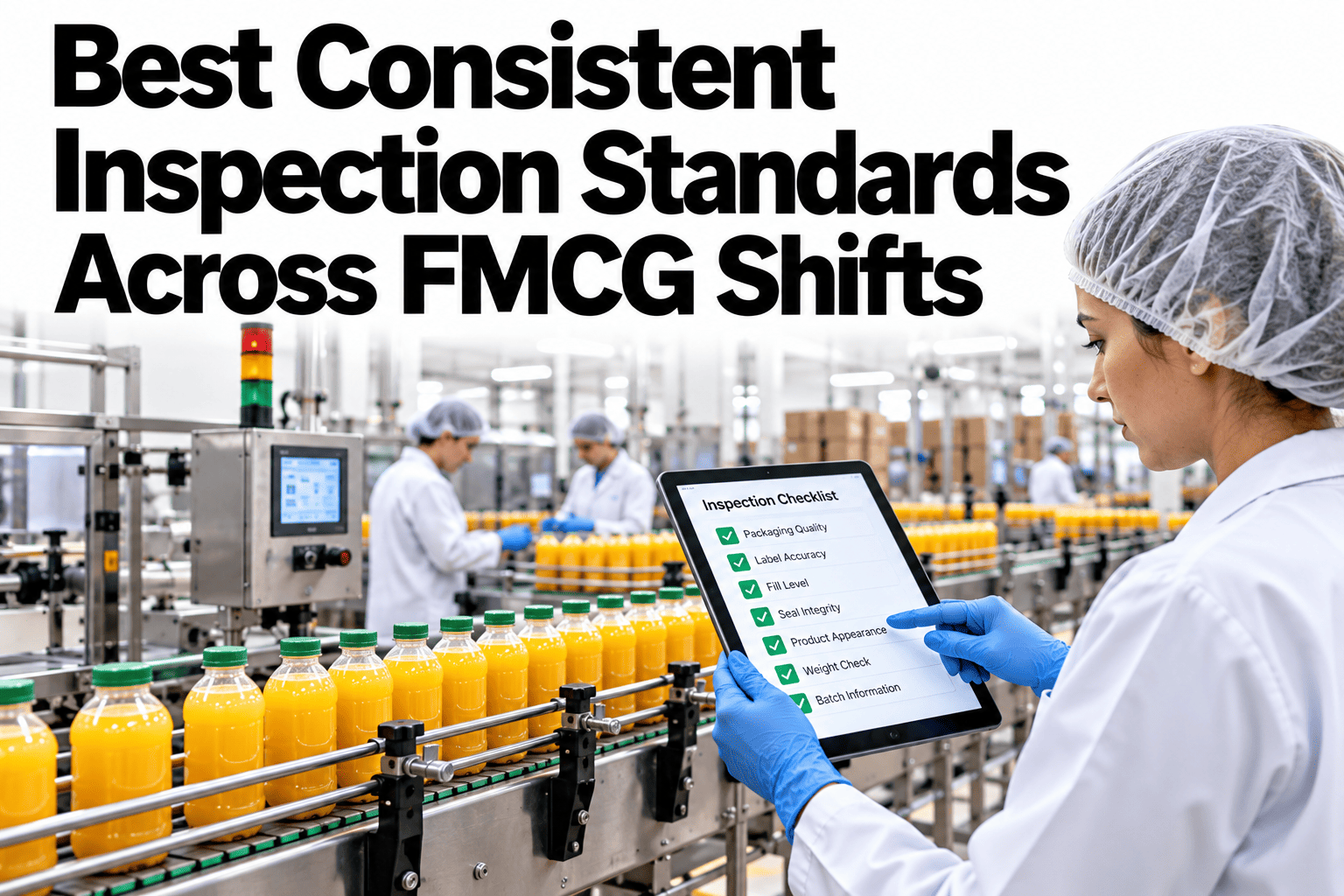
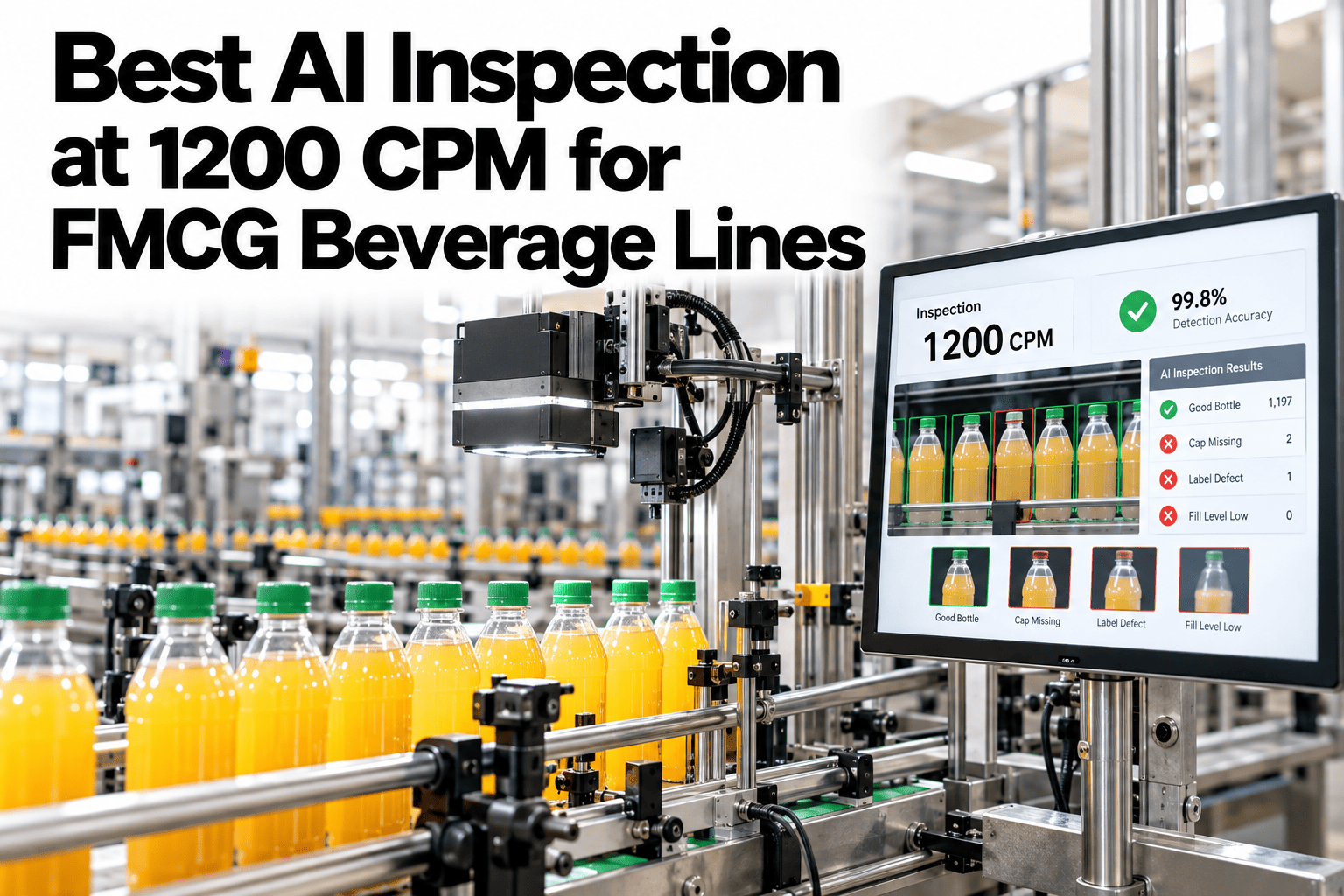
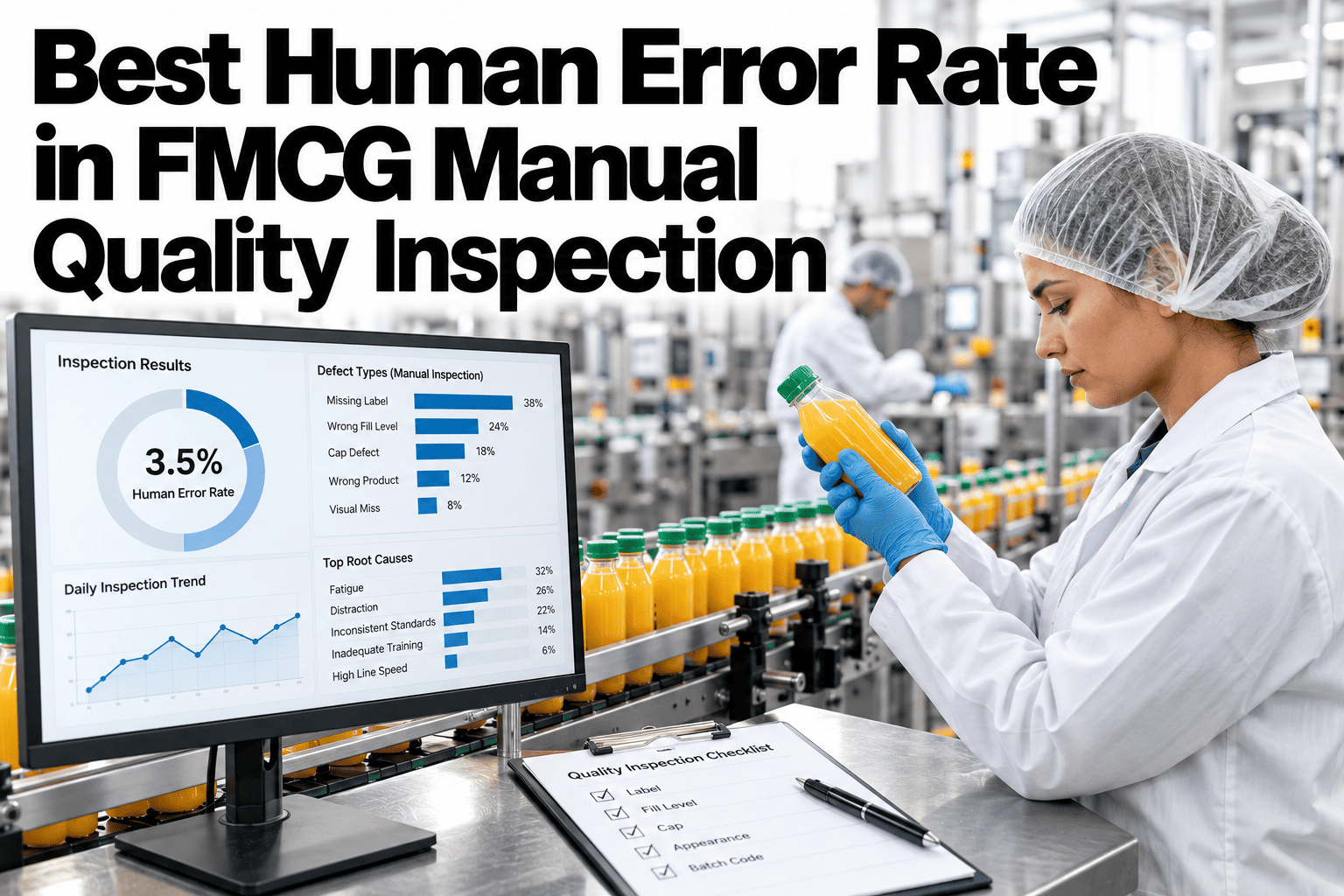
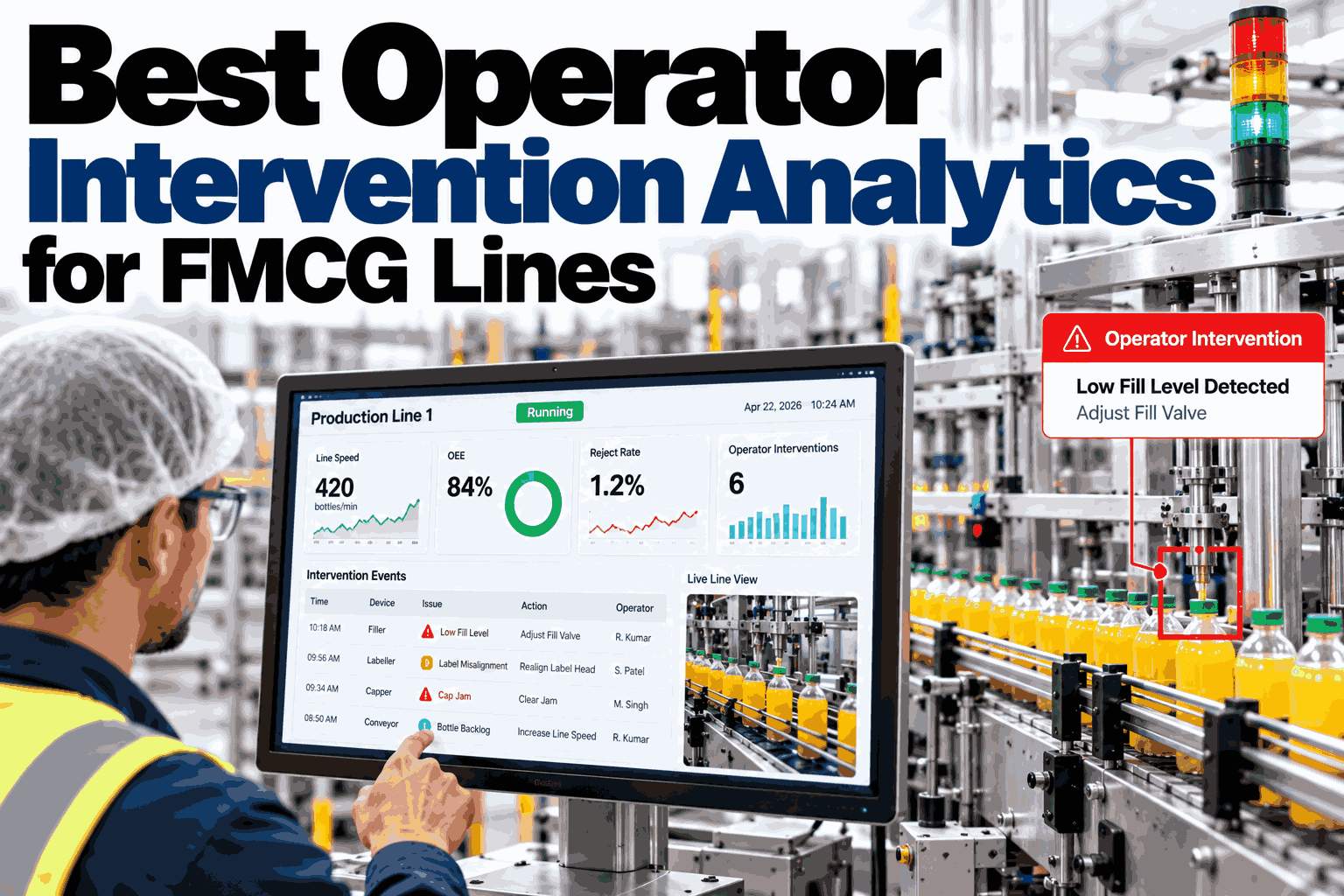
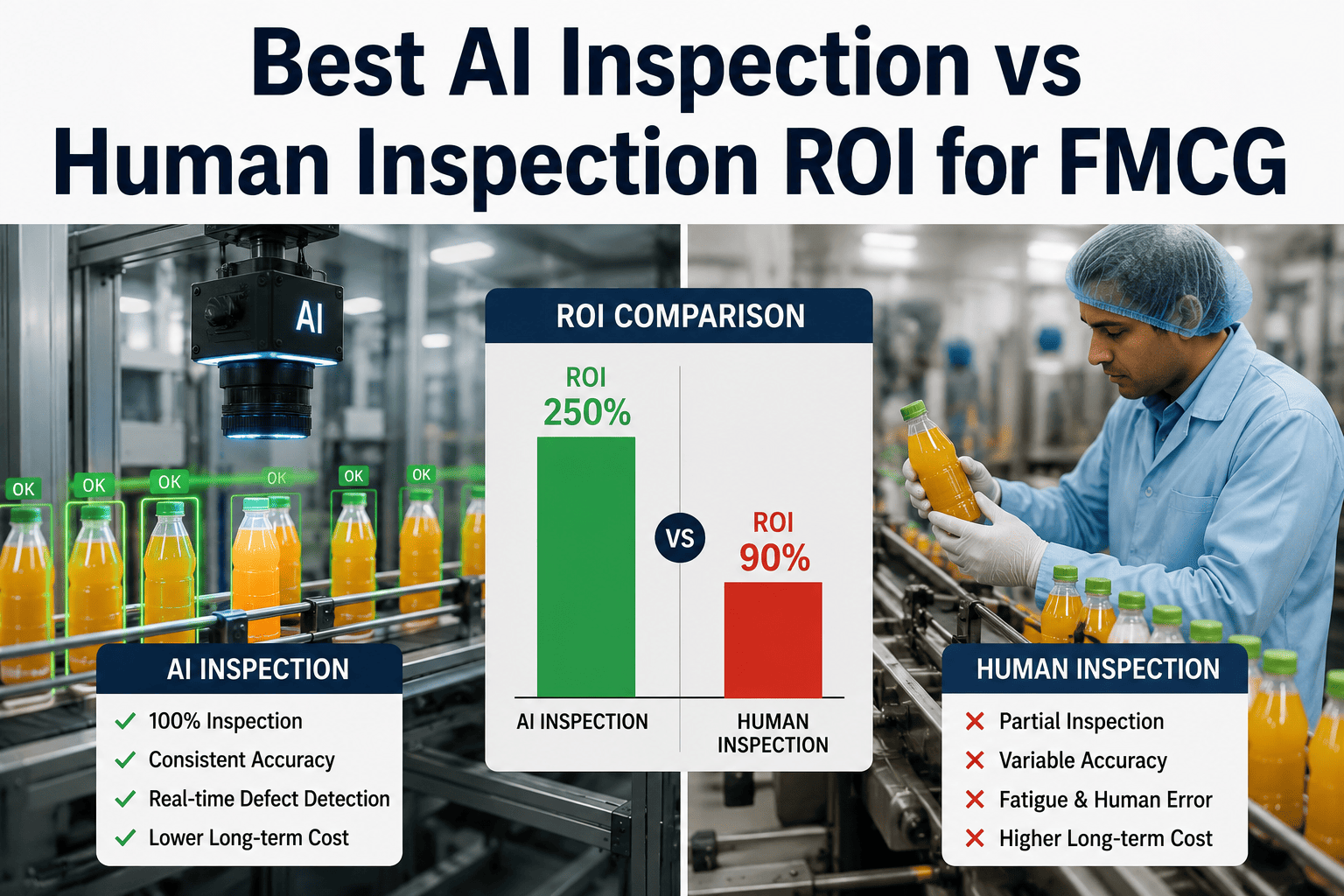
People are excellent at noticing the unusual, but not at doing it for hours without a break. Research on vigilance has shown for decades that performance on monitoring tasks tends to fall as time on task grows. On an FMCG line, that means defects are more likely to slip past an inspector late in a shift or after a long run. AI-assisted inspection takes the repetitive strain out of the job. To see how this could work on your line, you can review a shift-level inspection pattern with our team.
AI quality vision and inspector wellbeing
See How Fatigue Quietly Lowers Inspection Quality and What to Do About It
iFactory AI supports FMCG inspectors by checking every item at line speed, so people focus on judgment instead of endless repetition.
Illustrative: defect catch by hour of shift
Why attention fadesSix Reasons Inspection Attention Drops During a Shift
Fatigue is not a lack of effort. It is a normal human limit that shows up in any long, repetitive watching task.
1
Monotony
The same image passes again and again, so the brain starts to expect normal.
2
Speed
Fast lines leave no time to look twice.
3
Visual strain
Eyes tire from sustained focus and bright or poor lighting.
4
Few real defects
When defects are rare, they are easy to miss when they finally appear.
5
Few breaks
Long stretches without rest reduce alertness.
6
Time of day
Alertness dips at certain hours, especially on night shifts.
These factors add up. A task that is easy in the first hour can be much harder in the seventh.
The shape of the problemDetection Tends to Fall as Time on Task Grows
Studies of vigilance, going back to early radar watch research, show a decline in detection over sustained monitoring. This chart is a simple illustration, not measured plant data.
The size and timing of the drop vary by task, lighting, breaks and individual. Measure your own lines before drawing conclusions.
Cognitive loadSix Factors That Raise the Mental Load on Inspectors
Many defect types
More things to watch for means more to remember.
Subtle defects
Faint marks need closer attention and longer looks.
Changing products
New packs and labels reset what normal looks like.
Noise and distractions
Conversation, alarms and movement break focus.
Pressure to keep speed
Pushing line rate leaves less time per item.
Unclear standards
Doubt about what is acceptable slows each decision.
Reducing load helps, but there is a limit to what training and rest alone can do on very fast lines.
See What Fatigue May Be Costing Your Inspection
Share your shift pattern and defect history and see where late-shift misses may be hiding in your data.
Where misses are most likelySpeed and Defect Subtlety Combine to Raise the Risk
The risk is not equal across the line. Fast lines with subtle defects are the hardest for the human eye.
Line condition
Subtle defects
Obvious defects
High speed
Highest risk
Fatigue and speed combine to cause misses
Moderate risk
Speed alone can cause occasional misses
Lower speed
Moderate risk
Subtle defects need steady attention
Lower risk
Easier to inspect, but still needs breaks
Start AI-assisted inspection where the top left cell applies. That is where people have the least room to succeed.
What a miss costsFour Ways Missed Defects Reach the Customer
Complaints
Consumers notice and contact the brand
Returns
Retailers send back whole batches
Rework
Teams sort and re-pack stock
Trust
Repeat issues damage brand reputation
The cost of a miss is usually far higher than the cost of catching the defect on the line.
Helping peopleWhat Can Be Done Without and With AI
Without AI
Rotate inspectors on a schedule
Add short, regular breaks
Improve lighting and workstations
Provide clearer defect references
With AI assistance
Every item is checked at line speed
People review flagged items only
Same sensitivity at every hour
Images support training and disputes
Good working conditions remain important. AI assists inspectors and does not replace sensible breaks and rotation.
AI-assisted modelHow People and AI Share the Work
1
AI checks every item
Cameras and models review all products at speed.
2
AI flags exceptions
Doubtful or defective items are marked.
3
Inspector reviews
A person confirms or corrects the call.
4
System learns
Corrections improve later accuracy.
People do the part they do best, while AI handles the repetition. To see this working, ask our team for an operator workflow walkthrough.
Measuring the effectTrack Five Measures Before and After Change
| Measure | How to track it | What improvement looks like |
|---|
| Late-shift miss rate | Seeded defect tests by hour | Gap between early and late hours shrinks |
| Customer complaints | Complaint log by cause | Fewer complaints for visual defects |
| Inspector workload | Items reviewed per person | Fewer items, more value per review |
| False rejects | Rejects checked by supervisor | Stable or lower |
| Inspector feedback | Short monthly survey | Less strain reported |
Shift pattern and break schedule documented
Seeded defect samples prepared
Complaint data by defect type
Baseline miss rate by hour
Agreed targets for improvement
Inspector involvement in the pilot
Expert reviewWhat an Occupational Ergonomics Specialist Would Check First
Expert review
Fatigue is a design issue, not a character flaw. Tasks that demand constant vigilance at speed need support, not just reminders to concentrate.
VerdictAI-assisted inspection suits fast, repetitive visual tasks where misses are costly.
Watch forTreating fatigue as an individual problem rather than a system one.
Do nextMeasure miss rates by hour of shift and pilot AI where gaps are widest.
Frequently asked questionsWhat Quality Teams Ask About Inspector Fatigue
How do we measure fatigue's effect on inspection?
Seed known defects into production at different times of the shift and record how many are caught. Compare early-shift and late-shift results, and repeat the test across several days. This gives you your own numbers rather than relying on general studies, which vary widely by task.
Plan a seeded defect test.
Are short breaks enough to fix the problem?
Breaks, rotation and better lighting all help, and they should stay in place. On fast lines with subtle defects, however, the task itself remains demanding, so even well-rested people miss items. A combined approach of good conditions plus AI checking every item works best.
Ask about combined approaches.
Does AI inspection suffer from fatigue?
No, models apply the same checks at every hour of the day. Performance can still change if lighting degrades, lenses get dirty or products change, so routine calibration and monitoring are still needed. The difference is that these causes are measurable and fixable.
See how consistency is maintained.
Will inspectors resist AI?
Support is usually stronger when inspectors are involved early and see that AI removes the dullest part of the job. Their corrections also make the system better, which gives them a real role. Clear communication about job changes matters from the start.
Ask about change management.
Where should we start?
Begin on the line with the fastest speed, the subtlest defects and the biggest complaint history, since that is where manual inspection is under the most pressure. Run AI beside current inspection first, compare results and then decide how to expand.
Choose a pilot line with our team.
Less strain, fewer misses
Support Your Inspectors and Protect Your Brand
Book a session with iFactory AI to look at your shift data, spot where fatigue may be costing quality and plan an AI-assisted pilot.