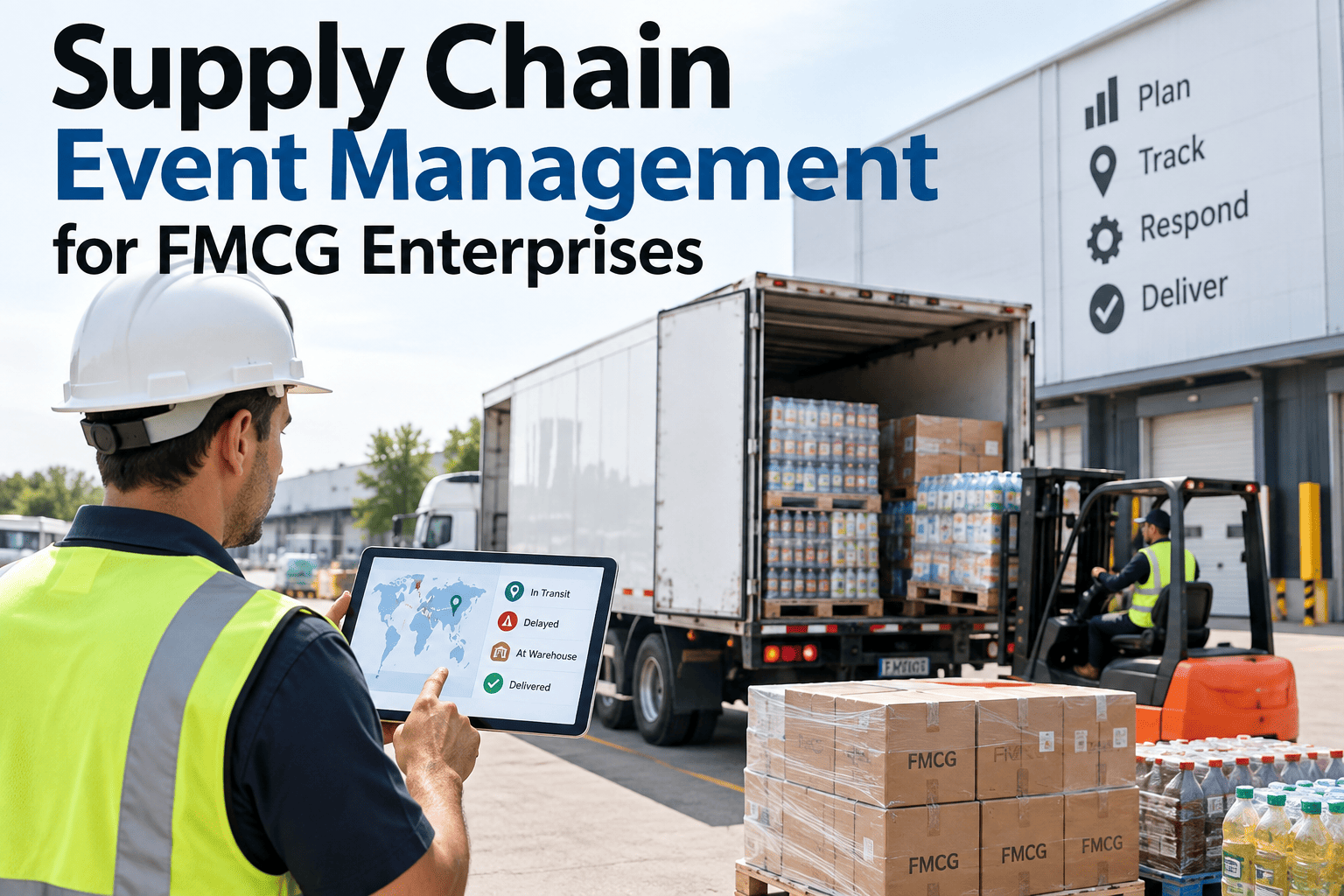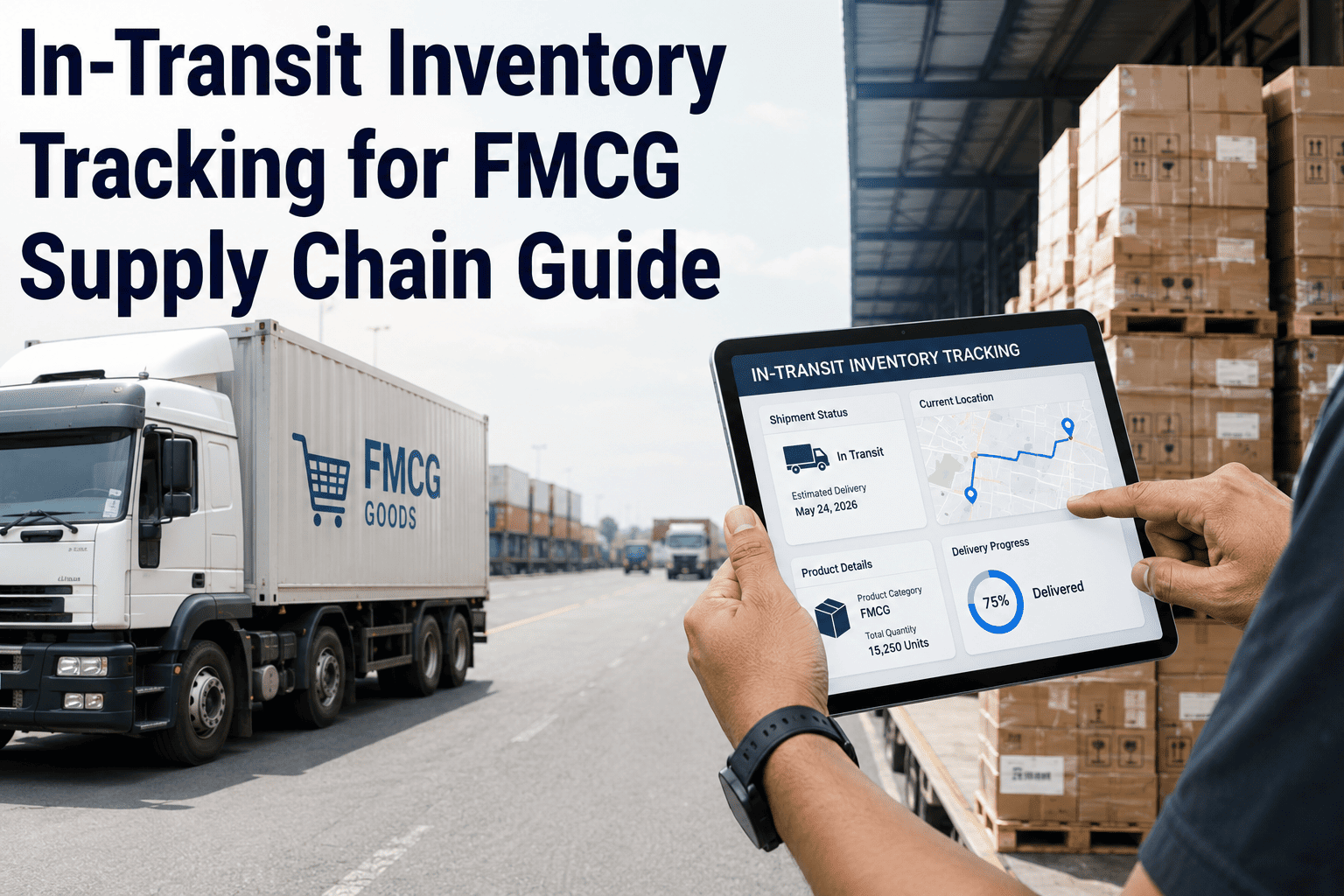
The moment a truck pulls away from your warehouse, a strange thing happens to that inventory in most FMCG operations: it stops counting. Your ERP no longer sees it as available stock, but it hasn't yet arrived anywhere it can be sold either, so it sits in a kind of accounting limbo for however many hours or days the journey takes, even though it is very much real, physical product moving toward a real customer. In-transit inventory tracking closes that gap by treating stock on the road as genuine available-to-promise inventory, using GPS location, geofence triggers, and ETA prediction to keep it visible the entire time it's between locations. Supply chain teams ready to see what that looks like for their own shipping network can start with a conversation with iFactory support.
The Truck Left Two Hours Ago. Your System Still Thinks That Stock Doesn't Exist.
iFactory tracks every shipment with GPS location, geofence arrival triggers, and predictive ETAs, treating in-transit inventory as real available-to-promise stock instead of a blind spot between your warehouse and your customer.
What Goes Wrong When In-Transit Stock Stays Invisible
Treating shipped inventory as simply "gone" until it arrives creates a specific set of problems that compound the more locations and carriers a brand's network includes. None of these are dramatic failures on their own, but together they quietly erode both service levels and working capital efficiency.
Orders Get Committed on Incomplete Data
A planner unaware of inbound stock may hold back an order commitment that in-transit inventory could actually have covered.
Delays Surface Too Late to Reroute
Without live tracking, a delayed shipment is often only noticed once the destination reports it hasn't arrived on schedule.
Warehouse Receiving Can't Plan Labor
Uncertain arrival windows make it hard to staff receiving docks efficiently, leading to either idle labor or rushed unloading.
Double-Counted or Missing Stock
Inventory that isn't tracked consistently between "shipped" and "received" status can be miscounted in either direction during that window.
In-Transit Tracking Methods Compared
| Tracking Method | Location Accuracy | ETA Reliability | Best Use Case |
|---|---|---|---|
| GPS Telemetry | High, continuous | Strong, updates dynamically | Owned or dedicated carrier fleets |
| Geofence Triggers | High at defined boundaries | Confirms arrival, not en-route position | Dock scheduling and receiving alerts |
| Carrier EDI Status Updates | Moderate, milestone-based | Moderate, depends on carrier reporting | Third-party freight and LTL shipments |
| Manual Status Checks | Low, point-in-time only | Weak, no predictive capability | Low-volume or exception-only shipments |
Turning a Shipment Into Real Available-to-Promise Stock
Making in-transit inventory usable for actual order commitments, rather than just visible on a map, requires connecting location data to a confidence-scored ETA and feeding that directly into planning systems.
Capture Live Location Data
GPS or carrier milestone data streams in continuously for every active shipment across the network.
Predict Arrival With Confidence Scoring
ETA predictions factor in route, traffic, and historical carrier performance rather than relying on a static planned delivery date.
Classify Stock as Available-to-Promise
Shipments within a defined confidence and time window get counted as usable inventory for order commitment purposes.
Trigger Geofence Arrival Events
Automatic status updates fire the moment a shipment enters a destination geofence, alerting receiving teams in real time.
Flag Delays Before They Become Surprises
A shipment falling behind its predicted ETA triggers an early alert, giving planners time to adjust commitments or reroute if needed.
Count Your In-Transit Stock as What It Actually Is: Real Inventory
iFactory turns GPS location, geofence events, and predictive ETAs into available-to-promise inventory your planning team can actually commit orders against.
Network Types Where In-Transit Tracking Matters Most
Multi-Leg Distribution Networks
Shipments moving through plant, regional DC, and final-mile legs, where visibility gaps compound at every handoff point.
Mixed Owned and Third-Party Fleets
Networks blending company-operated trucks with outsourced carriers, each requiring a different tracking integration approach.
Cross-Border and Long-Haul Shipments
Longer transit windows with more potential disruption points, where early delay detection has the biggest planning payoff.
High-Velocity Replenishment Lanes
Frequent, fast-turnaround shipments where even small ETA improvements meaningfully tighten overall replenishment cycles.
A Composite Scenario: The Delay That Got Caught Six Hours Early
A beverage distributor running a mixed fleet of owned trucks and third-party carriers had a recurring issue where roughly one in ten inbound shipments to its busiest regional DC arrived later than scheduled, with the receiving team typically finding out only when the truck failed to show at its expected dock slot. After connecting GPS and carrier EDI data into a unified in-transit tracking view, the system began generating predictive delay alerts based on live route progress rather than the original static schedule.
During one particularly high-volume week, a shipment carrying a fast-moving SKU was flagged as running six hours behind schedule based on its actual GPS position, well before the original scheduled arrival time had even passed. The regional planning team used that lead time to temporarily reallocate stock from a neighboring DC to cover the gap, avoiding what would have otherwise become a same-day stockout at three retail accounts served from that facility.
Frequently Asked Questions
Does in-transit tracking require installing hardware on every truck?
Not necessarily. Owned fleets typically use GPS telemetry devices, but third-party carrier shipments can often be tracked through existing EDI status updates or carrier-provided tracking APIs without requiring any additional hardware. The right method depends on the mix of carriers in a given network, which the iFactory support team can help map out.
Can in-transit stock really be counted as available-to-promise inventory?
Yes, once a shipment's ETA prediction reaches a defined confidence threshold, treating it as available-to-promise lets planning and sales teams commit orders against stock that's genuinely on its way rather than waiting for physical arrival. This typically applies to shipments within a shorter, more predictable window rather than long-haul shipments still early in transit.
How much advance warning does a delay alert actually give?
Warning time depends on how far into the journey the delay occurs and how it's detected, but shipments tracked via continuous GPS telemetry can often generate delay alerts several hours ahead of the original scheduled arrival, since the system compares live position against the route's normal progress pattern rather than waiting for a missed delivery window. Book a demo to see typical delay-detection windows for your specific lanes.
Does this work across a network that spans multiple countries?
Yes, the same core tracking principles apply to cross-border and long-haul shipments, though longer transit windows and additional customs or transfer points typically mean building in more conservative confidence thresholds before counting a shipment as available-to-promise. The underlying GPS and carrier data integration works the same way regardless of distance or border crossings involved.
Stop Losing Visibility the Moment a Truck Leaves the Dock
iFactory keeps every shipment visible from departure to arrival, turning in-transit stock into real, usable inventory your team can plan and commit against.