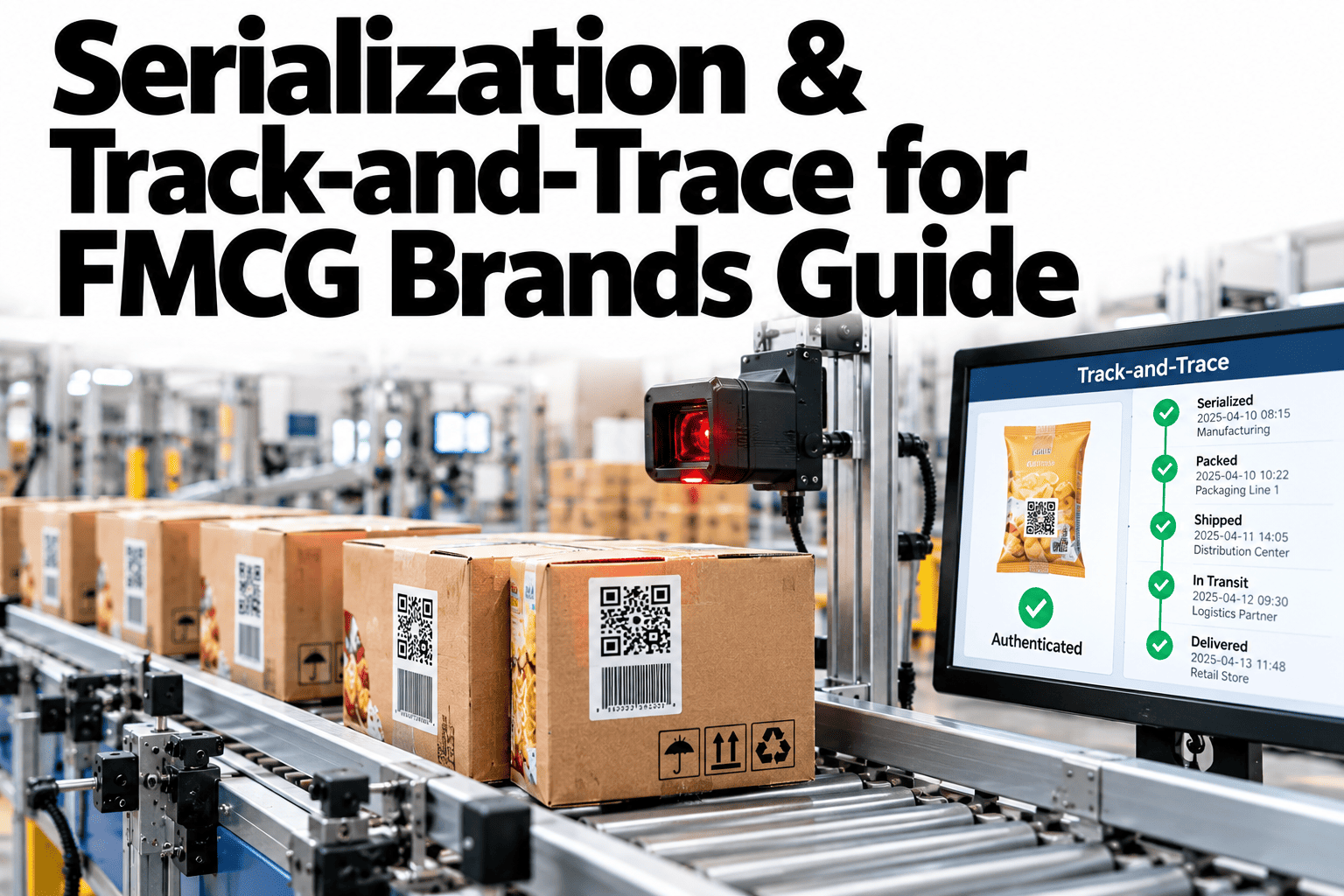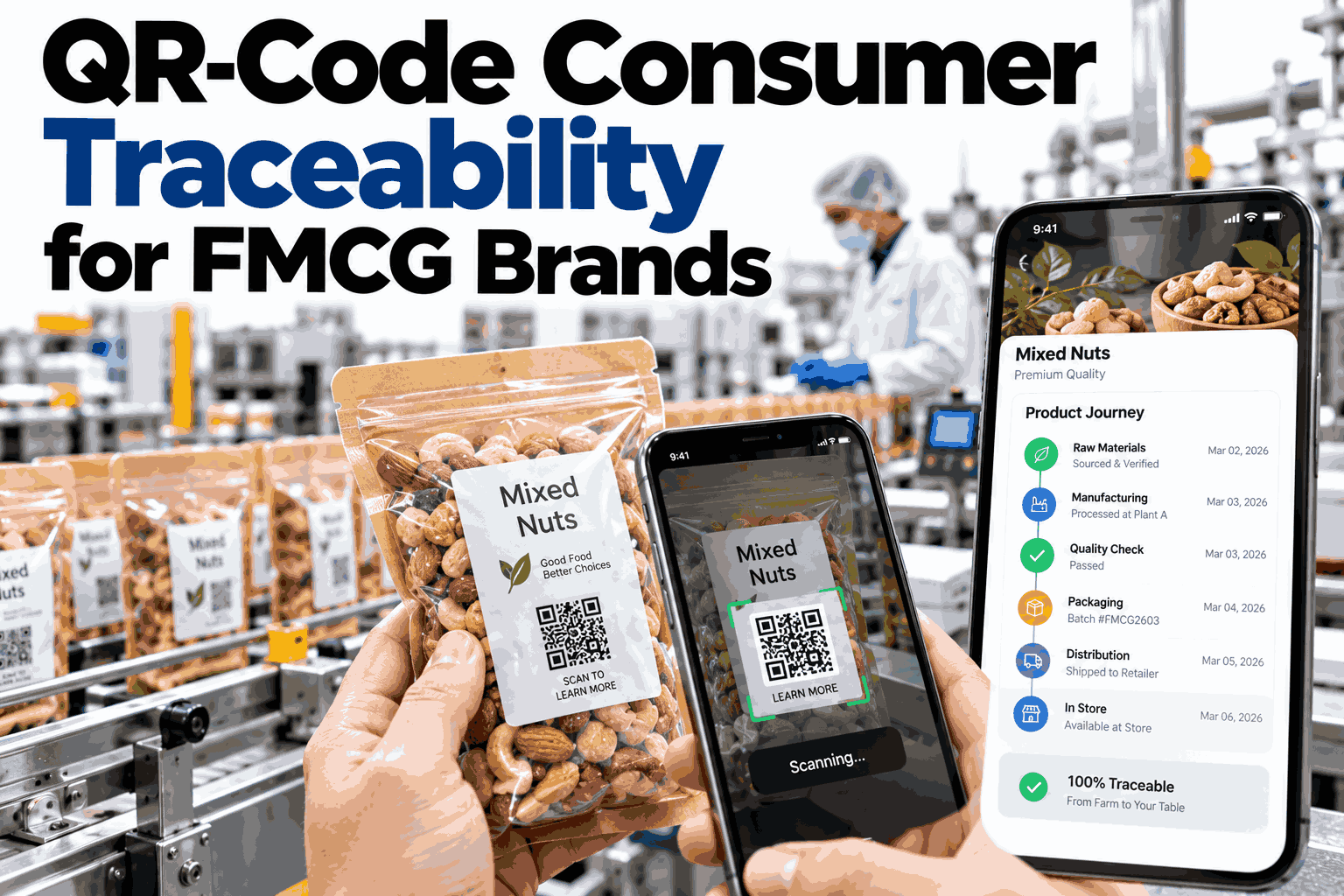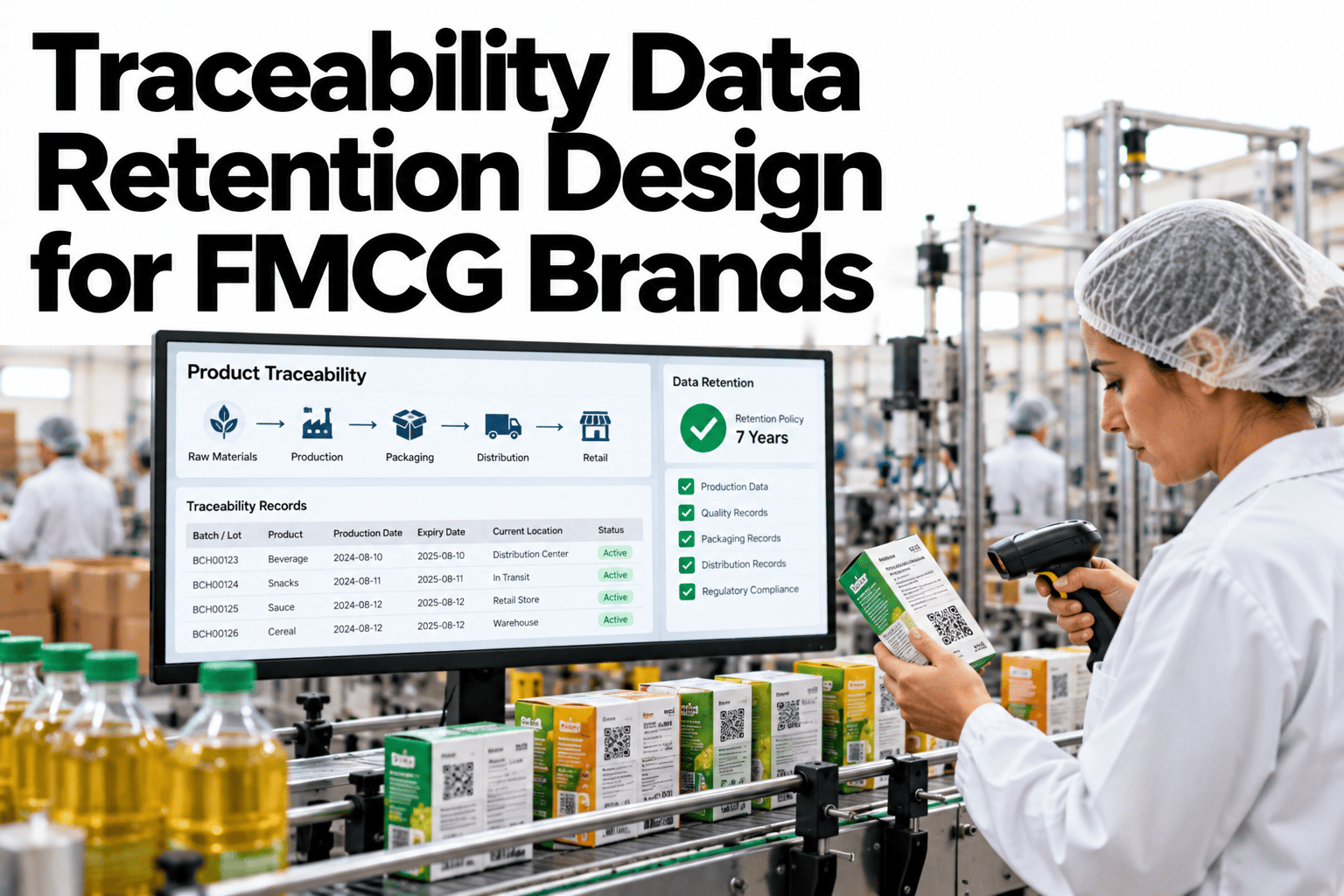
A recall notice does not wait for a tidy archive. When a retailer asks for ninety days of batch genealogy on a single SKU, the answer has to arrive in hours, not weeks, and it has to come from records that were never edited after the fact. Most FMCG plants already capture the right data in MES, LIMS and warehouse systems, but few have written down how long each record type must live, where it sits, and who can touch it once a hold is placed. This guide lays out a retention design built for audits, recalls and everyday proof of compliance, and teams ready to see it on their own batch data can book a demo with the iFactory AI team.
Traceability Data Retention Design for FMCG Brands
A practical framework for deciding what to keep, for how long, where it lives and how a legal hold freezes it without breaking daily production reporting.
Why Retention Is a Design Problem
Most plants do not lose data because nobody collected it. They lose it because nobody decided how long to keep it, so it either disappears early or clogs the active system until queries slow down.
A gap at the worst moment
A regulator or retailer asks for a record that was purged last quarter, and the only answer left is an apology.
A slow, expensive mess
Every table grows without limit, searches crawl, and nobody can say which copy of a record is the authoritative one.
A retention design fixes both problems by assigning every record type a lifespan, a storage tier and an owner, written down once and applied automatically after that.
Record Types and Regulatory Floors
Different record types carry different minimum lifespans, and the shortest answer is rarely the safest one once litigation risk is added on top of the regulation.
| Record Type | Typical Minimum | Why It Runs Longer |
|---|---|---|
| Batch genealogy | 2 to 3 years past shelf life | Recall windows and customer complaint cycles |
| Raw material lot records | Life of finished product plus buffer | Ingredient recalls trace forward from here |
| CCP and quality checks | Life of product plus 1 year | Audit and certification review cycles |
| Sanitation and cleaning logs | 1 to 2 years | Allergen cross-contact investigations |
| Shipping and distribution records | 2 to 3 years | Needed to complete a forward trace to retailers |
Three Storage Tiers
Not every record needs to sit in the fastest, most expensive storage. A tiered design keeps recent, active data quick to query and older data cheap to hold.
What a Litigation Hold Actually Does
A hold is not a backup. It is a freeze placed on specific records the moment a claim, complaint or investigation becomes likely, so normal retention schedules stop applying to that slice of data.
Scope the hold
Name the SKUs, batches, date range and record types the hold covers, no wider than needed.
Freeze deletion
Automated purge rules skip anything inside the hold, regardless of its normal retention clock.
Log every access
Who viewed or exported held records, and when, becomes part of the evidence itself.
Stop Guessing What a Recall Will Cost You
Book a 30-minute walkthrough and see how iFactory AI pulls full batch genealogy from live plant data in minutes, not days.
Archive Cost, Illustrative
The numbers below are invented to show the pattern, not to benchmark your plant. The shape holds across most FMCG sites: cold storage costs a fraction of hot storage per record.
Most FMCG plants find the bulk of their record volume belongs in the cold tier, so getting the tiering rule right is where most of the savings sit.
Common Retention Mistakes
The same errors show up across plants building their first retention policy. Each has a straightforward fix.
Who Asks, and How Fast They Expect an Answer
Retention design is not only a compliance exercise. Four different audiences pull on the same archive, each with its own patience for how long an answer takes.
A retailer auditor usually calls with a specific lot number and a short deadline. A regulator may ask for a broader window across several SKUs. Internal quality teams pull records constantly during routine checks, while legal counsel needs a narrow, frozen slice the moment a claim surfaces.
| Requester | Typical Ask | Expected Turnaround |
|---|---|---|
| Retailer or distributor | Lot-level trace on one SKU | Hours |
| Regulator | A broader window across SKUs or a facility | A day or two |
| Internal quality | Routine spot checks and trend review | Minutes to same day |
| Legal counsel | A narrow, held slice tied to a specific claim | Immediate freeze, retrieval on request |
Designing for the fastest of these, the retailer call, tends to satisfy every slower audience automatically, which is why retrieval speed is the metric most retention programmes should test first.
Getting Started: A Short Readiness Check
Before building a full retention design, most teams benefit from a quick internal audit of where things stand today. A few honest answers reveal how much work is ahead.
Start by asking whether anyone could currently name the retention period for each major record type without checking three different systems. If the answer is no, that gap alone is worth fixing before anything else.
| Question | If the Answer Is No |
|---|---|
| Is there a written retention period per record type? | Start here before any system changes |
| Can a hold be placed without a manual spreadsheet? | Treat this as the next priority |
| Is cold storage meaningfully cheaper than hot? | Review the current archive architecture |
| Has a full trace ever been timed end to end? | Run a drill before a real recall forces one |
Most plants find they are strong in one or two of these areas and weak in the rest, which is a normal starting point rather than a reason to delay. A focused ninety-day effort, following the blocks in this guide, typically closes most of the gap.
Frequently Asked Questions
How fast should a full batch trace be?
Most retailers expect an answer within a few hours of a request, and regulators expect it within a day or two depending on the market. A well-tiered archive with batch genealogy already linked makes this a query, not a project. Book a demo to time a sample trace on your own data.
Does a hold stop normal production reporting?
No. A well-scoped hold freezes deletion on the specific records named, while everything else in daily reporting continues as normal. The scope is what keeps a hold from becoming a plant-wide slowdown.
Who should own the retention schedule?
Quality usually sets the regulatory floor, legal sets the litigation buffer, and IT or the plant systems team enforces both. Write down who owns each record type so nobody assumes someone else is handling it.
Can this replace our document management system?
No, it complements it. iFactory AI reads from your MES, LIMS and ERP and builds the traceability layer on top, while your existing document systems keep their own role. Ask support which systems can connect at your plant.
Build a Retention Design You Can Defend
iFactory AI links batch genealogy, retention rules and litigation holds into one traceable record. Book a walkthrough built around your plant.