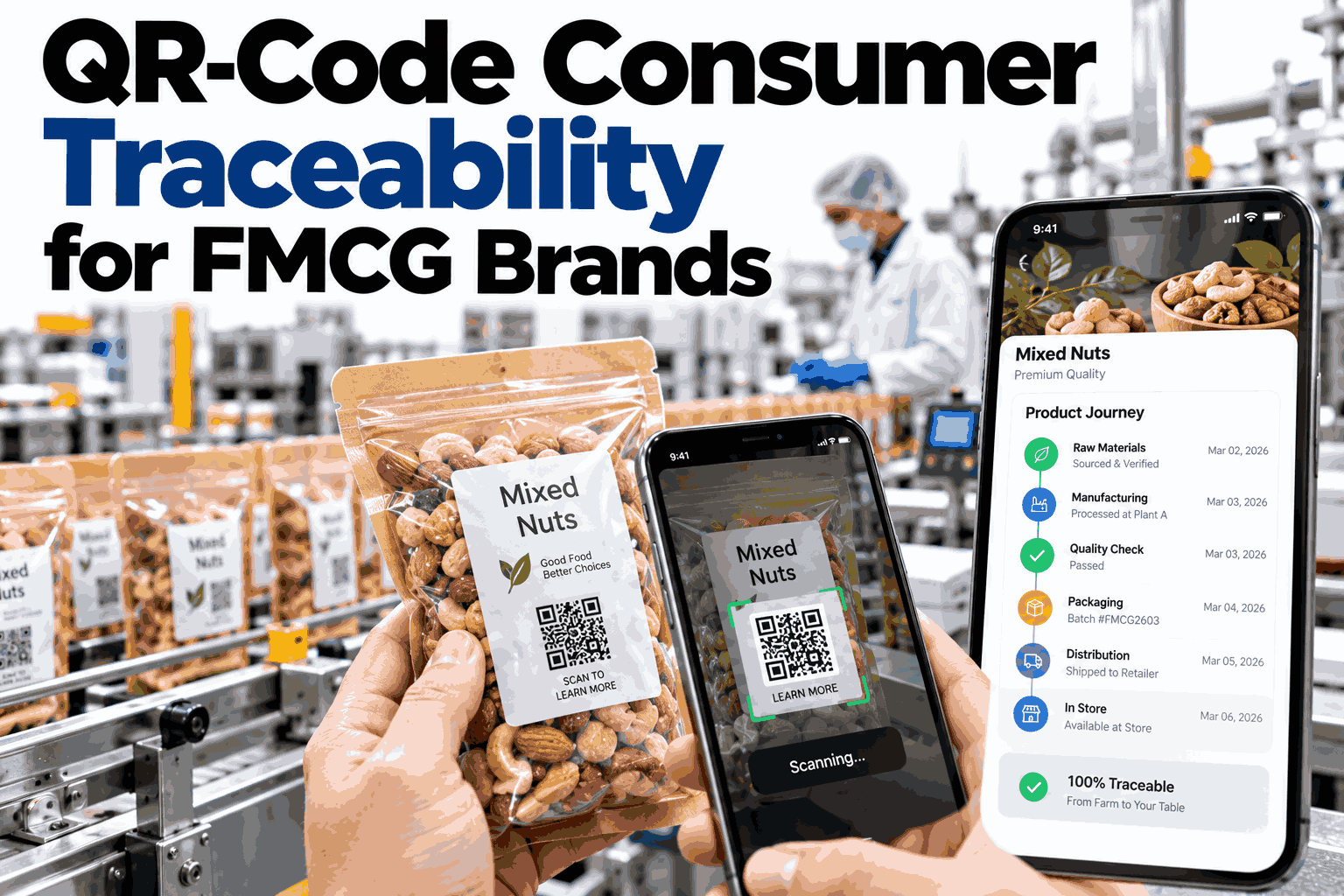
Most traceability investment never reaches the one person who actually bought the product. The batch record proves a recall can happen fast. The audit trail proves a regulator can verify a claim. Neither one ever shows up on the pack itself, where a shopper is standing in an aisle deciding whether to trust what's inside. A consumer-facing QR code is the one traceability touchpoint that can actually do that, if the code behind it leads somewhere worth scanning. Talk to iFactory AI about turning your existing batch data into that kind of pack-level experience.
The Traceability Data You Already Have, Put Where the Shopper Can See It
Pack-level QR codes, consumer landing pages, and scan analytics turn batch genealogy you already track into a marketing asset, not just a compliance record.
Two Audiences for the Same Underlying Data
A batch record exists to answer two very different questions, for two very different readers. A compliance auditor asks where this lot came from and where it went. A shopper asks something simpler: can I trust what I'm about to eat or use.
Most plants build the infrastructure to answer the first question well, because regulation requires it. Almost nobody builds the second answer on purpose, because nothing requires it, even though the underlying lot, ingredient, and origin data needed to answer it is usually already sitting in the same traceability system.
This also explains why so many consumer-facing traceability efforts stall after a promising pilot. A brand team gets excited about a story-driven landing page, commissions design work, and then discovers that populating it with real, specific data for every batch means going back to the compliance system anyway, usually without a clean way to pull from it automatically. The project either dies there or ships with generic, non-batch-specific content that defeats the whole purpose. Starting from the existing traceability system, rather than treating the consumer page as a separate marketing build, avoids that dead end entirely.
There is also a trust dimension worth naming directly. A shopper who scans a code and finds specific, verifiable detail, a real harvest date, a real facility, a real lot number, is having a different experience than one who finds a vague brand story with no connection to the actual product in their hand. The first experience is only possible because the underlying traceability data is real and already being tracked for compliance. The consumer page doesn't need to invent trust; it needs to surface trust that already exists in a system nobody outside compliance has ever seen.
What a Pack-Level QR Code Actually Needs to Carry
A code printed on a retail pack has to do two jobs at once: scan correctly at point of sale like a standard barcode, and open a consumer-friendly page when a shopper scans it with a phone. Those two jobs used to require two separate codes.
Retail Scan Compatibility
The code must still read at checkout like a standard barcode, so a point-of-sale upgrade is not a prerequisite for adoption.
Consumer Web Resolution
The same code, scanned by a phone camera, resolves to a branded web page rather than a raw product-ID string.
Batch-Level Specificity
The code identifies the specific lot that pack came from, not just the SKU, so the page it opens can be accurate to that exact batch.
Standards Alignment
GS1 Digital Link is the emerging standard that lets one 2D code carry both the retail identifier and the consumer-facing URL together.
This standards shift is not a distant future consideration. GS1's Sunrise 2027 initiative is pushing retailers toward 2D codes that replace the traditional linear barcode, which means brands adopting this now are building toward where point-of-sale scanning is already heading, not building a parallel system that will need to be replaced later.
The practical implication for a packaging team is that this is a narrowing window for a decision that will be made one way or another. A brand that waits until retailers formally require 2D codes will be doing this migration under a deadline, likely alongside every other supplier competing for the same packaging-line changeover time and the same printer-vendor support. A brand that moves early gets to design the consumer-facing side of the code deliberately, rather than treating it as a rushed compliance checkbox once the retail requirement actually lands.
See Your Batch Data Behind a Real Consumer Scan
Book a 30-minute walkthrough and see what a shopper-facing page looks like built from your own lot and ingredient records.
What Actually Belongs on the Landing Page
A scan that opens a thin page with just a lot number repeats the mistake of building for compliance instead of for the shopper standing in front of it. The page needs to answer questions a real person actually has.
| What the Shopper Wants to Know | Where It Comes From | Why It Builds Trust |
|---|---|---|
| Where did this come from | Origin and ingredient-source fields in the batch record | Specific origin claims read as more credible than a generic brand statement |
| When was it made | Production date and lot timestamp | Freshness and shelf-life confidence, especially for perishable FMCG categories |
| Was it tested | Quality-check and inspection records tied to that lot | Visible proof of a quality step most shoppers assume happens but never see |
| Is it actually genuine | Serialized code validation against the issuing plant's records | Direct counterfeit protection in categories where that risk is real |
None of these four rows require inventing new data. Each one is a reformatting of information a traceability system already holds for compliance purposes, presented in language and layout built for a shopper rather than an auditor.
There is a fifth question worth considering, even though it sits slightly outside this table: not every batch's story is equally compelling, and a landing page template needs a sensible fallback for the months when a lot's origin data is routine rather than remarkable. A template that only looks good for the one perfect harvest batch and falls apart for an ordinary production run isn't ready for production. The goal is a page that reads as trustworthy and complete on an average day, not one that only works as a marketing showcase for a best-case batch.
Why the Landing Page Design Matters as Much as the Code
A QR code that opens a slow, generic, or confusing page trains shoppers to stop scanning. The design of what's on the other end of the scan is doing as much work as the traceability data behind it.
Mobile-First, Not Mobile-Adapted
A page built for a desktop screen and shrunk down reads as an afterthought; a page built for the phone it will actually open on reads as intentional.
Branded, Not Generic
A plain data dump breaks the moment of trust the scan created; a page carrying the brand's own look reinforces it instead.
Fast, Not Just Functional
A shopper scanning in a store aisle will not wait through a slow load; a page that opens instantly is the difference between a completed scan and an abandoned one.
Getting this right turns the QR code from a compliance afterthought into something closer to a small, repeatable marketing touchpoint, one that happens at the exact moment a shopper is deciding whether to trust the product in their hand.
Load speed deserves a specific callout because it is the single most common way a well-designed page fails in practice. A page that looks polished in a design review but takes several seconds to load over an in-store cellular connection will lose a meaningful share of scanners before they ever see the content a team spent weeks building. Testing the page under realistic, imperfect network conditions, not just on a fast office connection, is a small step that determines whether the rest of the design effort actually reaches anyone.
What Scan Analytics Actually Tell a Brand Team
Once a code is live, every scan is a data point most brands have never had access to before: a direct signal from an actual shopper at the actual moment of purchase consideration.
Where Scans Happen
Geographic scan patterns can reveal which regions or retail formats are engaging with the traceability story at all.
When Scans Happen
A spike in scans right after a news story or a recall in the category shows the moments when shoppers actually go looking for reassurance.
What Scanners Do Next
Whether a shopper lingers on the origin story, clicks through to a loyalty offer, or leaves immediately says something real about what content on the page is actually working.
This is data a brand marketing team genuinely cannot get any other way, and it comes directly out of infrastructure the plant already built for an entirely different reason.
Over time, this scan data can also feed back into decisions that have nothing to do with marketing directly. A category where scan rates are consistently low might indicate the code's placement on the pack is poor, or that the retail format simply doesn't lend itself to in-aisle scanning, which is useful operational feedback regardless of what the marketing content says. A category where scan rates are unusually high right after a competitor's recall is a signal about what shoppers are anxious about in that exact moment, which is the kind of real-time consumer-sentiment data most FMCG brands pay research firms to approximate after the fact.
None of this requires a dedicated analytics team to act on. A simple monthly view of scan volume by region, by SKU, and by time of day is usually enough to spot the patterns worth investigating further, and that view can sit on the same dashboard the compliance team already checks for traceability coverage, just read by a different audience for a different purpose and on a different cadence suited to marketing's own planning cycle.
A Short Self-Check Before You Launch a Pack-Level Code
Run these against your current plan. A no on any of these points at where the program is still closer to a compliance project than a consumer one.
Where iFactory AI Fits
iFactory AI connects the batch genealogy a plant already tracks to a pack-level QR code and a ready-to-brand consumer landing page, without duplicating the underlying traceability data into a second system.
Batch-to-Code Linking
Each printed code is tied directly to its actual production lot, pulling origin, date, and quality-check data from the existing traceability record.
GS1 Digital Link Ready
Codes carry both the retail point-of-sale identifier and the consumer-facing URL in one standards-aligned format.
Branded Landing Pages
Mobile-first page templates render your brand's own look, populated automatically from the batch record behind each code.
Scan Analytics Dashboard
Where, when, and how shoppers engage with each scan is tracked and shared directly with the marketing team, not buried in a compliance log.
Expert Review
"The real shift with GS1 Digital Link isn't technical, it's organizational — for the first time, the same code a cashier scans at checkout can carry a story a brand team actually wants a shopper to see. Most companies are still treating traceability as a cost center that occasionally prevents a crisis. The ones getting ahead of Sunrise 2027 are treating it as a channel their marketing team didn't know they already had."
This review point is the practical reframe worth carrying into a budget conversation: a consumer QR program is rarely a new cost once the underlying batch data already exists. Have us scope what's reusable from your current traceability setup before assuming this needs a separate build.
A second point worth carrying from the same review: ownership of this program matters as much as its technical design. A consumer QR initiative that sits entirely inside compliance tends to default back toward dense, auditor-style language on the landing page, because that is the only voice the team building it has. One that sits entirely inside marketing, with no compliance review, risks drifting into claims the underlying batch data can't actually support. The programs that work well tend to have both functions reviewing the same page before it ships, which is a small governance step that is easy to skip and expensive to fix after the fact.
Frequently Asked Questions
Do we need new hardware to print consumer-facing QR codes on our packs?
Usually not. Most existing coding and marking equipment that prints standard barcodes can print a 2D GS1 Digital Link code with a software and template revision rather than a full hardware replacement. We can check your current printing setup against what a code upgrade actually requires before you budget for anything new.
Will switching to a GS1 Digital Link code break checkout scanning at retail?
No, when implemented correctly. A properly structured GS1 Digital Link code still resolves to the standard product identifier at point-of-sale scanners, while also opening a consumer web page when scanned by a phone camera. The two functions live in the same code, not in competing ones, which is the whole point of the standard and why it is worth testing thoroughly against your actual point-of-sale hardware before a full rollout.
What should actually be on the consumer landing page versus kept internal?
Origin, production date, and a plain-language quality-check summary generally belong on the consumer page. Internal supplier names, cost data, and granular process parameters generally stay in the compliance-facing system. Our team can help draw that line for your specific product category.
How do we know if shoppers are actually using the codes once they're live?
Scan analytics tracked at the code level show scan volume, location, timing, and on-page behavior such as how long a visitor stays or what they click next. This data should route to the marketing team reviewing the campaign, not only to the compliance system that originated the batch data, and a regular review cadence (monthly is typical) keeps the program accountable to actual shopper behavior rather than launch-day assumptions.
Is this only relevant for food and beverage brands?
No. Any FMCG category where a shopper might care about origin, authenticity, or freshness can use the same approach, including personal care, household goods, and packaged goods outside food. Categories with real counterfeit risk get an added authentication benefit on top of the consumer-engagement value, and even categories without a strong counterfeit concern still benefit from the trust and transparency signal a specific, batch-level page provides over a generic brand claim.
Put Your Batch Data Where Shoppers Can Actually See It
iFactory AI turns the traceability data you already track into pack-level QR codes, branded landing pages, and real scan analytics. Book a walkthrough on your own batch records.