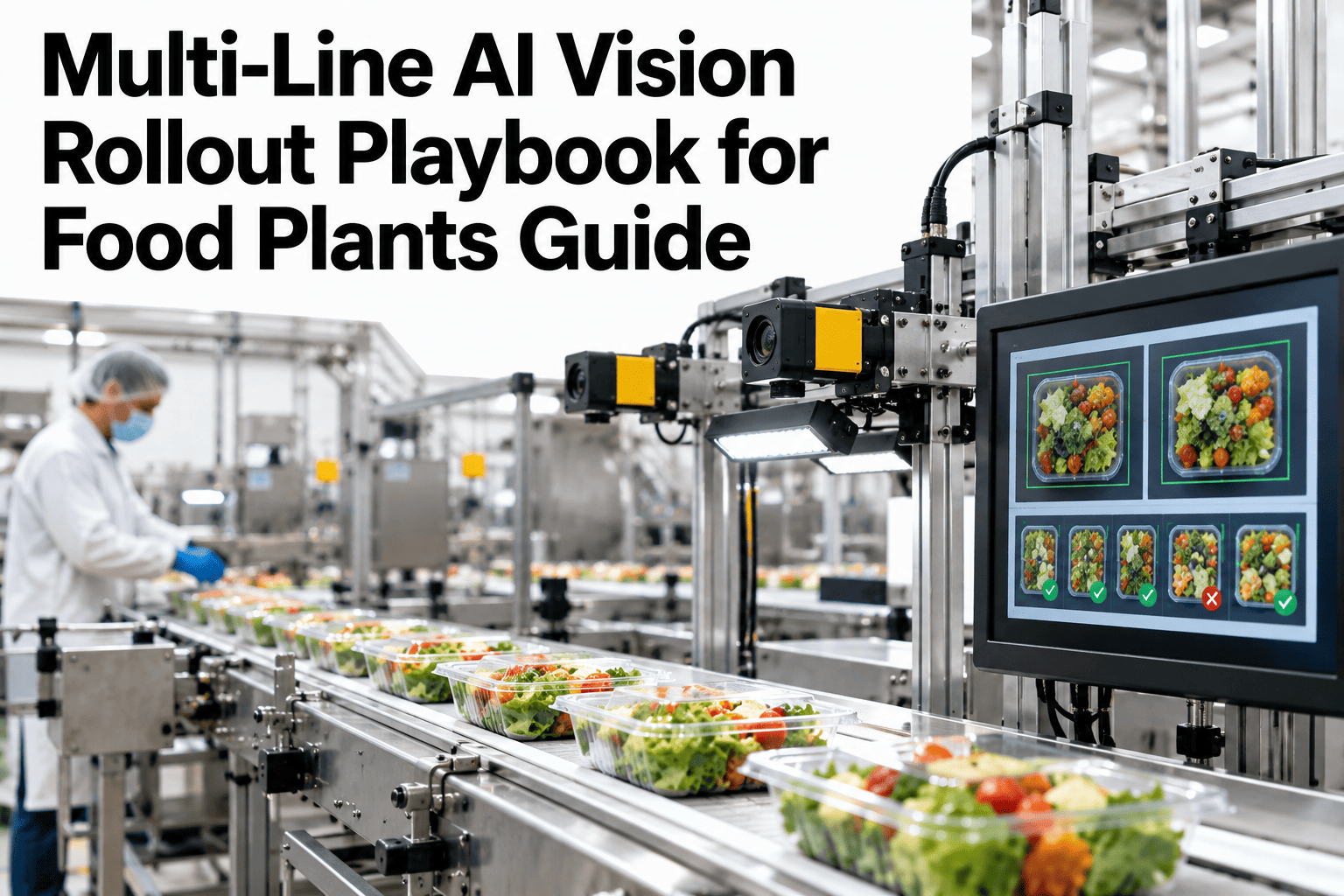
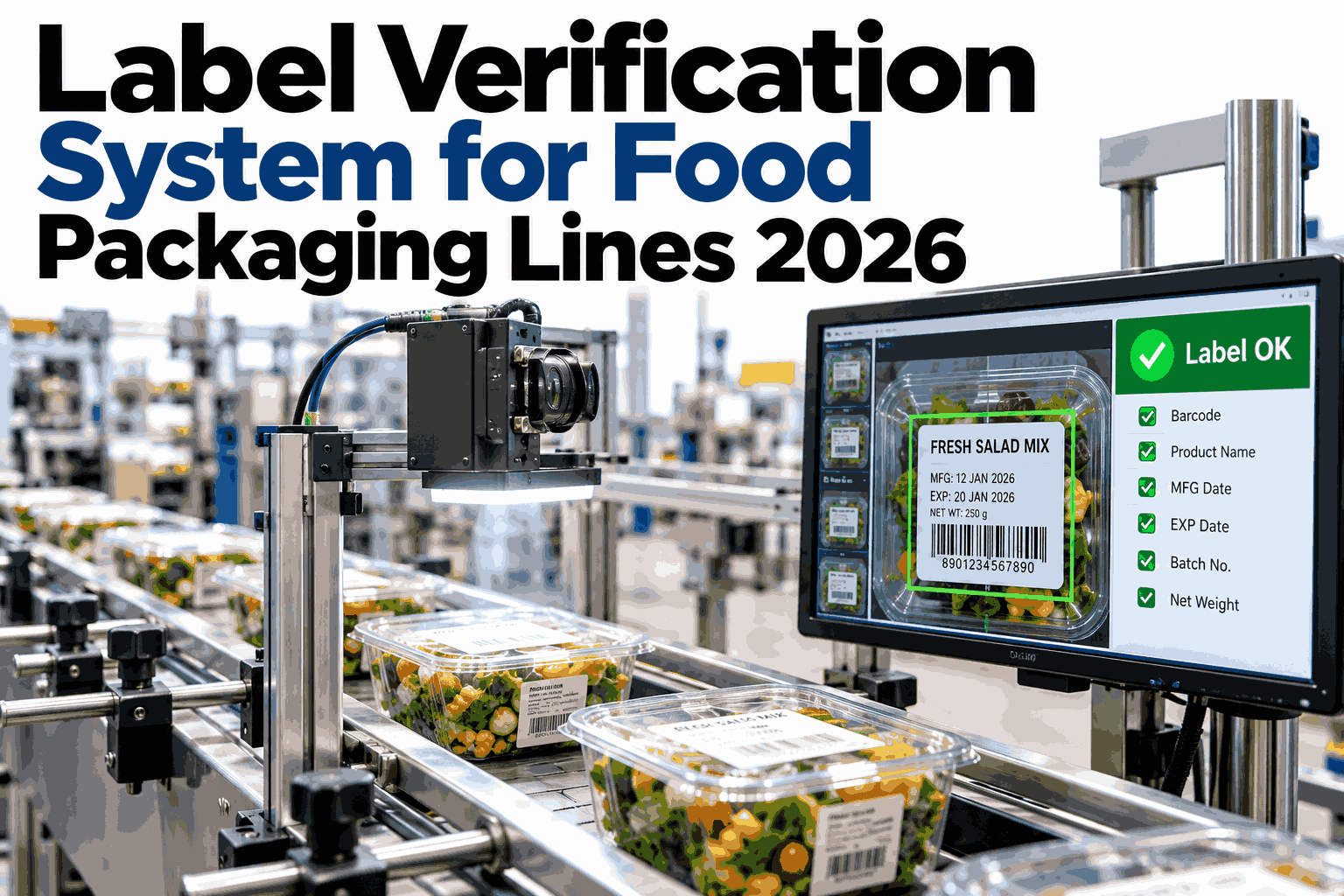
Most label verification projects stall not on the camera install but on the SKU master — the step nobody scoped properly at the start. Label errors drove 45.5 percent of US food recalls in 2024 (Loftware analysis of FDA enforcement data, 2026), which is exactly the risk a verification rollout is meant to close, but only if the deployment sequence avoids the gaps that let a wrong label through during the transition itself. iFactory, an on-premise AI platform with AI Vision Camera built in, follows a staged rollout designed around that risk. Plant teams planning their own deployment can discuss their plant data and use case with our team.
AI Label Verification Deployment Playbook · Food Plants, 2026
Six Steps, in Order, From SKU Master to First-Pass Release
iFactory AI's deployment playbook sequences every step so label verification goes live without a single shift of unprotected production.
Step 1
SKU Master Prep Is the Step Most Plans Underestimate
Consolidating nutrition data, allergen statements, and label artwork references into one structured SKU master is the longest step in most deployments, and it is the one most likely to be scoped at a fraction of its actual effort. Plants with scattered spec sheets, formulation records, and legacy print files should plan for this to take longer than the hardware install.
Steps 2–3
Camera Install and Baseline Calibration
| Step | What happens | Common pitfall |
|---|
| Camera install | Vision hardware mounted at the print-and-apply or inspection point on the line | Camera positioned before line-speed and lighting conditions are tested |
| Baseline calibration | System learns what a correctly printed and applied label looks like for each SKU | Calibrating on too few SKUs, missing edge-case label formats |
Step 4
Shadow Mode: Running the Check Without Acting on It Yet
Before any line reject is triggered automatically, the system runs in shadow mode — reading and checking every label but only logging the result, not stopping production. This is where false positives get tuned out before they ever cost a line a minute of downtime.
See Where Your Own SKU Master Stands Before You Scope a Timeline
Share your current spec sheet and artwork structure, and iFactory AI will give a realistic estimate of what each playbook step would take for your plant.
Steps 5–6
Live Enforcement and the Path to First-Pass Release
Live enforcement
Once shadow mode confirms accuracy, the system begins actually diverting or holding mismatched product.
Staged SKU rollout
Enforcement is typically turned on SKU by SKU rather than plant-wide on day one.
First-pass release
The final state: every SKU running under live verification with a trusted first-pass pass rate baseline established.
Big-bang vs staged rollout
Why Sequencing Beats a Single Plant-Wide Go-Live
All SKUs, all lines, day one
Every calibration error affects the whole plant at once
No shadow-mode data to tune thresholds before go-live
A single misconfigured SKU can stop multiple lines
Staged, SKU by SKU
Each SKU's thresholds proven in shadow mode before enforcement
A problem is isolated to one SKU, not the whole plant
Team confidence builds with each successful SKU added
What "zero downtime" actually means
The Playbook Protects Production Throughout, Not Just at the End
Zero downtime in this context does not mean the deployment is invisible — it means every step is sequenced so existing production never runs unprotected by either the old manual check or the new automated one, and no step introduces unplanned stoppage risk of its own.
Expert review
What a Deployment Lead Checks First
A label verification rollout succeeds when the SKU master is treated as the critical path from day one, not as a data-entry task squeezed in around the hardware schedule.
Verdict
Strong when shadow mode runs long enough to genuinely validate thresholds, not just long enough to check the box.
Watch for
Turning on live enforcement plant-wide before the first few SKUs have proven out their calibration.
Do next
Audit your current SKU spec data and flag which SKUs are missing a centralized, current nutrition and allergen record before scoping a go-live date.
Frequently asked questions
What Plants Ask About the Deployment Timeline
How long does a typical deployment actually take start to finish?
Timeline depends heavily on how centralized your SKU spec data already is — plants with a clean, current SKU master move through camera install and shadow mode much faster than plants starting from scattered spec sheets.
Get a realistic estimate for your plant.
Can we skip shadow mode to go live faster?
Do we need to build the entire SKU master before starting the camera install?
Which SKUs should go live first in a staged rollout?
What does the plant need to prepare before the playbook even starts?
An inventory of current SKU spec sheets, label artwork files, and known problem SKUs is the single most useful thing a plant can prepare in advance, since it directly shortens the SKU master prep step.
Talk through what to prepare before kickoff.
Sequenced for zero unprotected production
Follow a Deployment Playbook Built Around the Real Risk
Book a session with iFactory AI to map this playbook against your plant's current SKU data and line setup.
{"@context":"https://schema.org","@type":"FAQPage","mainEntity":[
{"@type":"Question","name":"How long does a typical deployment actually take start to finish?","acceptedAnswer":{"@type":"Answer","text":"Timeline depends heavily on how centralized your SKU spec data already is."}},
{"@type":"Question","name":"Can we skip shadow mode to go live faster?","acceptedAnswer":{"@type":"Answer","text":"Skipping shadow mode means calibration errors are discovered through live production rejects rather than quiet logging."}},
{"@type":"Question","name":"Do we need to build the entire SKU master before starting the camera install?","acceptedAnswer":{"@type":"Answer","text":"No, SKU master prep and camera install can often run in parallel."}},
{"@type":"Question","name":"Which SKUs should go live first in a staged rollout?","acceptedAnswer":{"@type":"Answer","text":"Most plants start with their highest-volume or highest-recall-risk SKUs."}},
{"@type":"Question","name":"What does the plant need to prepare before the playbook even starts?","acceptedAnswer":{"@type":"Answer","text":"An inventory of current SKU spec sheets, label artwork files, and known problem SKUs."}}
]}