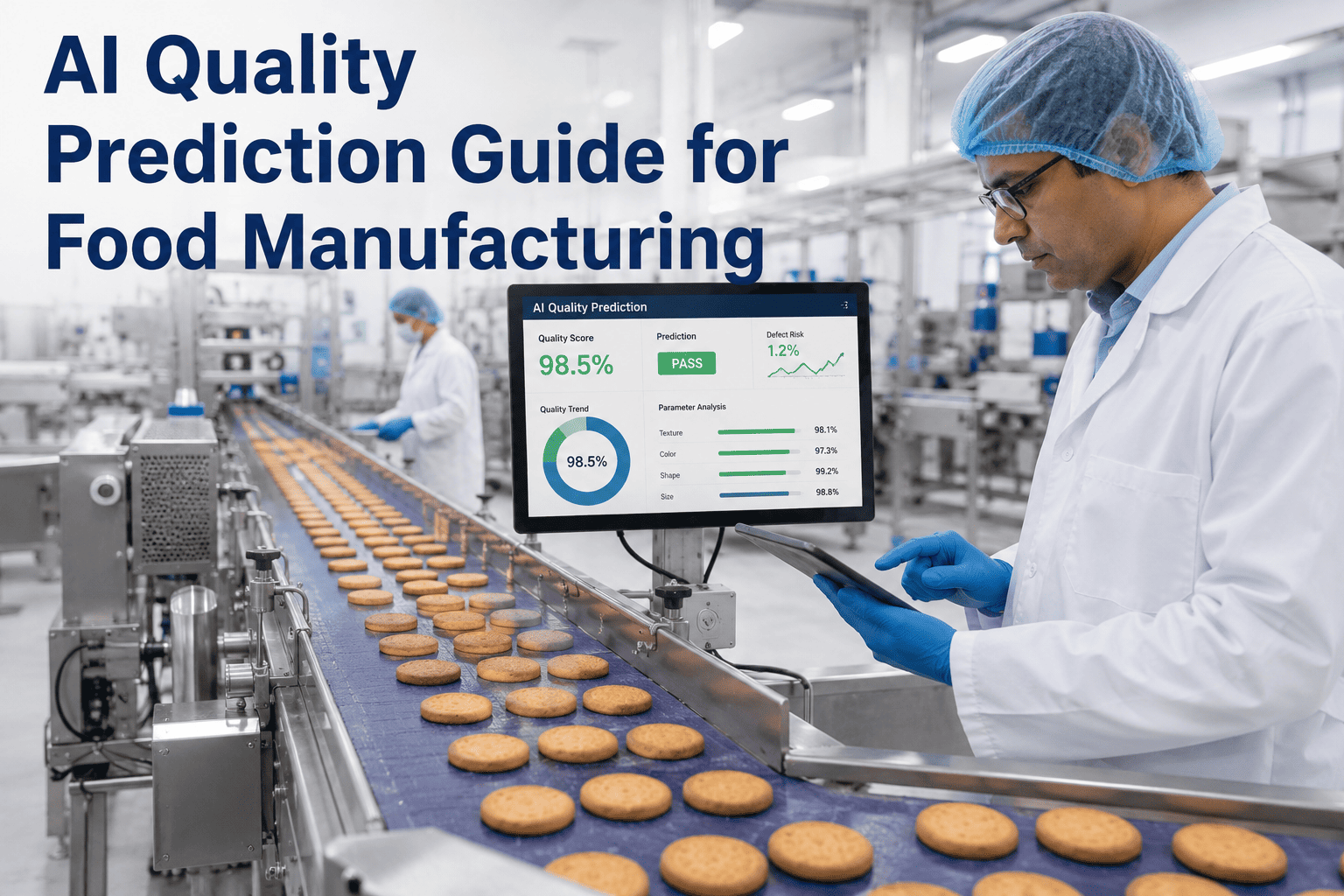
A batch fails final quality inspection after every ingredient has already been mixed, cooked, and packaged, and by that point the only options left are rework, downgrade, or scrap, none of which existed as options an hour earlier when the ingredient certificates first came in. Quality prediction flips that timing, using incoming material data and early process readings to flag a likely failure before the batch is finished rather than after. This guide covers how quality prediction models are actually built for food manufacturing, what data they need, and how to validate one before trusting it on a live line, including where iFactory's support team can help scope a first model.
Catch a Quality Failure Before the Batch Is Finished, Not After
Quality prediction models turn ingredient COA data and early process readings into an early warning, giving quality teams a window to adjust before a batch fails inspection instead of scrapping it afterward.
Reactive Quality Control Is an Expensive Habit
Traditional quality control checks a batch after it is largely or fully complete, which means every failure caught at that stage has already consumed the full cost of ingredients, energy, and labor for that run. Prediction does not replace final inspection, it reduces how often final inspection is the first place a problem is discovered, by using signals that were already available earlier in the process.
From Ingredient Data to an Early Warning
A quality prediction model is not a black box guessing at outcomes, it is a structured process moving from known inputs to a specific, testable prediction about a specific batch.
See This Modeled on Your Own COA and Batch Data
Bring a few months of ingredient and batch records to the call. We will walk through what a prediction model would flag against your actual history.
Not Every Input Carries Equal Weight
Feature importance, meaning which input variables most strongly influence a model's prediction, varies by product but tends to follow recognizable patterns across most food categories. Understanding this helps quality teams know where to focus data collection effort first.
How to Check a Model Before It Runs on a Live Line
A prediction model earns trust on a floor by being right consistently, not by being explained well in a meeting. These validation approaches are how quality teams build that confidence before letting a model influence real decisions.
| Validation Method | What It Checks | When to Use It |
|---|---|---|
| Historical Backtesting | Whether the model would have correctly flagged past known failures | Before any live deployment, using at least several months of prior batches |
| Shadow Mode Running | Model predictions logged silently alongside real outcomes without influencing decisions | During the first 30 to 60 days after initial validation |
| False Positive Review | How often the model flags a batch that actually turns out fine | Ongoing, since too many false alarms erode operator trust quickly |
| Drift Monitoring | Whether prediction accuracy degrades as ingredients or seasons change | Continuously, with a defined retraining trigger point |
What Quality Teams Ask Before Trusting a Model
Turn Your COA Data Into an Early Warning System
iFactory links ingredient, process, and quality outcome data into a single traceable model, tuned to your product's actual failure patterns. Book a demo to see it running.