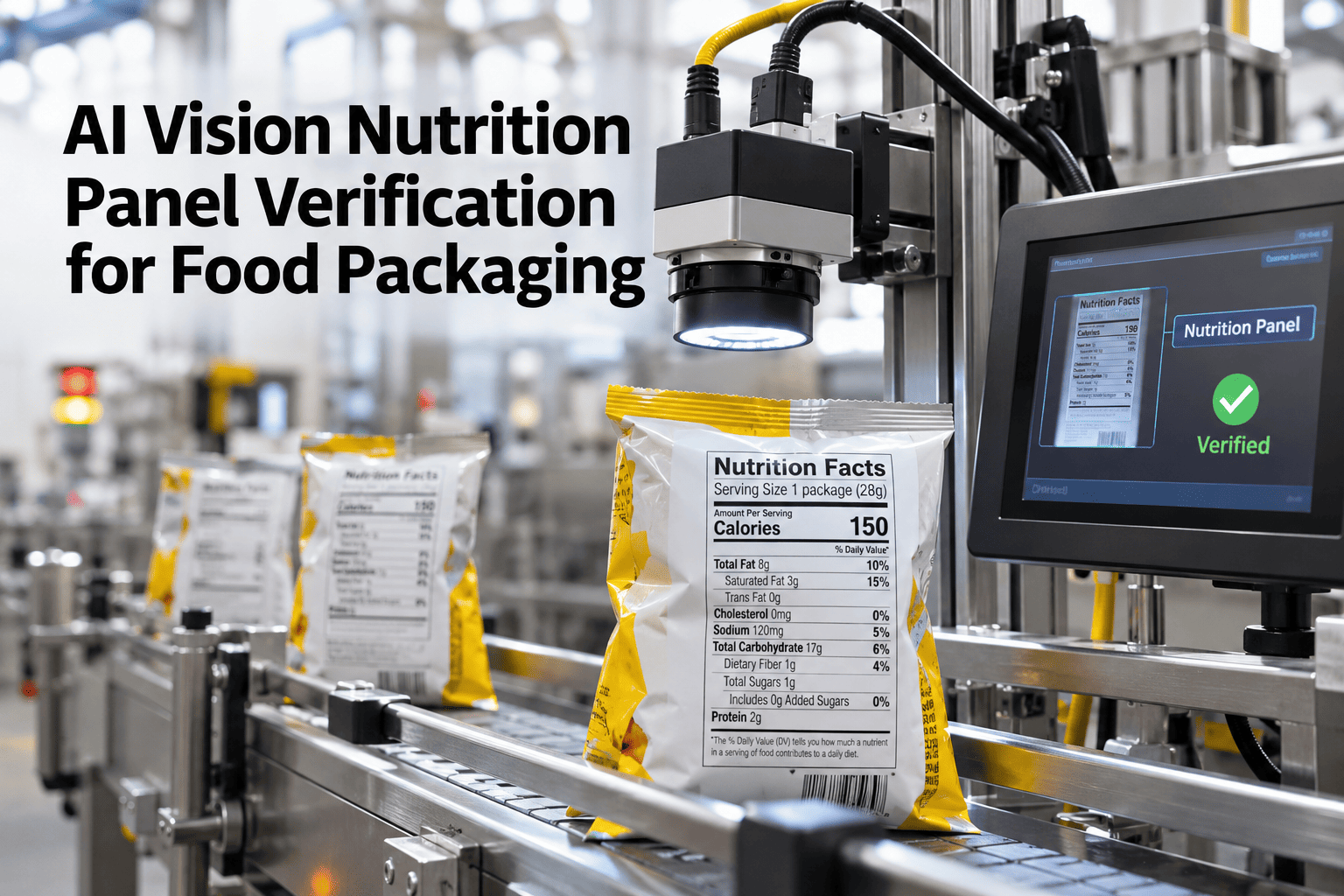
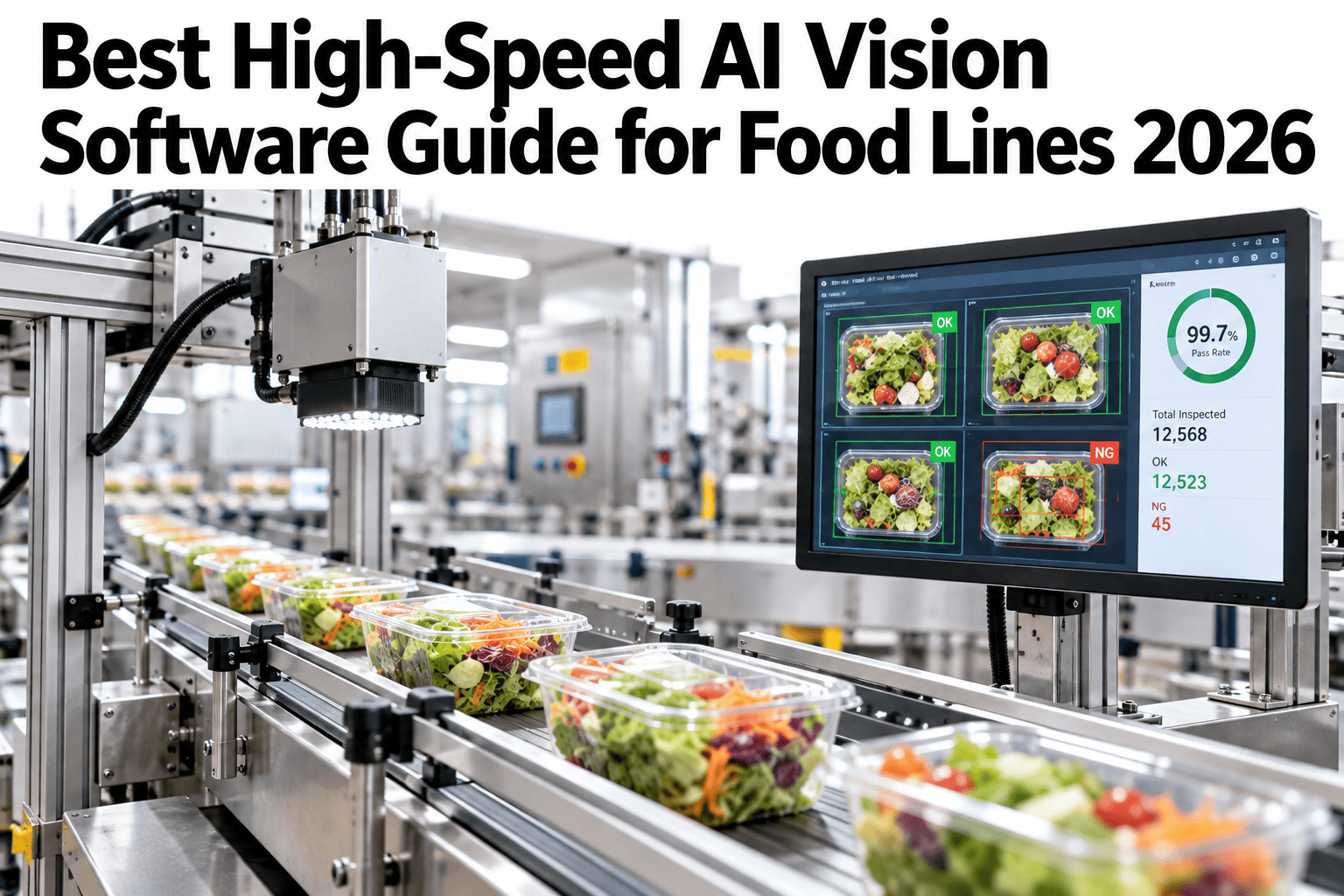
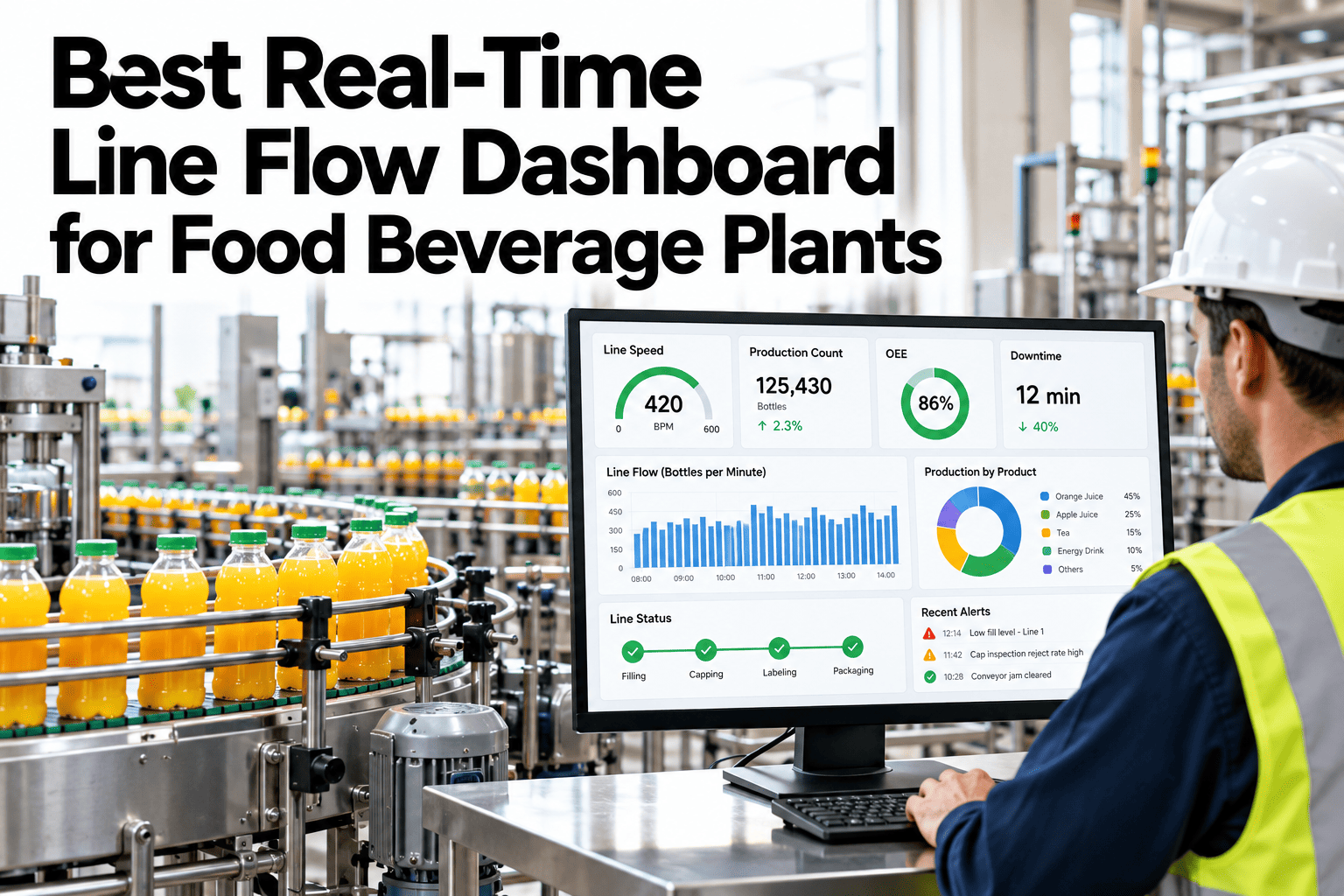
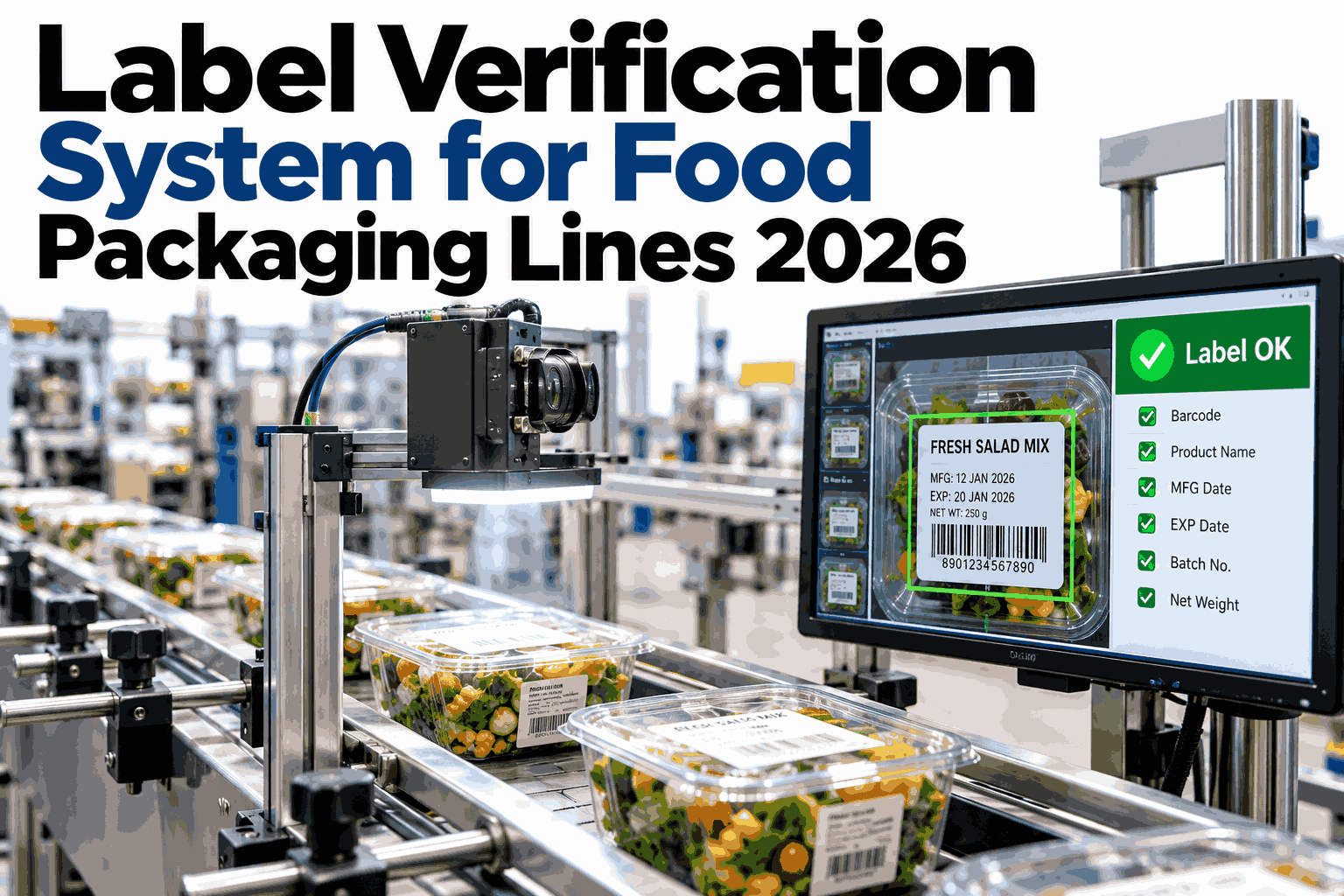
Label errors were the leading cause of US food recalls in 2024, accounting for 45.5 percent of all recall events and an estimated $1.92 billion in industry cost (Loftware analysis of FDA enforcement data, 2026). AI vision nutrition panel verification reads every printed nutrition facts panel and checks it against the approved SKU master before the case leaves the line. iFactory, an on-premise AI platform with AI Vision Camera built in, deploys this check directly on existing packaging lines. Food QA teams who want to see this against their own SKU catalog can request a demo with our team.
AI Vision Nutrition Panel Verification · Food Packaging, 2026
Every Nutrition Panel Checked Against the SKU Master Before It Ships
iFactory AI reads the printed nutrition facts panel with OCR and compares every field against the approved specification, catching a mismatch before the case leaves the line.
SKU master
Calories: 220
Total Fat: 9g
Sodium: 310mg
Protein: 4g
VS
Printed panel (OCR)
Calories: 220
Total Fat: 9g
Sodium: 290mg
Protein: 4g
Why this matters now
Incorrect Labels Are Not a Rare Edge Case
Allergen and labeling errors dominate the FDA's recall register — allergen mislabeling alone accounted for 45.8 percent of 2025 food and beverage recall events, and the FDA logged 605 food-related recalls in 2026 year to date (Esko analysis of FDA recall data, 2026; packaging industry recall tracking, 2026). A nutrition panel error is the same category of failure as an allergen omission: a specification that changed and a label that did not follow.
What OCR verification checks
Five Fields Where a Mismatch Most Often Starts
Serving size
The single most common field to drift when a package format or fill weight changes.
Calorie and macro values
Recipe reformulation that updates the spec sheet but not the print file.
Allergen statement
The highest-consequence field — an omission here is the leading driver of Class I recalls.
Percent daily value
A derived figure that can go stale even when the base nutrient values are correct.
Ingredient list order
Regulations require descending order by weight — a supplier swap can quietly break this.
How the check runs
From Camera to Flagged Case in Under a Second
1
Camera captures the panel
A vision camera on the packaging line images the printed nutrition panel as it passes.
2
OCR extracts the fields
Each line item is read and parsed into structured values.
3
Match against the SKU master
Extracted values are compared field by field against the approved specification for that SKU.
4
Divert on mismatch
A confirmed mismatch triggers a line reject or hold before the case reaches the pallet.
See What a SKU-Master Check Would Catch on Your Lines
Share a sample of your current nutrition panel artwork and SKU specifications, and iFactory AI will walk through what field-by-field verification would look like for your packaging.
Manual proofing vs vision verification
Why a Human Proofreader Misses What a Camera Catches
Manual proofing
Checked once at artwork approval, not on every run
A press plate or print-file error after approval goes unnoticed
Fatigue reduces accuracy on repetitive panel checks
AI vision verification
Checked on every unit, every run, continuously
Catches a print-file or press drift the moment it appears
Consistent accuracy regardless of shift or run length
Deployment speed
What a SKU Master Needs Before Go-Live
The verification check is only as good as the specification it compares against. Most deployments start by consolidating nutrition panel data from spec sheets, formulation records, and existing artwork into a single structured SKU master, which is usually the longest step in an otherwise fast rollout.
Expert review
What a Food QA Director Checks First
Nutrition panel verification earns trust when every flagged mismatch is traceable back to a specific SKU master field, not a vague "label looks wrong" alert.
Verdict
Strong when the SKU master is the single source of truth every panel is checked against, not a snapshot taken once at approval.
Watch for
A SKU master that falls out of sync with formulation changes — the check is only as current as the data behind it.
Do next
Pull your last three reformulations and confirm the nutrition panel print file was updated the same day as the spec sheet.
Frequently asked questions
What Food QA Teams Ask About Panel Verification
How big a problem are labeling errors compared to other recall causes?
Label errors were the single leading cause of US food recalls in 2024, accounting for 45.5 percent of recall events (Loftware analysis of FDA enforcement data, 2026).
See how this applies to your SKU catalog.
Can OCR reliably read small nutrition panel text on a moving line?
Modern line-speed vision systems are designed to resolve small print text at production speeds, though camera resolution and placement should be matched to your specific panel size and line speed.
Ask support about your line's camera requirements.
What happens when a mismatch is flagged?
A confirmed mismatch triggers a configurable response — typically a line hold or reject — before the affected cases reach the pallet, with the event logged against the specific SKU and run.
Discuss response rules for your lines.
How long does it take to build out our SKU master for this?
Does this cover allergen statements as well as nutrition values?
Catch the mismatch before it ships
Verify Every Panel Against Your SKU Master
Book a demo to see how iFactory AI checks nutrition panels line by line against your approved specifications.
{"@context":"https://schema.org","@type":"FAQPage","mainEntity":[
{"@type":"Question","name":"How big a problem are labeling errors compared to other recall causes?","acceptedAnswer":{"@type":"Answer","text":"Label errors were the single leading cause of US food recalls in 2024, accounting for 45.5 percent of recall events."}},
{"@type":"Question","name":"Can OCR reliably read small nutrition panel text on a moving line?","acceptedAnswer":{"@type":"Answer","text":"Modern line-speed vision systems are designed to resolve small print text at production speeds, with camera setup matched to panel size and line speed."}},
{"@type":"Question","name":"What happens when a mismatch is flagged?","acceptedAnswer":{"@type":"Answer","text":"A confirmed mismatch triggers a configurable response, typically a line hold or reject, before affected cases reach the pallet."}},
{"@type":"Question","name":"How long does it take to build out our SKU master for this?","acceptedAnswer":{"@type":"Answer","text":"Timeline depends on how many SKUs and how centralized current spec data already is."}},
{"@type":"Question","name":"Does this cover allergen statements as well as nutrition values?","acceptedAnswer":{"@type":"Answer","text":"Yes, the allergen statement is checked as one of the verified fields alongside calorie, macro, and serving-size data."}}
]}