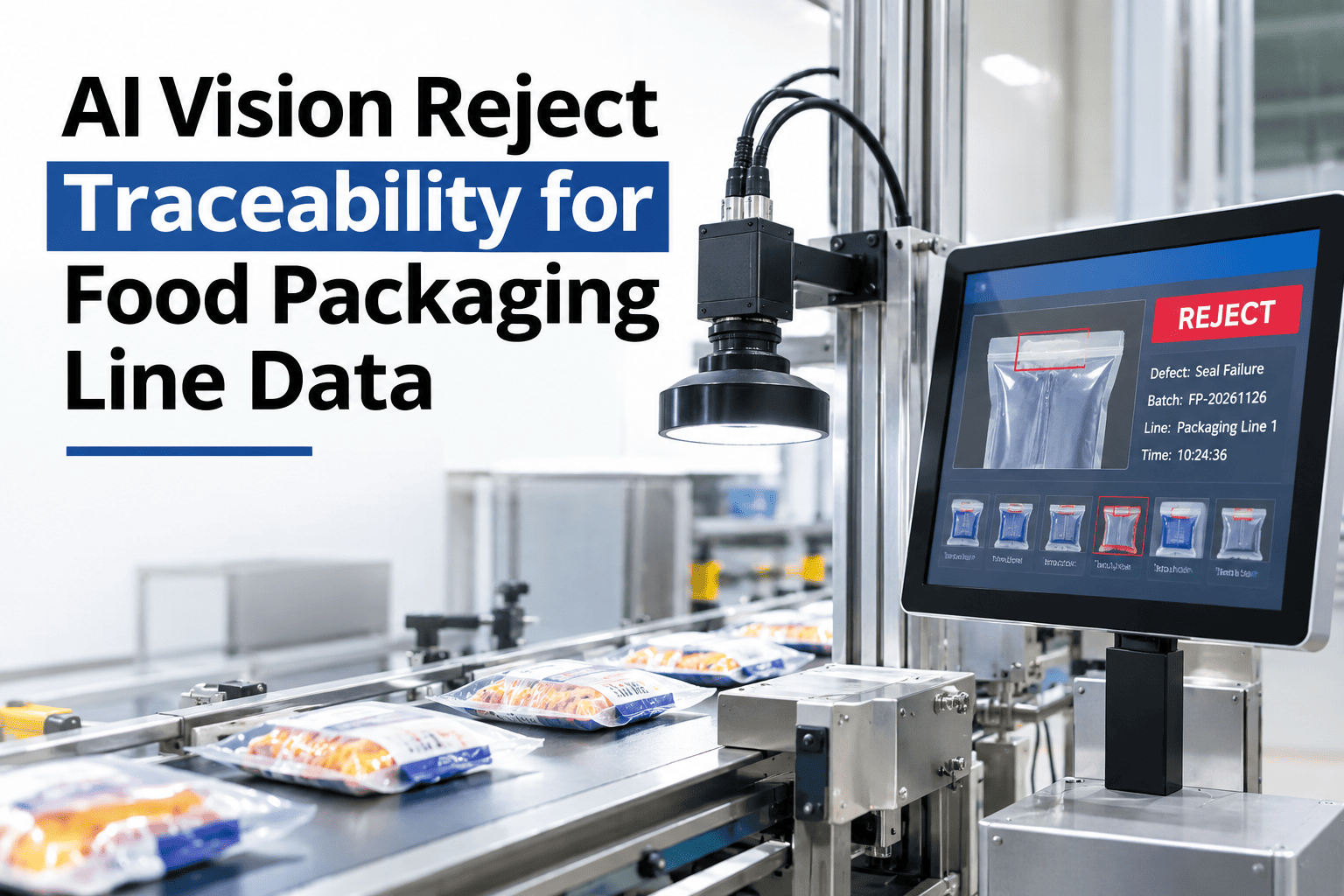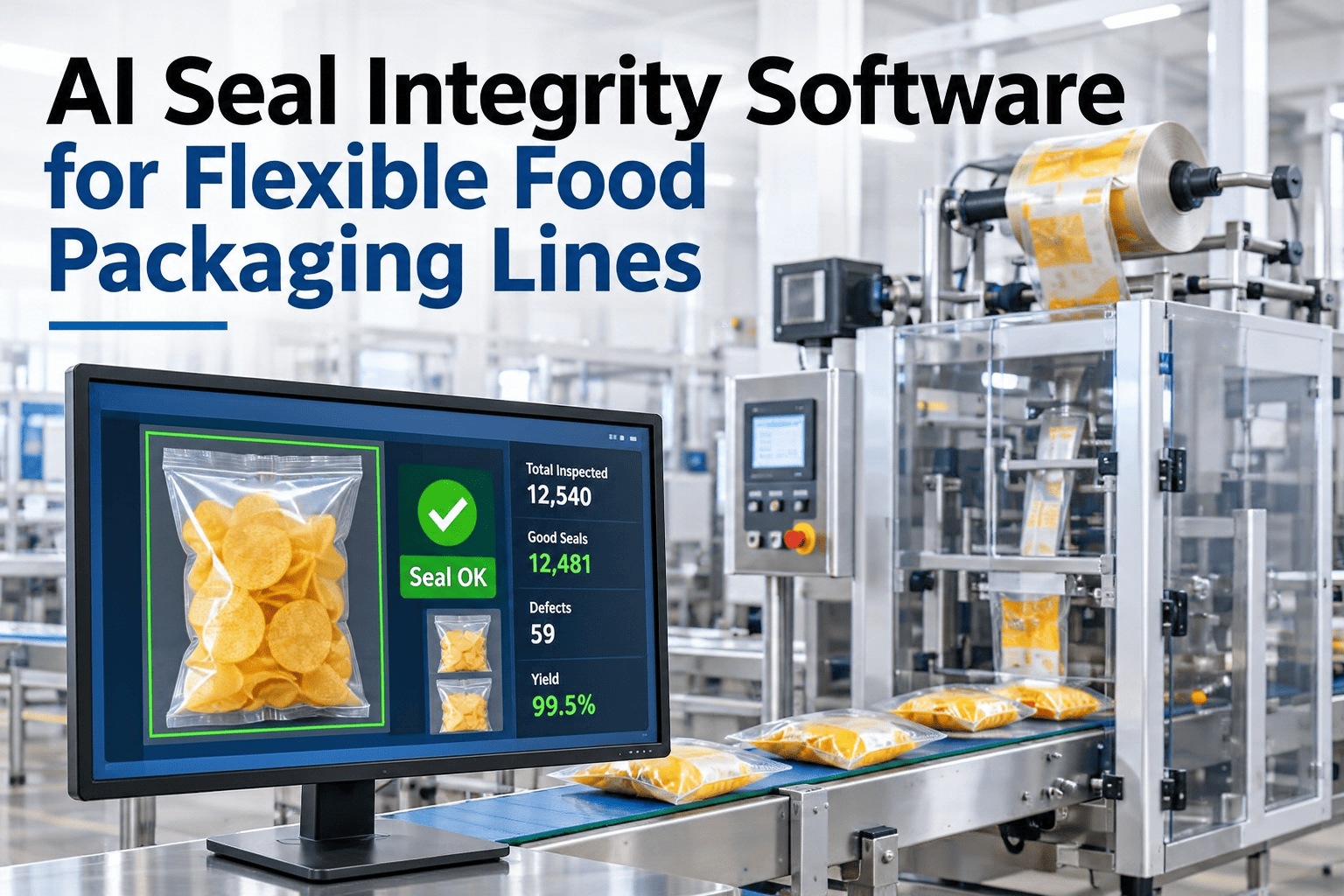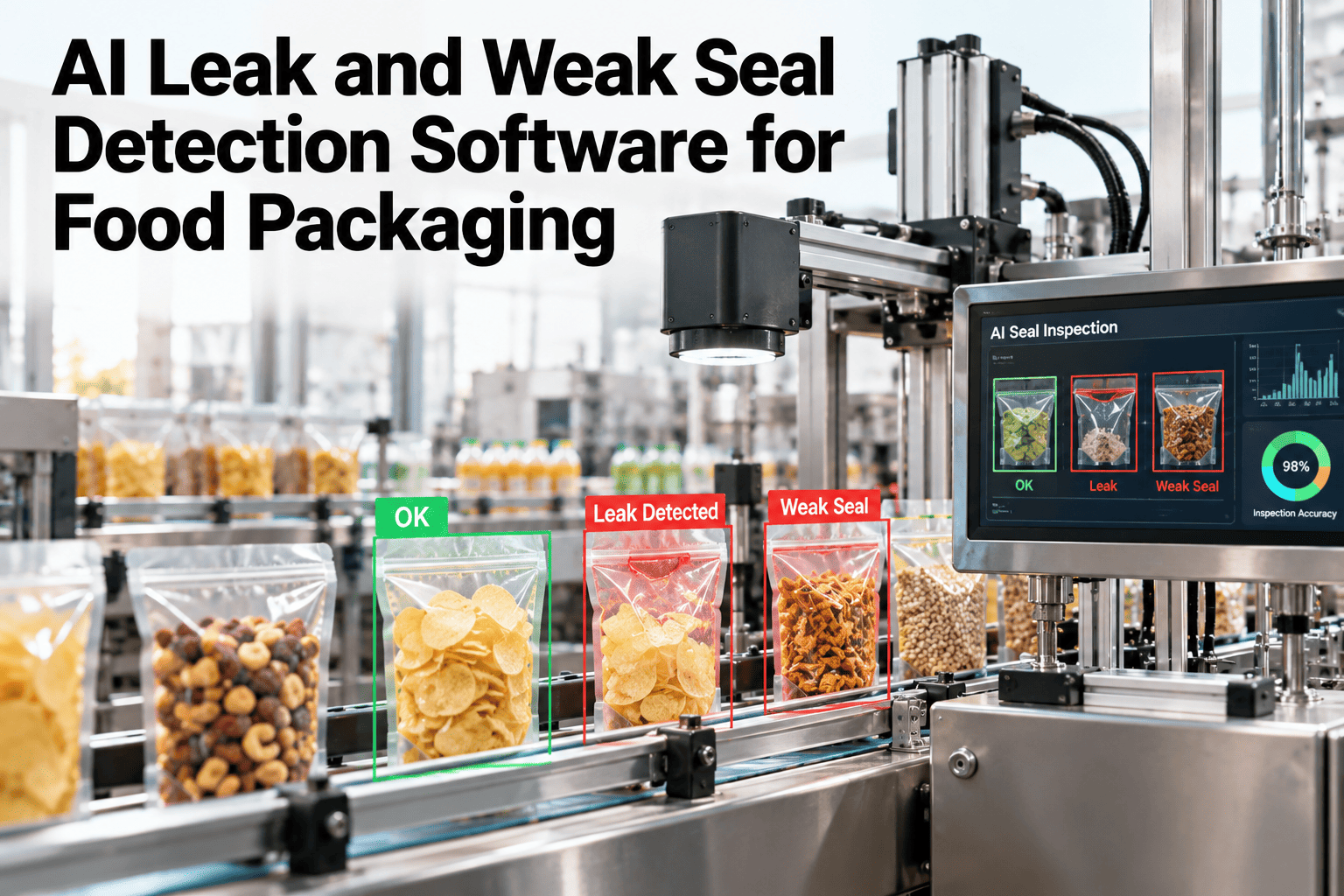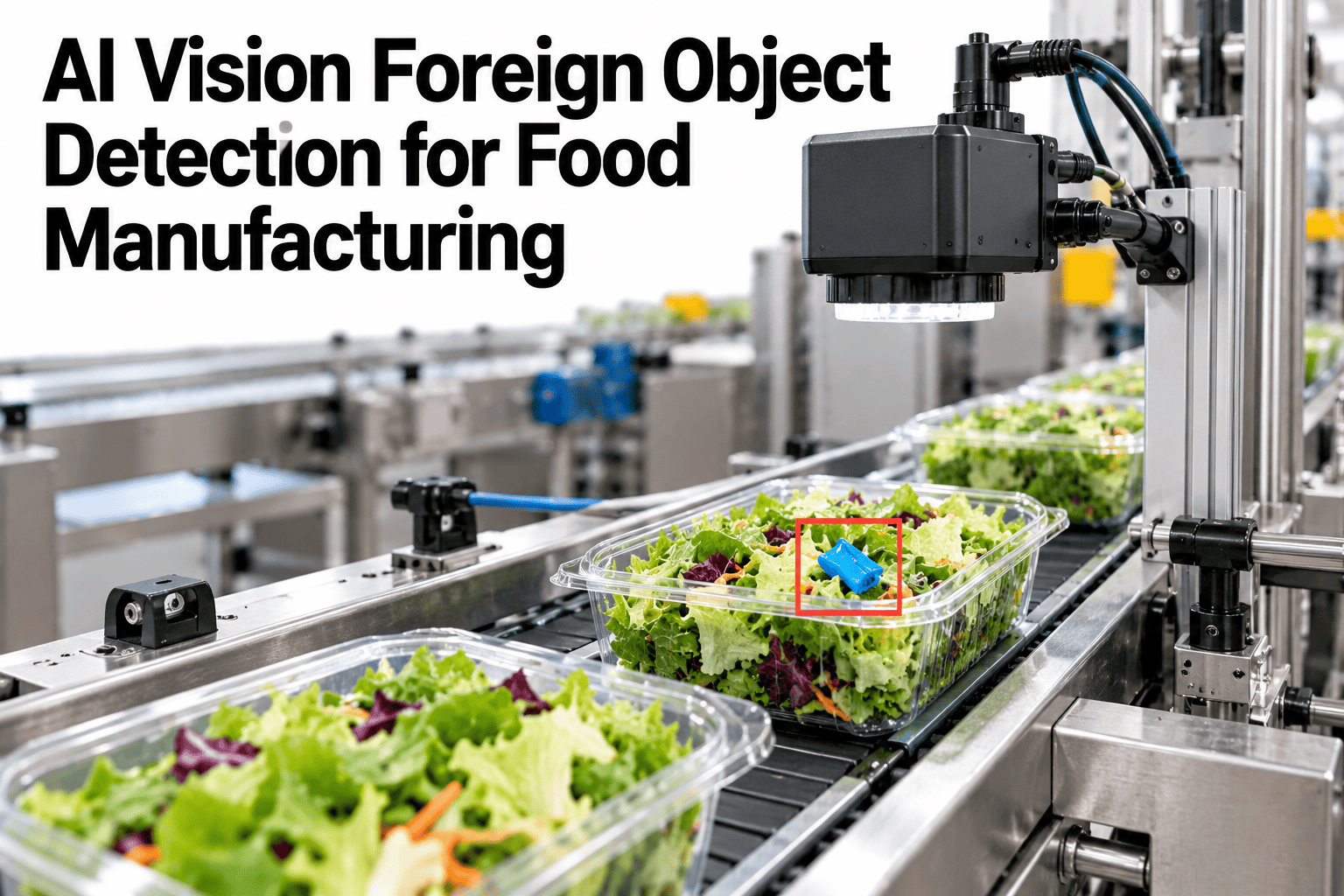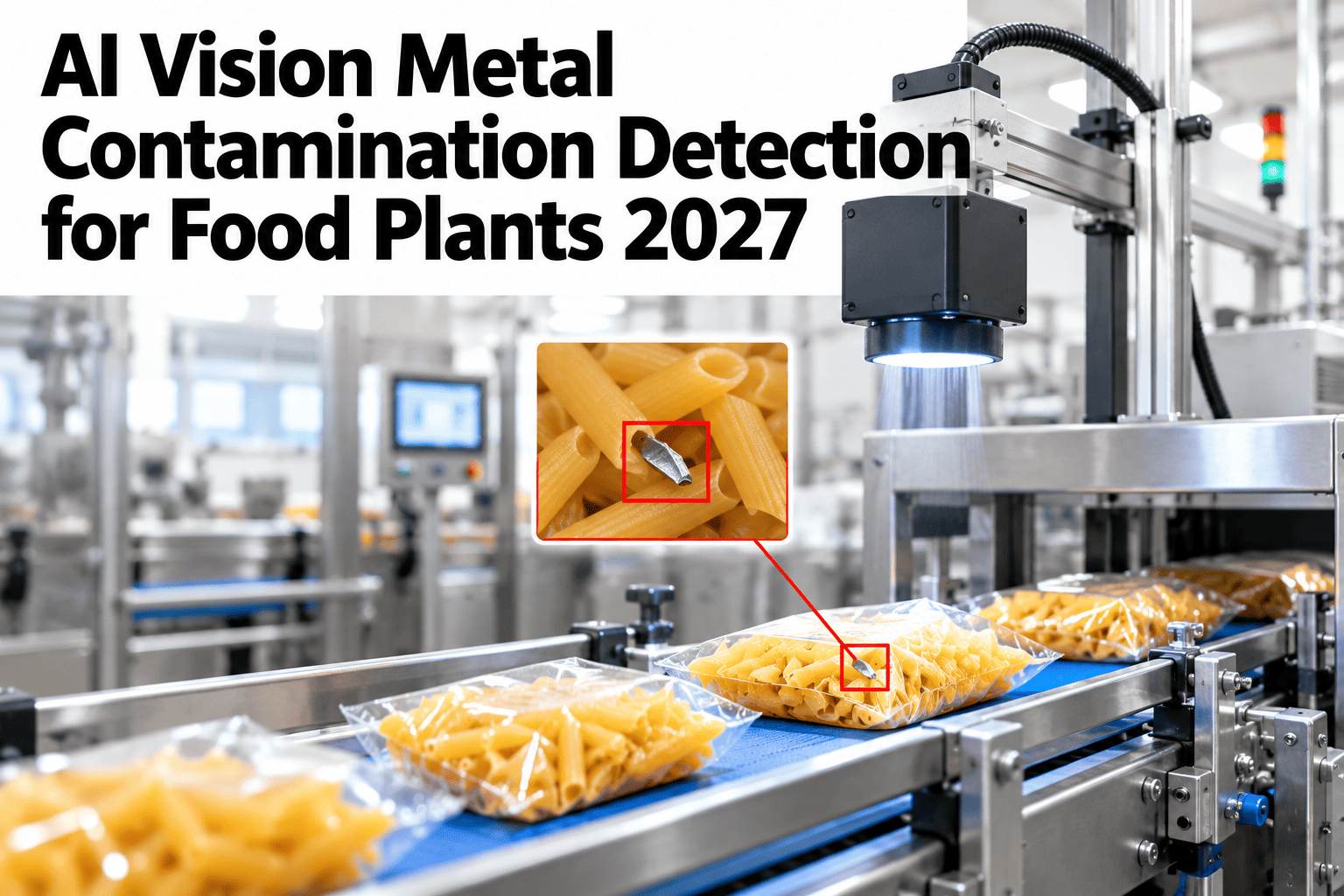
A seal bar does not need a crack or a worn edge to cause a leak — a smear of powder, sauce or residue sitting on the seal path at the moment of closure is enough to stop the seal from fusing cleanly. AI vision seal bar contamination detection reads the seal path immediately before closure and flags that residue before a channel ever forms, which is a different problem than checking the finished seal afterward. Plants that only inspect the completed seal can see a pre-closure contamination check running against their own seal bar footage to compare the two approaches directly.
Catch the Residue Before the Seal Closes Over It
iFactory AI inspects the seal path itself, not only the finished seal, so a channel caused by trapped product never has the chance to form.
What Is Seal Bar Contamination Detection?
Seal bar contamination detection is a vision check aimed at the seal path itself, in the instant before the jaws close, rather than at the finished seal afterward. iFactory, an on-premise AI vision platform for food packaging lines, places a camera and lighting setup to read the open seal path on each cycle and flags powder, sauce or film residue before the sealer fires.
Four Contamination Types That Reach the Seal Path
Powder and Fines
Fine product dust settles on the seal area during fill, especially on dry-mix and snack lines.
Sauce and Liquid Splash
A splash during fill lands on the seal path and beads up rather than sealing through cleanly.
Film Fold-In
A wrinkle or fold pulls part of the film itself into the seal area, creating a physical gap.
Seal Bar Buildup
Residue accumulates on the bar itself over a shift, transferring onto every seal that follows.
From Detection to a Cleared Seal Bar
Detecting contamination is only useful if it changes what happens next in time to matter. The pipeline below runs in the fraction of a second between fill and seal.
Find Out What Is Already on Your Seal Path
Share footage from your filler-to-seal transition and iFactory AI will show what contamination patterns it finds.
How the Four Contamination Types Compare
| Contamination Type | Common Line Cause | Resulting Defect |
|---|---|---|
| Powder and fines | Dry-fill dust settling on the seal area | Channel leak, weak fusion |
| Sauce and liquid splash | Overfill or fill-head drip | Beaded seal, incomplete fusion |
| Film fold-in | Film tension or guide misalignment | Physical gap in the seal |
| Seal bar buildup | No scheduled bar cleaning | Transfers to every following seal |
Up to 40% of seal defects go undetected in flexible packaging systems that rely on finished-seal inspection alone, and a third of global food waste is linked to packaging failures, according to FLIR's 2026 review of thermal and vision inspection methods, which is the gap pre-closure contamination detection is built to close.
Checklist for a Seal Bar Contamination Program
Frequently Asked Questions About Seal Bar Contamination Detection
How is this different from inspecting the finished seal?
Finished-seal inspection checks a seal that has already formed, so a channel caused by contamination is already there. Seal path detection looks at the instant before closure, catching the residue before it gets sealed over. See both inspection points compared on a call for your specific line.
Can the system tell the difference between product residue and a real seal fault?
Yes, when the model is trained on labelled examples of both, since residue and mechanical seal faults leave distinct visual signatures. Confusing the two would waste cleaning effort on faults that need a mechanical fix instead. Ask support how defect classes are separated for your product.
Does this slow down the sealing cycle?
The check runs in the interval the seal bar is already open between fill and close, so it is designed to fit inside the existing cycle time rather than add a new station. Confirm cycle-time fit on a walkthrough using your own line speed.
How often does the seal bar itself need cleaning once this is running?
Rather than a fixed schedule, buildup detection trends tell you when a bar is approaching the point where residue starts transferring to every seal, which is usually a better signal than a calendar-based clean. Ask support how to set a buildup threshold for your product mix.
What products see the most seal path contamination?
Dry-mix and powder products generate the most fines-related contamination, while sauces, dressings and wet-fill products are more prone to splash contamination at the fill-to-seal transition. Walk through your own product's contamination risk with the team.
Stop the Channel Before It Ever Forms
iFactory AI reads the seal path before closure and clears contamination before it becomes a reject. Book a walkthrough on your own seal station.