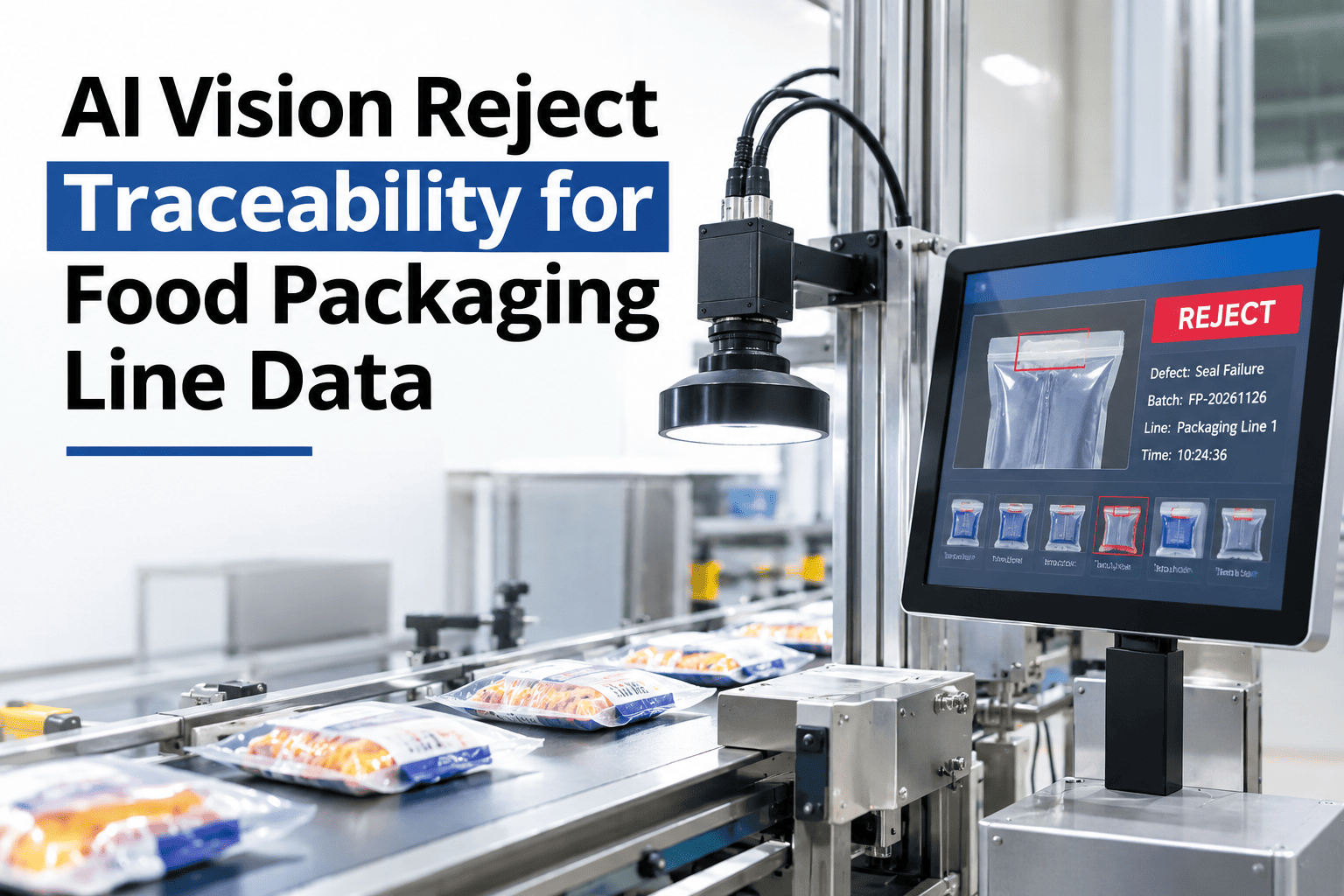
A reject count tells you how many units failed, but not why, and on a packaging line with a filler, a seal station, a labeler and a case packer, that question can take a supervisor an hour of pulling logs to answer. AI vision reject traceability links every reject back to the specific station, head and timestamp that produced it, turning a generic count into a pattern a team can actually act on. Quality teams still reconstructing root cause by hand can see reject traceability running against their own packaging line data before the next investigation eats another afternoon.
Every Reject Linked to the Station That Caused It
iFactory AI ties each rejected unit to its filler head, seal jaw, printer or labeler, so a root cause investigation starts with an answer instead of a stack of logs.
What Is AI Vision Reject Traceability?
Reject traceability is the practice of tagging every rejected unit with the station, head, time and defect type that produced it, rather than logging a single blended reject count for the whole line. iFactory, an on-premise AI vision platform for food packaging lines, captures this tag automatically at the moment of rejection, so the data exists before anyone asks for it.
From a Raw Reject to a Traced Cause
Each source feeds the same traceability layer with a consistent timestamp, so a reject seen by the vision system at the case packer can be traced back through the labeler, the seal station and the filler head in one query rather than three separate log pulls.
See One Query Replace an Afternoon of Log Pulling
Share a sample of your current reject logs and iFactory AI will show what a traced view of the same data looks like.
What Gets Tagged to Each Reject
| Reject Category | Likely Source Station | What Traceability Adds |
|---|---|---|
| Seal defect | Seal bar or jaw number | Which jaw, and whether it recurs by shift |
| Fill variance | Filler head | Head-level drift pattern over time |
| Label or code error | Printer or labeler station | Print head, cartridge or alignment history |
| Pack damage | Conveyor or handling point | Location and time, not just a damage count |
How Traceability Shortens a Root Cause Investigation
Checklist for a Reject Traceability Program
Frequently Asked Questions About Reject Traceability
How is reject traceability different from a standard reject count?
A reject count tells you how many units failed and often a defect type, but not the specific station, head or time that caused each one. Traceability adds that link automatically, so a pattern analysis does not require manually cross-referencing separate logs. See the difference on your own reject data during a short call.
Does this require replacing our existing vision or MES system?
No, traceability is typically added as a layer that reads from existing vision, filler and labeling systems rather than replacing them, using a shared timestamp to link events across sources. Ask support how it connects to your current systems before planning any changeover.
Can traceability data be used for FSMA or audit reporting?
Station-level reject data with consistent timestamps supports the kind of traceability detail auditors and regulators increasingly expect, though the specific reporting format should be confirmed against your own compliance requirements. Discuss your audit requirements with the team directly.
How long does it take to see a useful pattern once traceability is running?
A recurring issue tied to a specific station or head often surfaces within the first few days of consistent tagging, though rare defect types naturally take longer to accumulate enough events to form a clear trend. Ask support what to expect in your first weeks of rollout.
Can the wrong machine still get blamed even with traceability in place?
Traceability reduces that risk but does not eliminate the need for judgment, since a downstream station is sometimes blamed for a defect actually caused upstream; tracing the full sequence of stations a unit passed through helps avoid that mistake. Walk through a real example from a line similar to yours.
Turn Every Reject Into a Traceable Answer
iFactory AI links every reject to its source station so root cause analysis starts with data, not a guess. Book a walkthrough on your own packaging line.