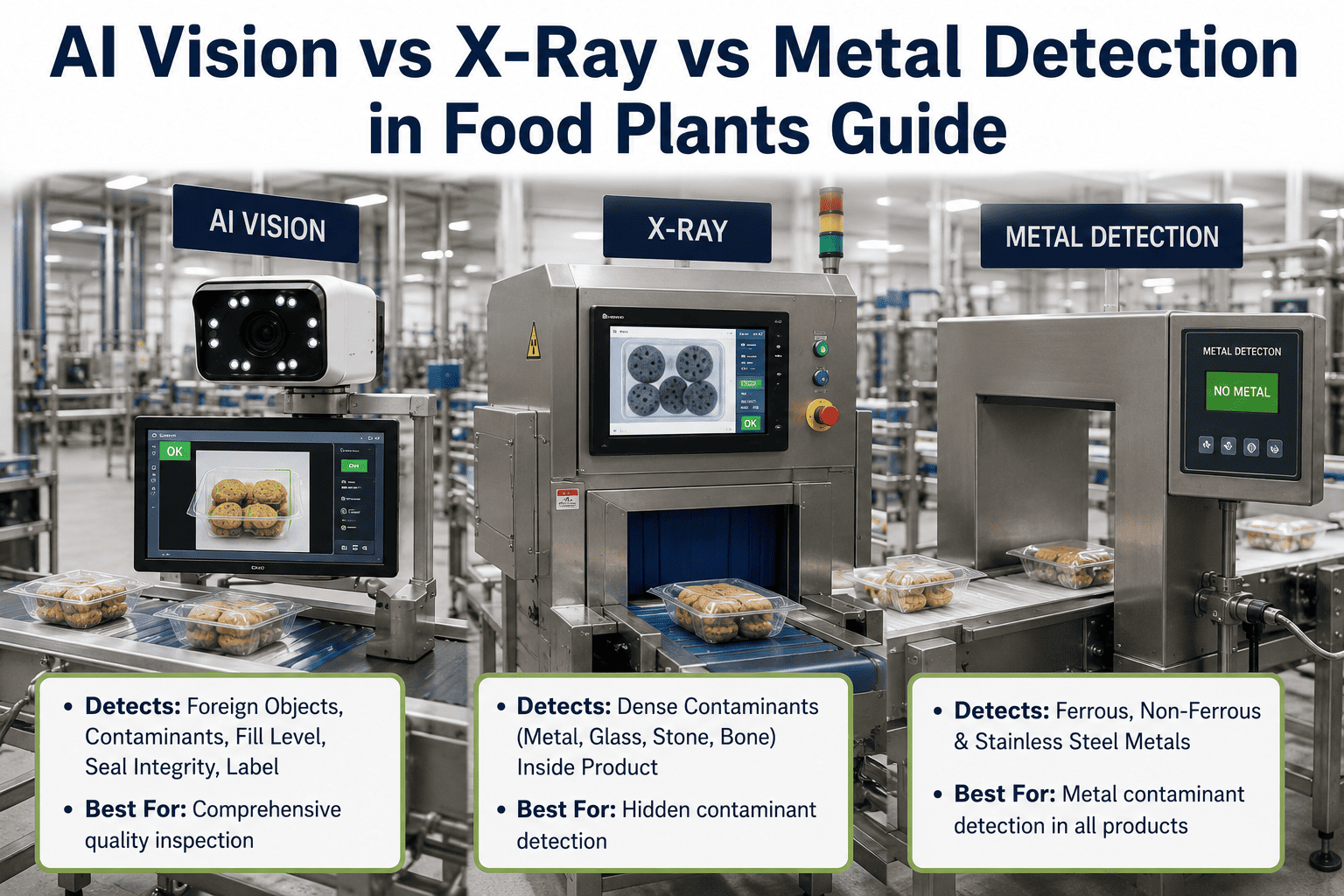
Ask five food safety managers whether they need AI vision, X-ray, or metal detection, and you'll likely get five different answers, mostly because the question itself is framed wrong. These three technologies aren't competing for the same job on the line — each one sees a category of defect the others physically cannot, and the plants with the fewest customer complaints almost always run some combination of all three rather than betting everything on one. This guide breaks down exactly where each technology excels, where their coverage overlaps, and how to decide what your specific product actually needs, and you can reach our team if you want a second opinion on your current setup.
Inspection Technology · Food Plants 2026
AI Vision vs. X-Ray vs. Metal Detection: Which Inspection Layer Covers Which Risk
A practical, side-by-side breakdown of what each technology actually detects, where they overlap, and the layered stack most food and beverage facilities need to run to close every gap at once.
The Quick Comparison
What Each Technology Can and Cannot Detect
| Defect Type | AI Vision | X-Ray | Metal Detection |
|---|---|---|---|
| Surface defects, discoloration | Strong | Cannot detect | Cannot detect |
| Label and packaging errors | Strong | Limited | Cannot detect |
| Foreign metal fragments | Limited on surface only | Strong | Strong |
| Foreign glass, stone, bone | Cannot detect internal | Strong | Cannot detect |
| Fill level, missing components | Strong | Strong | Cannot detect |
| Non-ferrous metal in wet product | Cannot detect | Strong | Weaker in high-moisture product |
No single row of green covers every risk category, which is exactly why relying on one technology alone leaves a predictable gap somewhere in your product.
The Detail Behind the Table
What Each Technology Is Actually Built to See
AI Vision Inspection
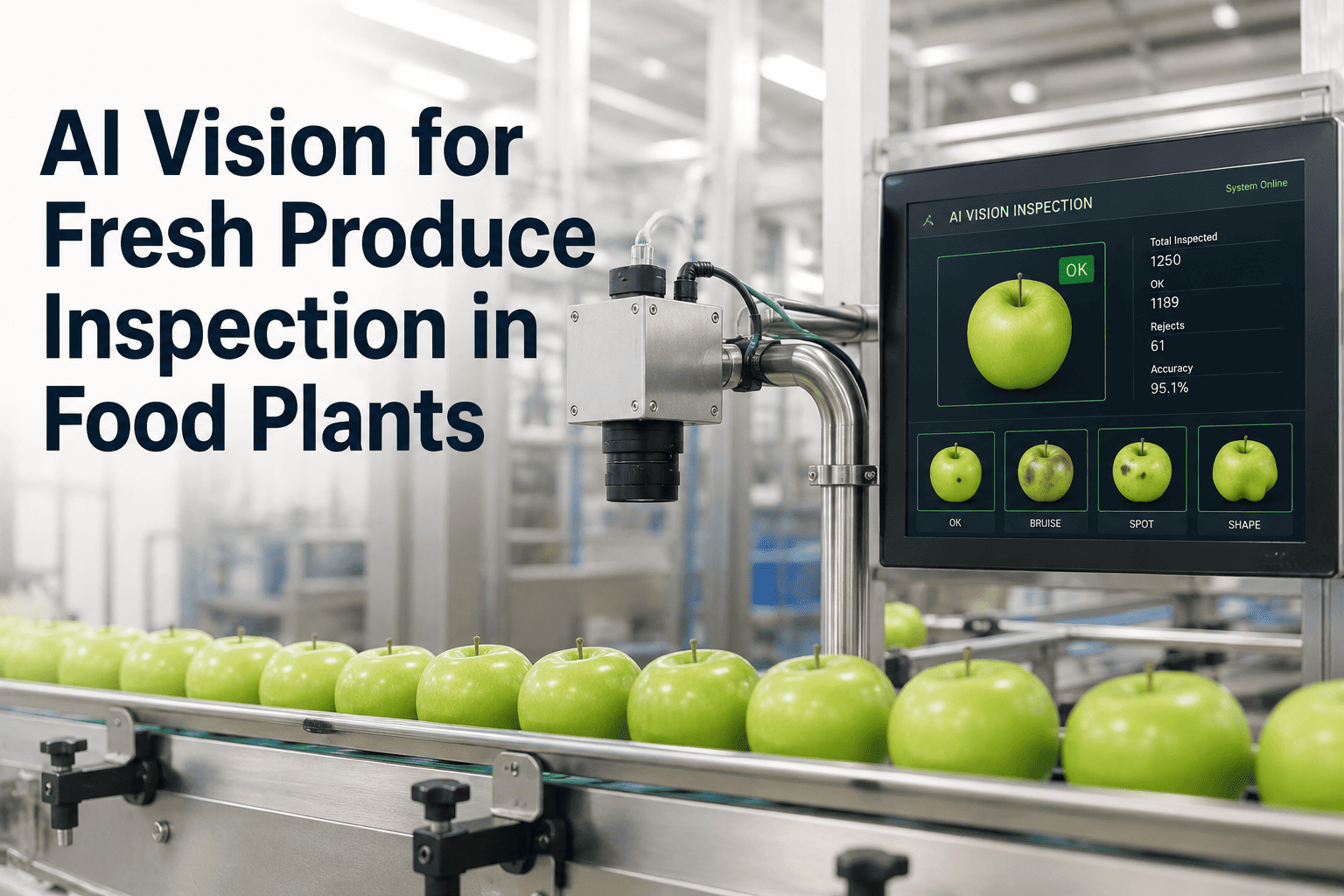
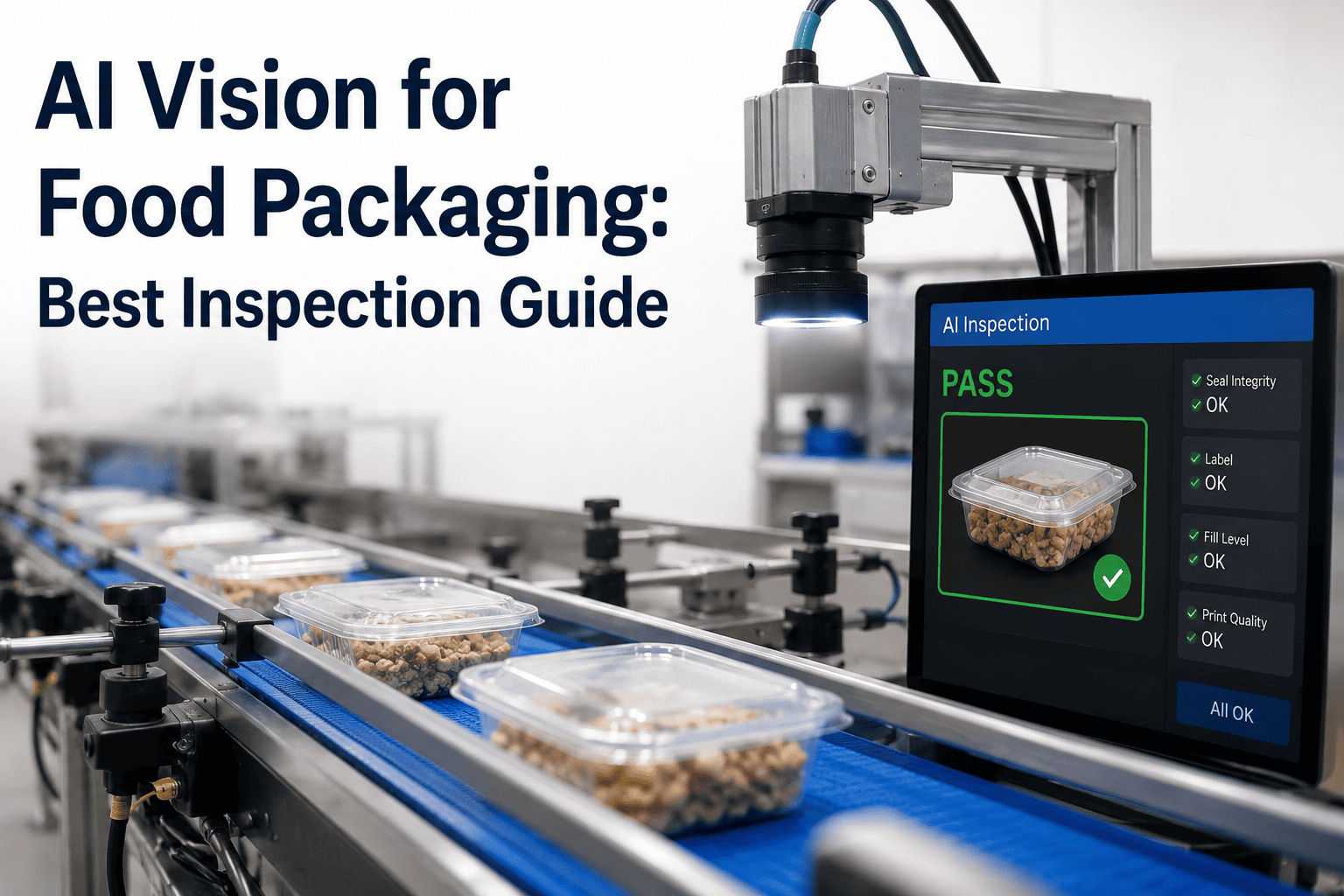
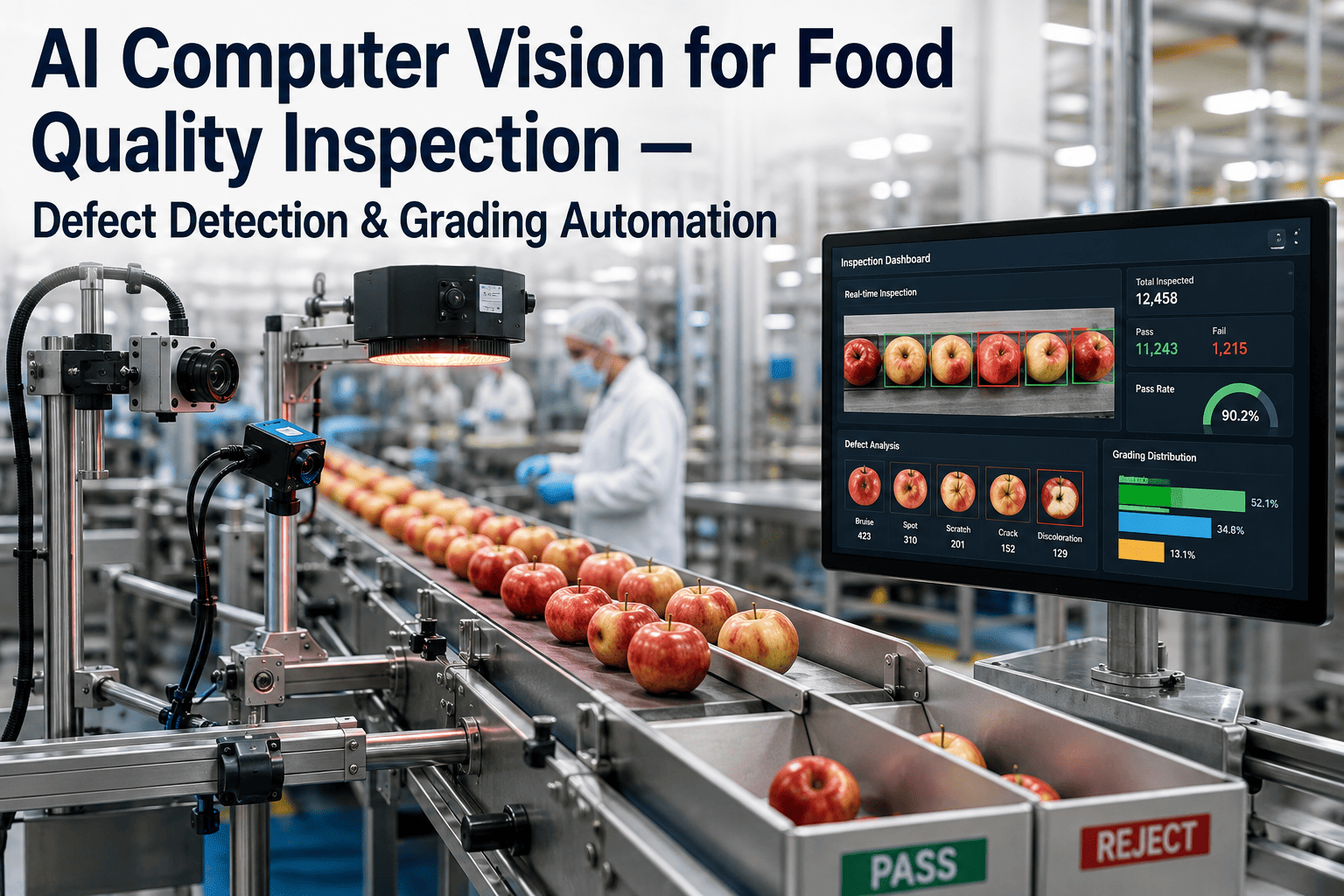
Cameras trained on your specific product recognize surface-level defects, color and texture inconsistencies, label placement errors, seal integrity issues, and fill or count anomalies, all in real time at full line speed. Its blind spot is anything hidden inside the product or packaging, since it can only evaluate what a camera can physically see.
X-Ray Inspection
X-ray systems see density differences, which means they catch foreign material regardless of whether it's metallic, along with internal defects like missing product, broken product, or incorrect fill that a camera looking at the outside of a sealed package would never catch. The tradeoff is cost and throughput limitations compared to vision systems.
Metal Detection
Purpose-built for one job — catching ferrous, non-ferrous, and stainless steel contamination — metal detectors remain the fastest and most cost-effective option specifically for metal risk, particularly in dry or low-moisture products where their sensitivity is highest and most reliable.
Not Sure Where the Gap Is
iFactory Helps You Map Your Current Inspection Coverage
We'll review your existing inspection stack against your actual product risk profile and show you exactly where AI vision closes a gap that X-ray or metal detection alone can't reach.
The Layered Approach
How the Three Technologies Stack Together on a Real Line
Layer 1 · Upstream
AI vision at the filling or packaging station catches surface, label, and fill defects before product moves further down the line, stopping the cheapest problems the earliest.
Layer 2 · Mid-Line
Metal detection positioned after any equipment prone to shedding fragments catches contamination risk introduced by the process itself, right at the point most likely to occur.
Layer 3 · Final Check
X-ray as the last checkpoint before palletizing catches anything the earlier layers couldn't see, including internal defects and non-metallic foreign material, as a final safeguard.
Making the Call
A Simple Framework for Deciding What You Actually Need
Start With Your Complaint History
Pull the last two years of customer complaints and returns, and categorize them by defect type. This tells you which technology would have caught each incident and where your real exposure sits today.
Map Your Packaging Format
Sealed, opaque packaging limits what vision systems can catch after sealing, which usually pushes X-ray or metal detection later in the line while vision handles pre-seal checks.
Factor In Product Moisture and Density
High-moisture products reduce metal detector sensitivity, which often means X-ray becomes the more reliable choice for metal risk specifically in wet or dense product categories.
Budget for the Highest-Frequency Risk First
If budget forces a phased rollout, start with whichever technology addresses your most frequent historical defect category, then layer in the others as budget allows over subsequent quarters.
Common Misconceptions
Three Myths That Lead Plants to the Wrong Technology
"X-ray makes vision inspection redundant."
X-ray cannot evaluate surface color, label accuracy, or seal integrity the way a camera can — the two technologies address entirely different defect categories and neither replaces the other.
"Metal detection alone is enough for contamination control."
Metal detection only catches metal. Glass, stone, bone, dense plastic, and other foreign material pass straight through undetected, which is why many plants pair it with X-ray for full coverage.
"AI vision is just a nicer camera, not a real inspection layer."
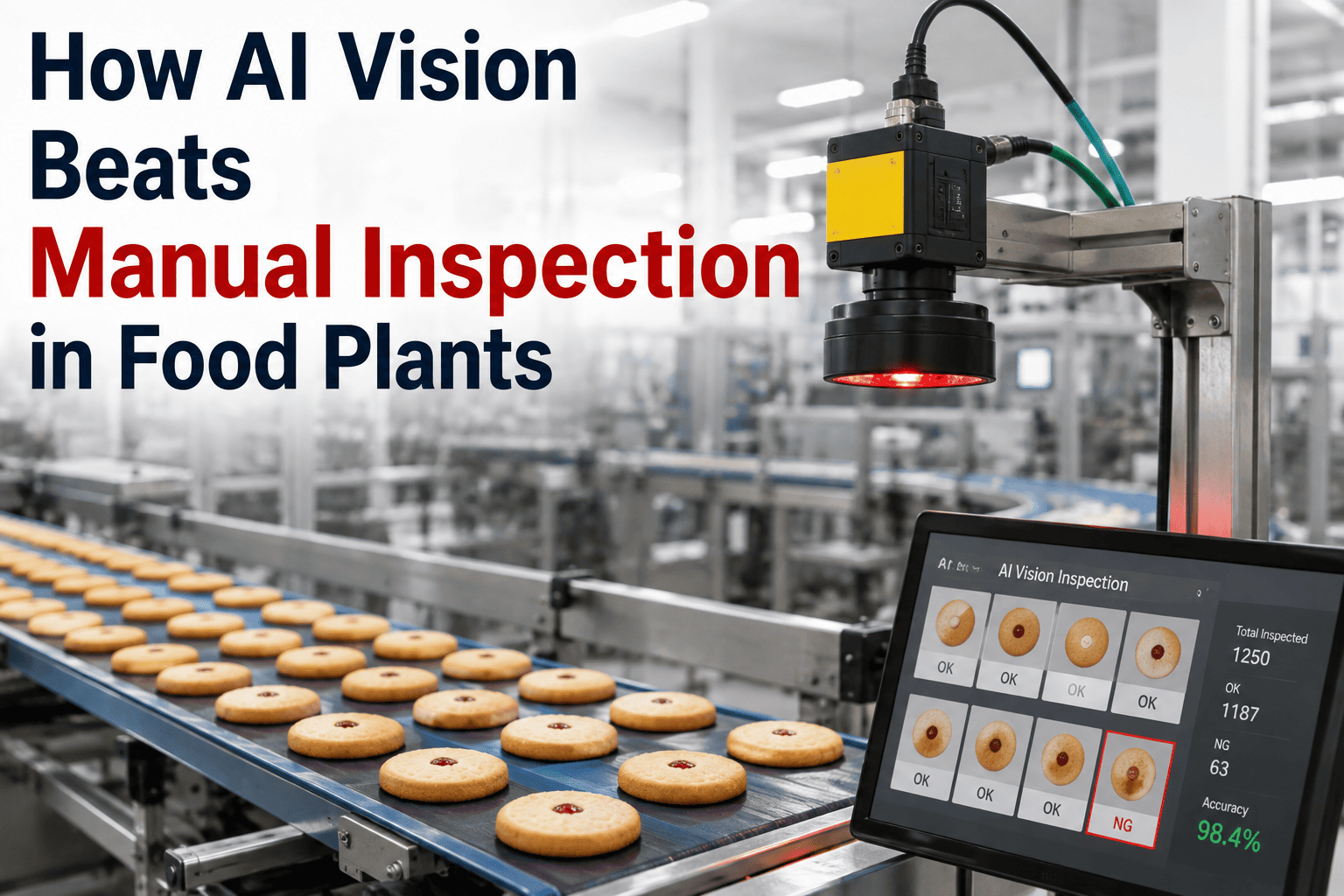
Trained vision models catch subtle defect patterns humans miss under fatigue, and they generate searchable image data for every unit inspected, which neither X-ray nor metal detection provide.
I've walked into plants that spent their entire inspection budget on a top-tier X-ray system and still had a rising complaint rate, because the complaints were all label and fill defects that X-ray was never designed to catch. The technology choice has to follow the actual defect data, not the other way around. Start with what's actually going wrong on your line, then pick the layer that addresses it, and you'll rarely need to justify an over-built system after the fact.
Marcus Ferreira-Lindqvist
Food Safety Systems Consultant · Former corporate QA director for a multi-plant beverage manufacturer
Common Questions
Inspection Technology Comparison — Frequently Asked
Can AI vision and X-ray share the same line without conflicting?
Yes, and this is a common configuration in plants that need both surface-level and internal defect coverage. Vision typically sits earlier in the line, right after filling or forming, while X-ray sits closer to the end before palletizing. The two systems don't interfere with each other operationally, and running both gives you a documented image and scan record for every unit that passes through, which is valuable for both quality trending and audit response.
Which technology has the lowest ongoing maintenance cost?
Metal detectors generally have the lowest ongoing maintenance cost among the three, since they have fewer moving parts and no imaging hardware to calibrate. AI vision systems require periodic model retraining as product formulations or packaging change, though this has become significantly less labor-intensive with modern retraining tools. X-ray systems typically carry the highest maintenance cost due to the specialized hardware and required certification checks.
Do we need all three technologies, or can most plants get by with two?
Most plants can achieve strong coverage with two well-chosen layers rather than all three, provided the two chosen address the actual defect categories showing up in complaint and rework data. A common effective pairing is AI vision for surface and packaging defects paired with either X-ray or metal detection depending on product moisture and packaging format. Talk to our team about which pairing fits your specific product line.
How does AI vision handle products with natural variation, like fresh produce?
Modern vision models are trained on a range of acceptable natural variation for the specific product, so they distinguish between normal variation in color, shape, or size and an actual defect, rather than flagging every unit that doesn't look identical to the last one. This is one of the areas where AI vision has improved substantially over older fixed-threshold systems, which struggled significantly with naturally variable products.
What's the typical order of investment if budget only allows a phased rollout?
Most plants start with whichever layer addresses their highest-frequency, highest-cost defect category based on complaint and rework history, since that delivers the fastest measurable return. AI vision is frequently the first phase because it tends to have a lower upfront cost and faster deployment timeline than X-ray, while also generating useful defect data that helps justify and scope the next investment phase. Book a demo to talk through a phased plan for your plant.
Close Your Inspection Gap
Find Out Exactly Which Layer Your Product Line Is Missing
iFactory's team will map your current inspection coverage against your real defect and complaint history, and show you precisely where AI vision fits into the stack.