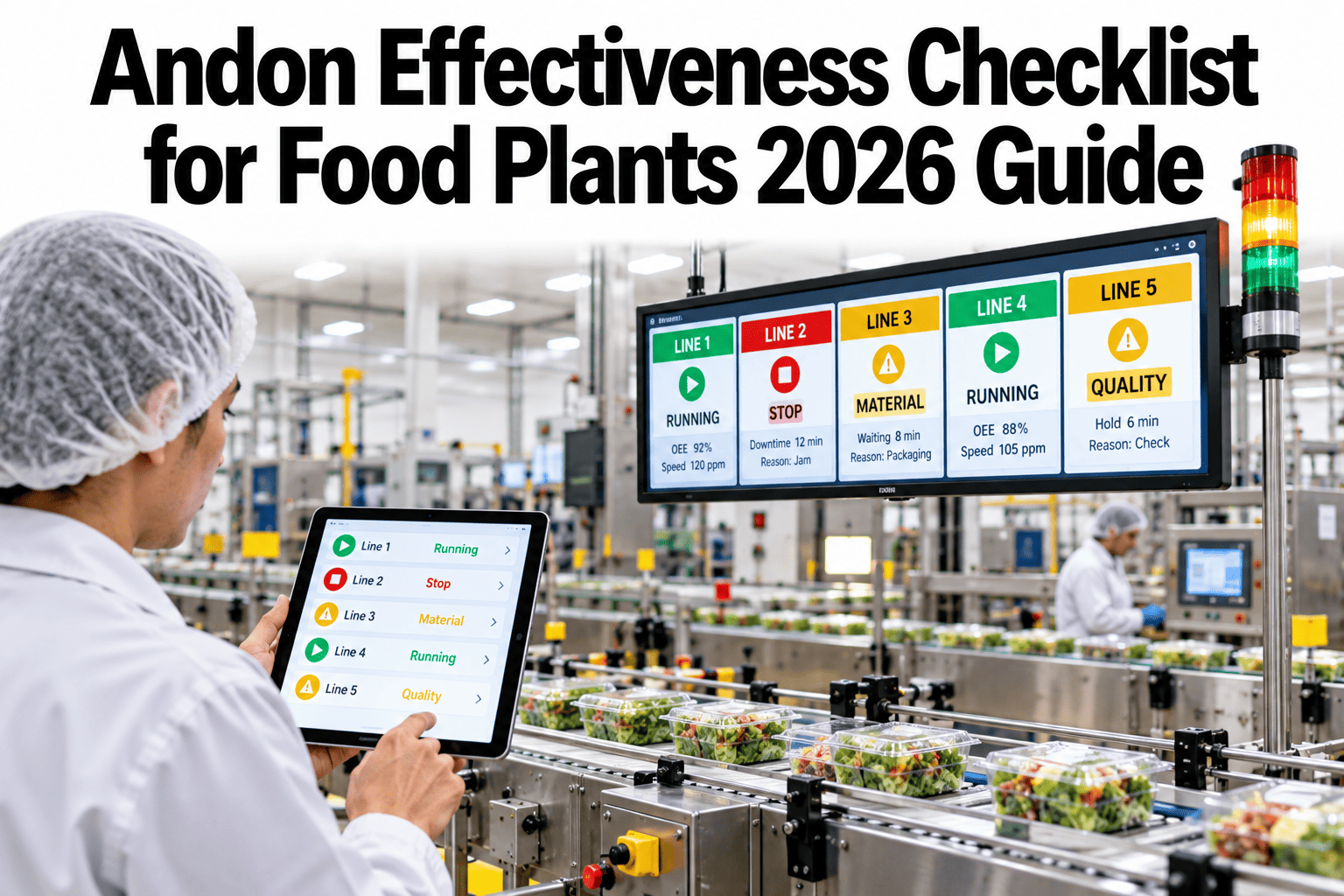
An andon system that lights up and nobody responds to within a reasonable window isn't a quality tool, it's a light show. Many food plants have andon cords, buttons or pull stations installed and dutifully logged in a system, yet nobody has ever actually audited whether calls get acknowledged quickly, resolved correctly, or formally closed with a cause attached. An andon system only earns its keep if call rate, response time, resolution quality and closure discipline are all tracked and reviewed together. Plants can audit their own andon effectiveness in a short session.
A Call Isn't Progress Until It's Closed With a Real Cause
iFactory tracks every andon call through acknowledgment, response, resolution and closure, so the system drives real action.
The Four Metrics That Define Andon Effectiveness
A single metric, like call count, tells you very little on its own. The real picture comes from tracking all four stages together.
| Metric | What It Measures | Why It Matters |
|---|---|---|
| Call rate | How often operators actually use the andon system | A rate that's too low often means operators have stopped trusting it |
| Response time | Time from call to someone physically arriving | A slow response trains operators to work around problems instead of calling |
| Resolution quality | Whether the actual root cause was addressed, not just the symptom | A quick fix with no root cause means the same call happens again |
| Closure discipline | Whether every call gets a documented cause and outcome | Undocumented calls can't feed into pattern analysis later |
Run a Full Andon Effectiveness Audit
Book a 30-minute session and iFactory will audit your current andon call, response and closure data together.
Andon Effectiveness Checklist
A practical checklist grouped by the four metrics, to confirm your andon system is actually driving action.
Signals Your Andon System Isn't Driving Real Action
Where iFactory Fits
iFactory tracks every andon call across all four stages automatically, connecting the data that's usually scattered across a board, a log and a few spreadsheets.
Full-Funnel Call Tracking
Every call is tracked from raise to close, with accurate timestamps at each stage, not just the initial trigger.
Response Time Reporting
Response time is measured against a defined target and broken down by shift and call type.
Repeat Issue Detection
Recurring calls for the same root issue are surfaced automatically, highlighting incomplete resolutions.
Closure Discipline Enforcement
A call cannot close without a documented cause, keeping the data usable for pattern analysis.
Reviewed by iFactory's Operations Excellence team for alignment with current andon system best practice. The checklist shown is a general framework; specific targets for response time and call rate should reflect your own plant's line speed and staffing model.
Frequently Asked Questions
What's a reasonable response time target?
This varies significantly by line speed and layout, so there's no universal number, but the key is defining a target explicitly and tracking performance against it rather than leaving response time unmeasured. Support can help set a target for your own plant.
What if our call rate is low, is that automatically bad?
Not necessarily, a low call rate on a well-running line can be genuine. The concern is a declining call rate over time, which more often signals eroding trust in the system than genuine improvement.
How do we improve closure discipline without adding operator burden?
A structured, fast cause-selection step at closure, rather than an open-ended write-up, keeps the burden low while still capturing useful data for pattern analysis. See a closure workflow designed for minimal added time in a short session.
Does this work with our existing andon hardware?
In most cases, yes, since tracking connects to the signals your existing andon cords or buttons already generate, rather than requiring new call hardware.
How often should an andon effectiveness audit happen?
A quarterly review of all four metrics together catches drift before it becomes a serious trust problem, though the underlying data should be tracked continuously rather than reviewed only at audit time. Ask support how to set up a regular audit cadence.
Make Every Andon Call Actually Drive Action
iFactory tracks calls through response, resolution and closure, so the system earns operator trust. Book a walkthrough on your own data.