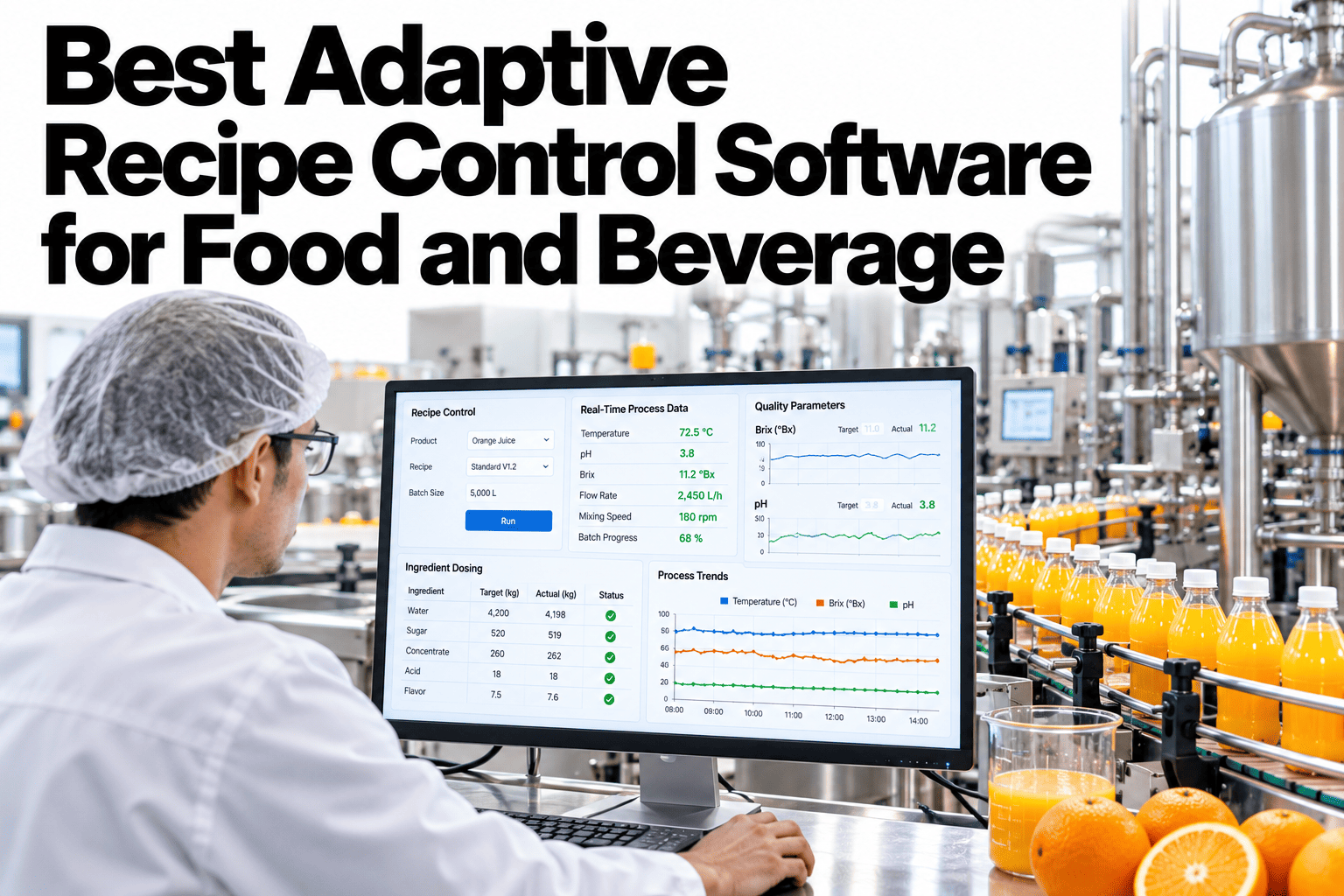
A recipe written for one lot of flour rarely performs the same way once a new shipment arrives with different moisture or protein content. Most plants handle this the same way they always have, with an experienced operator eyeballing the batch and nudging dose or time by feel. Adaptive recipe control replaces that guesswork with real-time inputs from raw material data that adjust dose, time and temperature before the batch ever drifts off spec. This guide covers how adaptive recipes are built and what a safe rollout looks like. Teams ready to see their own recipes adapted live can book a demo with the iFactory AI team.
Best Adaptive Recipe Control Software for Food and Beverage
Real-time inputs from raw materials adjust dose, time and temperature automatically, with a turnkey deploy on your existing line.
Why the Same Recipe Behaves Differently
A written recipe assumes consistent raw materials, but flour, dairy and produce vary batch to batch in ways a fixed dose and time cannot account for.
Adaptive recipe control reads incoming material data and adjusts the recipe's variable parameters before the batch starts, so the fixed recipe becomes a flexible one without anyone rewriting it.
What Gets Adjusted and Why
Three parameters account for most of the variation a raw material shift introduces, and each one maps to a specific input signal.
| Parameter | Driven By | Typical Adjustment Range |
|---|---|---|
| Dose | Moisture, density or concentration readings | Small percentage shift per batch |
| Time | Protein, viscosity or fat content | Minutes added or trimmed from the cycle |
| Temperature | Starting material temperature and composition | Fine setpoint correction within tolerance |
From Material Data to Recipe Adjustment
The adjustment happens in a short sequence that runs before or during the batch, not as a manual recalculation.
Let Every Batch Adjust to Its Own Ingredients
Book a 30-minute walkthrough and see adaptive recipe control adjust dose, time and temperature on your own line.
A Sample Adjustment, Illustrative
The figures below are invented to show the pattern, not to benchmark your recipe.
Common Adaptive Recipe Mistakes
The same errors show up across plants rolling out adaptive recipes for the first time.
Where Adaptive Recipes Pay Off Fastest
Not every recipe benefits equally. The biggest gains show up where raw material variability is highest and the product tolerance is tightest.
Bakery and dough products, dairy blends and beverage formulations with natural ingredient inputs tend to see the clearest improvement, since small composition shifts have an outsized effect on the finished product.
Frequently Asked Questions
Do we need inline sensors for raw material data?
Not always. Many plants start with lab results entered at intake, which still provides enough signal to adjust the recipe before the batch starts. Inline sensors can be added later for faster, more frequent updates. Book a demo to see what your current data supports.
How much can dose or time actually shift?
Adjustments stay within a tolerance band set by the recipe owner during setup, typically a small percentage of the base value, so the system corrects for drift without redesigning the recipe itself.
Does this work for recipes with multiple ingredients varying at once?
Yes, though most plants start with the single ingredient driving the most variability before expanding to multiple simultaneous inputs, which keeps the first rollout easier to validate.
Can this connect to our existing batching system?
In most cases, yes. iFactory AI reads material data and writes adjusted parameters back through your existing batching or control system. Ask support which batching systems connect.
Let the Recipe Adapt Before the Batch Drifts
iFactory AI reads raw material data and adjusts dose, time and temperature automatically. Book a walkthrough built around your plant.