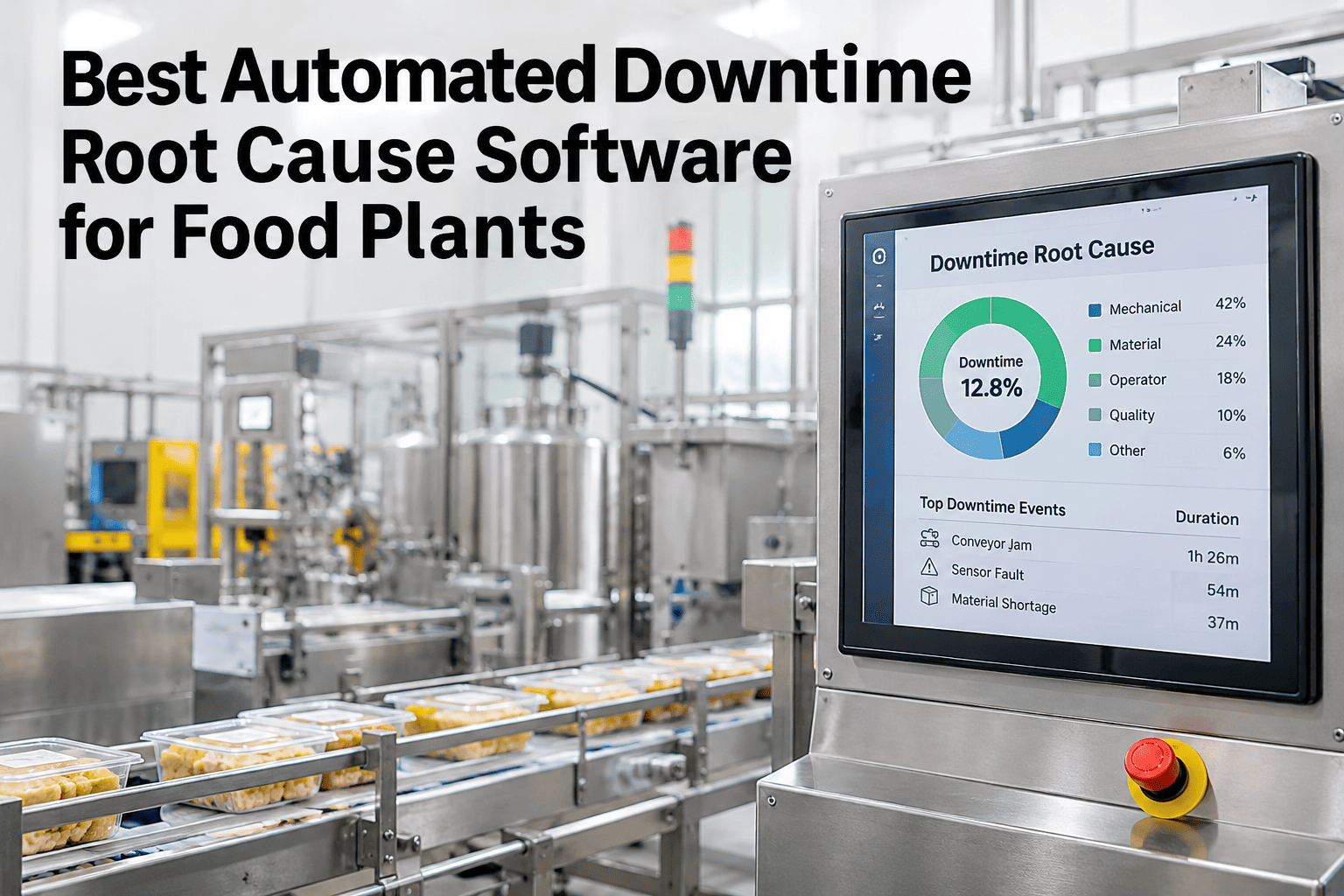
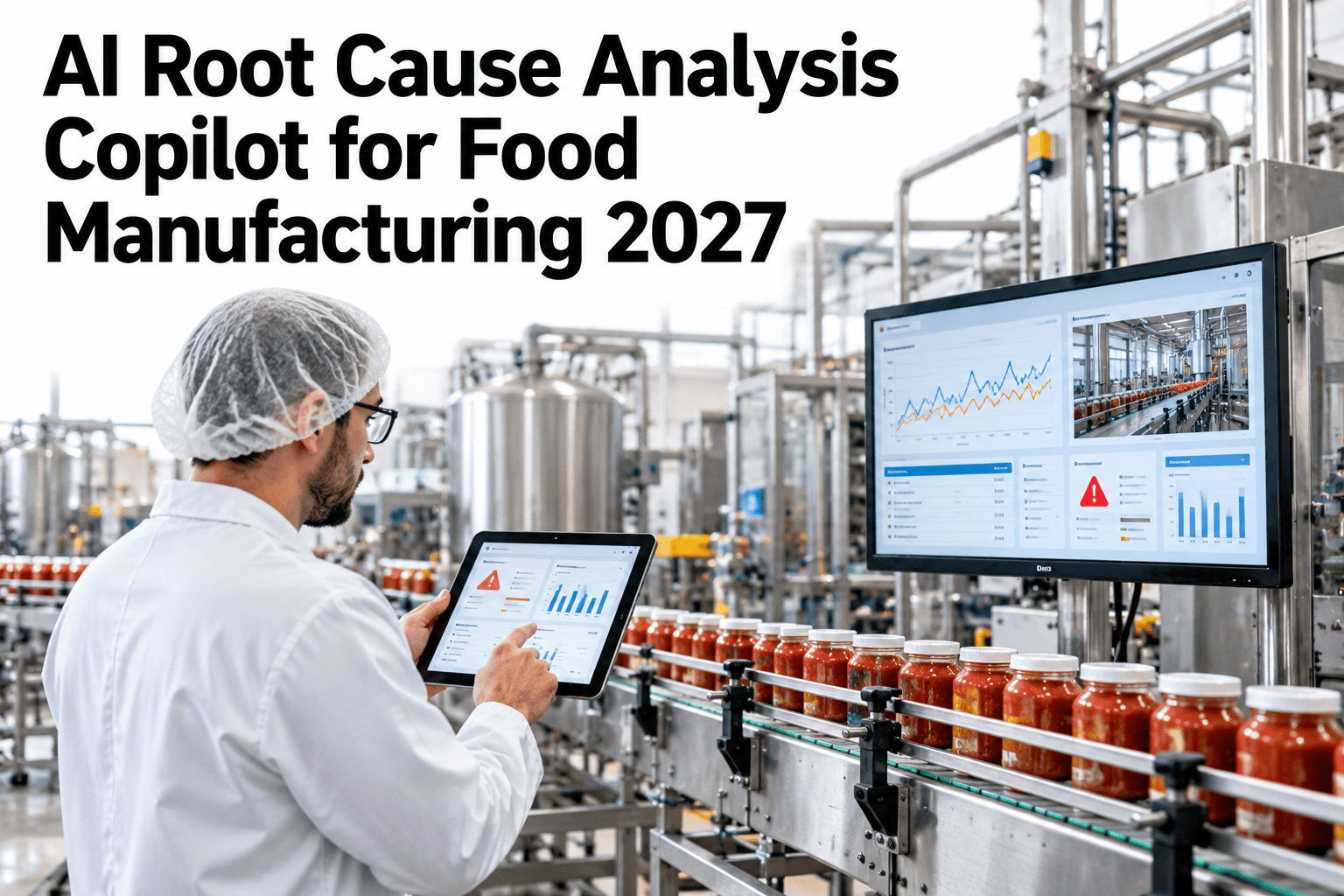
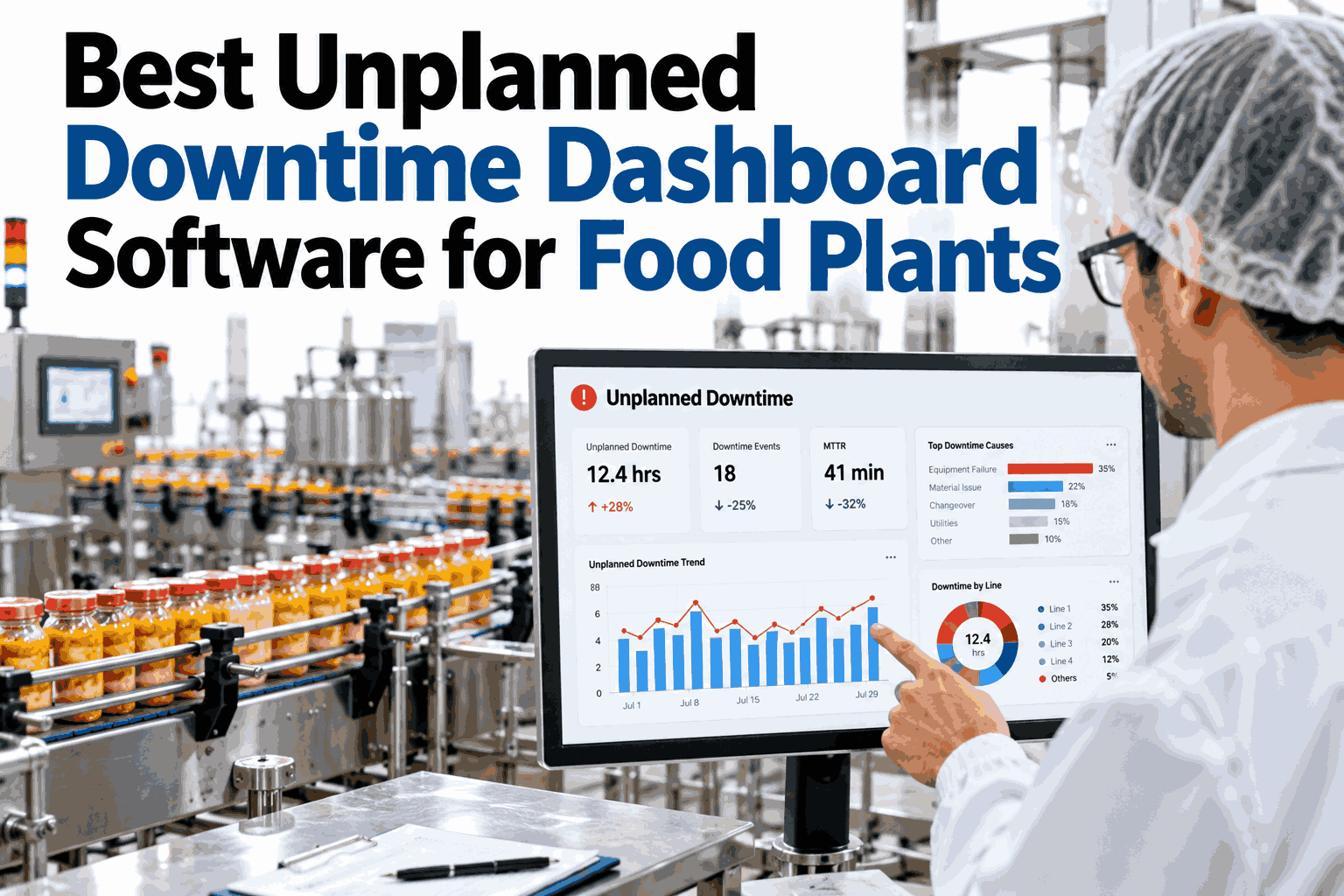
Roughly 43 percent of downtime events in plants without automated classification end up logged under a generic "Other" category — which means nearly half of all lost production time carries no usable root cause at all (manufacturing downtime analytics research, 2026). Automated downtime root cause software reads PLC state, sensor pattern, and stoppage duration the instant a line stops and classifies the event in seconds, not at the end of a shift from an operator's memory. iFactory, an on-premise AI platform with predictive maintenance and production monitoring built in, auto-classifies downtime from the same signals already running through your PLCs. Food plant operations teams who want this on their own lines can request a demo with our team.
Automated Downtime Root Cause Software · Food Plants, 2026
Nearly Half of All Downtime Gets Logged as "Other" Without Automated Classification
iFactory AI classifies every stoppage from PLC state and sensor pattern the moment it happens, so "Other" stops being the biggest category on your downtime Pareto.
Line stops
PLC state + sensor pattern read
Classified in seconds
Work order or log entry created
Why manual classification fails
Operator Memory Is Not a Root Cause Record
When a line stops and restarts within a few minutes, the standard response is to get it running again first and categorize the cause later, if at all. By the time anyone logs the event, the specific fault code, sensor reading, or sequence of conditions that caused it is gone — what remains is a best guess, usually filed under whatever category is fastest to select.
What gets read automatically
Four Signal Types Behind an Automated Classification
PLC fault code
The specific fault or alarm code the controller logged at the moment of the stop.
Sensor pattern
Temperature, pressure, speed, or vibration readings in the moments before and during the event.
Stoppage duration
A 15-second micro-stop and a 20-minute jam have different signatures and different likely causes.
Sequence context
What was happening on the line immediately before — a changeover, a material feed event, a shift transition.
What the Pareto actually shows
The Difference Between a Useful Pareto and a Misleading One
| Pareto built from | What it shows | Risk |
|---|
| Operator-selected categories | Whatever category was fastest to click, often "Other" | Top cause is actually "unclassified," hiding the real priority |
| PLC fault codes alone | Mechanical and electrical faults clearly, process issues poorly | Misses causes that don't trigger a discrete fault code |
| PLC + sensor pattern + duration | A specific, consistent classification across every stop type | Requires upfront connection work, but the Pareto is trustworthy |
See What's Actually Hiding in Your "Other" Category
Share a sample of your current downtime log and iFactory AI will show what share of it would reclassify under automated PLC and sensor-pattern analysis.
From classification to action
Five Steps From a Stop to a Closed Loop
1
Line stops
The stoppage is captured the instant it happens, with exact start and end time.
2
Signals are read
PLC fault codes and sensor data from the surrounding window are pulled automatically.
3
Cause is classified
The event is matched against known failure signatures and assigned a specific cause code.
4
Pareto updates
The classified event rolls into a live downtime Pareto by line, shift, and cause.
5
Top cause gets attacked
Reliability and operations teams focus improvement effort on the real top category, not "Other."
Legacy equipment
What If Some Lines Don't Have Modern PLCs?
Older food plant lines without accessible PLC data can still be covered — non-intrusive sensors on motor current, vibration, or simple run/stop signals provide a usable classification signal even where a direct PLC connection is not available, though the classification is generally less granular than on a fully connected line.
Expert review
What an Operations Manager Checks First
Automated classification earns trust when the cause codes are specific enough to actually drive a different corrective action, not just a more detailed-looking version of the same "Other" bucket.
Verdict
Strong when cause codes map to distinct, actionable responses — a jam, a material shortage, and a quality stop each need a different fix.
Watch for
A classification system that still lumps short, frequent micro-stops into a generic category because they're deemed too minor to differentiate.
Do next
Pull your current downtime Pareto and check what share of total time sits under "Other" or an equally generic bucket.
Frequently asked questions
What Food Plants Ask About Automated Downtime RCA
How big is the "Other" category problem really?
Roughly 43 percent of downtime events in plants without automated classification get logged under a generic "Other" category, leaving the largest share of lost time with no usable root cause (manufacturing downtime analytics research, 2026).
See what this looks like in your own downtime log.
How fast can a stoppage actually be classified?
Does this require new sensors or PLC programming changes?
Most lines with existing PLCs can be connected without reprogramming the control logic itself — the system reads existing signals rather than requiring new ones, though legacy lines without PLC access may need supplemental sensors.
Discuss your current PLC and sensor setup.
Can this distinguish a micro-stop from a major breakdown automatically?
Yes — stoppage duration is one of the core classification signals, and short frequent micro-stops are tracked and categorized separately from longer unplanned breakdowns rather than being bundled together.
Ask support how micro-stops are classified.
How does this connect to our existing maintenance work order process?
A classified downtime event tied to a mechanical fault can generate a work order directly in the CMMS with the cause code and supporting data attached, rather than requiring a separate manual write-up.
Talk through work-order integration for your plant.
Make "Other" the smallest category, not the biggest
Classify Every Stoppage Automatically, in Seconds
Book a demo to see how iFactory AI turns PLC and sensor data into a trustworthy downtime Pareto for your plant.
{"@context":"https://schema.org","@type":"FAQPage","mainEntity":[
{"@type":"Question","name":"How big is the 'Other' category problem really?","acceptedAnswer":{"@type":"Answer","text":"Roughly 43 percent of downtime events in plants without automated classification get logged under a generic Other category."}},
{"@type":"Question","name":"How fast can a stoppage actually be classified?","acceptedAnswer":{"@type":"Answer","text":"Classification can happen within seconds of a stop, reading PLC and sensor data already being generated."}},
{"@type":"Question","name":"Does this require new sensors or PLC programming changes?","acceptedAnswer":{"@type":"Answer","text":"Most lines with existing PLCs can be connected without reprogramming control logic, though legacy lines may need supplemental sensors."}},
{"@type":"Question","name":"Can this distinguish a micro-stop from a major breakdown automatically?","acceptedAnswer":{"@type":"Answer","text":"Yes, stoppage duration is a core classification signal, tracking micro-stops separately from longer breakdowns."}},
{"@type":"Question","name":"How does this connect to our existing maintenance work order process?","acceptedAnswer":{"@type":"Answer","text":"A classified downtime event tied to a mechanical fault can generate a work order directly in the CMMS."}}
]}