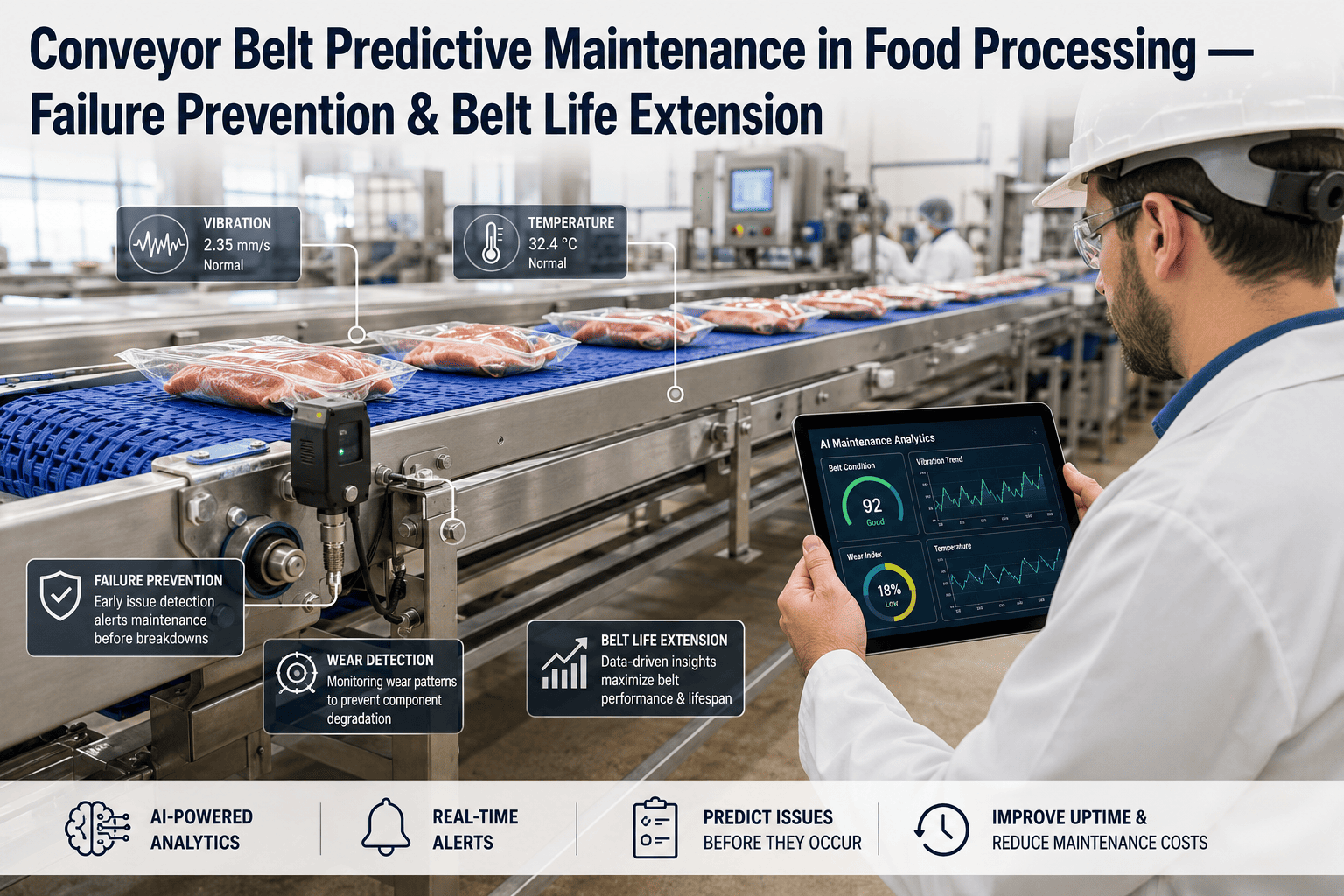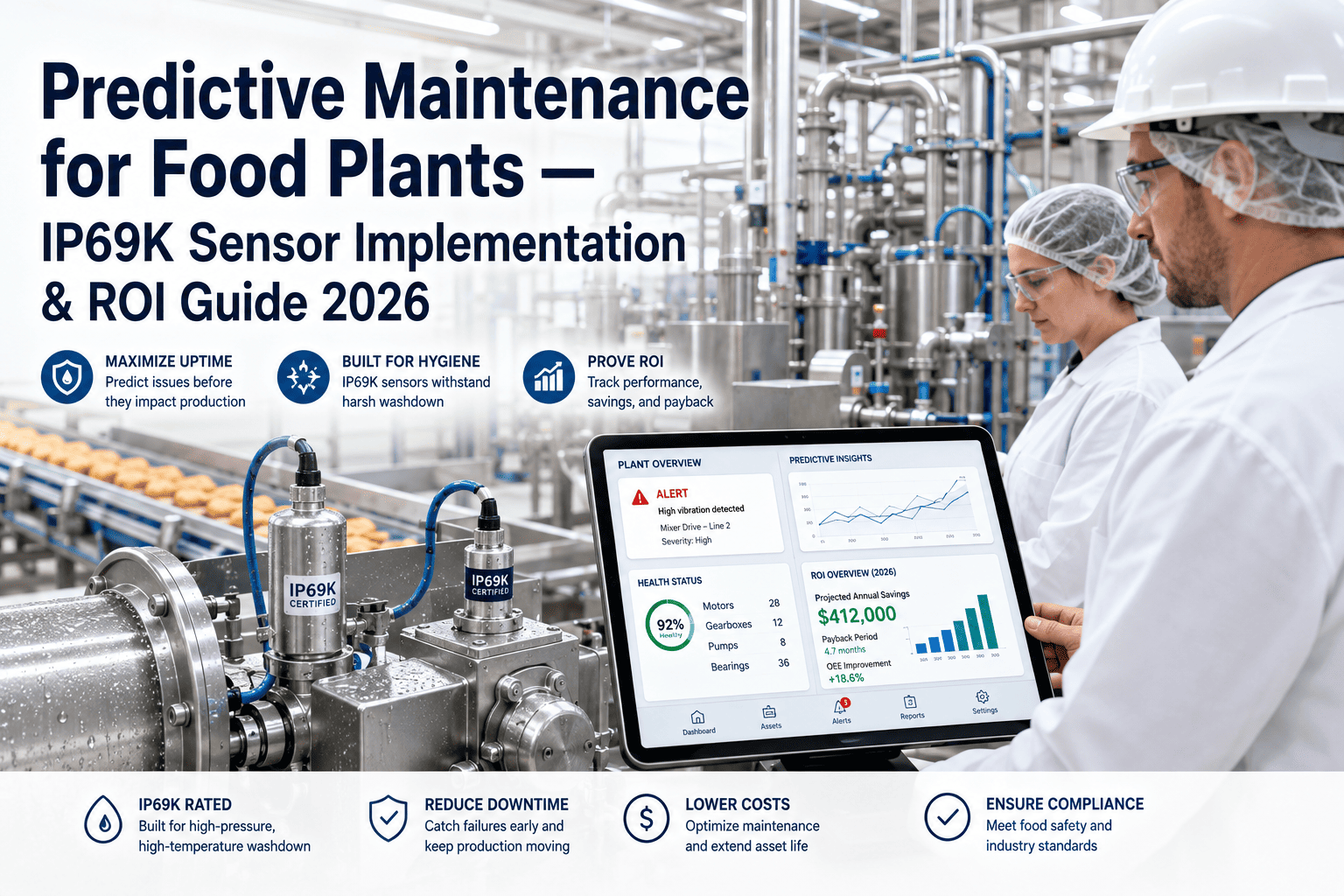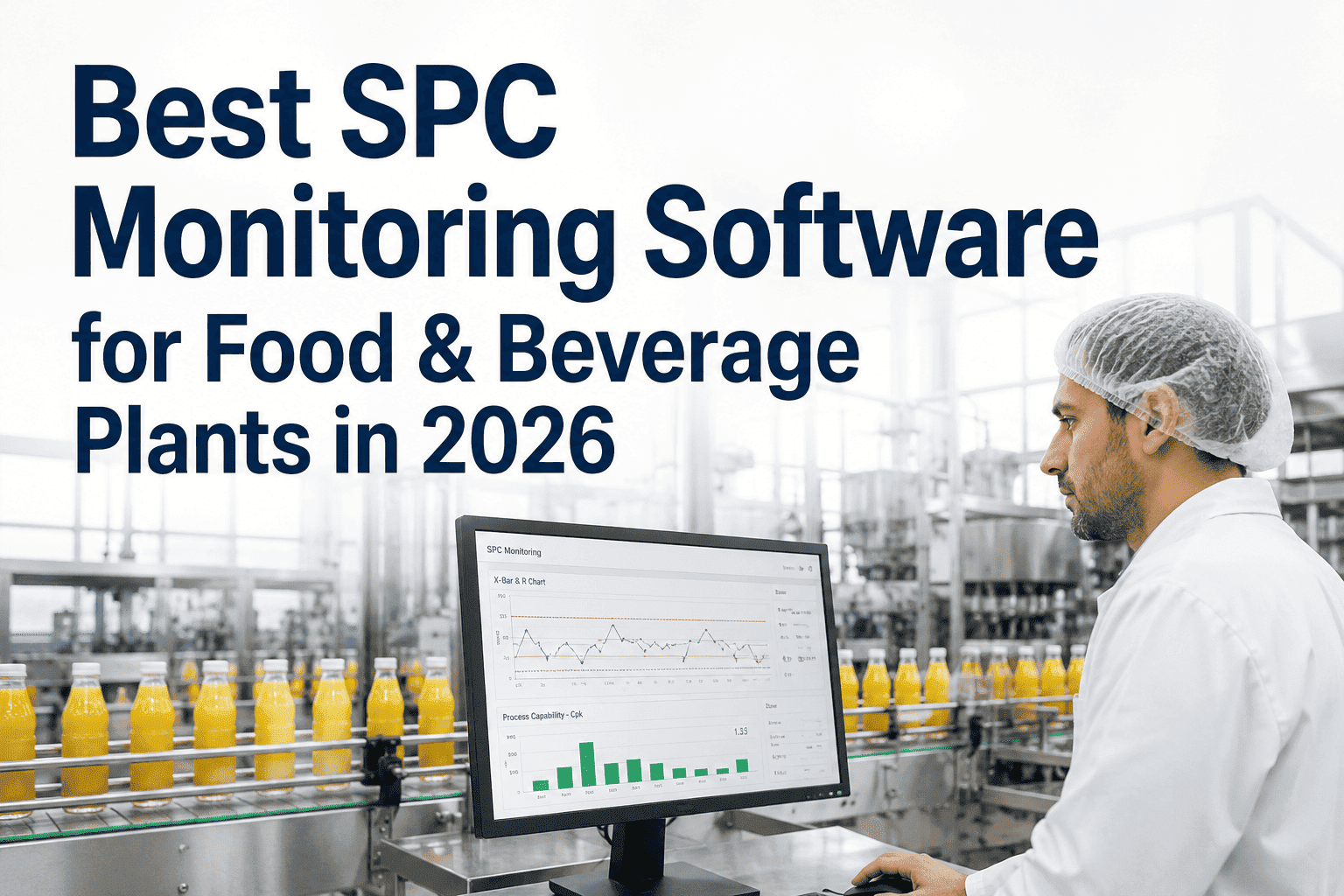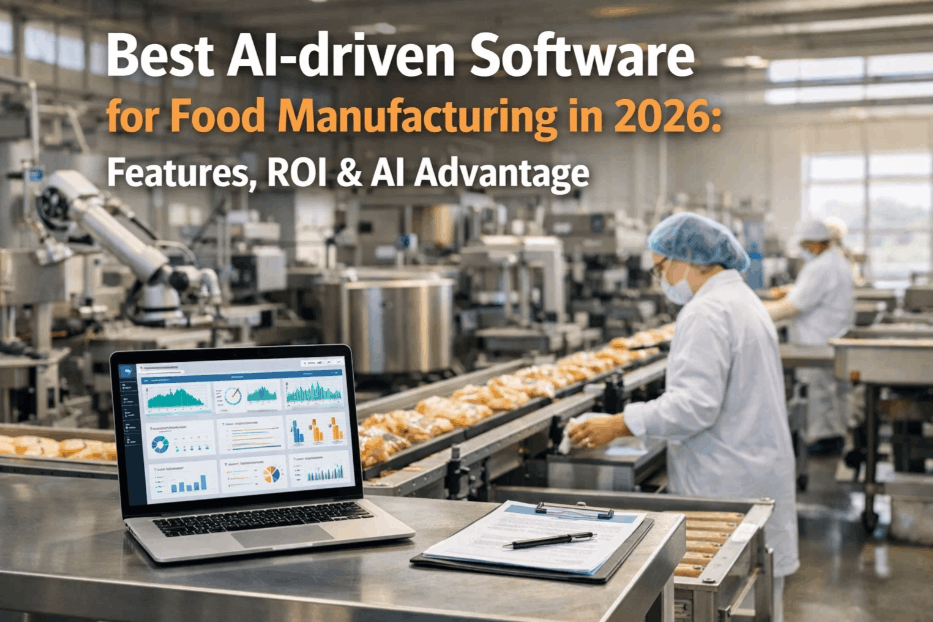
Conveyors are the quiet backbone of a food plant, and the first thing everyone notices when they stop. A single mistracking belt, seized roller or tired drive can halt filling, packing and palletizing at once, often in the middle of a rush order. Most of these failures give days or weeks of warning through belt tension, motor load and vibration, but nobody is watching those signals. The best conveyor predictive maintenance software turns them into a ranked repair list, and teams can watch iFactory AI rank live conveyor risks across a real line to judge the fit.
Keep Every Conveyor Moving Between Sanitation Windows
iFactory AI watches belt tension, roller torque and drive vibration, then tells your team which conveyor to fix before it stops the line.
Six Points Where Food Conveyors Fail
Conveyor breakdowns cluster in a few predictable places. Knowing where to look is half of predictive maintenance.
Drive motor and gearbox
Bearing wear, lubricant breakdown and overheating from constant washdown and start-stop duty.
Belt or chain
Stretch, hinge wear and tension drift that lead to slipping, skipping and jams.
Sprockets and drive shafts
Tooth wear and misalignment that quietly shorten the life of the belt above them.
Rollers and idlers
Seized rollers add friction and drag, then damage the belt surface and product.
Tracking and alignment
Mistracking pushes the belt to the frame edge, causing fraying and product spillage.
Transfers and takeups
Handoff points and tensioners that fail under changing loads and pile up product.
From Root Cause to Line Stop
Every stoppage follows a chain. Software earns its keep by spotting the middle link, the early signal, while it is still cheap to act on.
What a Rising Motor Load Looks Like
Motor current is one of the cheapest early signals. As friction builds, the motor draws more current to move the same product at the same speed.
A steady climb like this is invisible in a daily walk-around but obvious in trended data. That difference is the whole case for continuous monitoring.
What to Monitor on Each Conveyor Type
Food plants run several conveyor designs, and each fails differently.
| Conveyor Type | Typical Weak Point | Best Signals |
|---|---|---|
| Modular plastic belt | Hinge rod wear, sprocket wear | Drive current, tension, slip events |
| Roller conveyor | Seized rollers, drive chain | Motor current, roller torque, vibration |
| Flat belt | Mistracking, splice failure | Tracking offset, belt tension, current |
| Chain and slat | Chain elongation, gearbox wear | Vibration, current, temperature |
| Spiral conveyor | Drive bearings, cage drive wear | Vibration, current, torque |
Find Which Conveyors Deserve Sensors First
Bring your line layout to a 30-minute session and iFactory AI will help you mark the highest-risk conveyors.
Walk-Around Checks vs Continuous Monitoring
Ten Questions to Ask Any Vendor
Use this checklist when comparing software.
A Composite Scenario: The Infeed That Slowed Down
Picture a bakery packing line where an infeed conveyor keeps slowing at the end of long runs. Operators reset it and move on, because it always recovers.
Trended drive current would show a slow climb over several weeks, pointing to a dragging roller. A repair during a Sunday sanitation window costs a roller and an hour. Left alone, the same fault stops the line and scars the belt.
Where iFactory AI Fits
Reads what you already have
Drive current, speed and load data from existing controllers become health trends without extra hardware everywhere.
Adds sensors where needed
Vibration, torque and tension sensing are added only on the conveyors that carry the most risk.
Ranks the whole plant
One list shows which conveyor is most likely to stop next, so crews start with the right one.
Plans the repair
Alerts carry the likely fault and urgency, so parts and tools are ready for the next planned window.
A Practical First 30 Days
Frequently Asked Questions
What does conveyor predictive maintenance software actually monitor?
It trends signals such as drive motor current, vibration, temperature, belt tension and slip, then compares them with each conveyor's own normal behavior. A slow drift away from normal points to a specific problem such as roller drag or chain stretch. That gives the crew a diagnosis, not only an alarm. You can see these signals trended on a real food line in a short session.
Do we need sensors on every conveyor?
Usually not. Many plants start with drive current and speed data they already collect, and add vibration or torque sensing only on critical conveyors. This keeps the pilot small and the payback quick, while still covering the assets whose failure would stop a whole line. Coverage can widen later using the same scoring. Ask for a sensor plan sized to your line layout.
Can software detect belt mistracking and slipping?
Yes, when it combines tension, speed and current data. Slip shows up as a gap between motor speed and belt movement, while mistracking creates uneven load and edge wear patterns. Catching either early prevents frayed belts, product spills and jams at transfer points. The earlier the flag, the easier it is to correct within a normal cleaning stop. Explore how slip and tracking alerts appear for your belt types.
Will washdown and product changes cause false alerts?
They can with fixed thresholds, which is why baselines matter. Software that learns normal behavior separately for each product, speed and cleaning state can tell a heavy load from a failing bearing. It also compares each conveyor with its own history rather than a generic limit. That keeps alerts trustworthy and reduces the noise crews learn to ignore. Try a walkthrough of baselines set per product and speed.
How do we measure the return on conveyor monitoring?
Track unplanned stops, minutes of line downtime and emergency repair cost before and after the pilot. Add avoided product waste and reduced overtime for crews called in at short notice. Because a single line stop can cost more than a year of monitoring on that conveyor, a small pilot often shows results within one quarter. Join a session that builds a payback estimate from your downtime history.
Stop Finding Conveyor Failures by the Silence
iFactory AI trends drive current, tension and vibration so your team fixes conveyors on your schedule, not theirs. Book a walkthrough on your own line.