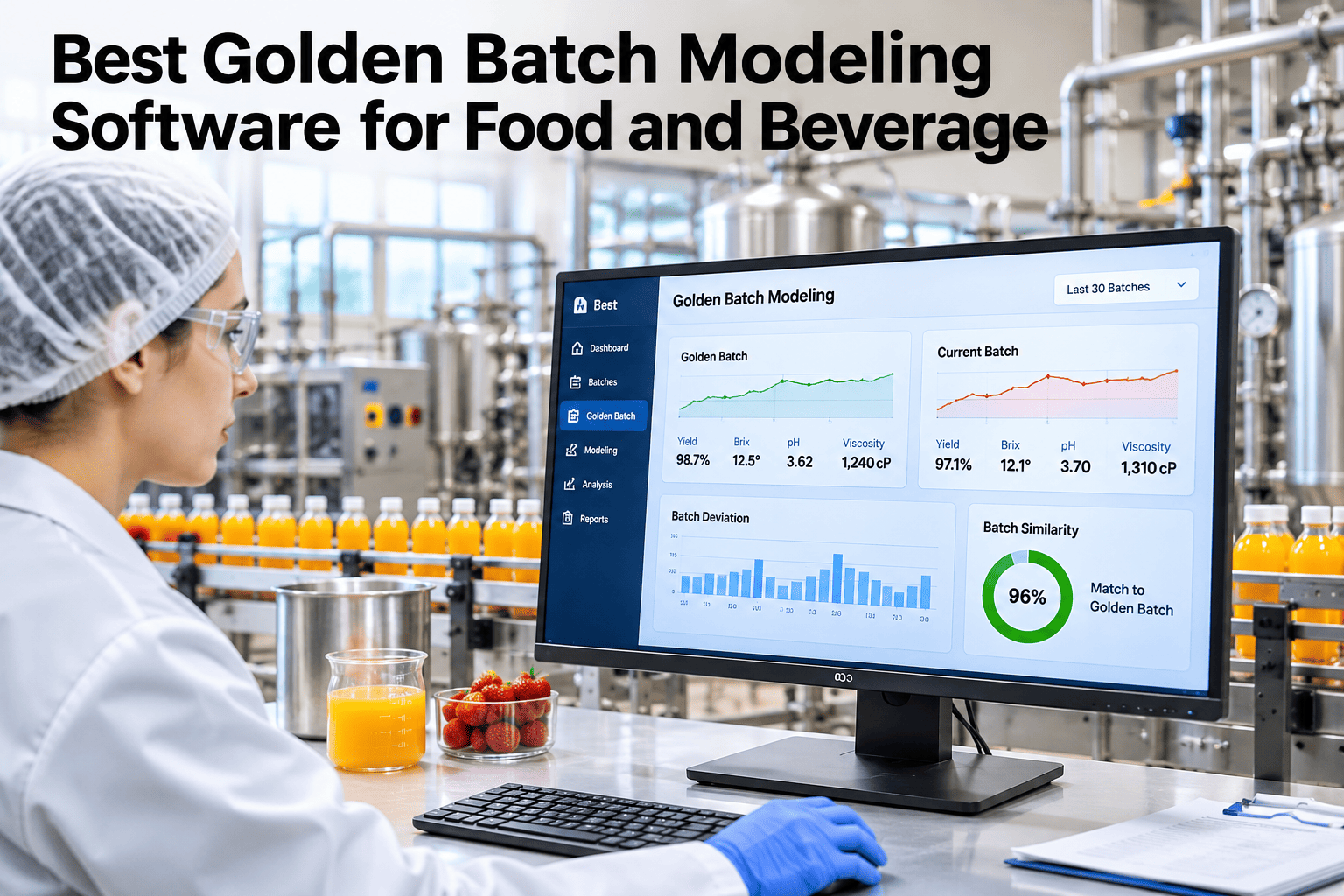
Every plant has a batch everyone remembers — the run that came out perfect, that the whole line still gets compared to months later. Golden batch modeling captures that run as a quantitative fingerprint, a full trajectory of every parameter across the batch's duration, so every future batch can be scored against it in real time instead of against memory. iFactory, an on-premise AI platform with automated analytics reporting built in, builds and tracks that fingerprint continuously. Food and beverage quality teams who want this on their own batches can request a demo with our team.
Golden Batch Modeling · Food & Beverage, 2026
Turn "That One Great Batch" Into a Fingerprint Every Future Batch Is Scored Against
iFactory AI captures the full parameter trajectory of your best-run batches and scores every live batch against that fingerprint in real time.
Golden batch bandGolden batch trajectoryLive batch — steering live
What a fingerprint actually is
More Than a Set of Target Values
A golden batch fingerprint is not a single target number per parameter — it's the full trajectory each parameter followed across the entire batch duration, including how parameters moved together at each stage. This is the same batch-trajectory modeling approach, often called unfold-PCA in process statistics, used to monitor fermentation, polymerization, and other staged batch processes across industries.
Building the fingerprint
Three Steps to Capture a Golden Batch
Identify the candidate
A batch with confirmed excellent finished-product quality and no process anomalies is selected as the reference.
Capture the full trajectory
Every monitored parameter's path across the batch, stage by stage, becomes the reference fingerprint.
Build the tolerance band
A statistically sound band around the trajectory sets how much deviation still counts as "on track."
Live scoring
What Happens While the Batch Is Still Running
| Batch position | What's scored | What steering looks like |
|---|
| Early stage | Trajectory compared against the golden fingerprint from the first reading | A minor adjustment early avoids a larger correction later |
| Mid-batch | Cumulative deviation from the band tracked in real time | Setpoint nudges to bring the trajectory back toward the fingerprint |
| Late stage | Final trajectory shape compared against the golden batch's closing pattern | Last-window adjustments where the process still allows them |
See How Your Recent Batches Compare to Your Own Best Run
Share the data from a batch you consider a benchmark and a few recent runs, and iFactory AI will show what a fingerprint comparison reveals.
One fingerprint vs many
Why a Single Golden Batch Isn't Always Enough
Single fixed fingerprint
One reference batch used for every comparison
Doesn't account for valid seasonal or recipe variation
A good batch run under different conditions scores as "off"
Condition-matched fingerprints
Multiple golden batches captured across normal operating conditions
Each live batch compared against the fingerprint for its actual conditions
Scoring reflects genuine deviation, not just a different valid operating mode
Keeping the fingerprint current
A Golden Batch Can Go Stale
Equipment wears, recipes get refined, and raw material sources change — a golden batch fingerprint captured two years ago may no longer represent what "best" actually looks like today. Most programs periodically re-evaluate whether a more recent exceptional batch should become the new reference, rather than treating the original fingerprint as permanent.
Expert review
What a Process Quality Lead Checks First
Golden batch modeling earns its keep when the reference batch is genuinely representative, not just the one everyone happens to remember fondly.
Verdict
Strong when the tolerance band is set statistically from real batch-to-batch variation, not drawn by hand around a single run.
Watch for
Using a single golden batch across conditions that genuinely require different operating profiles.
Do next
Identify your two or three best-documented batches and check whether their full parameter trajectories, not just final results, were actually logged.
Frequently asked questions
What Food and Beverage Teams Ask About Golden Batch Modeling
How do we pick which batch becomes the golden reference?
A strong candidate has confirmed excellent finished-product quality, no known process anomalies, and complete parameter trajectory data across the full batch duration — a quality result alone isn't enough without the underlying process data.
Discuss candidate batches from your own history.
Can we have different golden batches for different products or recipes?
Yes — each distinct product, recipe, or significantly different operating condition typically needs its own fingerprint, since comparing a batch against the wrong reference produces misleading deviation scores.
Ask support about setting up multiple fingerprints.
What happens when a live batch deviates from the golden trajectory?
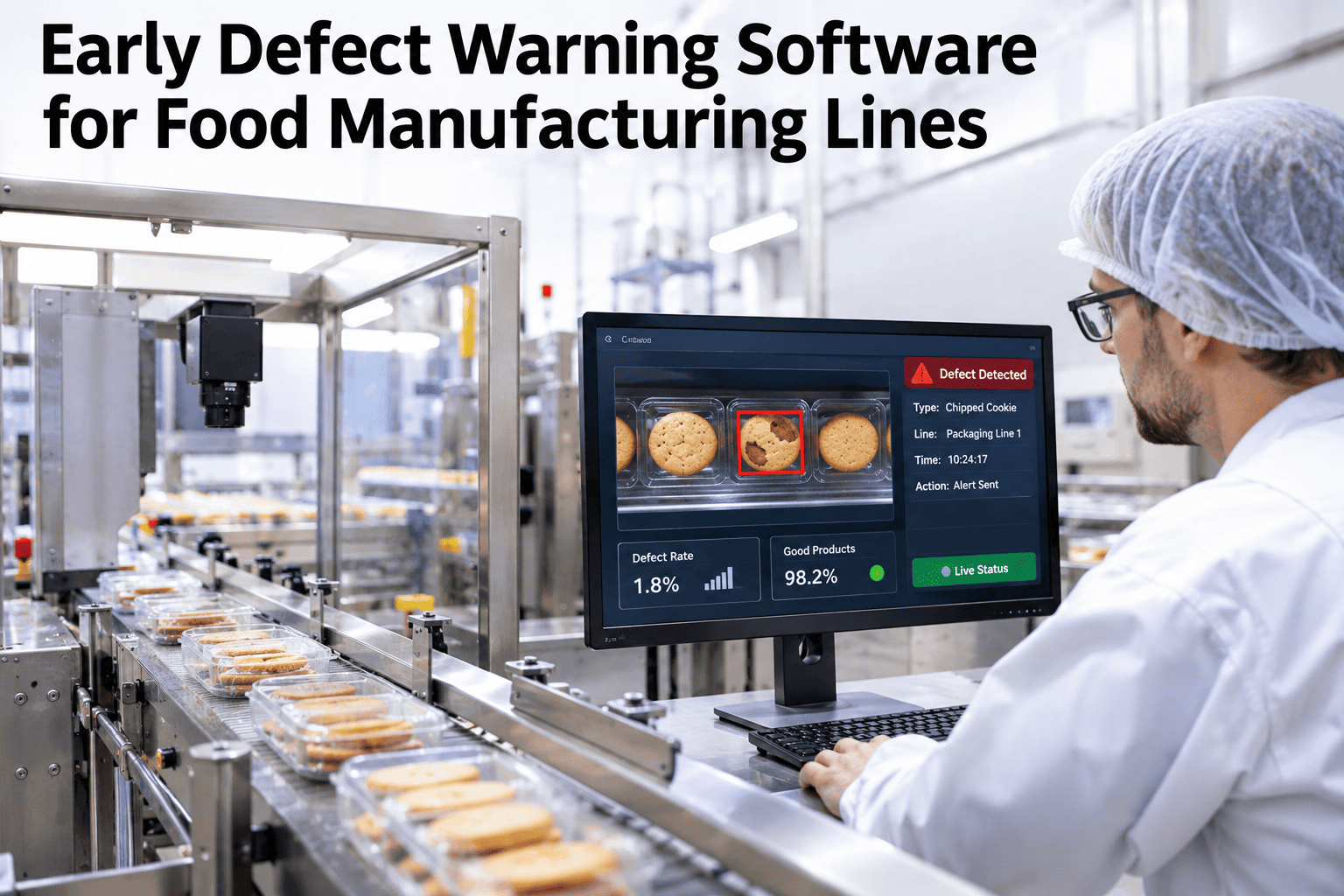
The system flags the deviation and, where a known corrective relationship exists, suggests a setpoint adjustment to steer the batch back toward the reference trajectory before it's too late to matter.
Talk through steering logic for your process.
How often should the golden batch fingerprint be updated?
Is this the same as standard batch SPC?
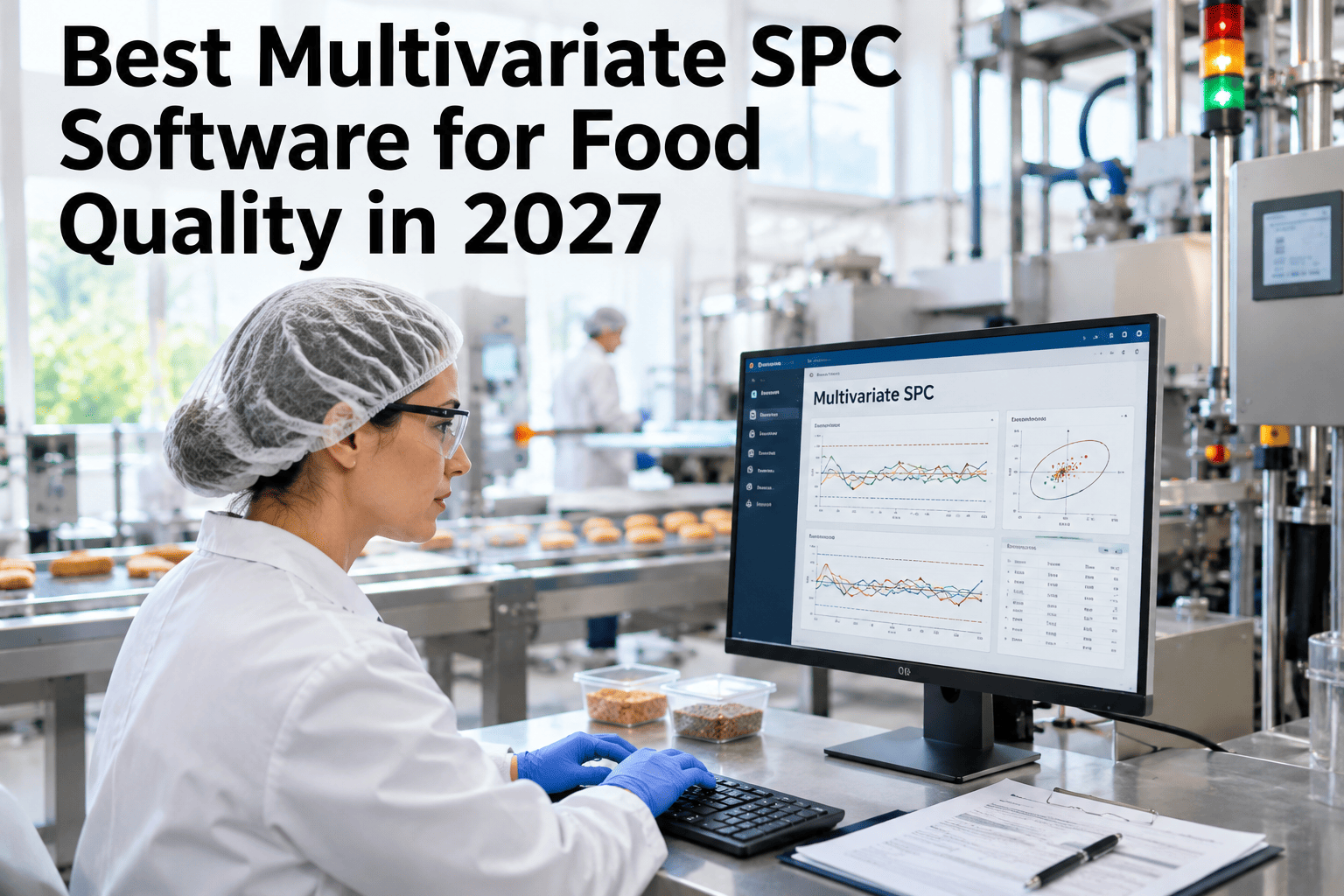
It builds on the same underlying statistical approach used in batch process monitoring, but scores the entire trajectory against a specific best-run reference rather than just flagging individual out-of-limit points.
Discuss how this complements your current batch SPC.
Score every batch against your own best run
Capture a Golden Batch Fingerprint and Steer Live From It
Book a demo to see how iFactory AI turns your best batch into a live reference for every future run.