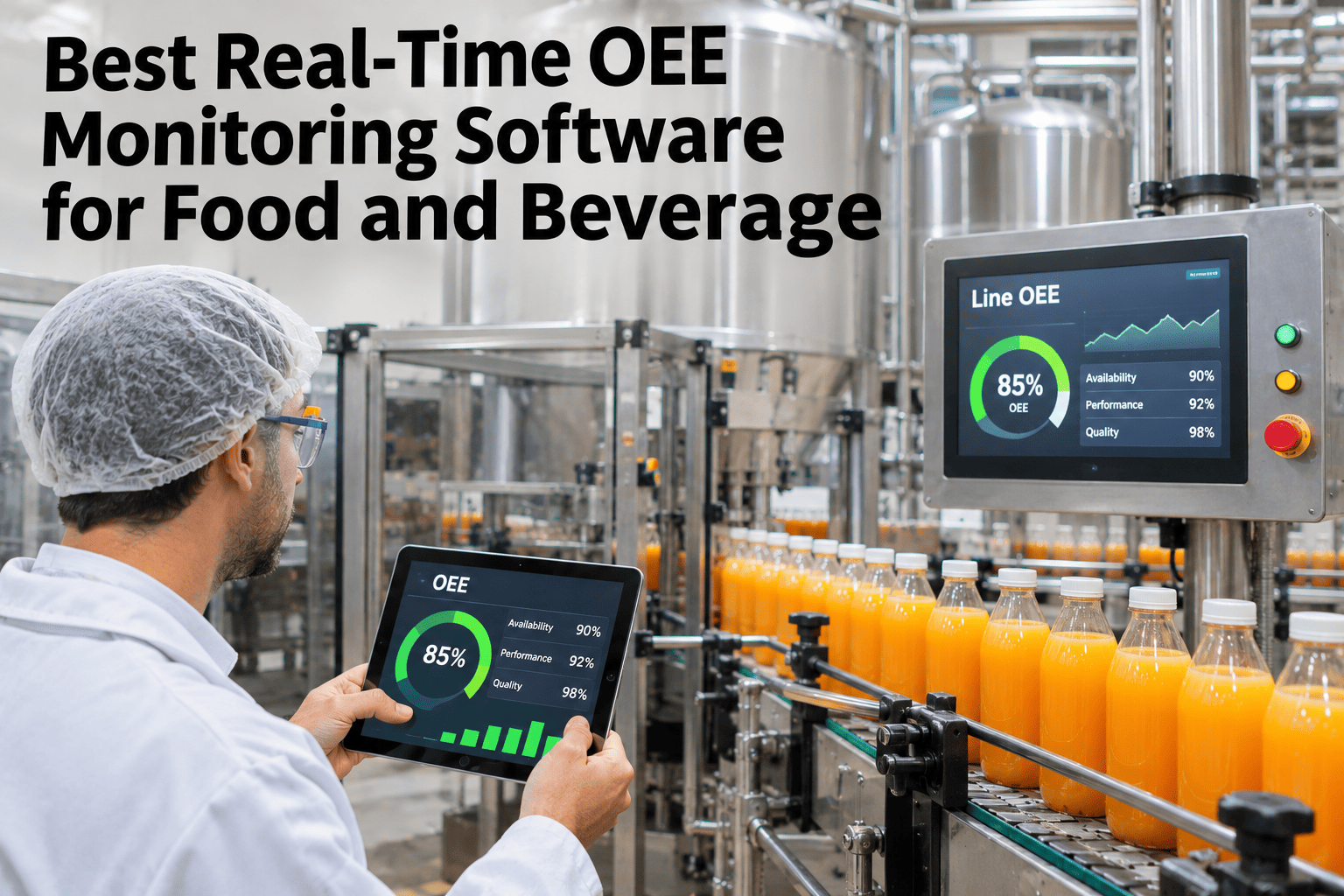
Watch a supervisor do an hourly round with a clipboard and you are watching a measurement system built for an era before sensors existed, still running on a line full of them. Everything that happens between rounds — a jam cleared in ninety seconds, a speed dip nobody mentioned, a reject spike that resolved itself — gets rounded away or simply forgotten by the time the number reaches a report. Real-time OEE monitoring replaces that round with a continuous feed, so the number on screen matches what the line is actually doing this minute, not what someone remembered an hour later. You can book a live OEE walkthrough with our team to see the difference on your own line.
The Clipboard Round Ended Ten Minutes Ago. The Line Didn't Wait.
iFactory, an on-premise AI platform for production monitoring, streams availability, performance and quality from every line continuously, with per-shift drill-through, so the number on screen is never more than seconds behind the line itself.
What Is Real-Time OEE Monitoring?
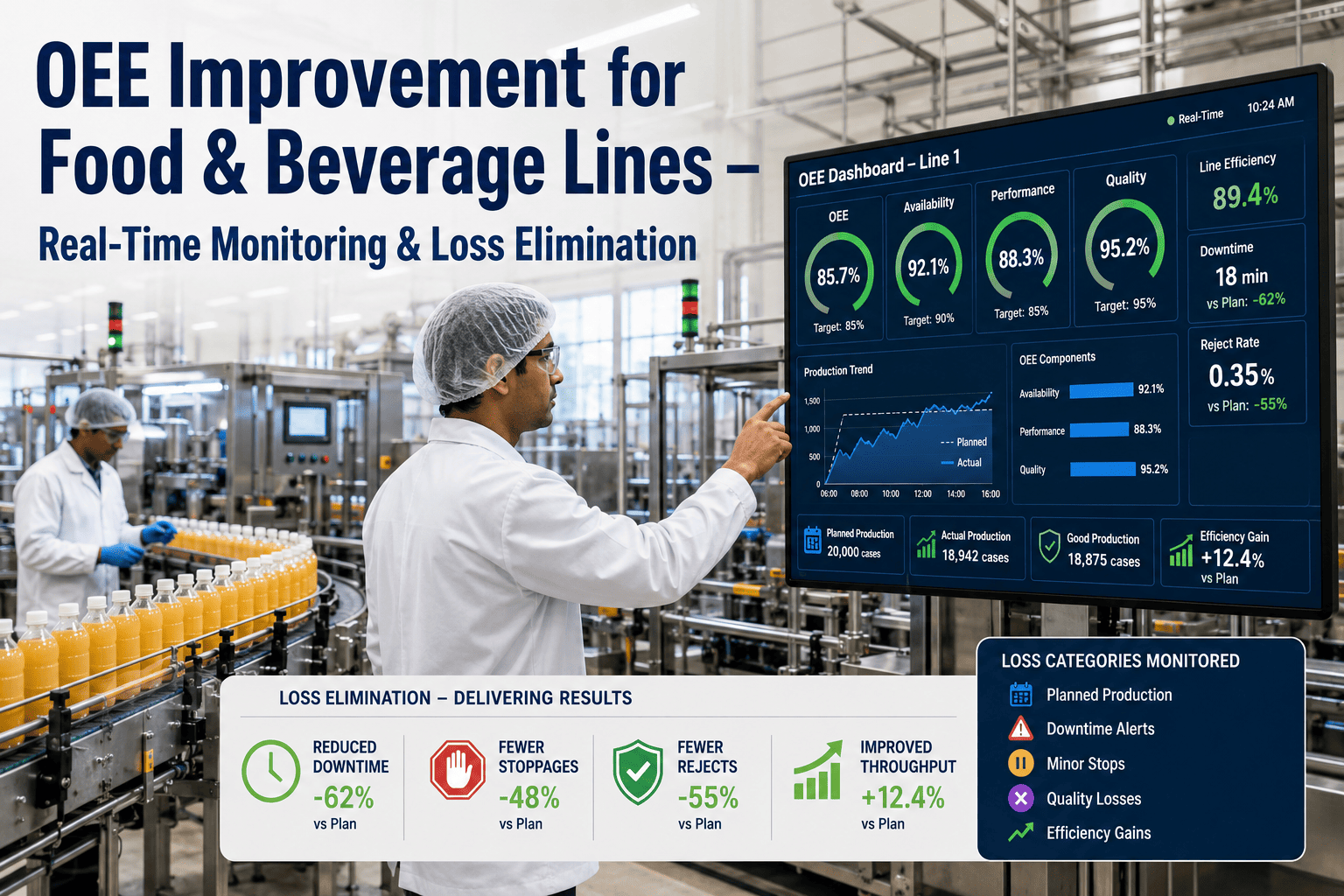
Real-time OEE monitoring calculates availability, performance and quality continuously from live PLC, SCADA and scale data, rather than reconstructing the figure once per shift from handwritten logs. The defining feature is not just speed, it is drill-through — a director seeing a dip in the live number can click into exactly which line, which reason code and which minute caused it, instead of waiting for tomorrow's report to explain today's shift.
Manual monitoring depends entirely on an operator's hourly round, which means anything that happens between rounds is reconstructed from memory afterward, if it gets recorded at all.
What Manual Monitoring Misses
How Much Does the Manual-to-Sensor Gap Actually Cost?
The gap between a manually reported OEE and a direct-sensor measured OEE is typically eight to twelve percentage points, meaning a plant reporting 70% by hand may actually be running closer to 60% once measured continuously (TeepTrak, 2026 World-Class OEE Benchmarks). Food and beverage median OEE under direct-sensor measurement sits at 58%, with world-class top-decile performance at 82% (TeepTrak, 2026).
Find Out What Your Manual Number Is Actually Hiding
Compare a week of your hand-logged OEE against what direct-sensor measurement would show on the same line.
Book a Manual-vs-Live Comparison Ask About Sensor HookupManual Rounds vs Real-Time OEE Monitoring
| Dimension | Manual Rounds | Real-Time Monitoring |
|---|---|---|
| Update frequency | Once per hour, by an operator | Continuous, from PLC and SCADA data |
| Accuracy | Rounded estimates, shift to shift | Direct-sensor measurement |
| Drill-through | None — a number with no trail | Click into shift, line and reason code |
| Reaction time | Next shift or next day | Mid-shift, while it is still fixable |
Four Stages From Manual Round to Fully Live
What a Production Engineer Would Check First
What Food and Beverage Plants Ask About Real-Time OEE
Replace the Clipboard With a Live Number You Can Trust
Book a session with iFactory AI to connect real-time OEE monitoring on your pilot line and see the drill-through behind every point lost.
Book a Real-Time OEE Demo Contact Our Support Team