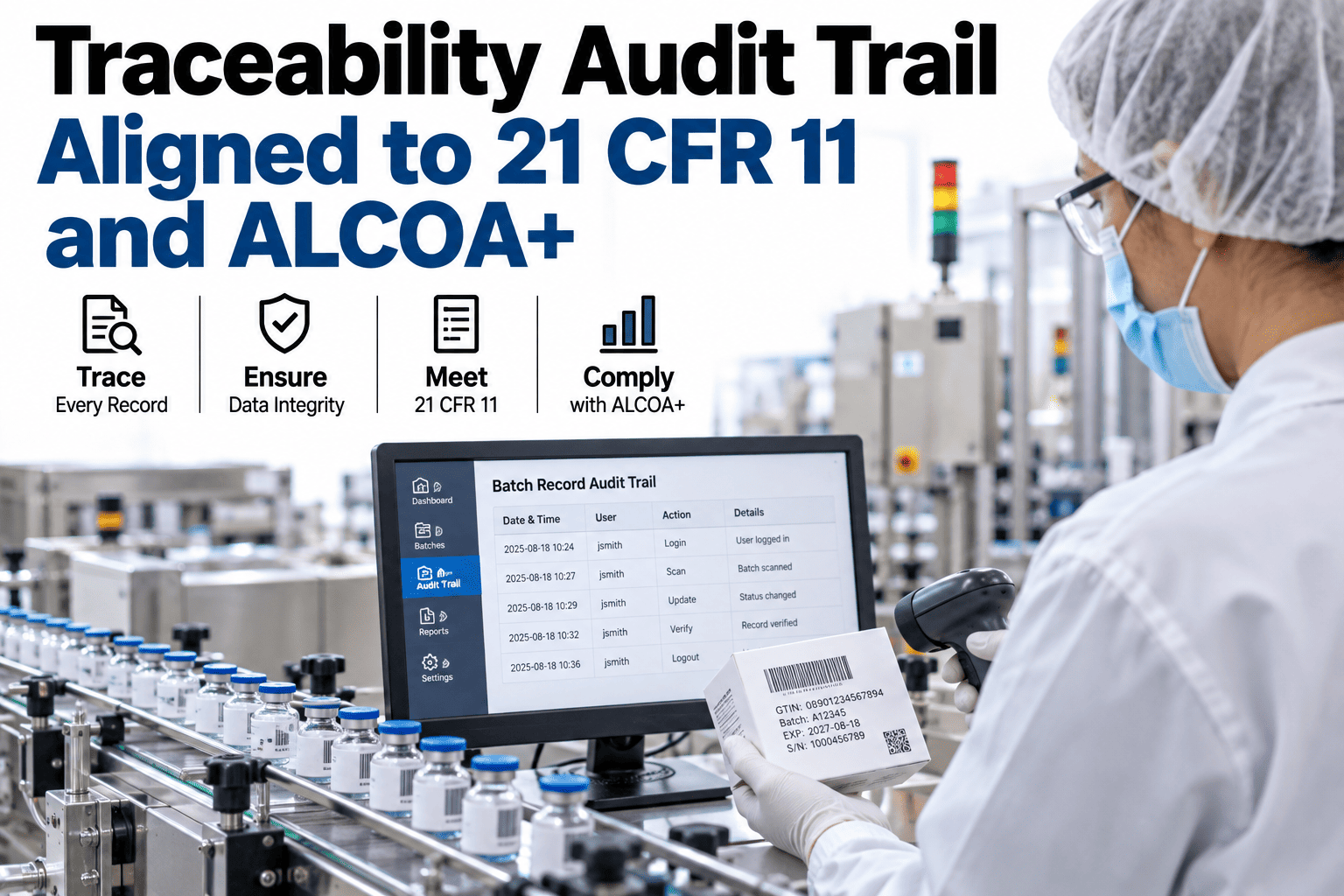
Most metal detector CCP failures are not caused by a broken detector. They are caused by a missed test-piece check, a sensitivity setting nobody reset after a product changeover, or a reject that nobody actually verified left the line. Auditors know this, which is why every CCP file for metal detection gets read line by line. A gap in the log is treated as a gap in control, whether or not any metal ever reached a customer. Plants that want to see how test-piece timing, sensitivity drift and reject verification get captured without relying on a line operator's memory can walk through a live CCP verification record on a 30-minute call.
Stop Defending Your Metal Detector Log, Start Trusting It
iFactory AI timestamps every test-piece pass, every sensitivity check and every reject confirmation, so the CCP record defends itself in an audit.
What a Defensible CCP File Actually Needs
Auditors are not checking whether your metal detector works. They are checking whether you can prove, for every batch, that it was working at the right sensitivity, at the right time, and that a reject was handled correctly.
Which Test Piece Fits Which Product
Sensitivity limits are not one number for the whole plant. Wet, high-moisture and metallised-film products need wider tolerances than dry, low-conductivity goods, and the test piece set has to match.
| Product Type | Fe Limit | Non-Fe Limit | SS Limit | Typical Risk |
|---|---|---|---|---|
| Dry, low moisture | 1.5mm | 2.0mm | 2.5mm | Low product effect |
| Wet or chilled | 2.0mm | 2.5mm | 3.0mm | Moderate product effect |
| Metallised film pack | 2.5mm | 3.0mm | 3.5mm | High product effect |
| Frozen, irregular shape | 2.0mm | 2.5mm | 3.0mm | Orientation sensitive |
Running the wrong test piece set against a packaging format is one of the most common findings auditors raise, and it rarely gets caught until the file is already open on the table. A record that ties each check to the exact product running at that time closes this gap on its own.
See Your Own Sensitivity Limits Mapped by Product
Book a 30-minute session and iFactory AI will map test-piece limits against your current product and pack list.
The Shift Where Frequency Checks Slip
Most missed test-piece checks happen in the same place: late in a shift, after a changeover, or when a line is running behind schedule. The timeline below shows a single shift where an hourly check requirement was scheduled against what actually happened.
Confirming a Reject Actually Left the Line
A detector signal is not proof of removal. The reject still has to leave the conveyor, land in a locked bin, and get logged by someone with the authority to release the line again.
When any one of these four steps is only recorded on paper, it is the first thing an auditor asks to see reproduced on the spot, and the one most likely to be missing.
Signature Capture, Without the Clipboard
Verification needs a name attached to it, not just a tick. The card below shows what a single verified check looks like once it is captured electronically instead of initialed on paper.
A Composite Scenario: The Audit That Took Twenty Minutes
A ready-meal plant used to spend the morning before an audit pulling paper logs from three lines and cross-checking dates by hand. After moving test-piece and reject verification into a single digital record, the same review took the auditor twenty minutes, because every check, limit and signature sat against the batch it belonged to.
Where iFactory AI Fits
iFactory AI does not replace your metal detectors. It captures what they already report and ties it to the people and products involved, so the CCP record builds itself.
Frequency Tracking
Scheduled test-piece checks are tracked against actual completion, with missed checks flagged the same shift.
Sensitivity Mapping
Fe, Non-Fe and SS limits are matched to the product running, so the wrong test piece set stops being possible.
Reject Confirmation
Detector signal, physical removal and supervisor release are linked into one verified event.
Digital Signatures
Every check carries an operator identity and a timestamp captured at the moment it happened.
Frequently Asked Questions
How often should a test piece actually be run?
Most HACCP plans call for an hourly check as a minimum, with additional checks at startup, after a changeover and at the end of a run. The right frequency depends on your risk assessment and product mix, not a single industry rule. iFactory AI's team can review your current frequency plan against what the detector and line actually require.
What happens if a sensitivity check fails?
A failed check means every pack produced since the last passed check is on hold until it can be re-screened or reworked. That window is exactly why the timestamp on the last passed check matters so much, since it defines how much product is affected.
Can this work with the detectors we already have?
Yes. The approach captures signals and events from the detectors already installed on your lines rather than requiring new hardware. Most common industrial metal detector outputs can be connected directly. Bring your detector model to a short call and the fit can be confirmed quickly.
Does this replace our HACCP plan or the CCP itself?
No. The CCP, its limits and its corrective actions stay defined by your HACCP team. What changes is how the verification of that CCP gets recorded, timestamped and made available when an auditor or customer asks to see it.
How long does it take an auditor to review a digital record?
Plants running a digital CCP record typically report audit review time dropping from hours to well under an hour, since checks, limits and signatures are already matched to the batch in question. Ask support what an audit walkthrough looks like with a live record pulled up.
Let Your CCP Record Defend Itself
iFactory AI timestamps test-piece checks, sensitivity limits and reject verification as they happen. Book a walkthrough to see it against your own lines.