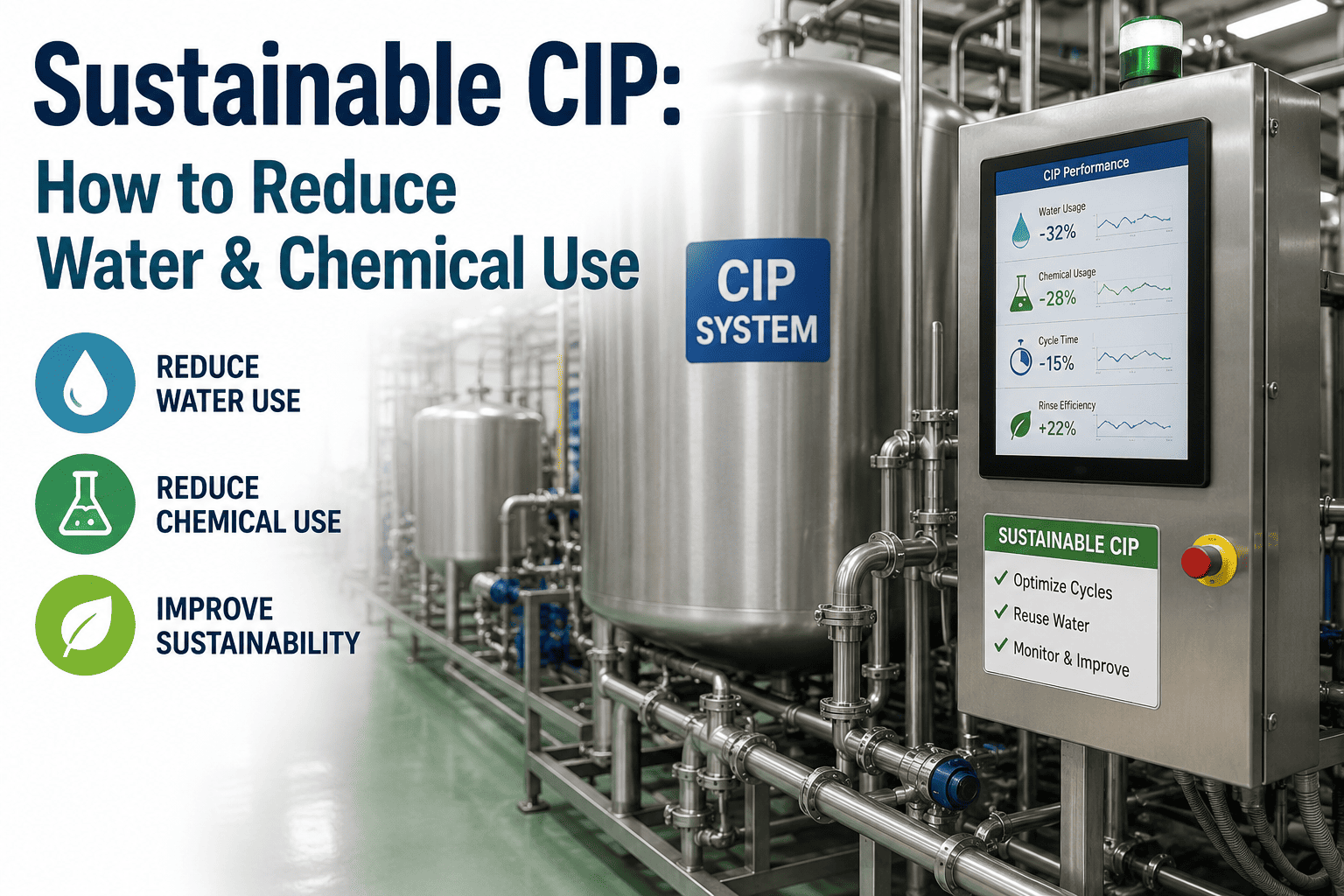
Most CIP cycles running in food plants today were set once, years ago, and never revisited even as equipment, chemistry, and product formulations changed around them. That means plants are routinely running cycles longer than they need to, pumping more water and chemical through the system than soil removal actually requires, simply because nobody has gone back to re-optimize the original parameters. A structured optimization review can cut water use, chemical spend, and cycle time meaningfully without ever compromising cleaning outcomes, which is the exact analysis a Book a Demo session with iFactory walks through line by line.
CIP CYCLE OPTIMIZATION · WATER · CHEMICAL · TIME REDUCTION
Cut CIP Water, Chemical, and Time Without Cutting Cleaning Quality
iFactory analyzes your CIP cycle data to find where parameters are running longer or stronger than validated soil removal actually requires.
Why Most CIP Cycles Are Running Longer Than They Need To
CIP cycle parameters are almost always set conservatively at commissioning, with extra margin built in to guarantee first-pass success during startup validation. That margin is reasonable at first, but it rarely gets revisited once the line stabilizes, and the same padded cycle time keeps running unchanged for years. The result is a slow, compounding waste of water, energy, and chemical across every single wash, multiplied by however many cycles the line runs per day.
Before Optimization
42 min
average full CIP cycle time on an unoptimized dairy tank circuit
→
After Optimization
29 min
validated cycle time after parameter review with equal soil removal results
20-30%
typical water consumption reduction achievable through cycle parameter optimization
15%
average chemical usage reduction when concentration is right-sized to actual soil load
30%
potential cycle time reduction without any loss of validated cleaning performance
100%
of optimized cycles still required to pass full re-validation before going live
Optimization Levers
Four Parameters Worth Re-Examining on Every CIP Circuit
Optimization is not about cutting corners on cleaning, it is about finding the smallest validated set of parameters that reliably achieves the acceptance criteria. Each of the following levers should be reviewed individually, then re-validated together before being locked in as the new baseline. Teams that want a structured review of their own cycle data can walk through it directly on a Book a Demo call.
Cycle Duration
Right-Size Each Wash Phase
Break the full cycle into its individual phases and measure how long soil removal actually takes to reach the acceptance criteria in each one, rather than running every phase to the same fixed duration regardless of how quickly it completes.
Chemical Concentration
Dose to the Validated Minimum
Many plants run caustic and acid concentrations above the validated minimum as a safety margin, when a properly validated lower concentration achieves the same soil removal result at meaningfully lower chemical cost.
Water Reuse and Recovery
Recover Final Rinse for Pre-Rinse Use
Final rinse water is typically clean enough to be captured and reused as the pre-rinse for the next cycle, cutting fresh water consumption substantially without any impact on final rinse quality standards.
Temperature Setpoints
Match Heat to Chemistry, Not Habit
Wash temperatures set higher than the chemistry actually requires waste significant energy across every cycle, and reviewing setpoints against the specific chemistry's effective temperature range often reveals meaningful reduction opportunity.
CIP EFFICIENCY · SUSTAINABILITY · COST REDUCTION
Find the Water, Chemical, and Time Your CIP Program Is Wasting
iFactory's cycle data review identifies exactly which parameters can be safely reduced and builds the re-validation plan to prove it before you change anything on the plant floor.
Optimization Method
A Three-Step Method for Optimizing CIP Cycles Without Losing Validation
Optimization done informally, without re-validation, is how plants accidentally introduce cleaning failures while trying to save water. A disciplined three-step method keeps the process both effective and defensible during an audit.
01
Baseline the Current Cycle With Real Data
Capture actual conductivity, temperature, flow, and duration data for the existing cycle across several production runs before changing anything, so the optimization has a real performance baseline to compare against.
02
Test Reduced Parameters Against Acceptance Criteria
Reduce one parameter at a time — duration, concentration, or temperature — and re-run soil removal verification against the same acceptance criteria used in the original validated protocol before making further changes.
03
Lock In and Re-Validate the New Baseline
Once the reduced parameters consistently pass verification across multiple cycles, formally re-validate the new baseline and update the validation documentation before it becomes the permanent standard operating parameter.
Frequently Asked Questions
CIP Cycle Optimization — Frequently Asked Questions
Does optimizing a CIP cycle require re-validation before use?
Yes. Any change to a validated cycle's duration, concentration, or temperature requires re-validation against the same acceptance criteria used originally, since the change technically creates a new cycle profile that has not yet been proven to reliably remove worst-case soil.
How much water can realistically be saved through CIP optimization?
Plants typically see a 20 to 30 percent reduction in water consumption through a combination of rinse water recovery, right-sized cycle duration, and eliminating unnecessary intermediate rinse steps, though the exact figure depends heavily on how conservative the original cycle parameters were.
Is it safe to reduce chemical concentration to save cost?
It is safe only when the reduced concentration is tested against the same worst-case soil load and passes the identical acceptance criteria as the original validated concentration. Reducing concentration without re-testing risks silent under-cleaning that will not show up until a swab test or, worse, a customer complaint.
Can final rinse water be reused elsewhere in the CIP process?
Final rinse water is frequently clean enough to capture and reuse as the pre-rinse for the following cycle, which reduces fresh water demand without affecting final rinse quality, provided the recovery system prevents cross-contamination between cycles and product changeovers.
How often should CIP cycles be reviewed for optimization opportunities?
An annual review is a reasonable baseline for most plants, with additional reviews triggered by equipment upgrades, chemistry changes, or noticeable increases in water and chemical spend, since these events often signal that the original cycle parameters no longer match current operating conditions.
CIP OPTIMIZATION · SUSTAINABLE CLEANING · 2026
Reduce CIP Water, Chemical, and Time Across Your Plant
iFactory analyzes your existing CIP cycle data and builds a validated optimization plan that cuts resource use while protecting your cleaning acceptance criteria.