Every food and beverage plant runs Clean-in-Place cycles thousands of times a year, yet most quality teams still cannot answer a simple audit question: how do you prove a CIP cycle actually removed the soil it was designed to remove? Validation is the difference between assuming a wash worked and demonstrating it worked with data an FDA or GFSI auditor will accept without argument. A properly built CIP validation protocol combines soil removal verification, chemical concentration testing, and rinse water analysis into one repeatable, documented process that stands up to scrutiny during a Book a Demo walkthrough of iFactory's validation toolkit.
CIP VALIDATION · FOOD MANUFACTURING · AUDIT READINESS
Build a CIP Validation Protocol Auditors Actually Accept
iFactory helps food and beverage plants design, execute, and document CIP validation protocols with sensor-verified soil removal, chemical concentration, and rinse water data attached to every cycle record.
Why CIP Validation Is Different From Routine Cleaning Verification
Routine CIP cleaning confirms that a cycle ran to completion. Validation confirms that the cycle, run under defined worst-case conditions, consistently removes soil to a measurable and acceptable limit. That distinction matters enormously during an audit, because inspectors are trained to ask for objective evidence, not operator sign-off sheets. A validated protocol ties together three independent data streams — physical soil removal checks, in-line chemical concentration readings, and final rinse water quality results — so a single missed parameter cannot slip through unnoticed.
3x
faster audit response when CIP records include validated soil removal evidence
62%
of food plant recalls trace back to sanitation or cleaning verification gaps
15 min
average time to assemble a validated CIP record with automated data capture
99.2%
soil removal consistency achievable with sensor-monitored validated cycles
Validation Protocol
The Five-Stage CIP Validation Protocol, Step by Step
A defensible CIP validation protocol follows a fixed sequence of stages, each producing its own evidence package. Skipping a stage or running stages out of order is one of the most common reasons validation protocols fail internal review before they ever reach a regulator. iFactory's platform structures each stage as a discrete, timestamped checkpoint so plant quality teams can reconstruct the full validation history for any product-equipment combination.
Stage 1
Worst-Case Soil Load Definition
Identify the hardest-to-clean product formulation and the longest realistic production run before cleaning. Validation must be performed against this worst-case condition, not an average or best-case soil load, or the protocol will not hold up to challenge during an audit.
Stage 2
Cycle Parameter Baseline Capture
Record temperature, flow rate, chemical concentration, and cycle duration for every phase of the wash — pre-rinse, caustic wash, intermediate rinse, acid wash, and final rinse. These baseline values become the acceptance criteria against which every future production cycle is compared.
Stage 3
Soil Removal Verification
Use ATP swabbing, visual inspection under defined lighting, or protein residue testing at predetermined critical control points to confirm soil has been removed to the acceptable limit. Results are logged against the specific equipment zone and cycle timestamp for full traceability.
Stage 4
Chemical and Rinse Water Confirmation
Verify caustic and acid concentration through in-line conductivity readings and confirm final rinse water meets conductivity and pH acceptance thresholds before the line is released back to production. This stage catches under-dosing and incomplete rinsing before they become a contamination event.
Stage 5
Documentation and Requalification Schedule
Compile the full validation package and set a requalification interval based on equipment changes, product changeovers, or a fixed calendar review. Requalification, not just initial validation, is what most auditors actually check first. Quality teams building this workflow can see the full stage-by-stage system on a
Book a Demo call.
Acceptance Criteria
CIP Validation Acceptance Criteria by Verification Method
Different verification methods carry different sensitivity, cost, and turnaround profiles. Most validated protocols combine at least two of the following methods so a failure in one detection layer is still caught by another. The table below summarizes how each method is typically deployed across a validation program.
CIP Validation Verification Methods — Comparison
CIP VALIDATION · DIGITAL RECORDS · SANITATION COMPLIANCE
Turn Every CIP Cycle Into an Audit-Ready Validation Record
iFactory automatically captures cycle parameters, verification results, and requalification schedules so your validation package is always ready before an auditor asks for it.
Common Failures
Where CIP Validation Protocols Break Down in Real Plants
Most validation failures are not caused by bad chemistry or weak equipment. They come from process gaps that are easy to overlook until an auditor finds them first. Recognizing these failure patterns early lets a quality team fix the protocol before it becomes a finding.
01
Validation Run Under Best-Case Conditions
Teams under time pressure often validate against a light, easy-to-clean soil load rather than the true worst case. The protocol looks successful on paper but fails the first time a heavier production run hits the line.
02
Missing Requalification Triggers
Equipment modifications, new product formulations, or spray ball replacements should all trigger requalification, but paper-based systems rarely flag these events automatically, leaving validated status stale and technically invalid.
03
Disconnected Data Streams
Soil removal swab results, chemical concentration logs, and rinse water readings are frequently stored in separate spreadsheets or paper logs, making it nearly impossible to reconstruct a single unified validation story during an audit.
04
No Independent Cross-Check Between Methods
Relying on a single verification method, such as visual inspection alone, leaves a validation program blind to residues and contamination types that method cannot detect, undermining the entire protocol's credibility.
Frequently Asked Questions
CIP Validation Protocol — Frequently Asked Questions
How often should a CIP validation protocol be requalified?
Most food plants requalify annually at minimum, and immediately after any equipment change, spray ball replacement, or new product introduction that alters the soil profile. iFactory's platform flags these triggering events automatically so requalification is never missed. Requalification frequency should also account for regulatory guidance specific to your product category and applicable GFSI scheme.
What is the difference between CIP verification and CIP validation?
Verification confirms an individual cycle ran and met its parameters. Validation is the broader, documented exercise that proves the protocol itself reliably removes worst-case soil across repeated cycles under defined conditions. A plant needs both, but auditors specifically look for validation documentation during scheme audits like SQF and BRCGS.
Can CIP validation be done without shutting down the production line?
Initial validation typically requires dedicated line time to run controlled worst-case cycles, but ongoing verification against the validated baseline happens during normal CIP cycles without any additional downtime. iFactory's sensor integration captures verification data automatically during routine production cleaning cycles.
What documentation do auditors expect to see for CIP validation?
Auditors typically expect the worst-case soil justification, baseline cycle parameters, verification method results, acceptance criteria, and a requalification schedule with evidence it has been followed. iFactory compiles all five elements into a single exportable record for every validated cleaning protocol on file.
How does allergen cross-contact fit into a CIP validation protocol?
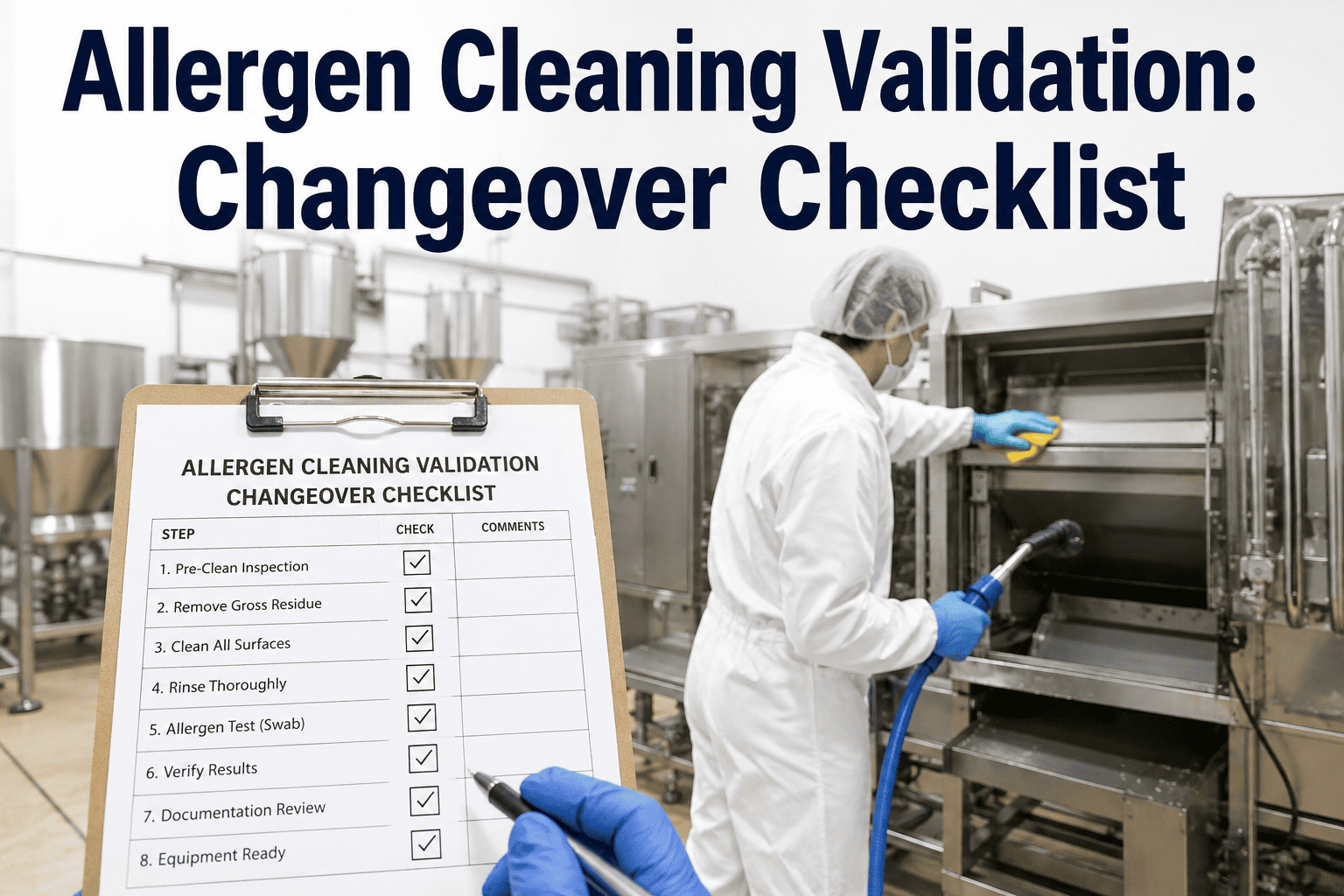
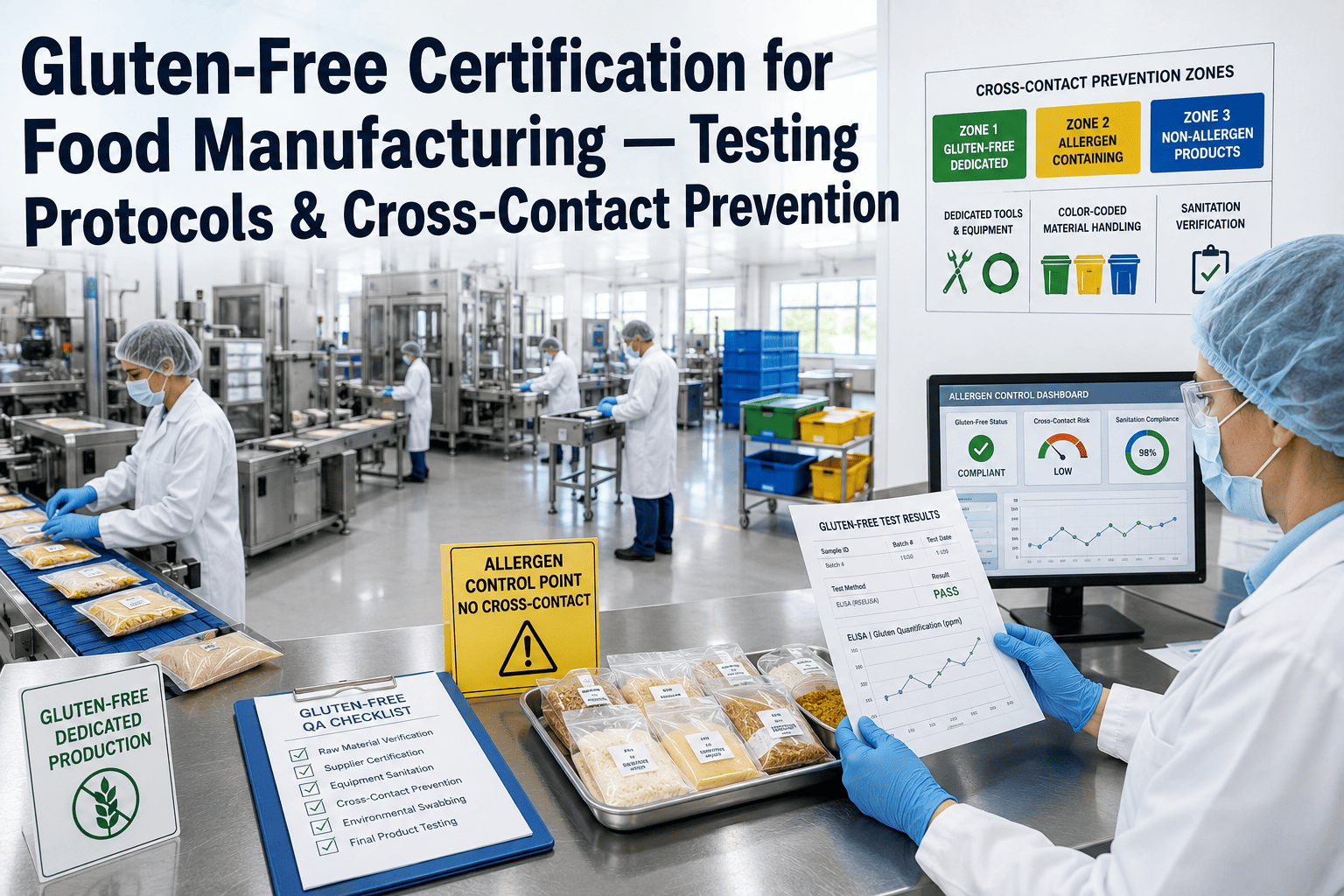
Allergen removal should be validated as its own critical control point using ELISA or lateral flow swab testing at changeover, separate from general soil removal validation, because allergen detection limits are far stricter than typical sanitation thresholds. Combining both into one protocol gives quality teams a complete changeover verification picture.
CIP VALIDATION · FOOD SAFETY · SANITATION AUDIT READINESS
Get a CIP Validation Protocol That Passes Every Audit
iFactory combines soil removal verification, chemical monitoring, and rinse water analysis into one automated validation record for every CIP cycle across your plant.



-system-analytics-best-practices-for-food-and-beverage.png)
-system-validation-and-analytics-checklist.png)
