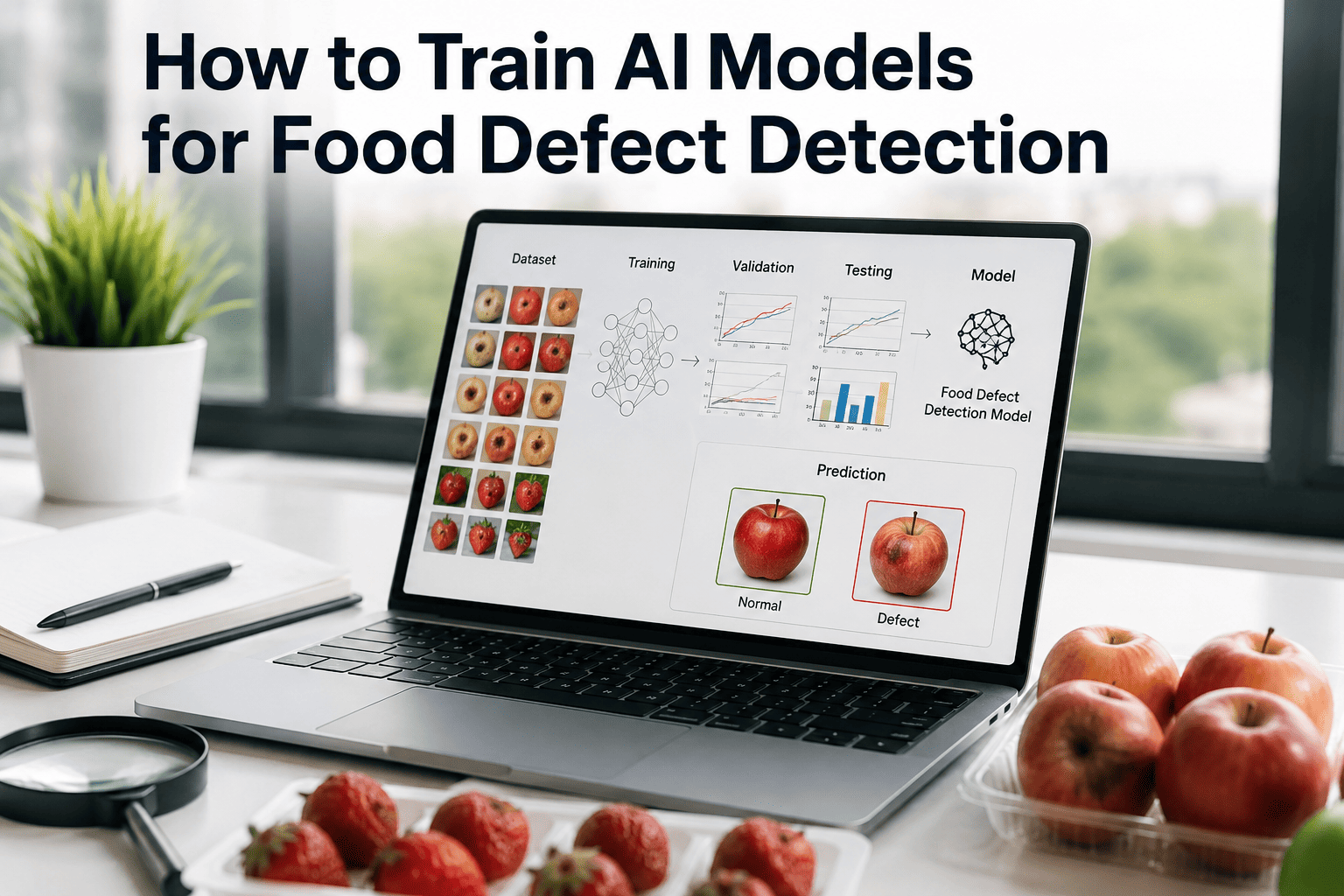
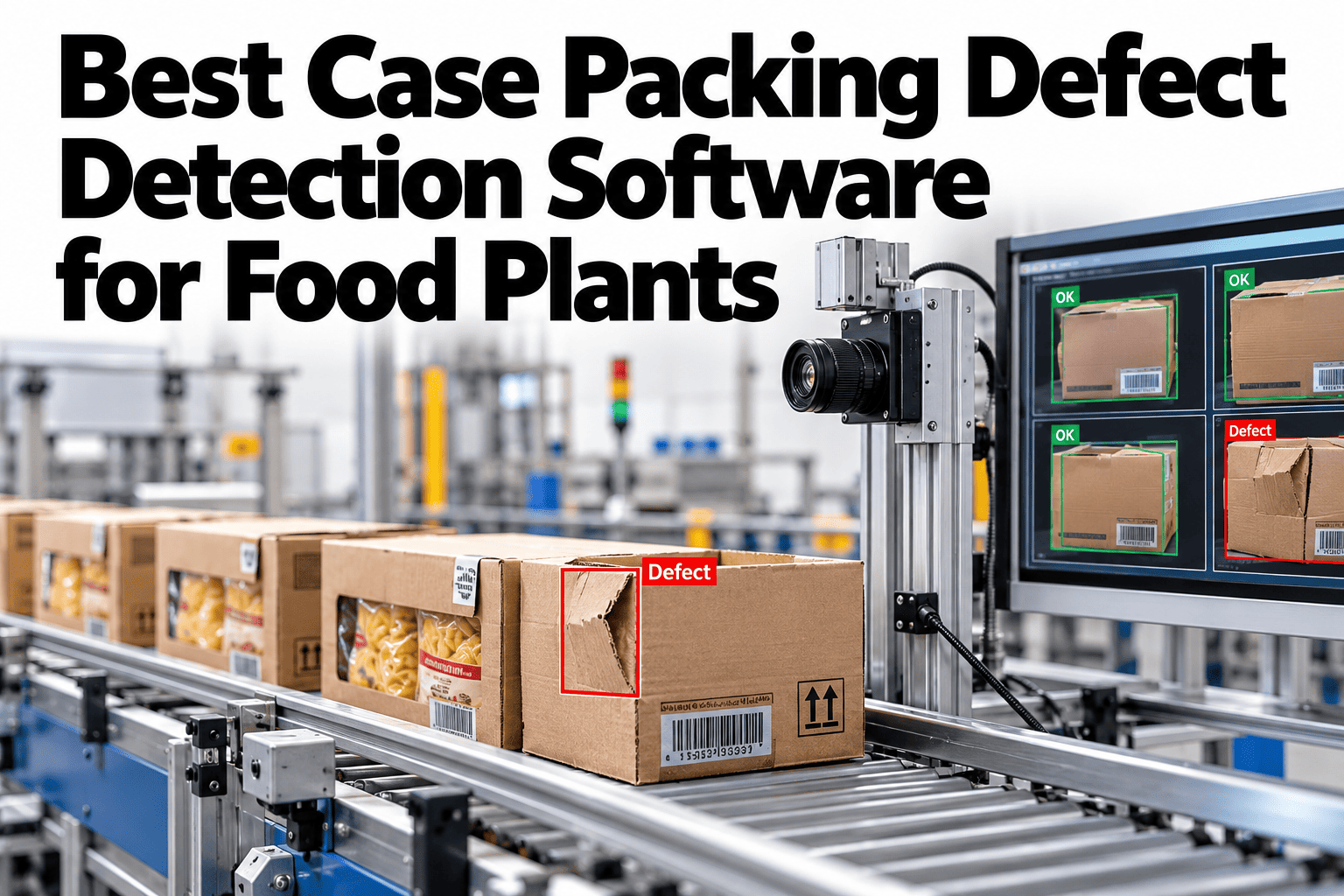
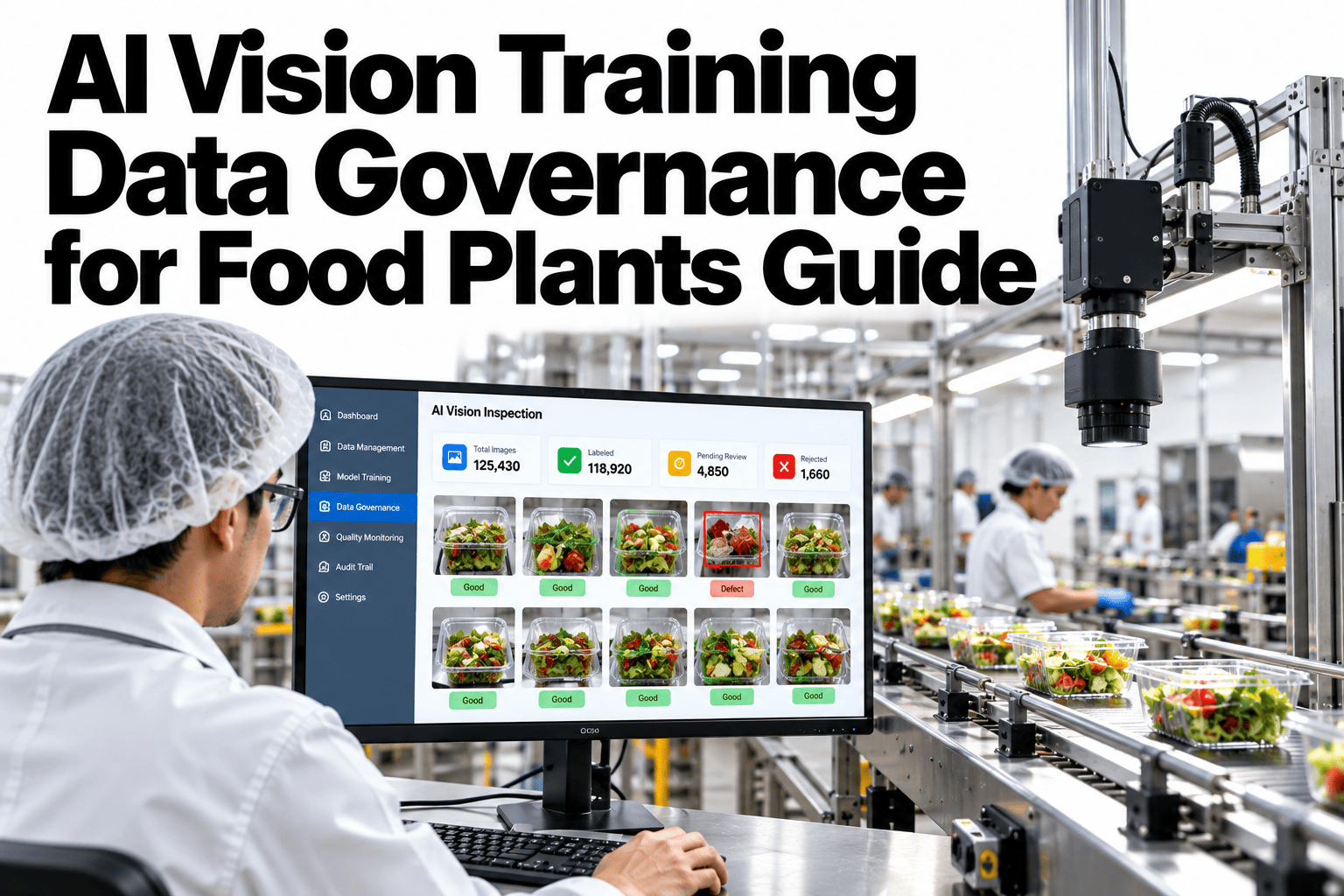
A vision model is only as good as the images it was trained on, and this is where most food defect detection projects quietly succeed or fail long before anyone talks about accuracy numbers. A model trained on fifty clean, well-lit photos of an ideal product will fall apart the moment it meets a real production line with variable lighting, condensation, and the natural mess of a working plant. Getting the data pipeline right — collection, annotation, augmentation, and validation — is the actual engineering work behind a reliable inspection system, and it is where iFactory's team spends most of its time on every deployment.
DATA STRATEGY · MODEL TRAINING · EDGE DEPLOYMENT
The Dataset Is the Product, the Model Is Just the Output
Production-ready defect detection models typically need a minimum of a thousand annotated images with at least a hundred examples per defect category, collected under the same lighting and camera conditions the system will actually run in.
The Pipeline From Raw Images to a Deployed Model
Every reliable defect detection model moves through the same core pipeline, even though the specific defect categories and product types change from one food line to the next. Skipping or rushing any one of these stages is the most common reason a promising pilot underperforms once it reaches real production volume.
01
Collect
Images captured under actual production lighting and camera conditions, not a controlled lab setup.
›
02
Annotate
Defect boundaries labeled by people who understand the product's real acceptance criteria.
›
03
Augment
Controlled variation added to fill gaps for rare defects without distorting real-world distributions.
›
04
Train & Validate
Model trained on a split dataset, then tested against images it has never seen before deployment.
See How a Model Is Trained on Your Actual Product
iFactory builds each model with your quality team's own acceptance criteria, not a generic industry dataset.
Why Annotation Quality Matters More Than Dataset Size
It is tempting to assume that more images automatically produce a better model, but a large dataset with inconsistent or careless annotation will train a model to be confidently wrong. Clear labeling guidelines, agreement between multiple annotators on what actually counts as a defect, and a review loop that catches mistakes before they enter training all matter more than raw volume. This is especially true in food manufacturing, where the line between an acceptable natural variation and an actual defect is often a judgment call that only someone with real quality experience on that specific product can make consistently.
Avoiding the Most Common Data Leak
A model can appear highly accurate during testing and then fail in production if training and validation images were drawn from the same production run or the same short time window. Splitting data by batch, shift, or sequence rather than by individual frame prevents the model from effectively memorizing the specific conditions of one narrow slice of footage instead of learning the defect pattern itself.
Where Synthetic Data and Augmentation Actually Help
Real production defects are, by definition, rare — that is what makes them defects. Waiting to naturally collect a thousand real examples of a rare but serious defect could take months a plant does not have. Data augmentation and synthetic image generation fill that gap by creating controlled variation for underrepresented defect categories, but the useful version of this technique complements real data rather than replacing it, and stays realistic enough that it does not skew the model's understanding of what production conditions actually look like.
Dataset Benchmarks by Deployment Stage
| Stage | Minimum Images | Focus |
| Prototype / Feasibility |
200-500 |
Confirm the defect is visually detectable at all |
| Pilot Deployment |
1,000+ with 100+ per defect class |
Validate catch rate and false-reject rate on real product |
| Production Scale |
Several thousand, growing continuously |
Ongoing model refinement from live line data |
Skip the Months of Trial and Error on Your Own Data Pipeline
iFactory's team has already solved the annotation, augmentation, and validation problems across dozens of food categories.
Frequently Asked Questions
How many images do we actually need before a model is production-ready?
A reasonable production baseline is around a thousand annotated images with at least a hundred examples of each defect category, though the right number depends heavily on how visually variable the product naturally is. A uniform manufactured product like a cracker needs less data than a highly variable fresh product like cheese or produce. Details on scoping a dataset for your product are available through
iFactory Support.
Can we use a generic public defect detection dataset instead of building our own?
Public benchmark datasets are useful for prototyping and learning the underlying techniques, but production deployment on a specific food product almost always requires custom data collected from your own line, lighting, and camera setup. Generic datasets rarely transfer well to the exact visual conditions and defect definitions of a specific plant.
What happens when a genuinely new defect type shows up that the model has never seen?
This is expected and part of why continuous data collection matters even after initial deployment. New defect examples get annotated and added to the training set in a periodic retraining cycle, so the model's coverage expands over time rather than staying frozen at its initial launch state.
Does the model need to be retrained every time we run a new SKU?
Not necessarily a full retrain. Many deployments use recipe-based model profiles that switch automatically between SKUs the system has already been trained on, reserving a genuine retraining cycle for products that fall meaningfully outside the model's existing coverage.
How is the model validated before it goes live on the actual production line?
The model is tested against a held-out set of images it never saw during training, and ideally against a period of live production data run in shadow mode alongside existing inspection methods before it is given control of the reject gate.
Book a demo to see a realistic validation timeline for your product category.
DATA STRATEGY · MODEL TRAINING · PRODUCTION-READY AI
Build a Model That Actually Holds Up on the Line
Talk to iFactory about the data collection and annotation approach behind a defect detection model built for your specific product.