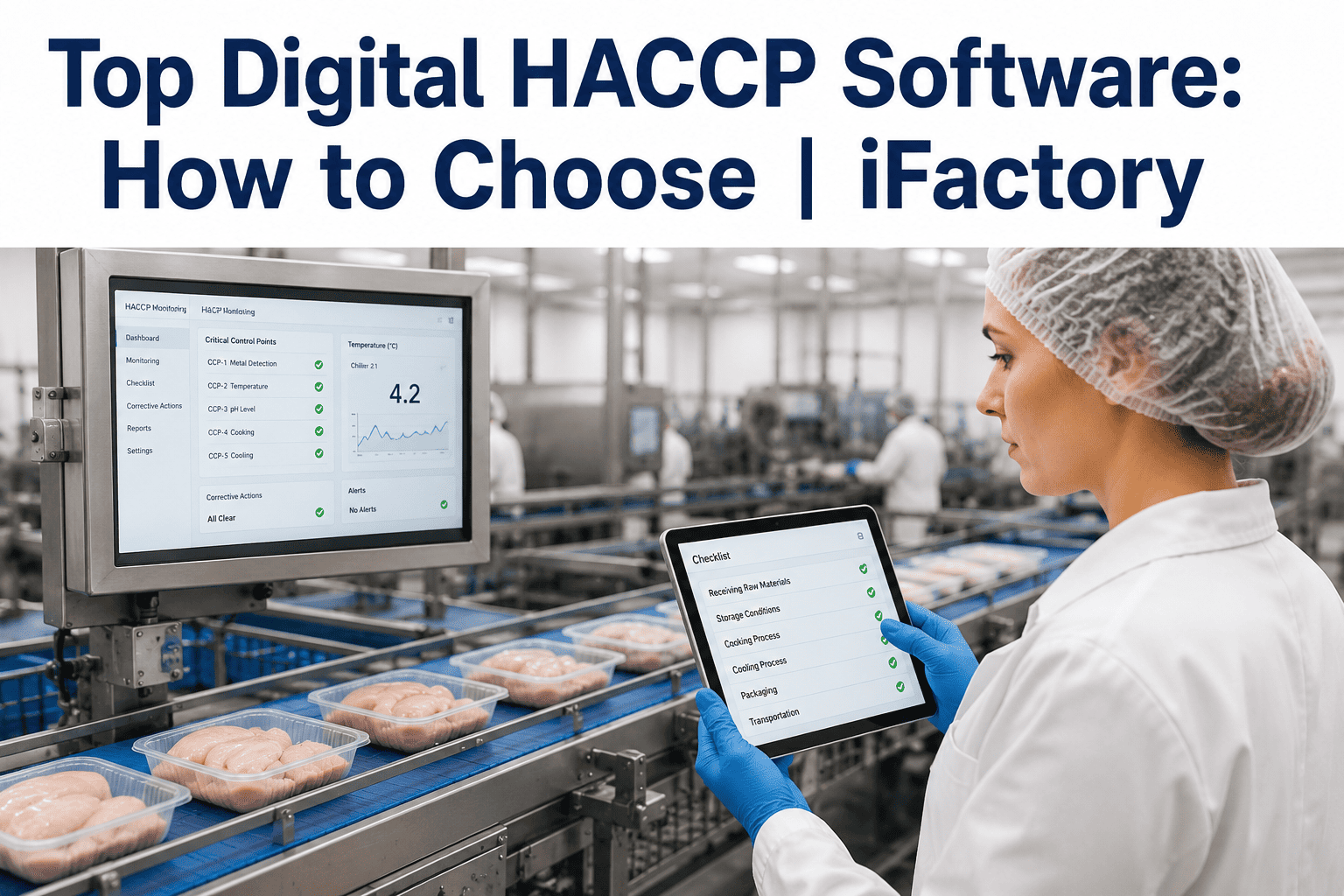
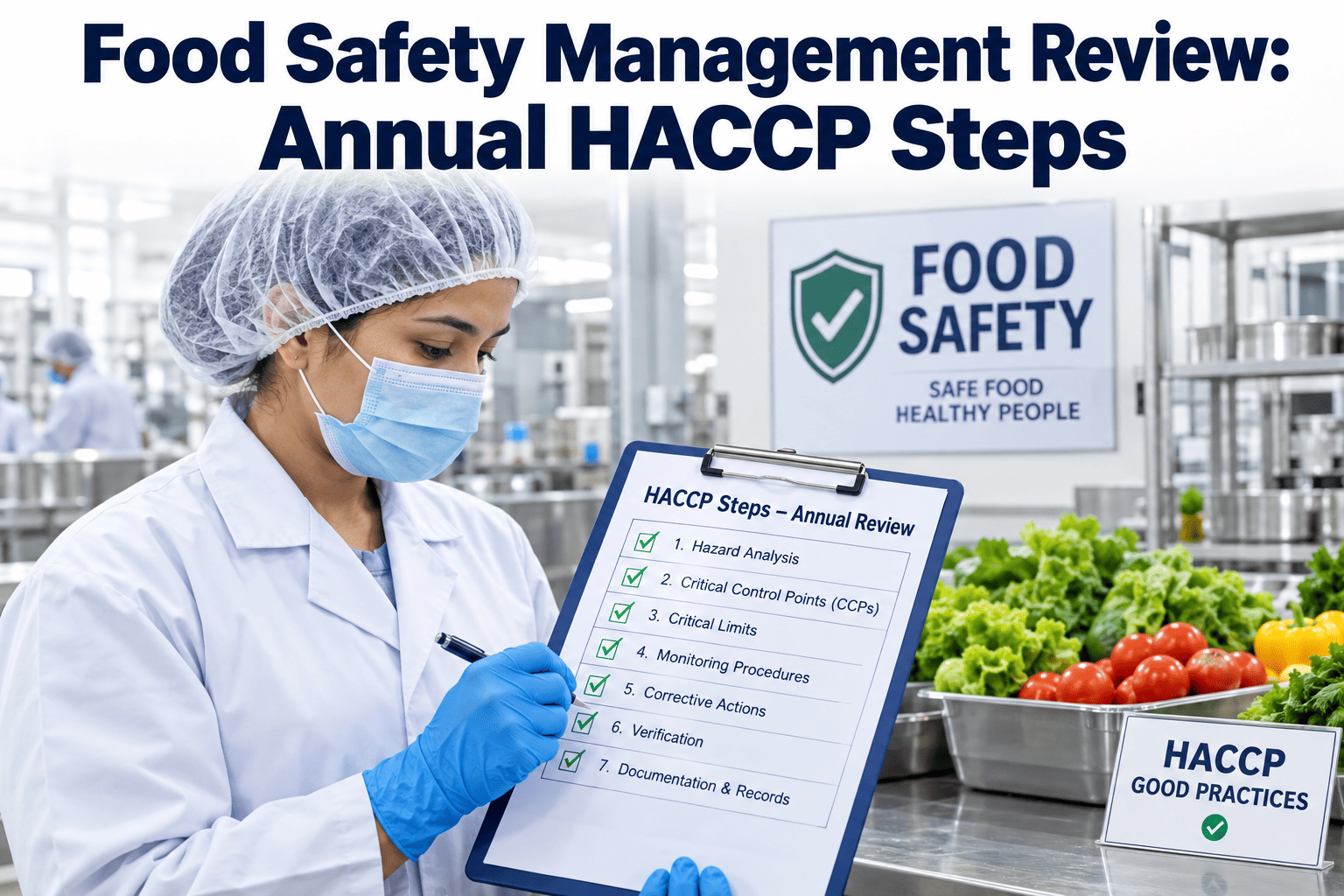
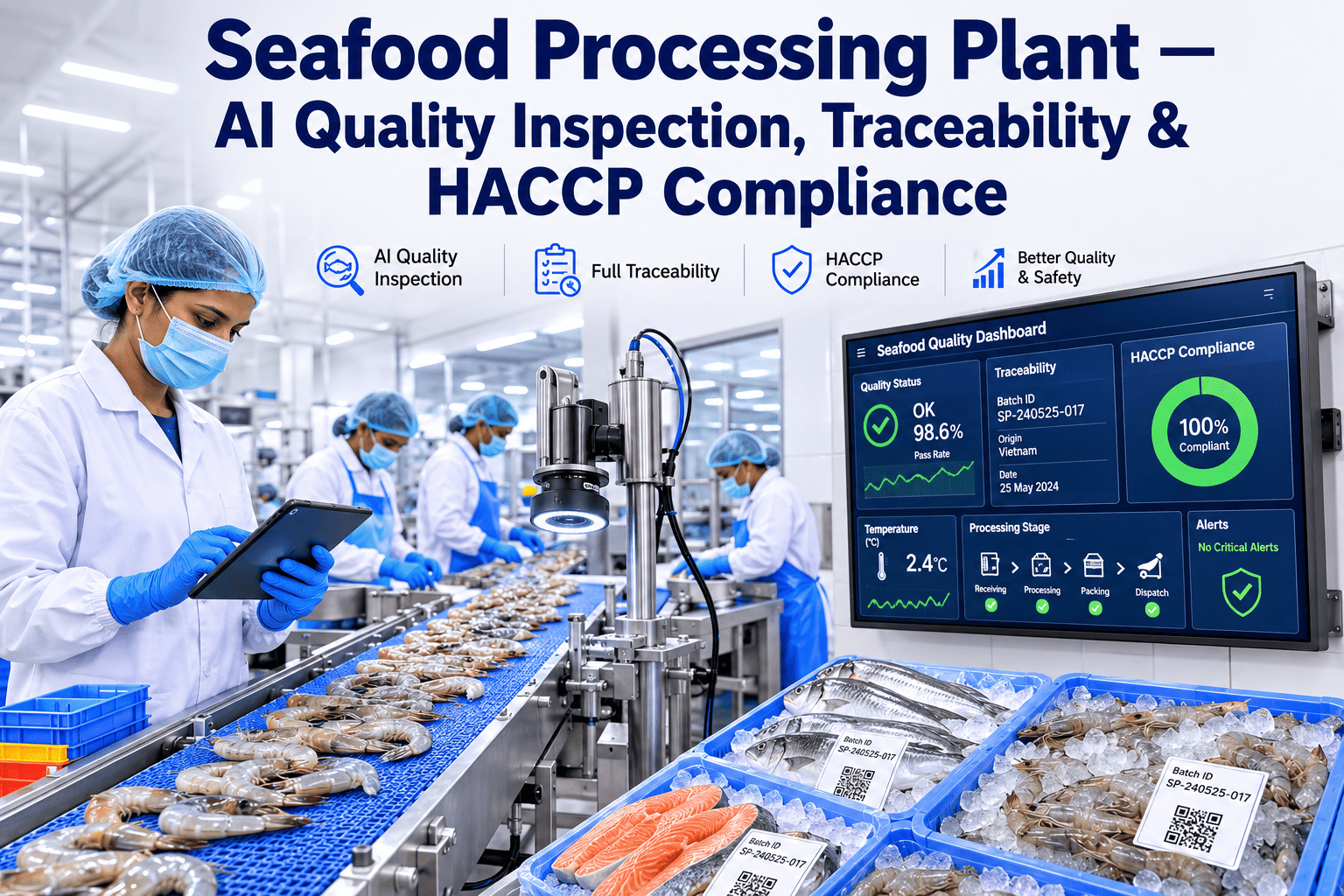
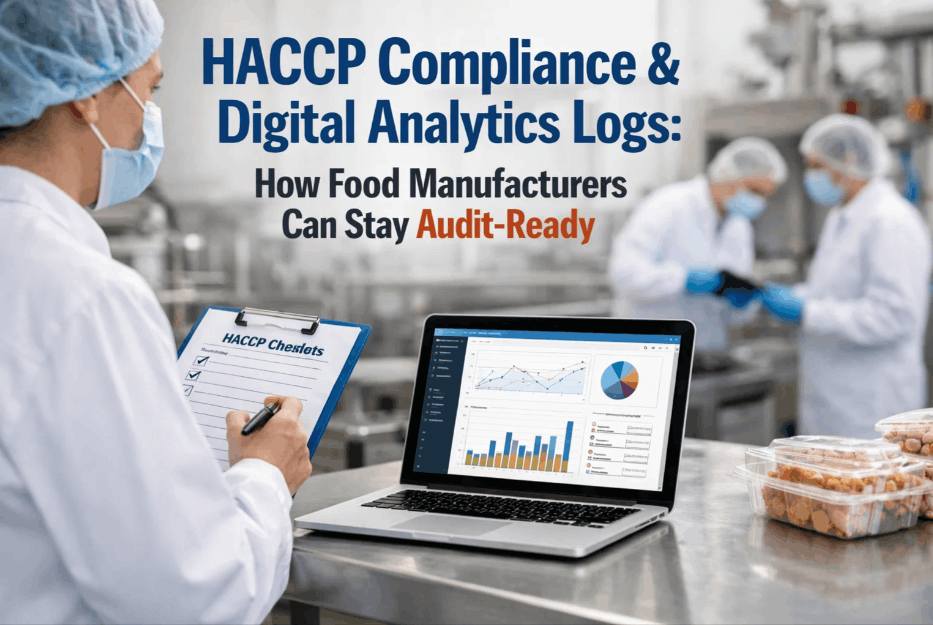
Every food plant still running HACCP on paper is one auditor request away from a scramble. Someone has to dig through binders, cross-reference handwritten CCP logs against production schedules, and hope the overnight shift filled in every field legibly. Digital HACCP software exists to remove that scramble entirely, but the market is crowded with platforms ranging from simple checklist apps to full plant-wide quality systems, and picking the wrong one for your operation size wastes budget and stalls adoption. Teams evaluating a move from paper or a legacy system can Book a Demo to see how iFactory structures CCP monitoring, corrective actions, and audit-ready records for manufacturing plants specifically.
DIGITAL HACCP SOFTWARE · SELECTION GUIDE · FOOD SAFETY MANAGEMENT
How to Choose Digital HACCP Software: A Practical Selection Guide for Food Plants
A feature-by-feature, integration-aware guide to selecting food safety management software — built for plant leaders comparing platforms, not just reading review sites.
$150k–$200k
Typical annual savings mid-size plants report after switching from paper to digital food safety monitoring
Why Paper-Based HACCP Breaks Down at Scale
Paper HACCP programs are not inherently non-compliant — regulations do not mandate a digital medium. What breaks down is consistency, speed, and retrievability as a plant grows past a single line or a single shift. A CCP log filled out by hand at 2 a.m. is only as good as the operator's legibility and attentiveness at that hour, and a binder of logs is only as searchable as someone's willingness to flip through months of pages during an audit. These are not edge-case failures; they are the predictable behavior of a paper system under real operating pressure.
The failure pattern tends to follow a predictable arc as plants scale. A single line with one dedicated QA technician can usually sustain a paper system through sheer diligence — the technician knows every form, checks every entry, and catches problems before they compound. Add a second shift, a second line, or a second site, and that diligence no longer scales linearly with headcount. Records fragment across supervisors with different habits, corrective action follow-through becomes inconsistent, and the plant's actual food safety performance becomes genuinely difficult for leadership to see in real time, since the only view into it is whatever gets manually compiled for the next audit or management review.
Illegible or Incomplete Entries
Handwriting quality, rushed shifts, and missed fields turn CCP logs into unreliable records exactly when they matter most.
No Real-Time Alerting
A temperature excursion at 2 a.m. sits undiscovered until the log is reviewed hours or days later, long after corrective action should have started.
Slow, Manual Audit Prep
Preparing for a GFSI or FDA audit means pulling binders, cross-referencing dates, and hoping nothing is missing — often days of dedicated staff time.
No Cross-Site Visibility
Multi-site operators cannot compare CCP performance, corrective action frequency, or compliance trends across plants without manually compiling reports.
The Core Feature Scorecard: What Every Platform Should Have
Vendor marketing pages tend to blur together after the fifth demo call. A structured scorecard, evaluated the same way across every platform under consideration, cuts through that noise. The categories below cover the functional core that separates a genuine HACCP management platform from a general-purpose checklist app wearing food safety branding.
Score each platform on the same sheet, in the same order, during or immediately after every demo — memory fades fast once you have sat through five or six vendor presentations in a week, and the platform that "felt" strongest in the room is not always the one that scores highest once must-have and strongly-recommended categories are weighed honestly. Treat any category marked must-have as a pass or fail line rather than a partial credit item; a platform missing guided corrective action workflows, for example, is not a slightly weaker option, it is a platform that will require building that workflow manually outside the tool, which defeats a large part of the reason to digitize in the first place.
Must-Have
HACCP Plan Builder
Structured hazard analysis, CCP identification, critical limit definition, and monitoring procedure documentation that mirrors or imports your existing approved plan rather than forcing a rebuild.
Must-Have
Real-Time CCP Monitoring
Live capture of critical control point data — manual entry or sensor-fed — with immediate flagging when a reading falls outside the defined critical limit.
Must-Have
Guided Corrective Actions
Workflow that walks an operator through deviation identification, immediate correction, root cause capture, verification, and product disposition — not a free-text box.
Must-Have
Audit-Ready Record Retrieval
Searchable, exportable records by date, line, product, or CCP — so an auditor's request for six months of data takes minutes, not days.
Strongly Recommended
Offline Mobile Capture
Shop-floor data entry that continues working without live connectivity and syncs automatically once the device reconnects — plant floors are not always well covered by Wi-Fi.
Strongly Recommended
Sensor and Instrument Integration
Direct connections to temperature probes, pH meters, and other monitoring instruments via standard protocols, removing manual transcription error from the record.
Strongly Recommended
ERP / QMS Integration
Two-way data exchange with existing ERP, WMS, or quality systems so lot codes, production orders, and inventory movements stay consistent without duplicate entry.
Nice-to-Have
GFSI Scheme Scoring
Built-in mapping of records and evidence against FSSC 22000, SQF, or BRCGS clause structures, useful for sites managing multiple certifications simultaneously.
CCP MONITORING · CORRECTIVE ACTIONS · AUDIT-READY RECORDS
See the Feature Scorecard Applied to Your Own Plant
iFactory covers every must-have and strongly-recommended category above — HACCP plan digitization, live CCP alerts, guided corrective action workflows, and ERP-connected records — built specifically for manufacturing environments.
Match the Platform Tier to Your Operation
The single biggest selection mistake is picking a platform built for a different scale of operation than the one you run. A single-site restaurant group and a multi-plant manufacturer with sensor-integrated production lines have almost nothing in common in terms of software requirements, even though both technically need "HACCP software." Matching platform tier to operational reality upfront avoids a costly re-selection eighteen months in.
Vendors themselves often blur these tiers in their marketing, since a platform that started as a Tier 1 checklist tool for restaurants and later added manufacturing features will still market itself broadly as "HACCP software for any food business." The tier framework below is a way to test that claim against your own operational reality — read the tier description that matches your plant honestly, not the tier that sounds closest to your ambitions for where the plant might be in three years, since buying ahead of actual operational complexity usually means paying for unused depth and fighting unnecessary configuration overhead in the meantime.
Tier 1
Single-Site, Checklist-Driven Operations
Best fit: independent restaurants, single kitchens, small retail food operations
Lightweight platforms centered on customizable checklists, temperature logging, and use-by date alerts on a phone or tablet. Quick setup, minimal training, and low monthly cost matter more here than deep manufacturing integration. AI-assisted plan generation has become common at this tier, reducing initial setup time significantly.
Tier 2
Multi-Site Food Service or Central Kitchens
Best fit: restaurant chains, central production kitchens, catering operations
Platforms need cross-location reporting, standardized checklist deployment across sites, and role-based access so regional managers see aggregated compliance trends. Frontline usability and offline capture matter as much as feature depth, since these teams often have high staff turnover.
Tier 3
Plant-Wide Manufacturing Control
Best fit: food and beverage manufacturers, processors, co-packers with production lines
Requires deep CCP monitoring tied to production data, sensor integration for automated readings, batch record tracking, and non-conformance management connected to the same data layer as quality and traceability. This is where paper-to-digital transitions deliver the largest measurable ROI, because manual monitoring at production scale is the most labor-intensive to replace.
Tier 4
Enterprise, Multi-Plant, GFSI-Heavy Operations
Best fit: large manufacturers managing FSSC 22000, SQF, or BRCGS across multiple facilities
Needs unified compliance scoring across schemes, supplier compliance management, EHS integration, and enterprise-grade ERP connectivity. Implementation is a genuine project requiring dedicated internal ownership, not a self-serve signup — but the ROI compounds fastest here since a single source of truth eliminates duplicate compliance work across sites.
Integration Requirements: The Question Vendors Answer Last
Sales demos are built to showcase the interface, not the integration reality. But for any plant with an existing ERP, WMS, or quality system, integration depth determines whether the new platform becomes the single source of truth or just another disconnected system generating duplicate data entry. These are the integration questions worth asking directly before signing.
The gap between "we integrate with your ERP" and a genuinely working integration is usually where implementation timelines quietly double. A vendor's honest answer to these six questions, delivered with specifics rather than reassurance, is one of the strongest signals available during evaluation — and it is worth insisting on a live technical call with the vendor's integration engineer, not just the sales representative, before finalizing a contract for any Tier 3 or Tier 4 deployment where production data accuracy is directly tied to food safety outcomes.
How does data flow between systems?
Confirm whether integration uses live APIs, scheduled file syncs, or manual imports — API-based integration keeps lot codes, production orders, and inventory movements accurate in real time, while batch file syncs introduce lag.
Which sensor protocols are supported?
OPC-UA, MQTT, and Modbus are the standard protocols for connecting temperature probes, pH meters, and other production instruments — confirm native support rather than requiring custom middleware for each connection.
What happens to existing item masters and lot codes?
Integration should preserve existing lot coding conventions and item master data rather than forcing a parallel numbering system that creates reconciliation work.
Does the platform work offline on the shop floor?
Plant floors are not uniformly covered by reliable Wi-Fi — confirm the mobile capture experience stores data locally and syncs automatically without workflow interruption when connectivity drops.
Which ERP and QMS platforms are pre-built connectors available for?
Ask specifically about your existing systems by name — SAP, Oracle, and other major ERP platforms typically have pre-built connectors on mature platforms, while less common systems may require custom integration work and added timeline.
How long does a typical deployment actually take?
Structured HACCP digitization deployments that mirror an existing approved plan rather than requiring a rebuild typically run four to six weeks; ERP-scale rollouts with heavy customization can run quarters — get a realistic timeline in writing, not a marketing estimate.
The ROI Math: What Digital HACCP Actually Saves
ROI conversations with vendors tend toward vague promises. The more useful exercise is breaking the value down into the specific categories that actually change when paper monitoring becomes digital, since each has a defensible way to estimate impact against your own labor and incident cost data.
3–6 mo
Typical full payback period reported by mid-size plants after deployment
800+ hrs
Labor hours reclaimed annually reported by plants replacing paper logs and rework with digital capture
4–6 wks
Realistic deployment window for a structured HACCP digitization mirroring an existing approved plan
1 shift
Typical operator training time needed to reach full independence on a well-designed mobile interface
The savings break into three buckets worth modeling separately. Labor reclaim comes from eliminating manual data transcription, log reconciliation, and audit-prep binder assembly — the most straightforward category to estimate against current staff hours spent on these tasks. Risk reduction comes from catching deviations in real time rather than discovering them during a delayed log review, reducing the scope and cost of holds, rework, and potential recalls. Compliance readiness comes from always having a defensible, searchable record set, which shortens audit duration and reduces the likelihood of findings tied to documentation gaps rather than actual process failures.
A useful exercise when building an internal business case is to price each bucket against your own plant's numbers rather than accepting industry averages at face value. Multiply current hours spent weekly on manual log review, transcription, and audit-prep assembly by fully loaded labor cost to estimate the labor reclaim figure. Pull the last two years of hold, rework, and recall-adjacent incident costs to estimate what faster deviation detection would plausibly have prevented. And ask your quality team directly how many audit days were spent specifically hunting for missing or hard-to-locate records rather than substantively demonstrating compliance — that number, multiplied by the fully loaded cost of the staff involved, is usually the most persuasive line item in the business case because it is the easiest for finance and operations leadership to visualize.
Red Flags: Signs a Platform Won't Hold Up at Your Scale
Some warning signs are consistent across vendor evaluations regardless of which platforms are on the shortlist. Watching for these during demos and reference calls prevents a selection that looks good in a sales presentation but struggles under real plant operating conditions. It is worth treating the demo itself as a working session rather than a passive presentation — bring an actual CCP from your HACCP plan, a real deviation scenario, and a genuine question about your existing ERP, and see how the vendor's team responds when the conversation moves off their prepared script. The quality of that improvised response is often more revealing than the polished portion of the demo.
!
No public or transparent pricing. Platforms that require a sales call just to learn baseline pricing often mean the cost scales unpredictably with users, sites, or features you assumed were included.
!
Generic checklist tool rebranded for food safety. If the platform's core architecture was built for general inspections and food safety features feel bolted on, HACCP-specific workflows like guided corrective actions will feel shallow.
!
No offline capability. A platform that requires constant connectivity will fail exactly where plant floors are weakest — dense equipment areas, cold storage, and remote corners of large facilities.
!
Integration described only as "possible" rather than demonstrated. If a vendor cannot show a live connection to a system like yours during the demo, budget significant additional implementation time and cost for custom integration work.
!
No reference customer at your operational scale. A platform with strong reviews from single-site restaurants is not evidence it will perform for a multi-line manufacturing plant, and vice versa — ask for references matching your tier specifically.
Frequently Asked Questions: Digital HACCP Software Selection
How long does it realistically take to go from paper to a fully deployed digital HACCP system?
For a plant importing an existing approved HACCP plan rather than rebuilding one from scratch, structured deployments typically run four to six weeks — the plan is imported, CCPs are configured with exact critical limits, sensor connections are established, and alert escalation paths are set before go-live. Enterprise deployments spanning multiple plants with heavy ERP customization take longer, often running a full quarter. Teams wanting a realistic timeline for their specific plant configuration can
Book a Demo to scope it directly.
Does digital HACCP software replace the need for a HACCP plan and food safety team?
No. The software digitizes execution, monitoring, and record-keeping of an existing HACCP plan — it does not replace the hazard analysis, CCP determination, or food safety expertise required to build that plan in the first place. A platform with AI-assisted plan generation can accelerate initial setup for simpler operations, but the food safety team remains responsible for validating that the resulting plan is accurate and complete for their specific product and process.
Can digital HACCP platforms integrate with sensors we already have installed?
Most mature platforms support standard industrial protocols — OPC-UA, MQTT, and Modbus — for connecting existing temperature probes, pH meters, and other monitoring instruments without requiring hardware replacement. Confirm protocol support and ask for a live integration demonstration with equipment similar to yours rather than accepting a general compatibility claim. Contact
iFactory Support to review specific sensor and instrument compatibility.
What is the real ROI timeline for switching from paper to digital HACCP?
Mid-size plants commonly report full payback within three to six months of deployment, driven by reclaimed labor hours previously spent on manual transcription, log reconciliation, and audit-prep work, along with reduced hold and rework costs from catching deviations in real time rather than during delayed log review. Larger multi-site operations tend to see the ROI compound faster because the same platform eliminates duplicate compliance work across every additional facility.
Should a small single-site operation buy the same platform as a large manufacturer?
No. Platform tiers exist for a reason — lightweight, checklist-driven tools built for quick setup and low monthly cost serve single-site food service well, while manufacturing plants with production-line CCP monitoring, sensor integration, and ERP connectivity needs require a fundamentally different depth of platform. Buying enterprise-grade software for a single kitchen means paying for unused complexity; buying a lightweight checklist app for a multi-line plant means outgrowing it within a year.
HACCP DIGITIZATION · CCP MONITORING · ERP INTEGRATION
Move From Paper to a Plant-Wide Digital HACCP System Built for Manufacturing
iFactory imports your existing approved HACCP plan, connects to production-floor sensors via OPC-UA, MQTT, or Modbus, and ties every CCP reading, corrective action, and audit record to your existing ERP — with a structured deployment that fits inside a single audit cycle.