Most freezers defrost on a timer, whether the evaporator needs it or not. Each unnecessary defrost uses energy, adds heat to the room and warms nearby product, while a missed defrost lets frost choke airflow and push the room off temperature. Defrost optimisation reads the real state of the coil and starts a defrost only when it is needed. Done well, it can cut energy use and temperature swings together. To see how this could work on your freezers, you can review your defrost data with our team.
Refrigeration performance for food plants
Defrost When the Coil Needs It, Not When the Clock Says So
iFactory AI reads coil and room signals to time defrost cycles, helping food plants reduce energy use and temperature swings.
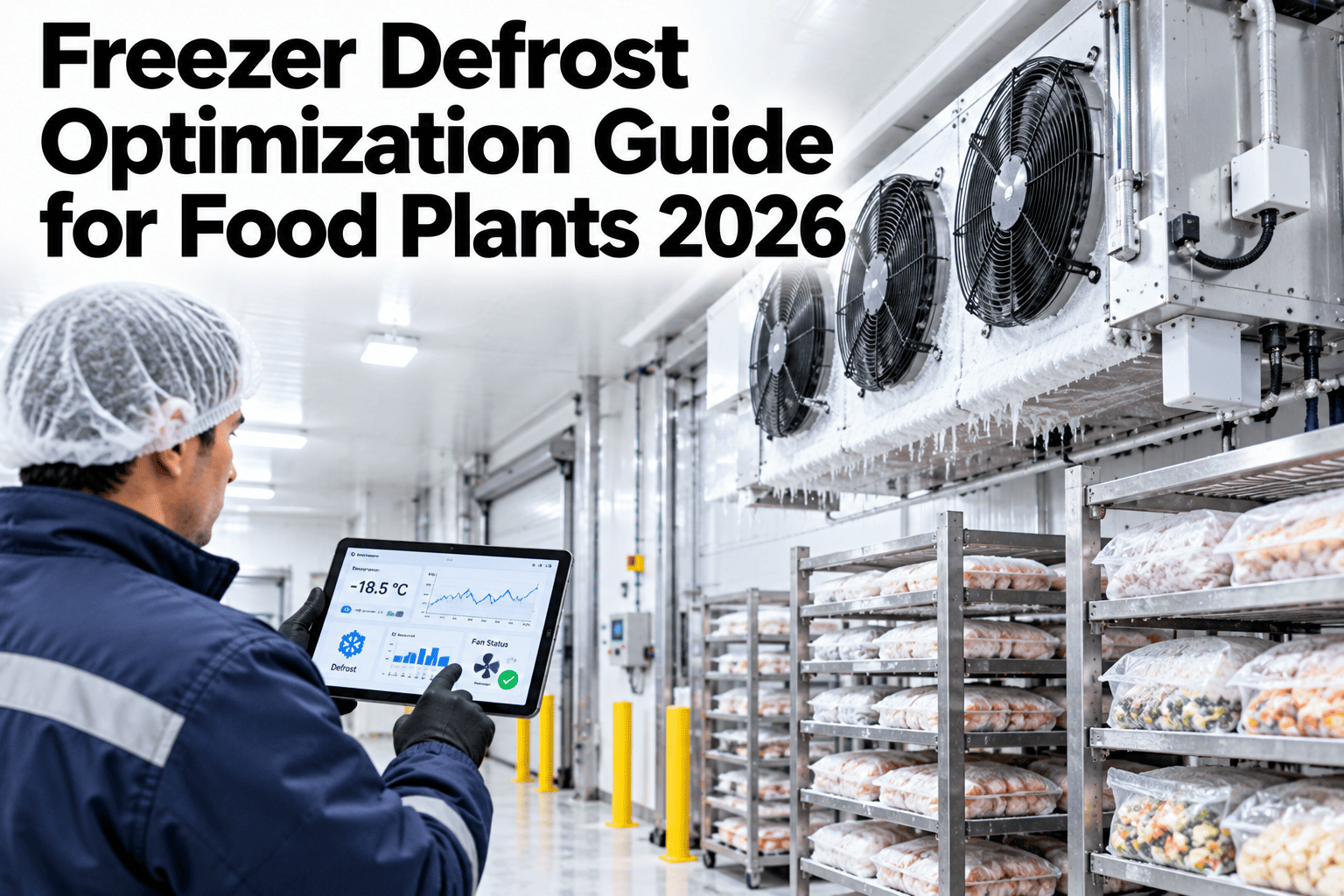
Illustrative frost build-up on an evaporator coil
Why defrost mattersDefrost Protects Performance but Has a Cost
Frost on a coil blocks airflow and reduces cooling. Removing it takes energy and adds heat.
Energy
Heaters or hot gas use power
Warmth
Heat leaks into the room and product
Recovery
The system works harder afterwards
Wear
Frequent cycles stress components
The goal is the right number of defrosts, not the fewest. Too few is as damaging as too many.
Timer versus demandTwo Ways to Decide When to Defrost
Timer-based defrost
Runs at fixed times
Ignores humidity, door activity and load
Often defrosts clean coils
Can miss heavy frost on busy days
Demand-based defrost
Starts when coil condition requires it
Reflects real operating conditions
Skips unnecessary defrosts
Reacts to heavy frost early
Demand-based control needs reliable signals and sensible limits, so a failed sensor never leads to missed defrosts.
Reading the coilSignals That Show How Much Frost Is on the Coil
Frost leaves clues in the data. Several signals together give a reliable picture.
Air temperature difference across the coilFan currentPressure or airflow readings
Defrost decision logic
Defrost startDefrost endAlerts and reports
See How Often Your Freezers Defrost Unnecessarily
Share a few weeks of defrost and temperature data and see how iFactory AI would estimate unnecessary cycles and the energy involved.
Signal guideWhat Each Signal Tells You
| Signal | What changes with frost | Caution |
|---|
| Temperature difference across the coil | Falls as frost reduces heat transfer | Check sensor placement and calibration |
| Fan current | Changes as airflow resistance grows | Fan type and speed control affect readings |
| Pressure or suction readings | Shift with reduced coil performance | Interpret with system design in mind |
| Door and loading activity | Explains moisture entering the room | Use as context, not alone |
| Room temperature trend | Rises when cooling falls | Late signal, so use with others |
The defrost cycleFour Stages From Start to Recovery
1
Start
The cycle begins based on the chosen logic.
2
Melt the frost
Heat removes the frost from the coil.
3
Drain and dry
Water leaves and the coil settles.
4
Recover
Refrigeration restarts and the room returns to setpoint.
Ending defrost too late wastes heat. Ending it too early leaves frost behind. Termination logic matters as much as the start.
Where the energy goesAn Illustrative View of Defrost Energy
Defrost costs more than the heater or hot gas alone. This split is an illustrative example.
35 percent: Heating the coil
Electricity or hot gas used to melt frost.
30 percent: Heat into the room
Warmth that escapes into the freezer.
25 percent: Extra cooling afterwards
Energy to pull the room back down.
10 percent: Other effects
Fan operation, controls and wear.
Avoiding an unnecessary defrost saves all three of the main costs together.
Autonomy levelsTake Control Step by Step
Advise
The system recommends changes and engineers decide.
Adjust schedules
Timer settings are updated within limits.
Demand control
The system triggers defrost directly with strong safeguards.
Many plants begin with advice and move up as results prove reliable. To plan your path, ask our team about defrost control options.
Before and afterFewer Cycles, Steadier Temperatures
Track the same measures before and after changes. This view is illustrative.
These bars are illustrative. Savings depend on freezer design, humidity, door activity and current settings.
Pilot planFive Steps From Audit to Savings
1
Audit today
Record defrost times, durations and room temperature.
2
Find unnecessary cycles
Compare defrost starts with coil condition.
3
Trial new timing
Adjust schedules on one freezer under supervision.
4
Add demand logic
Use coil signals once the data is trusted.
5
Roll out
Extend to similar freezers and review monthly.
Defrost schedule documented for each freezer
Coil and room data logged
Sensor calibration checked
Unnecessary and missed defrosts counted
Safety limits for maximum time between defrosts
Product temperature protected during trials
Energy baseline recorded
Owner from refrigeration and quality
Expert reviewWhat a Refrigeration Engineer Would Check First
Expert review
Never trade product safety for energy savings. Defrost changes should be tested on one freezer with careful monitoring before any wider rollout.
VerdictStrong when decisions use several signals and strict safety limits.
Watch forSingle-sensor control and sensors that drift without notice.
Do nextAudit one freezer's defrost cycles and compare them with coil condition.
Frequently asked questionsWhat Food Plants Ask About Defrost Optimisation
Is demand defrost safe for product?
It can be, if it uses reliable signals, has a maximum time limit between defrosts and is tested under supervision. Product temperature should be watched throughout trials, and a failed sensor should fall back to a timer.
Discuss safety limits.
How much energy can optimisation save?
It depends on how many unnecessary defrosts your freezers run, your design and conditions. Some plants see meaningful savings, but results vary, so audit your current cycles first.
Ask about savings estimates.
What data do we need to start?
Defrost start and end times, room and coil temperatures and ideally fan current or pressure readings give a good start. Door activity and humidity add context.
Check your data readiness.
Can this work with old controllers?
Often yes, either through added sensors or by adjusting existing timer schedules based on analysis. Newer controllers allow more direct demand control.
Ask about controller options.
How do we prove the saving?
Record a baseline of defrost counts, energy and room temperature, then compare after changes at similar conditions. Adjust for weather and production changes where possible.
Plan a measurement approach.
Defrost only when needed
Stop Defrosting Clean Coils
Book a session with iFactory AI to audit your defrost cycles, read your coil signals and plan a safe trial that cuts energy and temperature swings.