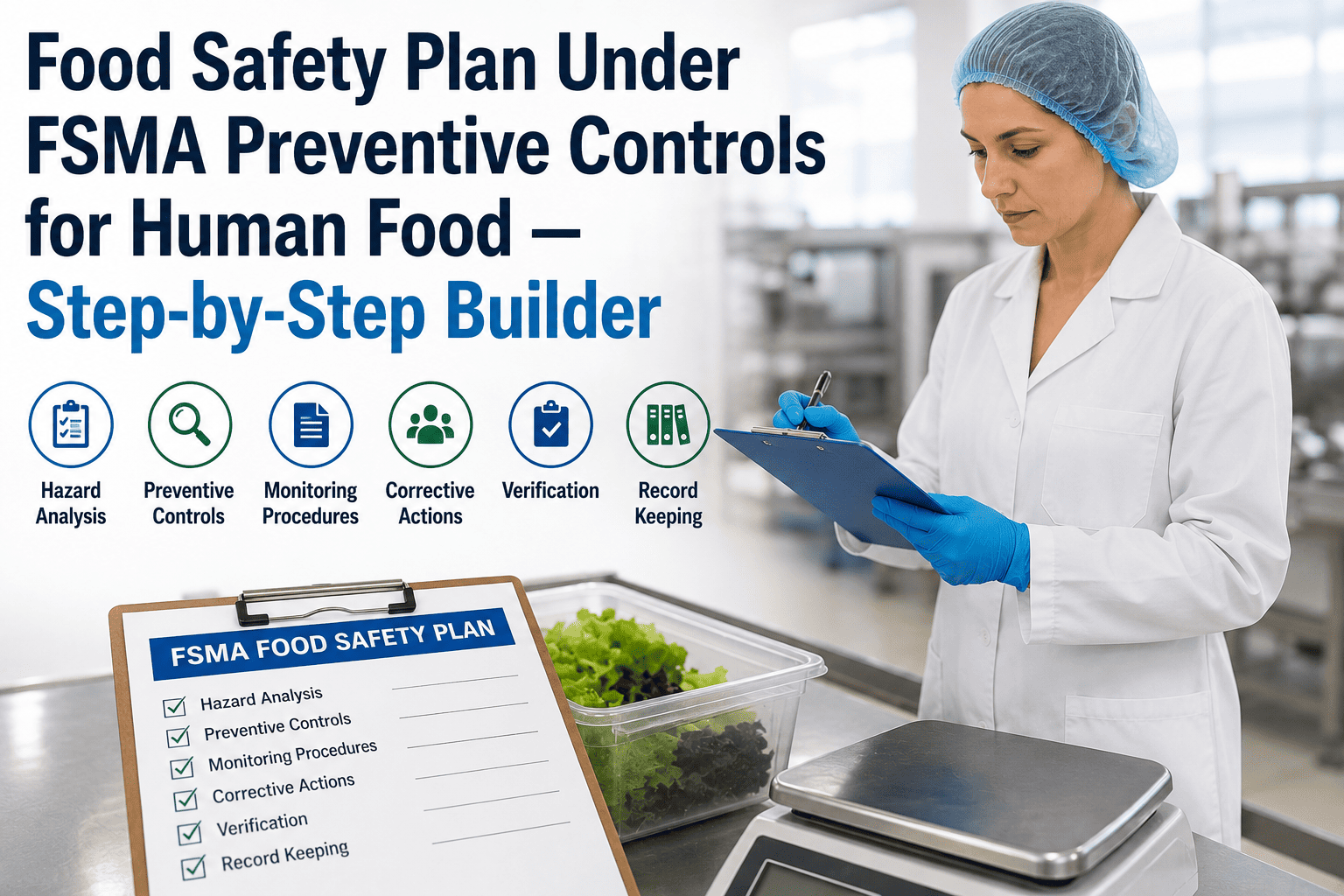
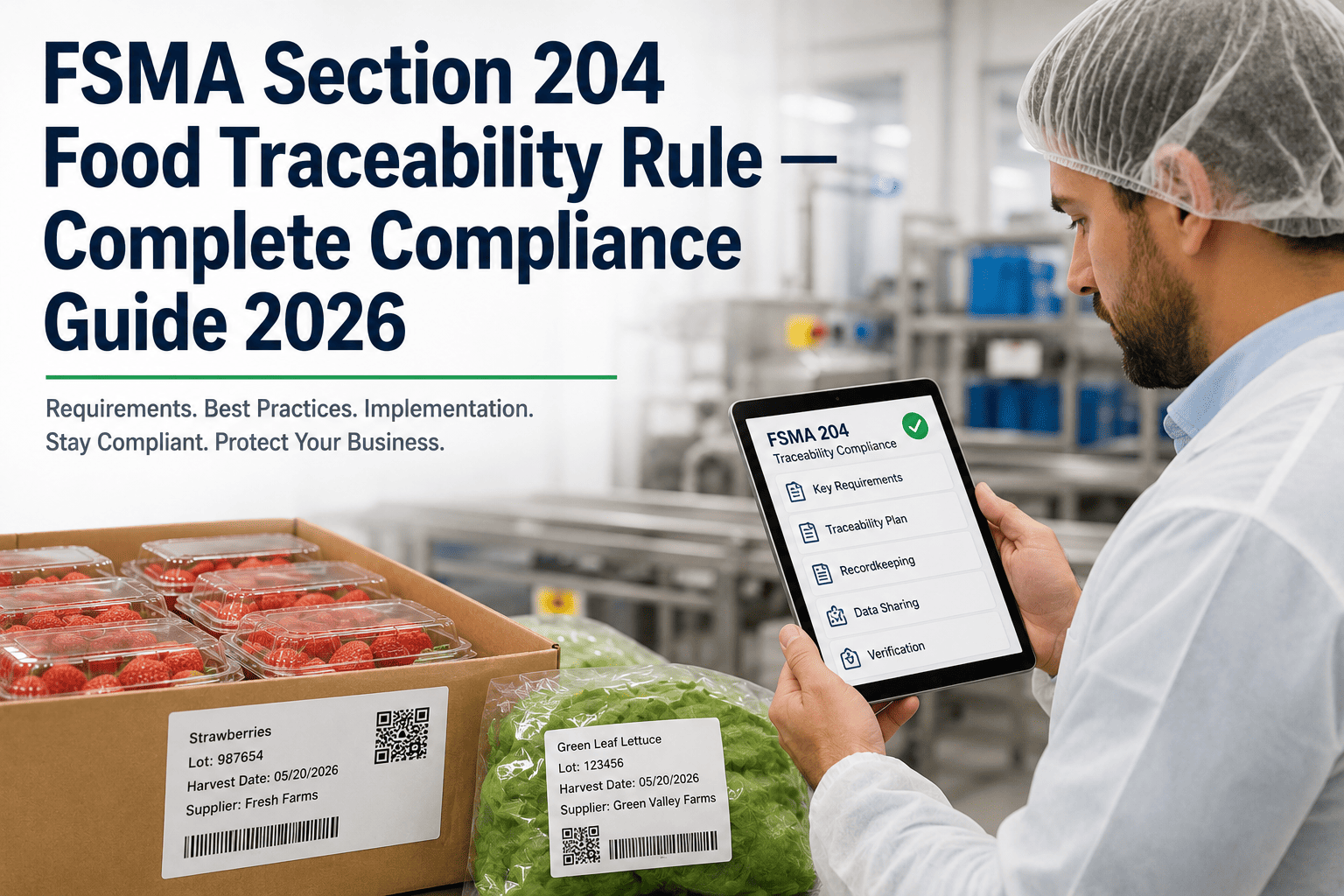
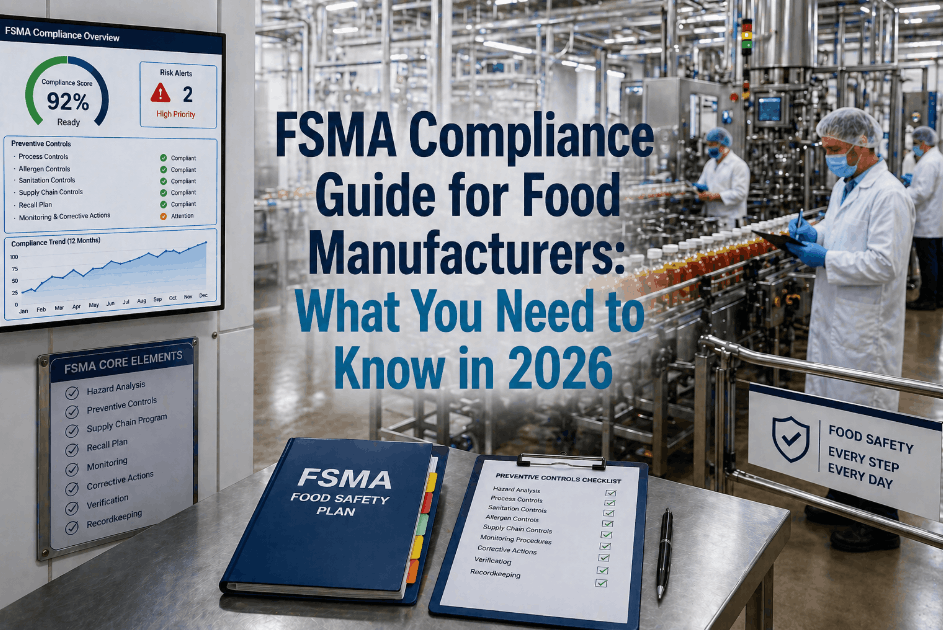
FSMA's Preventive Controls for Human Food rule shifted food safety from a reactive posture to a proactive one, and the person at the center of that shift is the Preventive Controls Qualified Individual. A facility can have a technically complete food safety plan sitting in a binder, but if it wasn't prepared or overseen by someone who meets the PCQI qualification, it doesn't satisfy the regulation — and that gap is one FDA inspectors are specifically trained to check during a facility inspection. Plenty of experienced QA managers assume years on the job is equivalent to formal PCQI qualification, and that assumption has caused real compliance problems during inspections that otherwise found nothing wrong with the plan itself. This guide covers what PCQI qualification actually requires, what a PCQI is responsible for beyond writing the plan, and how a demo can show what preventive controls monitoring looks like once it's connected to real-time plant data.
What FSMA's Preventive Controls Rule Actually Changed
Before FSMA, food safety regulation in the United States was largely reactive — FDA responded to contamination after it was found, often after product had already reached consumers. The Preventive Controls for Human Food rule, part of the broader Food Safety Modernization Act, requires covered facilities to identify hazards and implement preventive controls before a problem occurs, backed by a written, science-based food safety plan. It builds directly on HACCP principles but expands the scope beyond just Critical Control Points to include four categories of preventive control, and it introduces a specific qualification requirement for the person developing or overseeing the plan.
The rule applies to most facilities required to register with FDA under the Food Safety Act, with exemptions and modified requirements for qualified facilities meeting certain size thresholds, and separate rules covering produce safety and animal food. Getting the applicability determination right matters, because a facility that assumes it's exempt and later turns out not to be can find itself years behind on a food safety plan it should have had in place from the start, with no grace period once an inspector identifies the gap.
The shift from reactive to preventive also changed what "compliance" actually looks like day to day. Under a purely reactive model, a facility could reasonably argue it was doing everything right as long as no contamination event had occurred. Under Preventive Controls, the burden is on demonstrating — with documentation — that hazards were identified in advance and that controls are actively working, whether or not anything has gone wrong yet. That's a meaningfully higher bar, and it's why the PCQI qualification and the ongoing monitoring, verification, and reassessment requirements matter as much as the initial hazard analysis itself.
What Makes Someone a Qualified Individual
A PCQI needs to have successfully completed training in the development and application of risk-based preventive controls at least equivalent to a standardized curriculum recognized by FDA, most commonly the course developed by the Food Safety Preventive Controls Alliance, or be otherwise qualified through job experience to develop and apply a food safety system. In practice, most facilities pursue the standardized course because "otherwise qualified through job experience" is a harder standard to document and defend during an inspection — an inspector can ask exactly what experience qualifies someone, and a vague answer is a finding waiting to happen. The standardized curriculum also has the advantage of being nationally recognized, so the qualification travels with the person if they move between facilities or companies, whereas a job-experience justification is specific to one individual's history and has to be re-argued from scratch anywhere else.
Record-Keeping That Supports the Plan
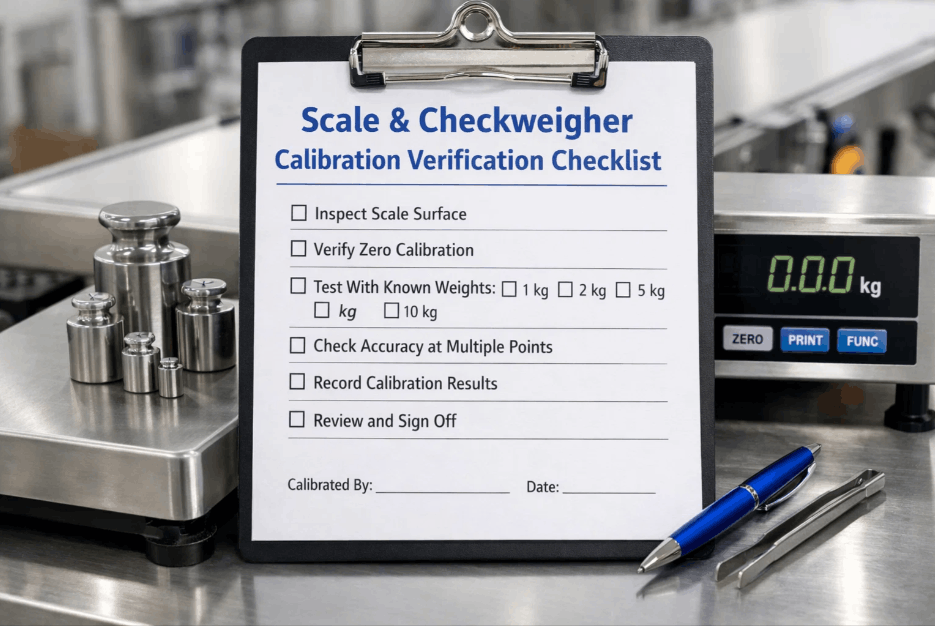
A Preventive Controls plan generates several distinct categories of records, and inspectors typically expect to see each one maintained separately and completely rather than combined into a single generic log. Monitoring records show that each preventive control is being checked at the required frequency. Corrective action records document what happened when monitoring found a control wasn't working as intended. Verification records confirm the overall system — calibration, record review, and in some cases environmental or product testing — is functioning correctly. Validation records demonstrate, usually through scientific literature or a process authority, that the control was capable of adequately controlling the hazard in the first place.
Facilities that struggle most during inspections usually have all four categories of records somewhere, but not organized in a way that lets them respond quickly when an inspector asks for a specific piece. A control that's genuinely working but can't be evidenced within a reasonable timeframe during an inspection creates exactly the kind of finding a facility could have avoided with better record organization, independent of whether the underlying food safety practice was ever actually deficient.
PCQI vs. HACCP Coordinator: Not Interchangeable Titles
Facilities that operated under HACCP long before FSMA sometimes assume their existing HACCP coordinator automatically satisfies the PCQI requirement. That's not necessarily true — HACCP training and PCQI training cover overlapping but distinct content, and FDA inspectors will specifically ask for documentation of PCQI-qualifying training, not just general food safety experience or a HACCP certificate from a decade ago. Many facilities resolve this by having their existing HACCP coordinator complete PCQI-specific training so the two roles are consolidated in one qualified person, rather than trying to argue equivalence during an inspection when the outcome of that argument is genuinely uncertain.
| Role | Primary Focus | Qualifying Basis |
|---|---|---|
| PCQI | Preventive Controls plan development and oversight | Standardized PCQI training or equivalent documented experience |
| HACCP Coordinator | HACCP plan for meat, poultry, or seafood under USDA/FDA HACCP rules | HACCP-specific training, separate from PCQI curriculum |
| QA Manager | Day-to-day quality operations and record review | Role-based, not a regulatory qualification requirement |
Supply-Chain Preventive Controls: A Uniquely FSMA Requirement
Supply-chain applied controls are one of the areas that most clearly separates FSMA Preventive Controls from a traditional HACCP plan. When a hazard identified during your hazard analysis is actually controlled by a supplier rather than at your own facility — a raw ingredient's pathogen control being handled upstream, for instance — the rule requires you to verify that the supplier is actually controlling it, not simply assume they are because they've been a vendor for years. That verification needs to be proportional to the risk: higher-risk hazards typically require onsite audits, while lower-risk situations may be satisfied with certificates of analysis or other documentation, determined by someone qualified to make that risk-based call.
A frequently overlooked detail is that supply-chain verification responsibility doesn't automatically disappear just because a broker or distributor sits between you and the original supplier. If your facility is the one applying the preventive control based on the assumption that a hazard was already controlled upstream, the verification obligation follows that assumption regardless of how many intermediaries are in the supply chain. Facilities that skip this step because "the distributor handles that" are relying on an assumption FDA doesn't recognize as a substitute for documented verification. Support can walk through how supply-chain verification activities get documented and tracked over time.
Training Requirements Beyond the PCQI
The PCQI requirement gets the most attention, but FSMA also expects broader food safety training across the facility. Anyone performing an activity related to manufacturing, processing, packing, or holding food needs training in food hygiene and safety appropriate to their role, and that training needs to be documented. This is a lower bar than PCQI-level training, but it's still routinely checked during inspections, and a facility that can produce a PCQI certificate but can't show general employee training records is still exposed to a finding. Training documentation gaps tend to be worst for facilities with high seasonal turnover, where temporary or contract workers rotate through faster than the onboarding paperwork can reliably keep up, and it's worth building the training record process to handle that turnover rate specifically rather than assuming the same cadence that works for a stable full-time crew.
Where Facilities Most Often Fall Short of Full Compliance
A handful of gaps show up repeatedly across FDA inspection findings related to Preventive Controls, and most of them aren't about the underlying food safety practice being wrong — they're about the documentation and oversight structure around it being incomplete.