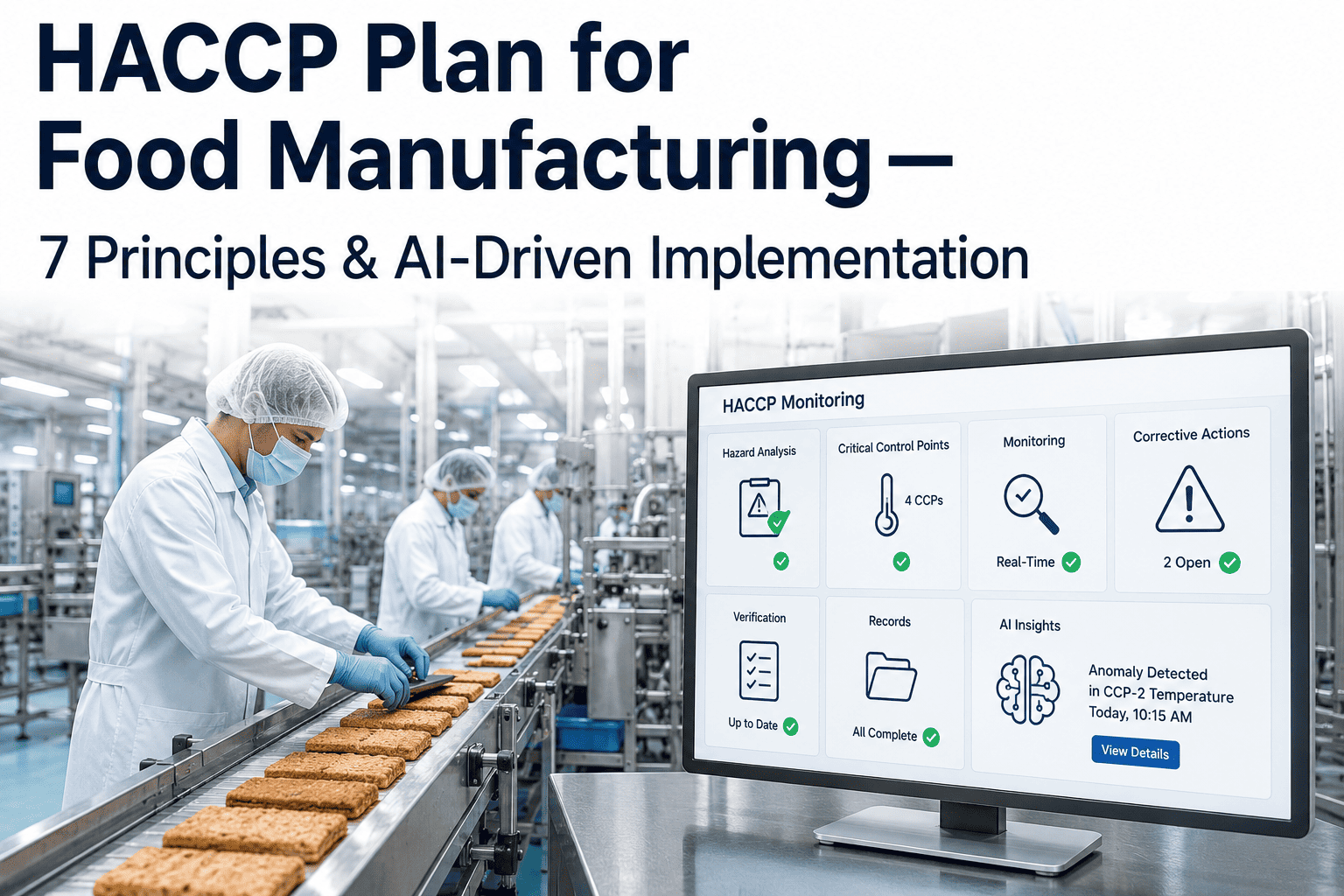
Every plant manager running a human food facility in the United States is operating under one non-negotiable requirement: a written food safety plan that satisfies FSMA's Preventive Controls for Human Food rule, built and signed off by a qualified individual. It's not a formality. FDA inspectors show up expecting a plan that names your actual hazards, ties each one to a real preventive control, and proves through records that the control worked on the day in question. Plants that treat this as a one-time document tend to discover the gaps during an inspection, which is the worst possible time to find them. Plants that treat it as a living system, updated as processes change and verified continuously, walk into inspections with confidence instead of dread. Plant managers who want a clearer picture of where their current plan stands can book a demo and run a gap check against FSMA requirements.
FSMA COMPLIANCE · HUMAN FOOD FACILITIES · 2026
Build a Food Safety Plan That Survives an Unannounced Inspection
Hazard analysis, preventive controls, supply chain verification, and recall readiness, all documented and monitored in one system your PCQI can defend on any given day.
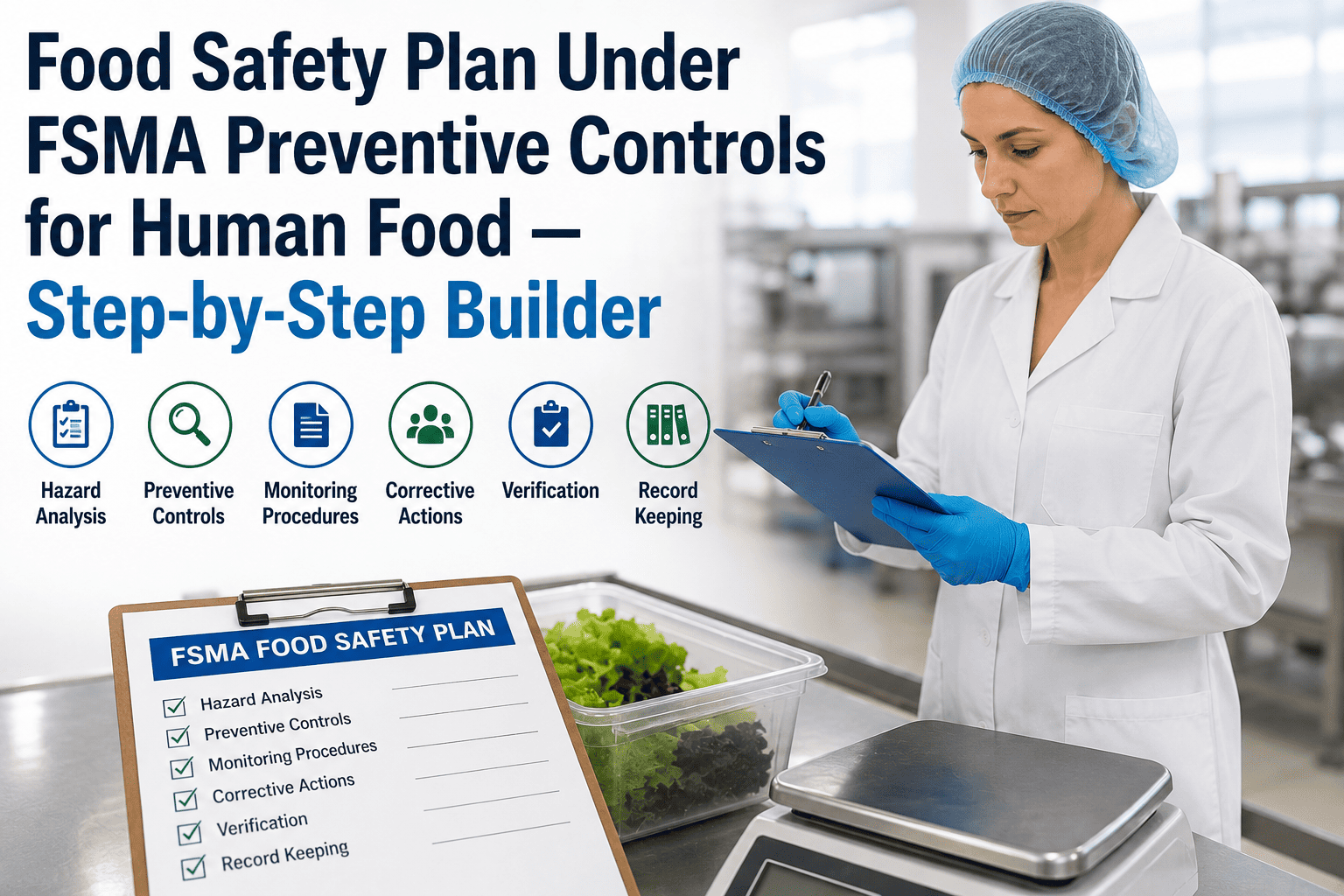
The Five Elements Every FSMA Food Safety Plan Must Cover
The Preventive Controls for Human Food rule isn't a single checklist item, it's a structure. Miss one piece and the entire plan is considered incomplete, regardless of how strong the rest of it is.
Hazard Analysis
Biological, chemical, physical, and radiological hazards identified and evaluated for every product and process.
Preventive Controls
Process, sanitation, allergen, and supply chain controls assigned wherever a hazard requires active management.
Monitoring Procedures
Defined frequency and method for confirming that every preventive control is consistently performed.
Corrective Actions
Documented response steps for the moment a control fails, including product disposition decisions.
Verification & Recall Plan
Validation that controls actually work, plus a tested recall procedure ready to execute if traceability is needed.
Section 117
CFR Part governing Current Good Manufacturing Practice and Preventive Controls for Human Food
3+ Years
Minimum record retention period FDA expects for monitoring and verification documentation
48 Hours
Typical window FDA allows a facility to produce requested food safety records during inspection
FOOD SAFETY PLAN · FSMA · 2026
Run a Gap Check Against the Preventive Controls Rule
See exactly which elements of your current plan already meet FSMA expectations and which ones need attention before your next inspection.
Supply Chain Verification: The Piece Most Plans Get Wrong
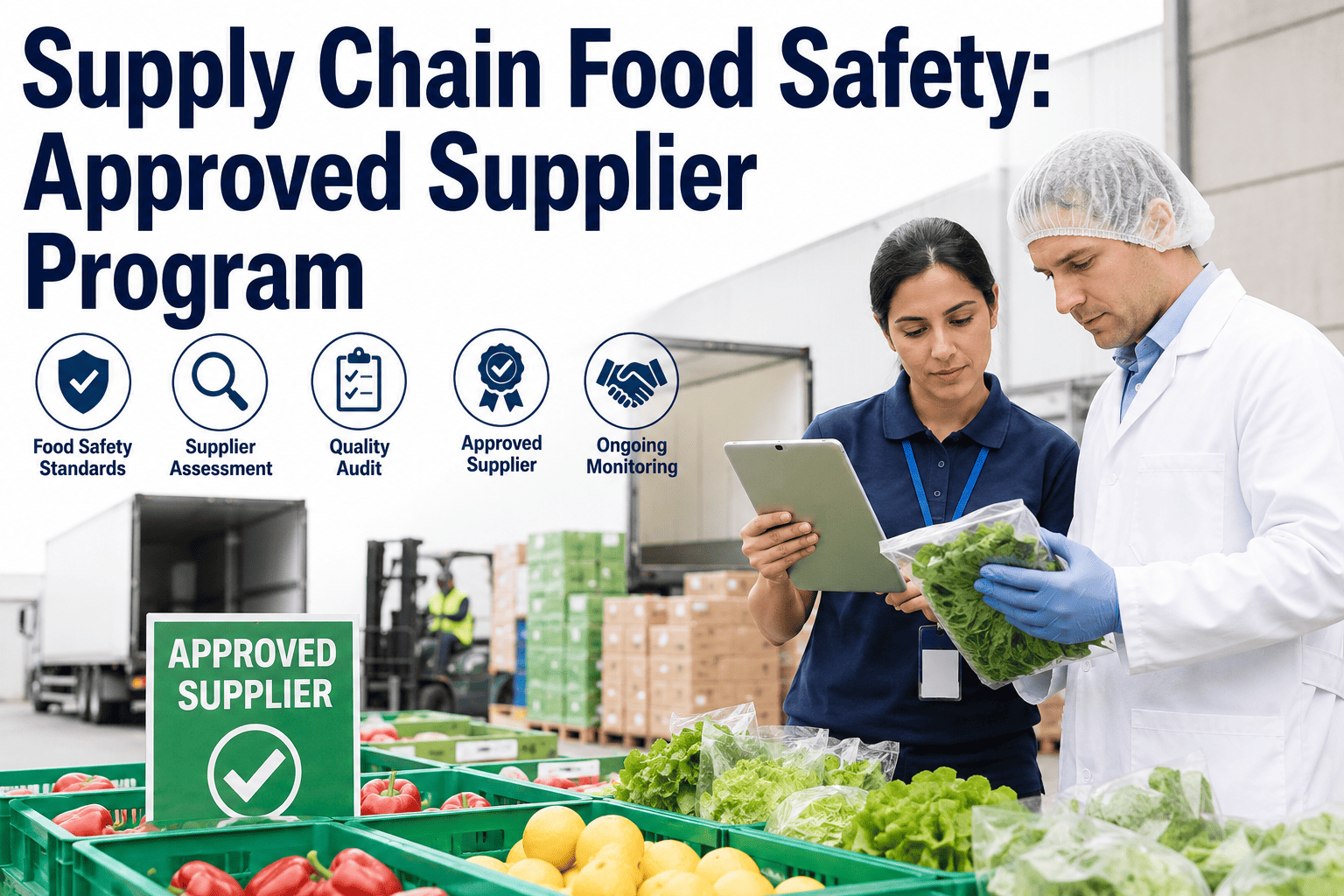
If a raw material or ingredient carries a hazard that your process won't control before the product reaches the consumer, FSMA requires a documented supply chain program for that supplier. Plant managers most often fall short here because verification activities get treated as a one-time onboarding step instead of an ongoing requirement.
Required
Approved supplier list tied to the specific hazard each supplier is responsible for controlling
Required
Documented verification activity, such as onsite audit, sampling and testing, or review of food safety records
Required
Verification frequency based on the hazard's severity and the supplier's compliance history
Required
Re-verification triggered whenever a supplier changes their process or a new hazard is identified
Static Plan vs Continuously Verified Plan
| Plan Component |
Static, Document-Only Plan |
Continuously Verified Plan |
| Monitoring Records |
Filled out manually, reviewed weekly at best |
Captured automatically, reviewed against limits in real time |
| Corrective Actions |
Logged after the fact, sometimes days later |
Triggered immediately with a documented disposition trail |
| Supplier Verification |
Tracked in spreadsheets, easy to miss renewal dates |
Scheduled and flagged automatically before expiration |
| Inspection Readiness |
Days of prep pulling records from multiple sources |
Records available in minutes, organized by requirement |
From Gap Analysis to Fully Documented Plan
Phase 1
PCQI-Led Hazard Analysis Review
Your qualified individual reviews existing hazard analysis against current processes, ingredients, and facility layout.
Phase 2
Preventive Control Mapping
Every identified hazard is matched to a specific process, sanitation, allergen, or supply chain control.
Phase 3
Monitoring & Recall Plan Build
Monitoring frequencies are set, corrective action steps documented, and a tested recall procedure is finalized.
Phase 4
Verification & Mock Inspection
A mock FDA inspection confirms the plan and its records hold up under real scrutiny before you need them to.
We used to lose two full days pulling records together every time we heard an inspector was in the area. Now our PCQI can pull a complete verification history for any control point in under five minutes, and it's changed how our whole team thinks about compliance.
Plant Manager, Ready-to-Eat Food Facility
Frequently Asked Questions
FSMA COMPLIANCE · HUMAN FOOD FACILITIES · 2026
Walk Into Your Next Inspection With a Plan You Trust
Turn hazard analysis, preventive controls, and supply chain verification into one continuously verified system your PCQI can stand behind.