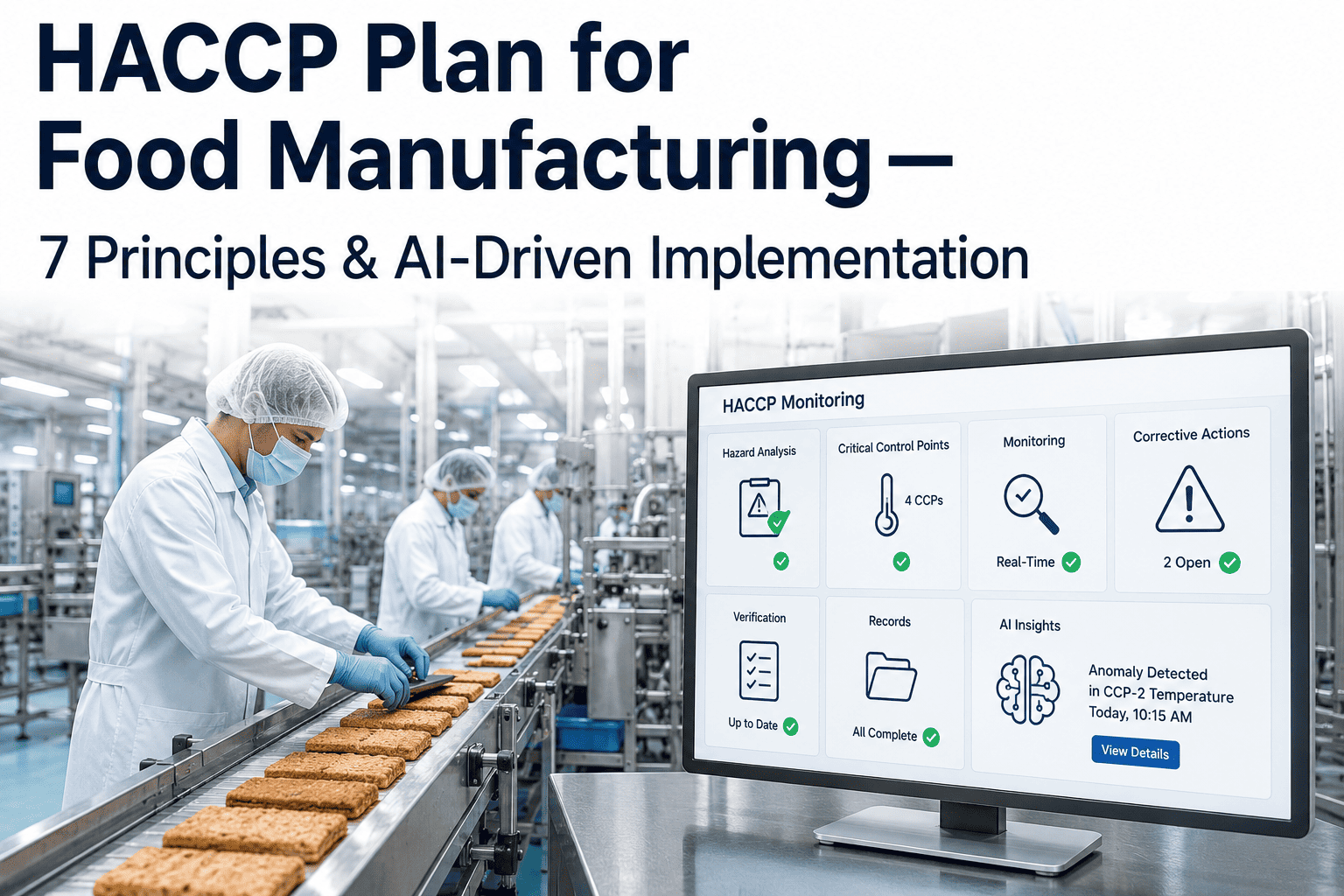
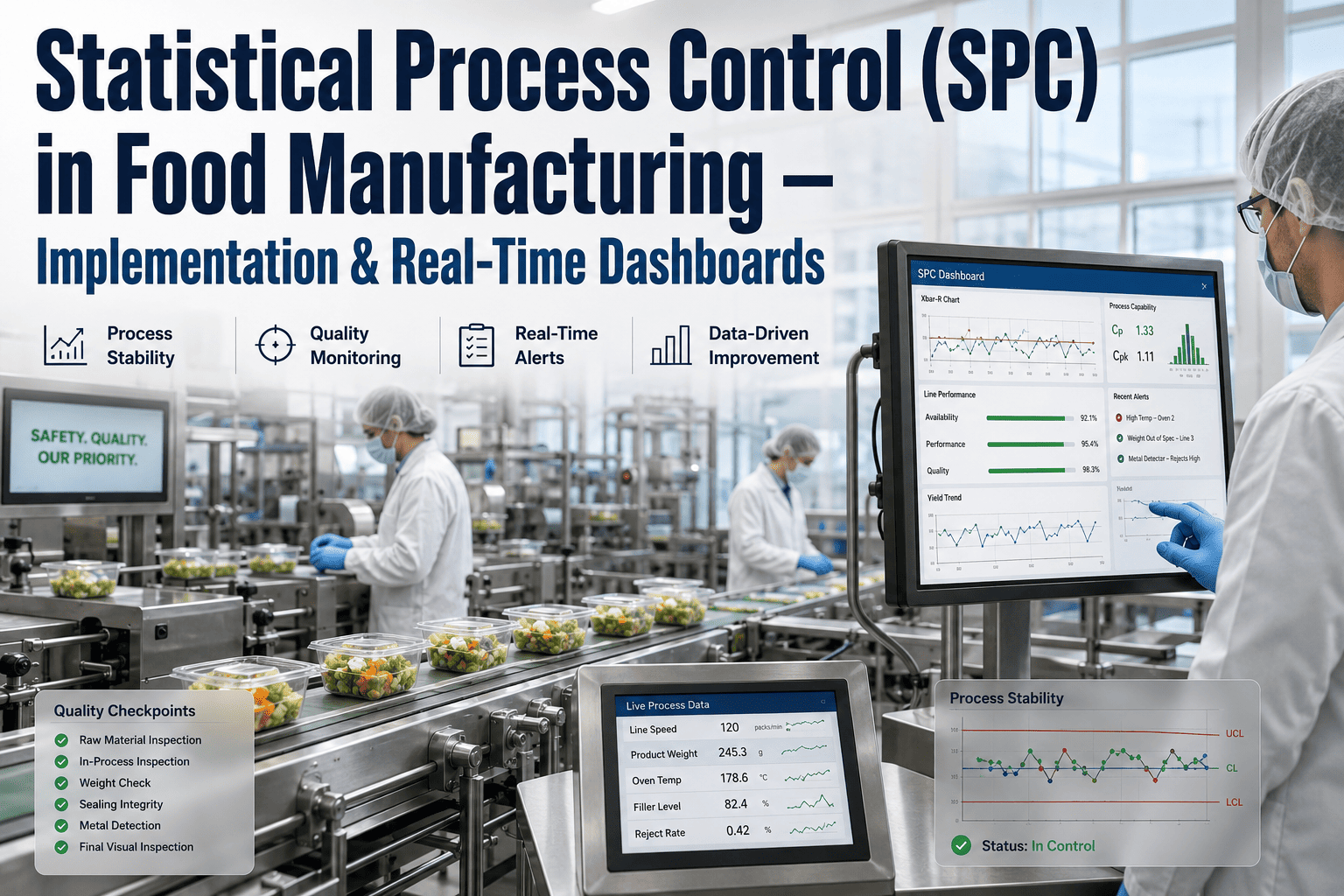
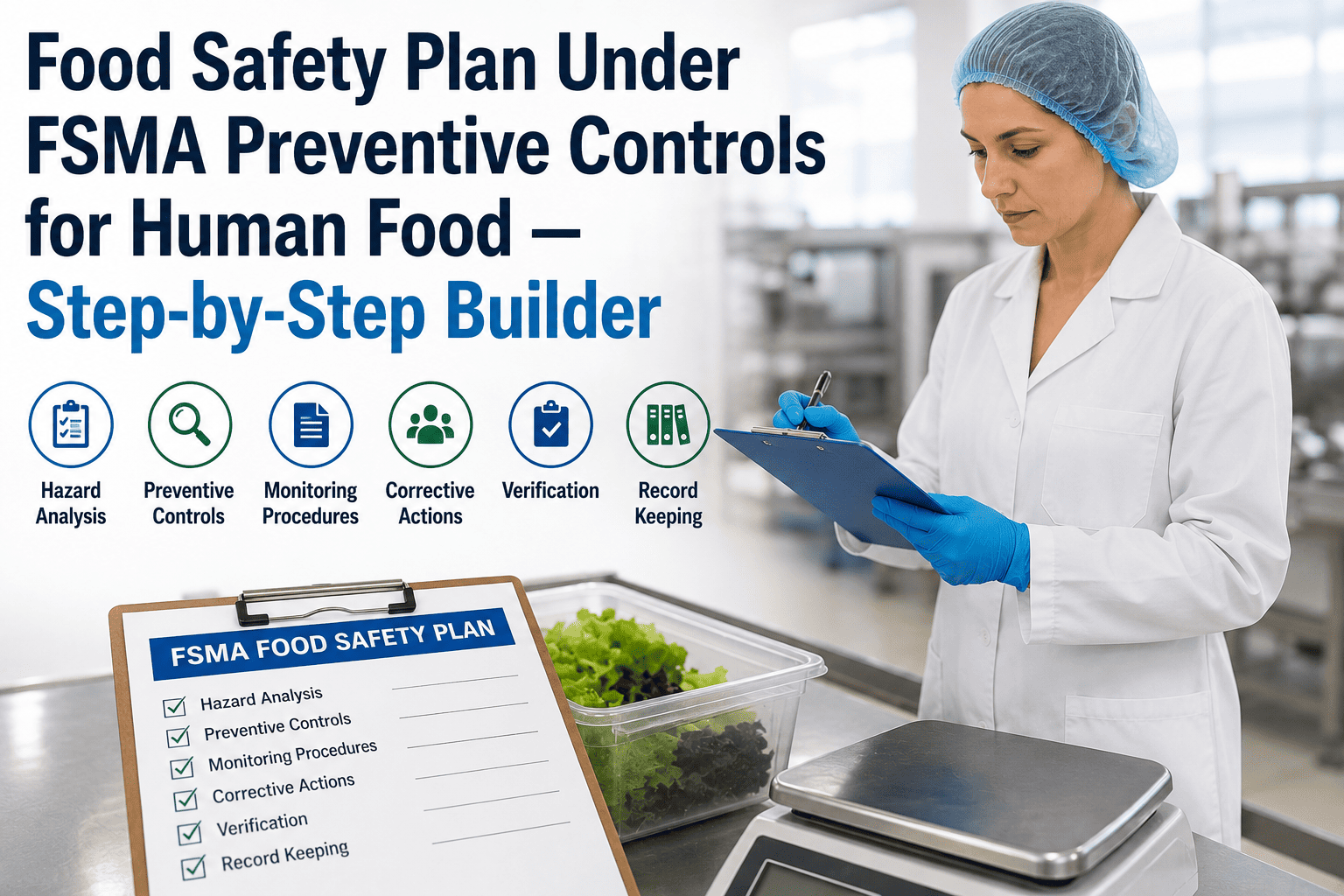
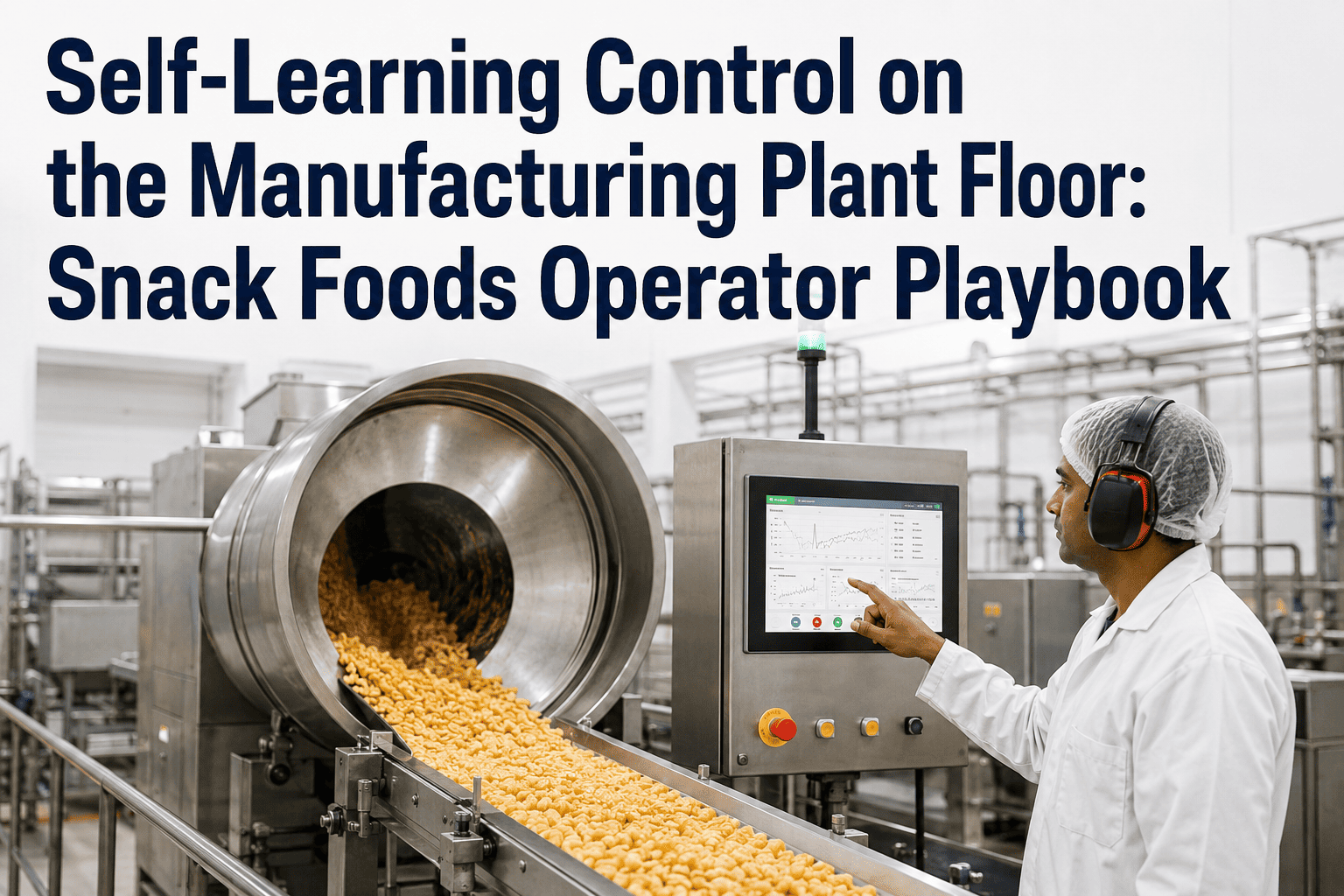
Food manufacturers walk a narrow line every single day: one missed critical control point can mean a product recall, a regulatory citation, or worse, someone gets sick. A HACCP plan is supposed to be the safety net that catches these risks before they ever leave the plant, yet many facilities still run their seven principles on paper logs and hope nothing falls through the cracks. Quality managers know the real challenge isn't writing the plan, it's keeping every CCP monitored, every deviation documented, and every corrective action closed out consistently across every shift. Modern AI-driven monitoring platforms are changing that equation by turning static HACCP documentation into a live, self-verifying system that catches drift before it becomes a hazard. Quality teams ready to see how this looks on their own production lines can book a demo and walk through a live CCP monitoring dashboard.
HACCP COMPLIANCE · FOOD MANUFACTURING · 2026
A HACCP Plan Is Only As Strong As Its Weakest Monitoring Point
Build, verify, and maintain every one of the 7 HACCP principles with a system that flags CCP drift the moment it happens, not during next month's audit.
7
Core principles every food safety plan must satisfy to meet Codex and FDA expectations
92%
Of recurring CCP deviations trace back to inconsistent manual monitoring rather than process failure
10+ hrs
Weekly documentation time reclaimed by quality teams once CCP logging is automated
$10M+
Average direct and reputational cost of a single major food safety recall event
Why Paper-Based HACCP Plans Keep Failing Audits
A binder full of temperature logs looks compliant right up until an auditor asks for the deviation that happened at 2 a.m. on a Saturday shift. Manual HACCP monitoring depends entirely on a technician remembering to check, record, and escalate, and that chain breaks more often than most quality managers want to admit. The result is a plan that exists on paper but doesn't actually protect the product in real time, which is exactly what regulators and customers are starting to test for during audits.
The 7 HACCP Principles, Step by Step
Every certified HACCP plan is built on the same seven principles, whether it covers a bakery line or a meat processing facility. Getting each one right, and keeping it right day after day, is what separates a plan that passes audits from one that actually prevents harm.
01
Conduct a Hazard Analysis
Identify biological, chemical, and physical hazards at every process step, from raw material receipt through final packaging.
02
Determine Critical Control Points
Pinpoint the exact steps where control can be applied to prevent, eliminate, or reduce a hazard to an acceptable level.
03
Establish Critical Limits
Set measurable boundaries, such as temperature, time, or pH, that each CCP must stay within to remain safe.
04
Establish Monitoring Procedures
Define how, how often, and by whom each CCP will be observed and measured throughout production.
05
Establish Corrective Actions
Pre-define exactly what happens the moment a critical limit is breached, so response never depends on guesswork.
06
Establish Verification Procedures
Confirm the plan is working as intended through calibration checks, record reviews, and periodic validation testing.
07
Establish Record-Keeping Procedures
Maintain documentation that proves, at any moment, that every CCP was controlled and every deviation was resolved.
Manual Monitoring vs AI-Driven CCP Verification
| HACCP Activity |
Manual, Paper-Based Approach |
AI-Driven Monitoring |
| CCP Monitoring |
Technician checks and writes down readings on a fixed schedule |
Sensors stream readings continuously with instant threshold alerts |
| Deviation Detection |
Found only if someone reviews the log after the fact |
Flagged in real time the moment a limit is crossed |
| Corrective Action |
Logged manually, often after product has already moved downstream |
Triggered automatically with a timestamped work order and hold instruction |
| Audit Readiness |
Days spent compiling binders before an inspection |
Complete, searchable records available on demand |
CCP MONITORING · FOOD SAFETY · 2026
See Real-Time CCP Alerts on Your Own Process Data
Bring your critical limits and monitoring points to a live walkthrough and see exactly where automated verification would have caught a deviation earlier.
Rolling Out an AI-Backed HACCP Plan Without Disrupting Production
Quality managers rarely get a clean slate to rebuild their food safety plan from scratch. A phased rollout keeps your certification intact while proving the value of automated verification one CCP at a time.
Weeks 1-2
Plan & Hazard Review
Validate existing hazard analysis and confirm every CCP, critical limit, and monitoring frequency is current.
Weeks 3-4
Sensor & Data Mapping
Connect existing temperature, metal detection, and pH sensors, adding low-cost monitors only where gaps exist.
Weeks 5-6
Alert & Workflow Setup
Configure critical limit thresholds and automated corrective action workflows for each CCP.
Week 7+
Verification & Audit Trial
Run a mock audit against the automated record set before the next scheduled certification review.
Our old system meant someone had to remember to check the chiller log every two hours. Now if a CCP drifts even slightly, the alert hits before the batch is even close to leaving the line. Our last SQF audit took a third of the time because every record was already there.
Quality Manager, Frozen Food Processing Facility
Frequently Asked Questions
HACCP COMPLIANCE · FOOD MANUFACTURING · 2026
Turn Your HACCP Plan Into a Live Safety System
Stop reconstructing compliance from memory during audits. See how continuous CCP monitoring keeps your plan verified every hour of every shift.