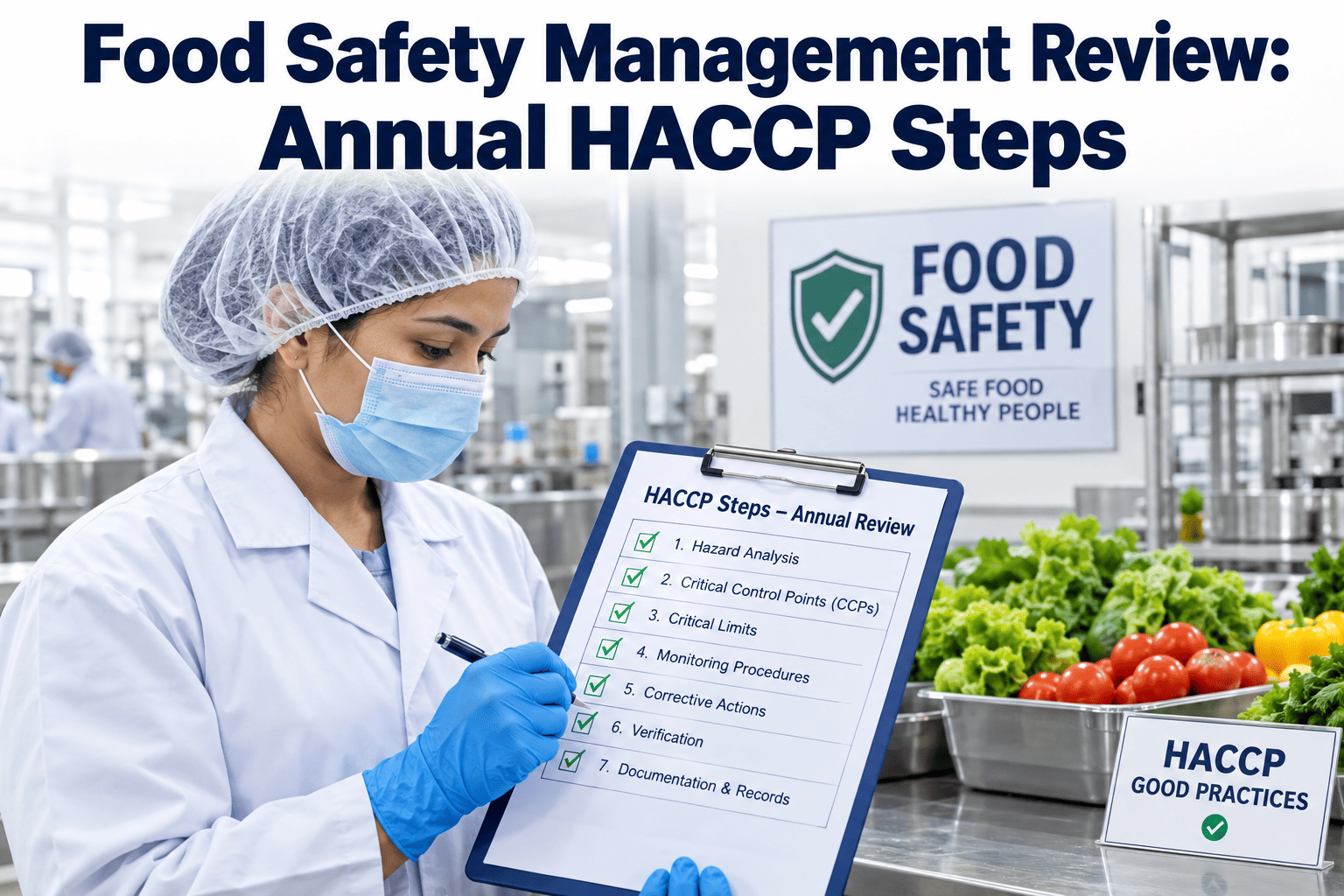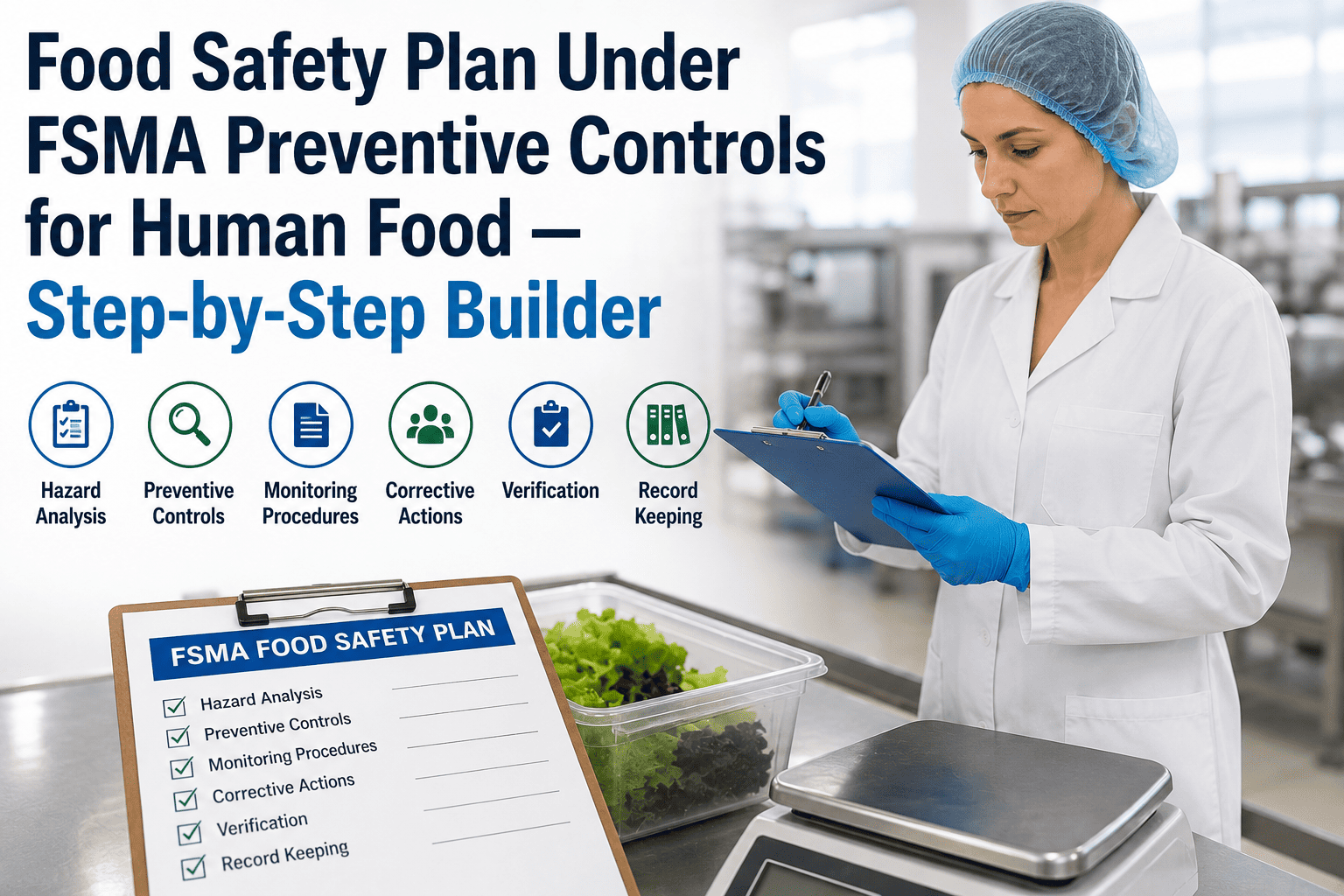
A HACCP plan is only as strong as the hazard analysis behind it, yet most food manufacturing plants build theirs once during initial certification and rarely revisit it until an auditor forces the issue. Products change, suppliers change, and even a shift in cook time on one line can quietly turn a controlled hazard into an active risk nobody is tracking. The seven principles that make up HACCP are simple to list and genuinely difficult to execute correctly across dozens of lines and hundreds of ingredients. Get the hazard analysis wrong, or let monitoring records slip, and the whole program stops protecting anyone — it just becomes paperwork in a binder. This guide walks through what each principle demands in practice, where plants most often lose control of the process, and how a demo can show what a digitally connected HACCP program looks like day to day.
Why So Many HACCP Plans Quietly Fail Audits
HACCP was designed as a living, product-specific system, not a template that gets filled in once and filed away. In practice, plants copy a plan from a similar product line, swap a few ingredient names, and call the hazard analysis complete. The result looks compliant on paper but doesn't reflect what's actually happening on the floor: a critical limit that was never validated against real process data, a monitoring frequency that hasn't kept pace with line speed increases, or a corrective action procedure nobody has tested since the plan was written. Auditors from BRCGS, SQF, and FDA inspectors under FSMA are trained to spot exactly this gap, and it's the single most common source of major non-conformances in food safety audits.
The seven principles exist in a deliberate sequence because each one depends on the accuracy of the step before it. A hazard analysis that misses a chemical contamination risk means the CCP list is incomplete before you've even started setting critical limits. A critical limit set without process validation means monitoring data can look "in control" while the product is actually unsafe. Building the plan in order, and revisiting each principle whenever the process changes, is what separates a HACCP program that genuinely reduces risk from one that just satisfies a checklist.
There's also a practical reason plans drift out of date: keeping seven interdependent principles synchronized across multiple products and lines is a lot of manual coordination for a QA team that's already stretched across sanitation verification, supplier approval, and daily production support. When the hazard analysis lives in one spreadsheet, the monitoring logs live on paper at the line, and the corrective action records live in a separate binder, nobody has a single view of whether the plan as designed actually matches the plan as executed. That disconnect is exactly what an auditor is trained to probe for, and it's usually not intentional negligence — it's the natural result of a system built around disconnected documents instead of one connected record of what happened at each CCP, every shift.
Hazard Analysis: The Three Categories You Cannot Skip
A hazard analysis that only considers pathogens is incomplete, and it's a common finding in third-party audits. Every step of the process needs to be evaluated against all three hazard categories, because a single processing step can introduce more than one type of risk at once — a metal detector calibration drift is a physical hazard even on a line where biological control is otherwise tight. The analysis should also account for how hazards can be introduced indirectly: an allergen carried on a shared conveyor from an earlier changeover, a chemical residue from an incompletely rinsed CIP cycle, or a physical hazard from a supplier's packaging rather than your own equipment. Documenting the reasoning behind why a hazard was judged significant or not significant matters just as much as the conclusion, because that reasoning is what an auditor or inspector will ask to see first.
Determining Critical Control Points Without Overreaching
One of the most frequent mistakes in Principle 2 is naming too many CCPs. Every additional CCP adds monitoring burden, documentation, and verification work, and if a step isn't genuinely the last point where a hazard can be controlled, calling it critical dilutes attention away from the steps that actually matter. The standard CCP decision tree walks through a consistent sequence of questions for each identified hazard at each process step.
Common Mistakes That Weaken a CCP Determination
Running every hazard through the decision tree correctly on paper doesn't guarantee the resulting CCP list holds up under scrutiny. A few patterns show up repeatedly across audit findings, and most of them come from teams treating the decision tree as a one-time exercise instead of a working tool that gets revisited whenever the process changes.
Setting Critical Limits: Validated, Not Assumed
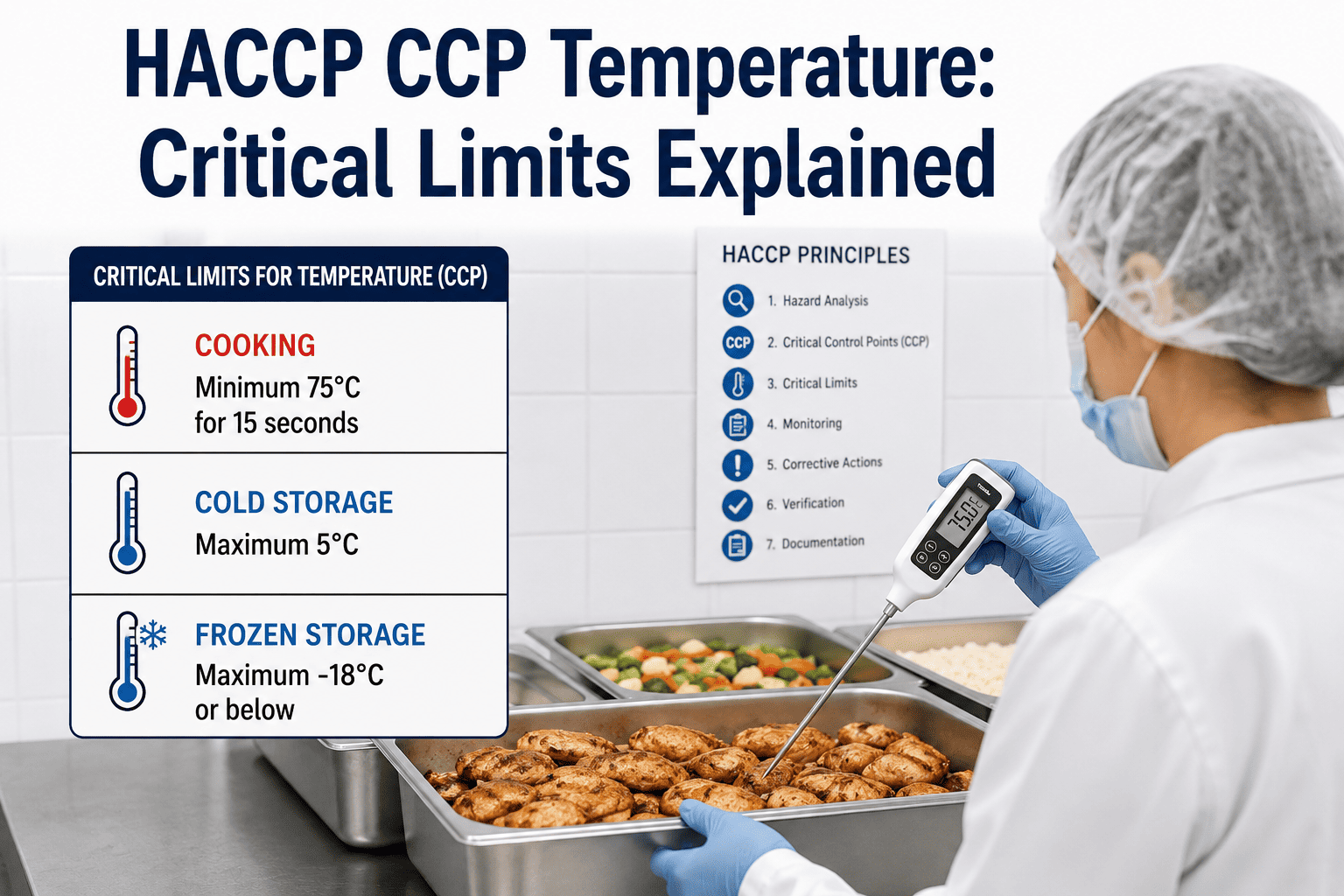
A critical limit copied from a generic industry guideline instead of validated against your own equipment, formulation, and facility conditions is one of the most cited weaknesses auditors find. A cook step's minimum internal temperature, for example, needs to be validated with a scientific study or process authority letter specific to the product's thickness, packaging, and equipment — not borrowed from a similar-sounding product elsewhere in the plant. The critical limit also needs an operating limit set slightly inside it, giving operators room to intervene before the process actually breaches the food-safety threshold, rather than finding out only after a batch has already gone out of control.
| CCP Example | Critical Limit | Validation Source |
|---|---|---|
| Cook Step (Ready-to-Eat Meat) | Minimum internal temp of 71°C for 15 seconds | Process authority validation study |
| Metal Detection | No detectable fragment above set sensitivity | Equipment manufacturer specification, test log |
| Acidification (pH Control) | Finished product pH at or below 4.6 | Scheduled process, pH meter calibration record |
| Allergen Changeover Cleaning | ATP swab result below facility-set threshold | Cleaning validation study |
Monitoring, Corrective Actions, and Verification Are Not the Same Thing
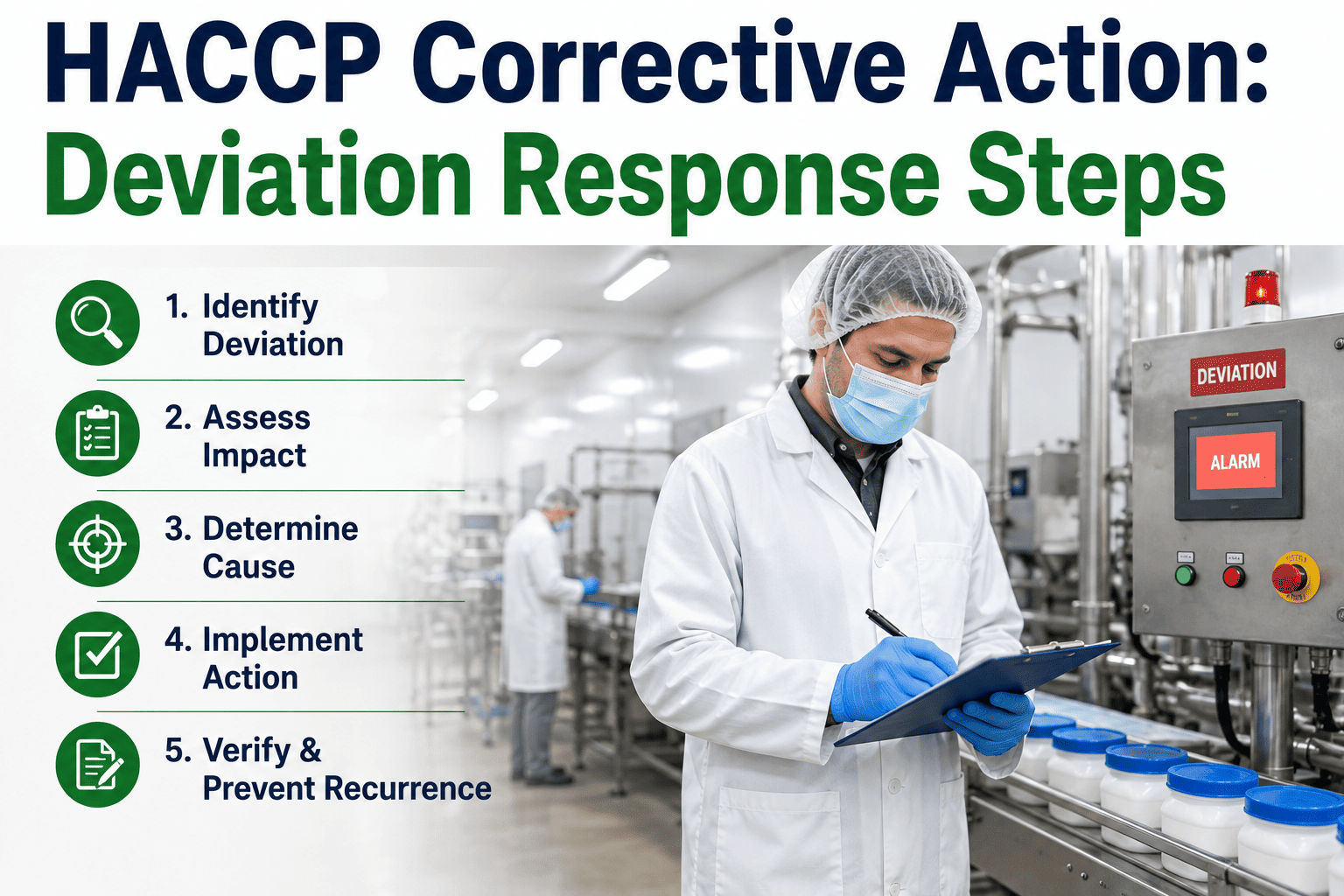
Plants sometimes treat monitoring, corrective action, and verification as one combined activity, and that's where the plan starts to lose its ability to catch real deviations. Monitoring is the routine, scheduled observation an operator performs every batch or shift — a temperature reading, a visual check, a metal detector test. Corrective action only happens when monitoring reveals a limit has been exceeded, and it needs to be pre-defined rather than figured out in the moment. Verification is a separate activity performed by someone other than the monitor, on a different schedule, confirming the whole system — including the monitoring itself — is functioning as designed. Blurring these three activities together usually shows up as one specific gap: the corrective action gets performed correctly in the moment, but the record of it either doesn't get written down until later or doesn't capture enough detail to reconstruct what happened. An auditor reviewing a corrective action record wants to see the deviation, the product identified and held, the disposition decision and who made it, and confirmation the root cause was addressed so the same deviation doesn't recur on the next shift.
Where Paper-Based HACCP Programs Break Down
Even a well-designed HACCP plan struggles when it depends on operators writing values onto a paper log during a busy shift. Illegible handwriting, backfilled entries after the fact, and gaps during shift changes are the most common findings when auditors pull records against production schedules. It's rarely a sign that operators aren't taking food safety seriously — it's what happens when the person responsible for monitoring a CCP is also running the line, managing changeovers, and fielding questions from three other stations, with the log sheet as the last priority in a busy hour. Support can walk through how digital CCP logging closes these gaps by capturing monitoring data automatically from connected sensors and flagging deviations the moment they happen, rather than during a weekly record review.