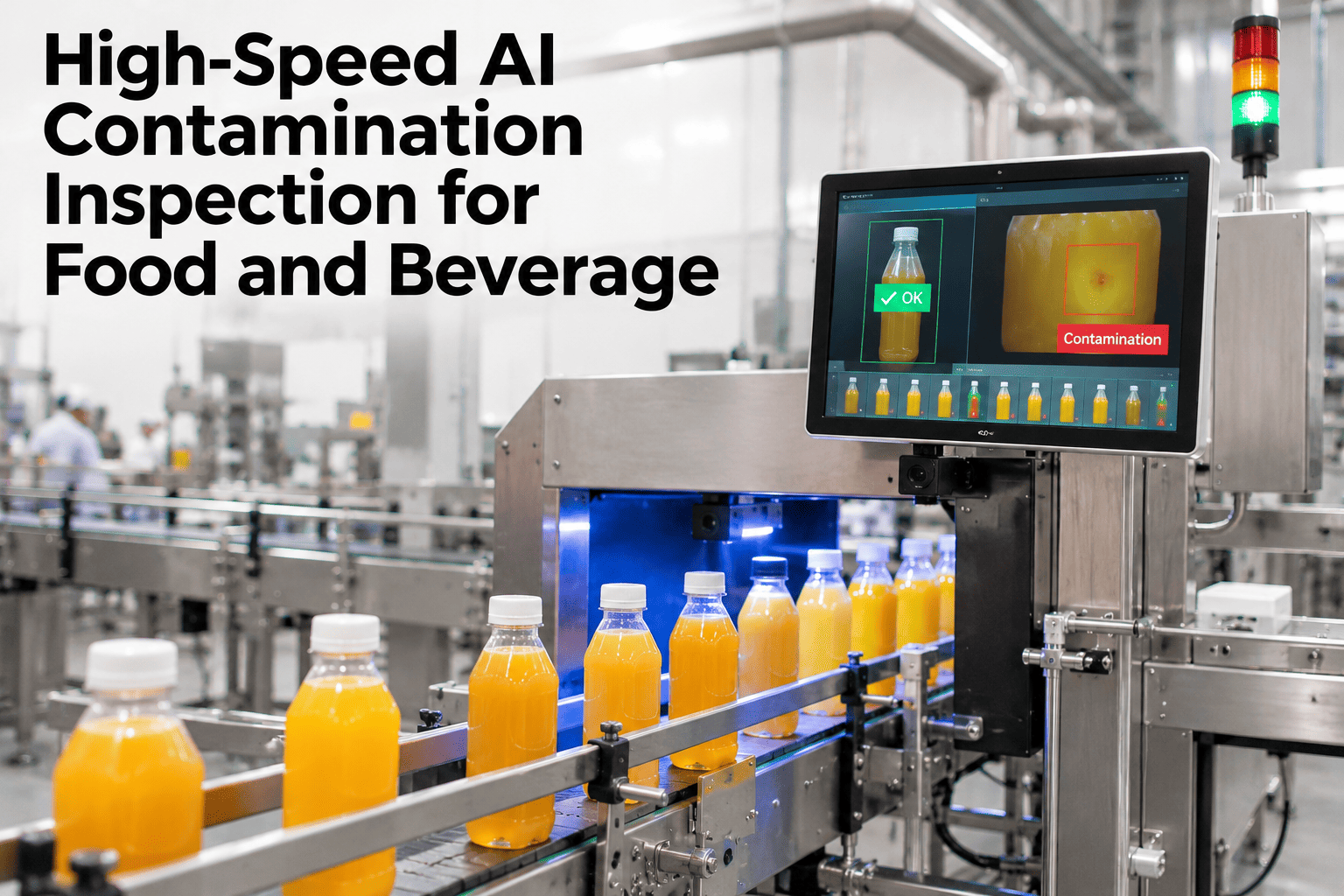
At 1,000 units per minute, a product sits under the camera for a fraction of a second, and the inspection system has to capture the image, run inference and make a reject decision inside that same fraction — roughly 150 milliseconds — before the product moves out of reach of a reject mechanism. Most contamination models are trained and benchmarked for accuracy alone, with latency treated as an afterthought, which is exactly why they fail silently once deployed on a line running faster than the lab ever tested. You can see inference latency measured on your own line speed with our team.
Accuracy Means Nothing if the Decision Arrives Too Late
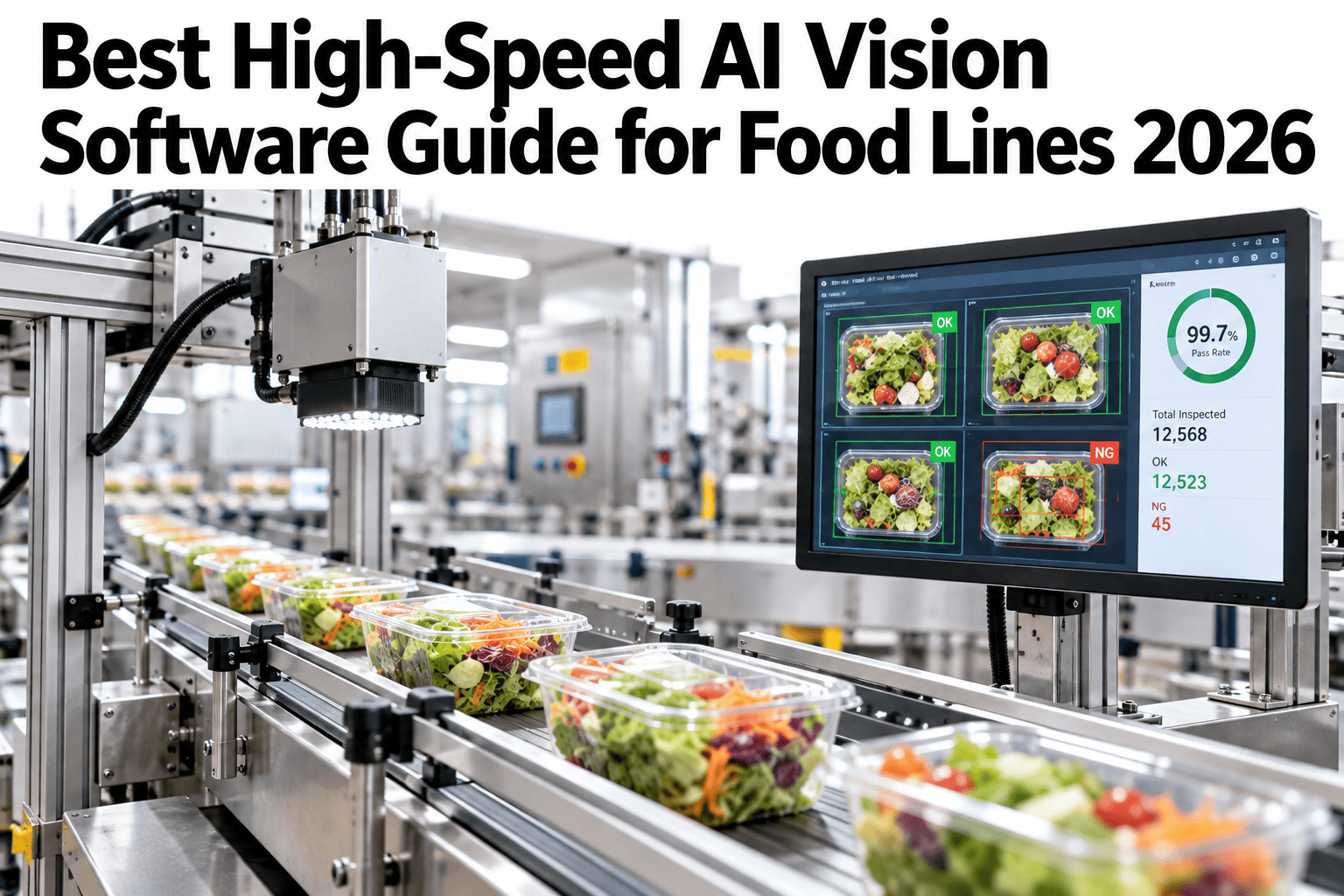
iFactory, an on-premise AI platform for AI vision inspection, runs contamination detection at up to 1,000 units per minute with sub-150 millisecond decision latency, so the reject signal arrives while the product is still reachable.
What Does "High-Speed" Actually Mean for AI Contamination Inspection?
High-speed inspection is not just a faster camera — it is the entire pipeline, from image capture through inference to reject actuation, fitting inside the time window a single unit spends reachable on a fast-moving line. At 1,000 units per minute, that window is measured in tens of milliseconds, not seconds.
Three Places Latency Hides in an Inspection Pipeline
Speed vs Accuracy Is a Real Tradeoff, Not a Marketing Line
| Approach | Typical latency | What it costs you |
|---|---|---|
| Large, high-accuracy model | Often 300ms or more | Misses the reject window on fast lines |
| Lightweight edge-optimized model | Often under 150ms | Slightly lower raw accuracy, but decisions actually land in time |
| Hybrid — edge model plus periodic deep audit | Fast edge decision, slower audit offline | Balances speed for live rejects with depth for trend analysis |
Find Your Line's Actual Latency Budget
Share your line speed and unit spacing and see exactly how many milliseconds your inspection system has to work with.
Book a Latency Budget Review Ask About Edge HardwareWhy High-Speed Inspection Limitations Go Unnoticed Until It's Too Late
A model's accuracy is easy to demonstrate in a controlled test — slow the line down, feed it known samples, report the number. Latency under full production speed is harder to demonstrate convincingly in a sales demo, which is exactly why it is the limitation most plants discover only after a system is already installed and underperforming.
What a Controls Engineer Would Check First
What Food and Beverage Plants Ask About High-Speed Inspection
Make Sure Your Reject Decision Actually Arrives in Time
Book a session with iFactory AI to measure real inference latency at your line's full production speed.
Book a High-Speed Inspection Demo Talk to Our Support Team