Multi-Sensor Humanoids for Food Cold Chain Monitoring
By Mark Nessim on May 27, 2026
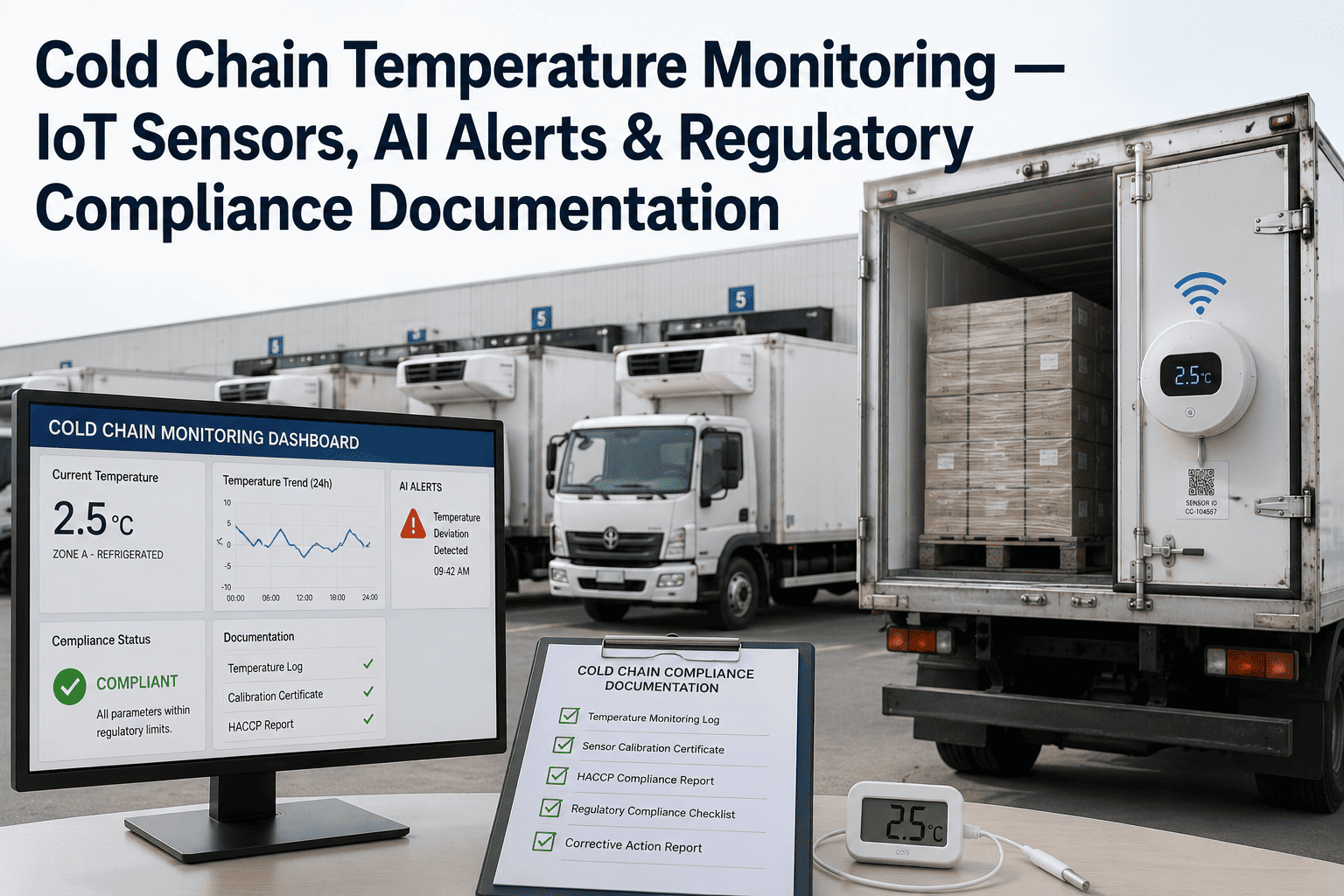
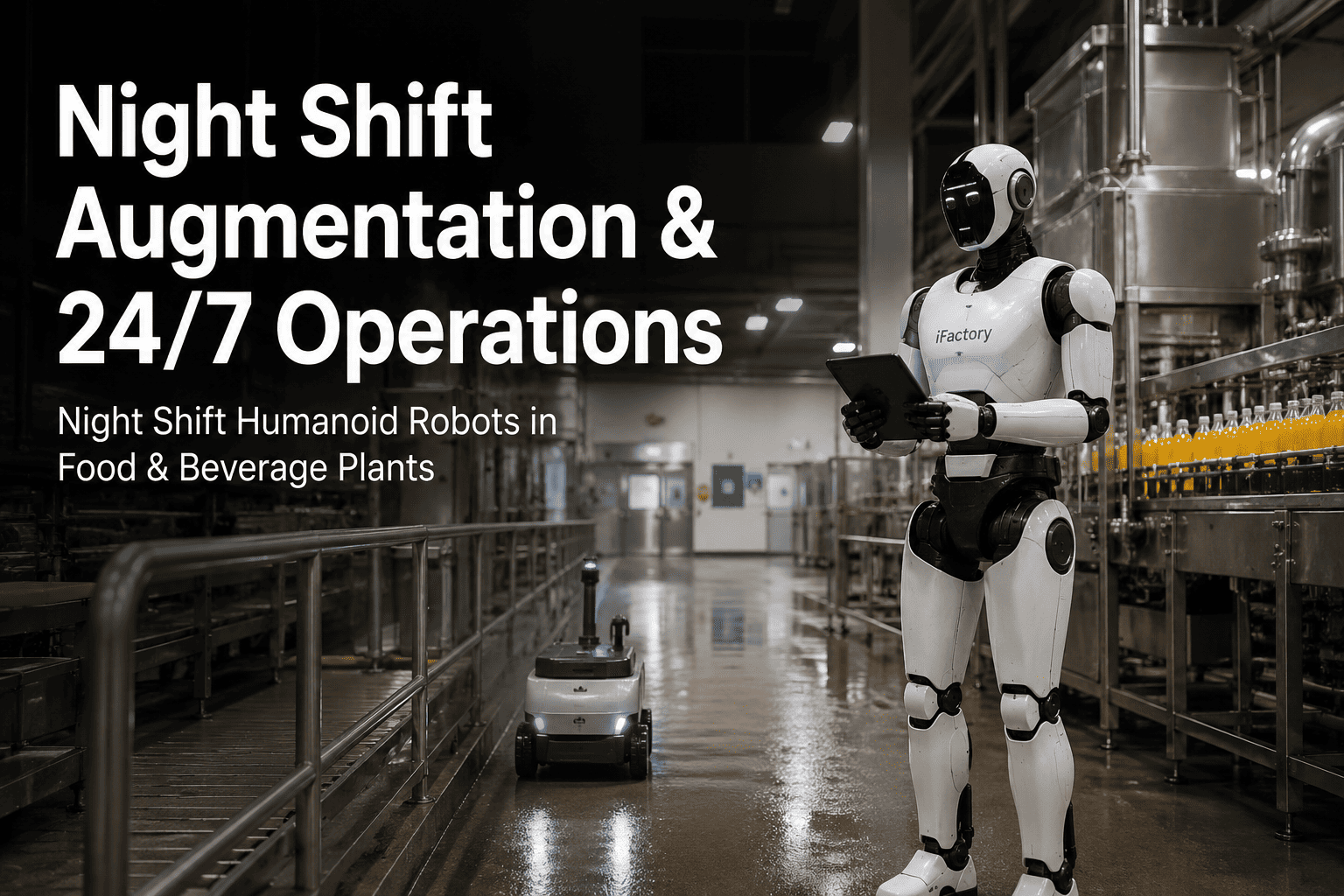
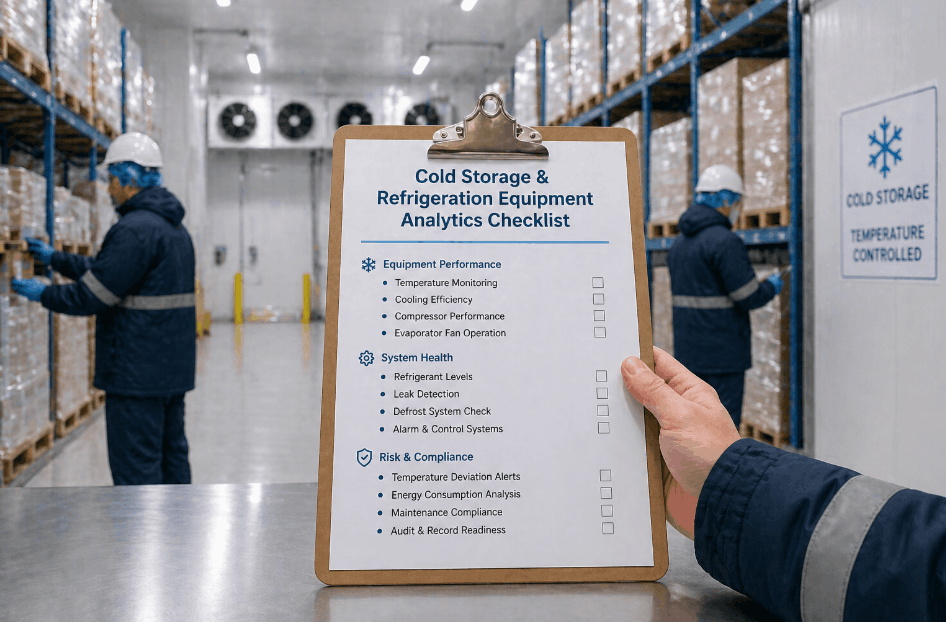
Food cold chain compliance is one of the most inspection-intensive requirements in food manufacturing. Walk-in coolers, blast freezers, spiral freezer cells, ammonia plant evaporator sections, and refrigerated warehouse aisles require documented temperature monitoring, humidity checks, airflow verification, and refrigerant gas detection across zones that are physically large, cold, and difficult to inspect at the frequency that HACCP plans and food safety audits require. Multi-sensor humanoid robots — carrying thermal imaging, calibrated temperature probes, humidity sensors, and gas detection modules — execute scheduled patrol routes through these zones and feed every reading directly into iFactory's CMMS and HACCP automation platform. If you'd like to see how iFactory connects multi-sensor humanoid patrol data to your cold chain compliance records, book a demo with our team.
Cold Chain & Refrigeration · 2026
Multi-Sensor Humanoids for Food Cold Chain Monitoring
Thermal · humidity · gas · airflow — multi-sensor patrol routes across refrigeration assets, feeding live iFactory dashboards and HACCP CCP records.
Each cold chain zone has different sensor requirements, different monitoring frequencies under the facility's HACCP plan, and different compliance implications for FSMA 204 trace-back. The matrix below shows which sensor types apply in each zone and what iFactory outputs from the captured data.
Zone
Temp
Humidity
Thermal
NH3
Airflow
iFactory Output
Chill Room
HACCP CCP records · deviation alerts
Blast Freezer
Cooling profile logs · uniformity map
Cold Store
Spatial temp map · FSMA 204 trace
IQF / Spiral
Equipment PdM · coil frost alerts
Ammonia Plant
EHS gas event log · compressor PdM
Refrigerated WH
Spatial cold map · FSMA 204 lot log
Primary sensor Zone-dependent Not applicable
Three Cold Chain Problems iFactory Solves
01
HACCP
CCP Records
Cold Chain CCP Gaps — Temperature Uniformity Across Zones
HACCP plans require documented temperature monitoring at multiple locations throughout cold storage zones to demonstrate thermal uniformity and detect refrigeration failures before product temperature rises above the critical limit. Human inspectors can safely remain in blast freezer conditions for 20–30 minutes before mandatory warm-up rotation — limiting inspection depth and frequency. Humanoid robots on scheduled patrol routes compile a spatial temperature map of every zone per pass, auto-populating HACCP CCP records with immutable digital logs. If you'd like to see how iFactory generates spatial temperature maps and HACCP CCP records from humanoid patrol data, book a demo with our team.
HACCP CCPsSpatial temp map21 CFR Part 11
02
48hr+
PdM Lead Time
Refrigeration Equipment Failures That Cause Cold Chain Breaches
Evaporator coil frosting, compressor bearing wear, and cooling jacket failures are not visible until they cause a cold chain breach. Thermal imaging from humanoid patrols detects abnormal heat signatures on compressors, motor housings, and evaporator sections before they cascade into refrigeration failure. iFactory's AI predictive maintenance models generate failure prediction signals and auto-create work orders with required parts — enabling planned service before product is at risk. Every thermal anomaly and work order is logged with lot and zone reference for FSMA 204 trace-back.
Thermal PdM48hr+ predictionAuto work orders
03
NH3
Gas Detection
Refrigerant Gas Detection & Humidity Deviation Logging
Ammonia refrigerant leaks require immediate detection and documented response. Humidity deviations in cold stores create condensation risk on packaging and racking — a HACCP concern in facilities storing RTE products. Multi-sensor humanoids carry NH3 electrochemical sensors and humidity probes on scheduled patrol routes, feeding every reading into iFactory's real-time alert engine and EHS event log. Threshold exceedances trigger notifications and immutable event records aligned with IIAR documentation patterns. If you'd like to discuss multi-sensor humanoid integration for your refrigeration and cold store environments, contact our support team.
NH3 detectionHumidity loggingEHS event log
Patrol Routes — What Happens Zone by Zone
iFactory is the AI software intelligence layer — not a humanoid manufacturer. The platform integrates with sensor data from humanoid platforms executing cold chain patrol routes. Each route generates a data payload that flows into iFactory's HACCP automation, predictive maintenance, and compliance record systems.
Blast Freezer
Cooling Profile & Uniformity Patrol
Per HACCP plan schedule
Temp probe
Thermal camera
Airflow sensor
The humanoid traverses the blast freezer on a scheduled route — capturing temperature at multiple heights and positions, thermal imaging of evaporator coils to detect frost build-up, and airflow readings. iFactory builds a spatial temperature map per pass, auto-populates HACCP blast-freeze records, and flags coil frosting before it reduces airflow efficiency below specification.
OutputSpatial temp map · coil frost PdM · HACCP records
AlertTemp deviation → CCP deviation record
Cold Store
Refrigerated Warehouse Spatial Monitoring
Per HACCP plan schedule
Temp probe
Humidity sensor
Thermal imaging
Walk-in cold stores and refrigerated warehouses require spatial temperature mapping across every racking bay and aisle to identify hot spots from door infiltration, failed evaporator sections, or blocked airflow. Humidity readings detect condensation risk on packaging near cold surfaces. iFactory compiles per-patrol spatial maps, supports FSMA 204 lot-to-zone temperature record linkage, and surfaces structural racking anomalies via visual inspection. If you'd like to see how iFactory generates compliant cold store spatial maps from humanoid patrol data, schedule a demo with our team.
OutputSpatial cold map · FSMA 204 lot linkage
AlertHumidity deviation → condensation risk flag
Ammonia Plant
Refrigerant Gas Detection & Compressor Inspection
Per IIAR / OSHA PSM schedule
NH3 gas sensor
Thermal imaging
Temp probe
The humanoid traverses the refrigeration machine room and evaporator galleries on scheduled routes carrying an NH3 electrochemical sensor. Every reading logs with timestamp and GPS position into iFactory's EHS event log. Threshold-approaching readings trigger safety alerts. Thermal imaging captures compressor motor and bearing heat signatures — feeding iFactory's predictive maintenance models.
OutputGas readings · EHS log · compressor PdM
AlertNH3 threshold → EHS notification
What iFactory Delivers for Cold Chain Operations
HACCP
CCP records auto-captured — immutable, FDA 21 CFR Part 11 compliant
48hr+
Failure prediction lead time on refrigeration assets via thermal PdM signals
SQF/BRC
Audit-ready records pre-formatted for SQF, BRC, FSSC 22000 retrieval
NH3
Ammonia gas threshold alerts with timestamped GPS-tagged EHS event records
FAQ
iFactory is the AI software intelligence layer — not a humanoid manufacturer or sensor hardware vendor. The platform integrates with data from fixed IoT sensors, PLC telemetry (Rockwell, Siemens, Wonderware), ERP (SAP, Oracle), temperature dataloggers, and multi-sensor humanoid platforms carrying thermal cameras, temperature probes, humidity sensors, and gas detection modules. Your facility selects the humanoid and sensor hardware; iFactory turns the captured data into HACCP records, PdM signals, EHS event logs, and audit-ready compliance documentation.
Fixed IoT sensors monitor continuously at specific points — valuable for CCP coverage, but unable to generate spatial temperature maps, detect thermal anomalies on equipment, or adjust patrol routes as HACCP plans change. Multi-sensor humanoids complement fixed sensors by adding mobile spatial mapping, thermal imaging for equipment PdM, visual racking inspection, and route flexibility. iFactory integrates both data streams into the same HACCP automation and compliance record system.
The platform supports HACCP/HARPC, SSOP, SQF, BRC, FSSC 22000, FSMA 204, GMP, and FDA 21 CFR Part 11. Every temperature reading, humidity log, gas sensor record, and thermal anomaly event becomes part of immutable digital records with electronic signatures and ALCOA+ data integrity. FSMA 204 lot-to-zone temperature record linkage supports one-click trace-back across cold chain routes during recall or audit scenarios.
Deploy iFactory for Cold Chain Multi-Sensor Monitoring
AI-powered CMMS connecting multi-sensor humanoid patrol data — thermal imaging, temperature probes, humidity sensors, and NH3 gas detection — into one platform with spatial cold chain maps, HACCP CCP automation, refrigeration PdM, and FSMA 204 traceability.