A maintenance planner at a mid-size snack food plant recently described her mornings as "reading three different novels about the same day." The CMMS says a work order closed on time. The ERP says raw material was consumed for a batch that technically hasn't started yet. The PLC historian, buried in a folder nobody checks, holds the actual machine states that would explain both. None of the three systems is lying. Each one is just answering a narrower question than the plant actually needs answered, which is why getting CMMS, ERP, and PLC data onto one dashboard matters more than any single report ever will. iFactory's integration team spends most of its time closing exactly this kind of gap for food and beverage plants.
Merge CMMS, ERP, and PLC Data Before It Becomes Three Different Versions of the Truth
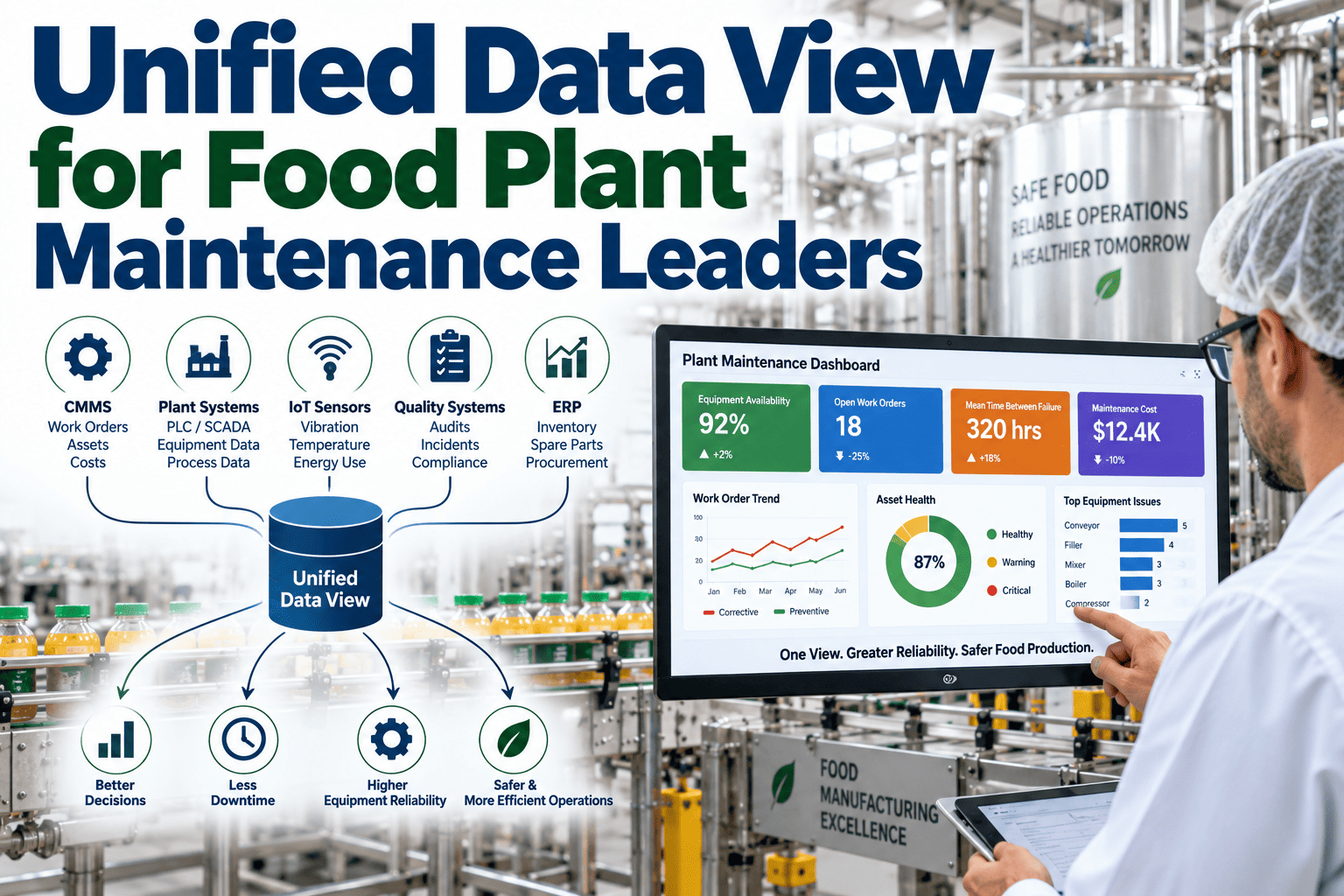
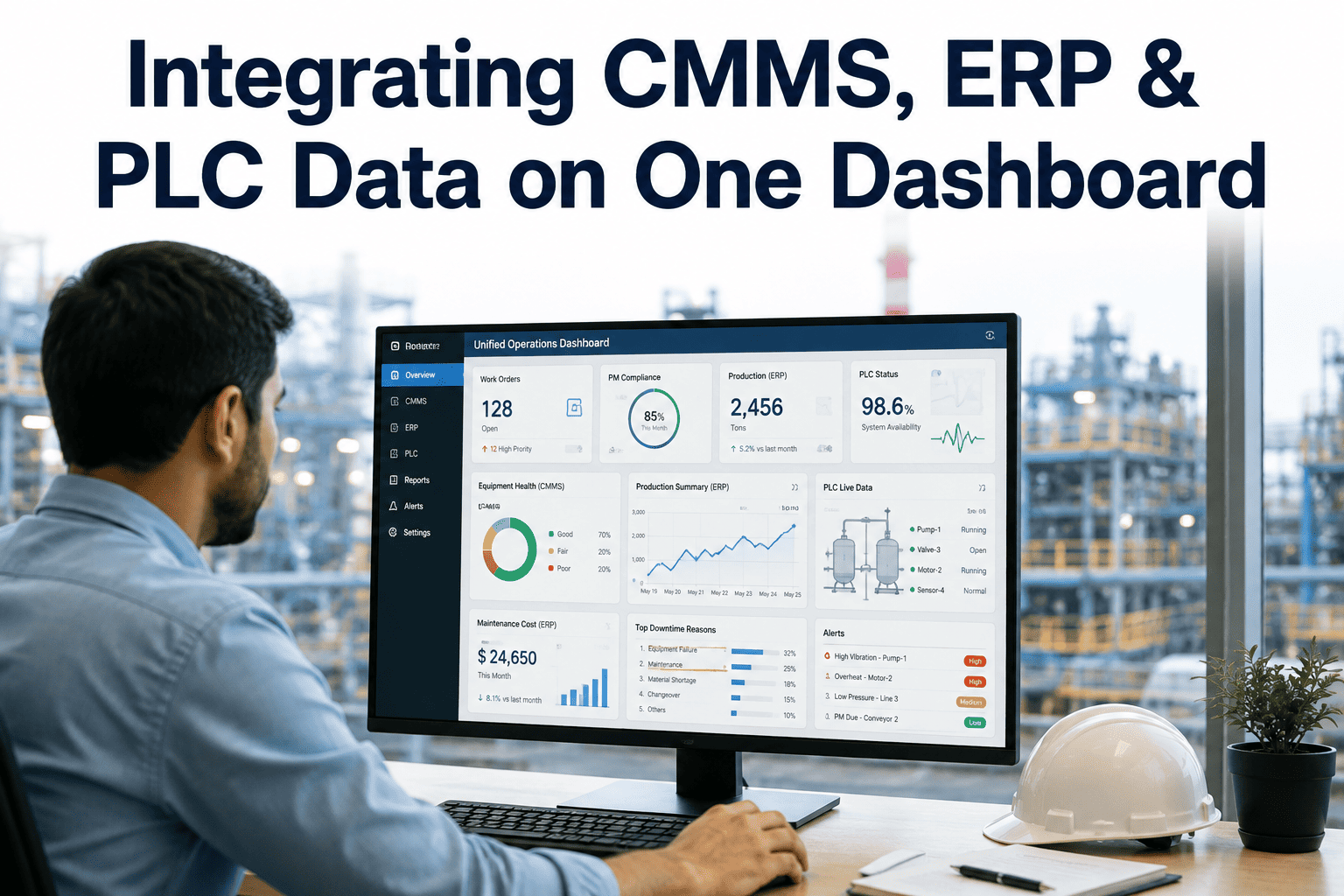
A single maintenance dashboard that pulls live PLC states, current CMMS work order status, and ERP inventory and cost data into one canonical view, so nobody has to guess which system is right this week.
Why Food Plants Accumulate This Problem Faster Than Other Industries
Food and beverage plants run more SKUs, more changeovers, and tighter sanitation windows than almost any other manufacturing vertical, and each of those activities generates a data event in a different system. A changeover gets logged in the PLC as a state change, in the CMMS as a completed task, and eventually — sometimes hours later — as a cost line in the ERP. When those three records don't reconcile automatically, someone has to do it by hand, and the plant ends up making decisions on whichever system happens to be open on the screen in front of them rather than the one that's actually correct.
The Cost of Letting These Systems Disagree
Every plant that runs CMMS, ERP, and PLC systems separately eventually develops workarounds to cope with the disagreements between them. Those workarounds feel normal after a while, which is exactly why they're worth naming plainly.
Bring Your CMMS and ERP Login Screens to the Call
We'll walk through what a live connection between your specific CMMS, ERP, and PLC historian would actually look like, using your real asset list rather than a generic demo.
What a Genuinely Unified Dashboard Actually Does
The goal isn't a fourth screen that shows the other three side by side — that just adds a fourth version of events to reconcile. A properly integrated dashboard sits underneath all three systems, reading and writing through APIs and edge connectors, and resolves conflicts before a human ever sees them. When a PLC reports a machine stopped and the CMMS hasn't logged a corresponding work order within a defined window, the platform flags the mismatch automatically instead of waiting for someone to notice the numbers don't add up during a monthly review.
Curious what this sequence looks like against your own tag list and CMMS schema? Send our team your setup and we'll map it out before the call.
Reconciliation Rules That Make the Numbers Agree
The technical difficulty in this kind of integration is rarely the connection itself — most modern CMMS and ERP platforms expose reasonable APIs. The difficulty is deciding, ahead of time, which system wins when two records disagree, and building that logic into the platform rather than leaving it to whoever notices the discrepancy first.
| Data Type | System of Record | How Conflicts Resolve |
|---|---|---|
| Machine run/stop state | PLC / historian | PLC timestamp always wins over manually logged times |
| Work order status | CMMS | CMMS closure requires a matching PLC state change |
| Material consumption | ERP | ERP posts only after batch completion is confirmed by MES/PLC |
| Downtime cost attribution | Integration layer | Calculated from PLC duration mapped to ERP labor and rate tables |
Rolling It Out Without Disrupting Production
Plants that try to connect every asset across every line in one project usually stall, not because the technology fails but because the number of exceptions and edge cases grows faster than the team can resolve them. A staged rollout keeps the project moving and gives leadership a working result to point to early.
What Plants Report After Unifying These Systems
Manufacturers that have connected maintenance, planning, and machine-level systems into a single view consistently point to the same categories of improvement: fewer hours spent reconciling numbers by hand, faster response when an asset starts failing, and — perhaps most valuable — a level of trust in the numbers that lets leadership make decisions without a side conversation to confirm the report is accurate.
Common Mistakes When Merging These Systems
The most frequent misstep is treating this as a reporting project rather than a data governance project. Building a dashboard that displays numbers from three sources without first agreeing on which source wins in a conflict just produces a more attractive version of the same disagreement. A second common mistake is skipping the PLC layer entirely and integrating only CMMS with ERP, which solves the administrative gap but leaves the plant blind to the machine-level events that actually caused the work order in the first place. The dashboard ends up describing what happened without ever explaining why.
A third mistake is underestimating change management. Technicians who have logged work orders a certain way for years will route around a new system if it adds steps to their day, so the integration has to make their job easier immediately, not just make the report look better six months later.
Frequently Asked Questions
Put CMMS, ERP, and PLC Data on One Dashboard That Actually Agrees With Itself
Bring your current systems list to the call and we'll show you what a phased connection looks like for your specific plant, starting with one pilot line.