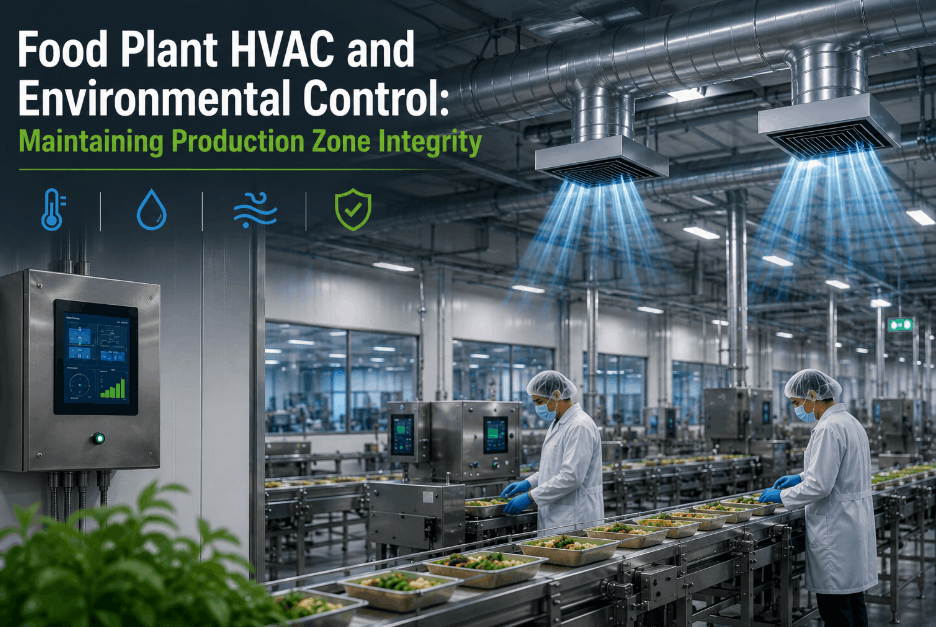
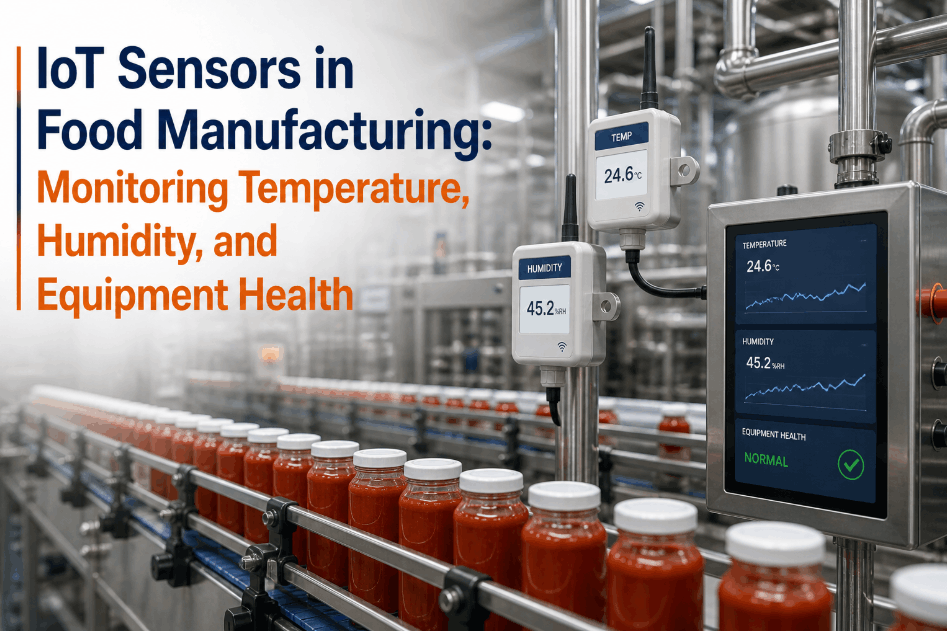
A single employee crossing from the raw receiving dock into a ready-to-eat packing zone without footwear sanitation is a documented Listeria and Salmonella transfer vector — and it happens in seconds, unrecorded, unless a door sensor and access log actually catch it. Hygienic zoning divides a food plant into risk-graded areas by design, but design alone does not enforce itself once employees are moving fast during a shift change. IoT door sensors, access control readers, and personnel flow tracking turn zone boundaries from a floor plan into something that is actually monitored in real time — flagging the propped door, the badge that entered without a gowning confirmation, and the airlock that cycled both doors open at once. Book a demo to see zone access monitoring built into iFactory's food plant platform.
IoT Sensors
IoT Door & Access Monitoring: Hygiene Zone Control
14 min read
3 Types
Traffic flows every food plant needs to monitor separately — personnel, material, and equipment movement between zones
One-Way
Direction hygienic zoning requires — products and air should flow from low-risk toward high-risk zones, never backward
No Backflow
The core airlock requirement — both doors should never cycle open at once, preventing pressure equalization between zones
21 CFR 117
Federal food safety regulation under which physical zone separation failures are documented as direct non-conformances
Why Zone Design Alone Does Not Guarantee Zone Compliance
Hygienic zoning divides a facility into areas with different hygiene requirements, ensuring product and personnel movement flows only from lower-risk toward higher-risk zones — never in reverse. This design principle is well understood across the industry, but a floor plan with the right zones marked on it does not stop an employee from propping a door for airflow on a hot shift, or walking through a zone transition without completing the required footwear sanitation step. Zone integrity depends on continuous enforcement, not a one-time facility design decision.
Digital tracking of zone compliance in real time is increasingly treated as a necessary complement to physical design, not an optional add-on — because audits and regulatory inspections consistently find that the gap between designed zone separation and actual day-to-day compliance is where contamination incidents originate.
What IoT Door and Access Sensors Actually Monitor
A basic door contact sensor tells you a door opened. A properly configured hygiene zone monitoring system tells you which door, which direction of travel, whether the badge that opened it had a valid gowning confirmation, and whether the paired airlock door was already open when it did. Start free trial to see zone access events logged against your facility's actual traffic patterns.
Door Open/Close Events
Every door state change logged with timestamp, duration open, and which zone boundary the door sits on — flagging doors left propped or held open beyond a configured duration.
Access Control Readers
Badge or biometric entry logged per individual, tied to their authorized zone list, flagging any access attempt into a zone the individual is not credentialed to enter.
Airlock Sequencing
Paired door sensors confirming only one door of an airlock is open at any moment, preventing the direct air and pressure connection between zones that a simultaneous double-open creates.
Gowning Verification Interlock
Zone entry gated on a confirmed gowning completion signal, so a badge cannot open a controlled-zone door without a logged gowning step immediately preceding it.
Personnel Flow Direction
Entry and exit events correlated to confirm personnel are moving in the required direction between zones, flagging any raw-to-RTE movement without the required transition step.
Traffic Density by Zone
Aggregate movement counts per zone per shift, surfacing unusual traffic spikes that may indicate a workflow breakdown or unauthorized shortcut route being used.
The Three Traffic Flows Every Plant Needs Tracked Separately
Contamination risk does not move through a plant as a single undifferentiated traffic stream — personnel, raw materials, and finished goods each carry distinct risk profiles and need distinct monitoring logic rather than being lumped into one generic "movement" metric.
Personnel FlowEmployee movement between zones, gated by gowning verification and access credentials. The highest-frequency traffic type and the one most exposed to shortcut behavior during busy shifts.
Material FlowRaw ingredient and packaging movement, which must never cross back from a higher-risk zone into a lower-risk one once it has entered production.
Equipment FlowTools, carts, and mobile equipment moved between zones, a frequently overlooked vector since color-coded tool segregation depends on equipment actually staying within its designated zone.
Why This Gets Missed
Unauthorized movement of color-coded tools between zones is one of the most common cross-contamination events documented in FDA inspection findings. It rarely happens through deliberate disregard for procedure — it happens because nobody was tracking whether the cart that left the raw zone actually stayed there, and door and access data closes exactly this kind of visibility gap.
Alert Logic: What Should Trigger Immediate Notice
Not every door event needs an alert — a properly tuned system distinguishes routine access from the specific patterns that represent genuine zone compliance risk, so the team responding to alerts is responding to real issues rather than drowning in notifications for every normal door cycle.
Door Held Open Beyond ThresholdA door propped open longer than a configured duration triggers immediate alert, since extended open time is when pressure equalization and contamination ingress risk accumulates.
Airlock Double-Open EventBoth doors of a paired airlock registering open simultaneously flags immediately, since this is the exact failure mode airlocks exist to prevent.
Access Without Gowning ConfirmationA badge opening a controlled-zone door without a preceding logged gowning completion event triggers immediate review, since this represents a direct SSOP non-conformance.
Reverse-Direction Zone EntryMovement detected from a higher-risk zone back into a lower-risk zone without a documented sanitation transition flags for review as a potential backflow contamination event.
Unauthorized Credential AttemptA badge attempting access to a zone outside its authorized list logs and alerts, distinguishing a genuine security concern from routine authorized traffic.
From Access Log to Audit-Ready Compliance Record
Gowning practices and zone access records are frequently reviewed during regulatory inspections, since they provide immediate, hard-to-fake evidence of a facility's quality culture and training discipline. Book a demo to see how continuous access logging turns into an exportable compliance record before an auditor asks for one.
Turn Your Zone Boundaries Into Monitored, Enforced Control Points
iFactory connects door sensors, access control readers, and gowning verification systems into one continuous zone compliance view — flagging propped doors, airlock breaches, and unauthorized crossings the moment they happen, not after an audit finding.
What Plants Report After Deploying Continuous Zone Access Monitoring
Real-Time
Zone Breach Detection
Door and access events flagged as they happen rather than discovered during a periodic manual audit walkthrough
Fewer
SSOP Non-Conformances
Reduction in zone separation findings once propped doors and ungowned entries are caught before an inspection
Audit-Ready
Access Records
Exportable compliance logs replacing manual sign-in sheets and reconstructed shift-end paperwork
Faster
Root Cause Tracing
Traffic and access data available immediately when investigating a contamination event, rather than relying on memory
Frequently Asked Questions
QDoes IoT door monitoring replace physical barriers like airlocks and air curtains, or work alongside them?
IoT monitoring works alongside physical barriers rather than replacing them — airlocks, air curtains, and pressure-maintained vestibules remain the physical mechanism preventing contamination transfer between zones, while door and access sensors provide the continuous verification that those physical systems are actually functioning and being used correctly. A well-designed airlock with degraded seal integrity or a motor issue on the air curtain can quietly stop doing its job long before anyone notices without monitoring in place, which is exactly the gap continuous sensor data closes.
Book a demo to see how sensor data correlates with your existing physical zone barriers.
QHow does gowning verification actually integrate with a door access system?
Gowning verification typically works as an interlock — a gowning station logs completion of the required steps for a given zone, generating a time-limited confirmation tied to that individual's badge, and the door access reader checks for this valid confirmation before permitting entry into the controlled zone. If gowning was skipped, done out of order, or the confirmation window has expired, the door access system flags or denies entry rather than allowing a badge holder through on credential alone. This closes the gap between having a valid access badge and having actually completed the hygiene requirement tied to that specific zone.
QWhat is the difference between an access control failure and an airlock backflow event, and why track them separately?
An access control failure is about identity and authorization — the wrong person, or a person without the right credential, entering a zone. An airlock backflow event is about physical air and pressure integrity — both doors of a paired airlock opening at once, creating a direct connection between two zones regardless of who is passing through. Both matter, but they represent different failure modes with different root causes and different corrective actions, which is why compliance tracking needs to log and report them as distinct metrics rather than folding everything into a single generic "zone incident" count.
Start free trial to see these tracked as separate metrics in your compliance dashboard.
QCan this type of monitoring help during an actual contamination investigation, not just prevent future incidents?
Yes, and this is often where the value becomes most apparent to a plant that has never had an incident yet — when a contamination event does occur, having a continuous, timestamped record of exactly who moved between which zones, when doors were open, and whether gowning was confirmed dramatically shortens the root cause investigation compared to reconstructing the timeline from memory, paper sign-in sheets, or camera footage review alone. The same data collected for day-to-day compliance monitoring becomes the investigation record the moment it is needed.
QHow much retrofit work does adding door and access monitoring require on an existing facility?
Most food plants already have some form of door hardware and access control infrastructure in place, so the typical deployment adds sensor modules and integration to existing doors and readers rather than requiring a full physical rebuild of zone boundaries. The bigger variable is usually the number of zone transition points that need coverage and whether existing access control readers support the integration needed for gowning interlock logic, both of which a facility walk assessment identifies before deployment begins.
Stop Discovering Zone Breaches During the Audit
iFactory monitors every door, airlock, and access point across your hygiene zones continuously, giving quality teams the real-time visibility and audit-ready records that physical zone design alone cannot provide.