A nightly batch job that refreshes the RCA dashboard at 6 a.m. is already twelve hours stale by the time the morning shift meeting starts. Machine data streaming software closes that gap by moving MQTT, OPC UA or Sparkplug B payloads off the plant edge continuously, so the analysis layer sees a stop or a drift within seconds instead of waiting for the next batch window. Getting this right on a food plant's OT network means respecting the segmentation that keeps control systems safe while still getting data out fast enough to matter. Plant engineers can review a streaming architecture built around their own OT network with the iFactory AI team.
Stop Waiting on the Nightly Batch for Line Data
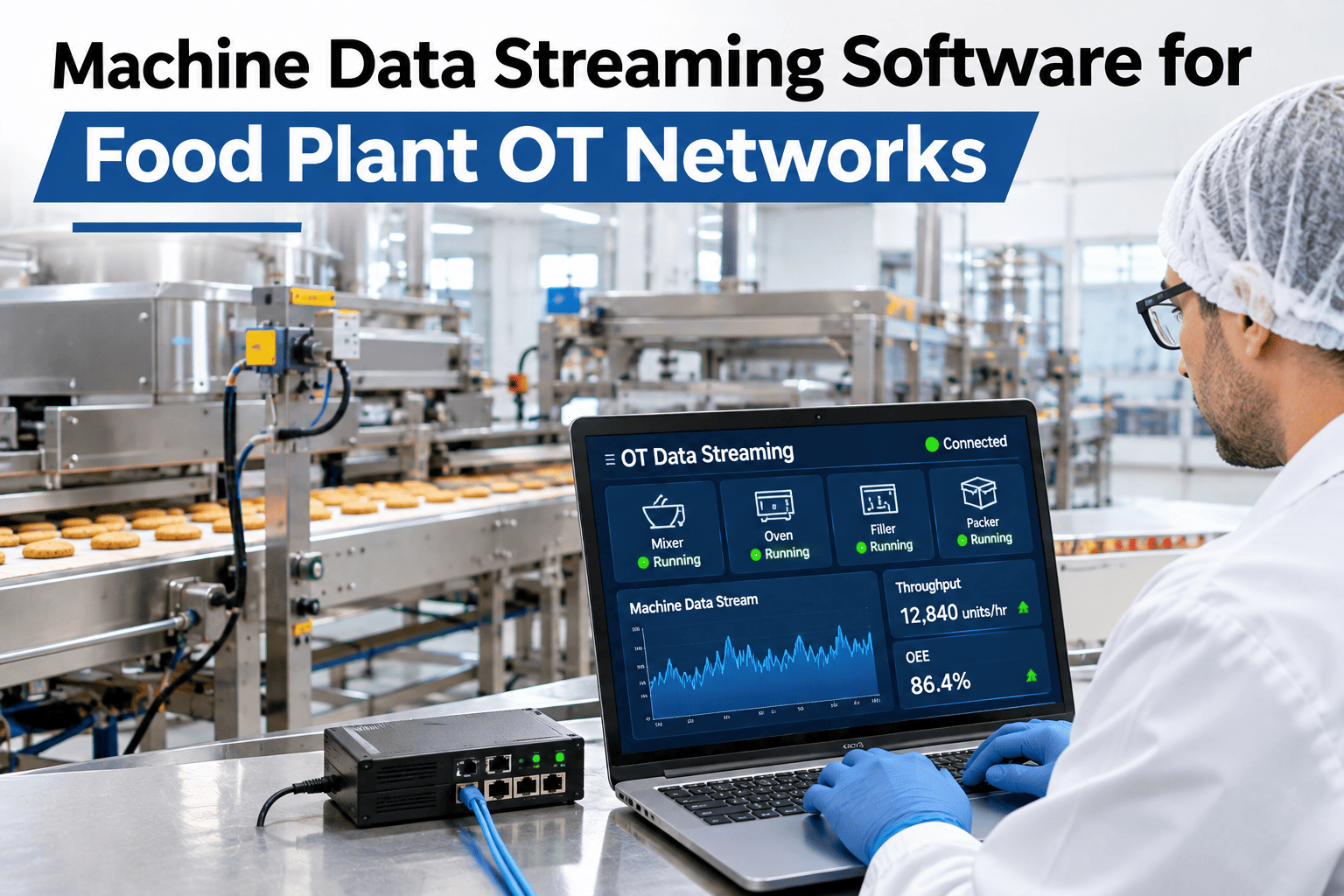
Machine data streaming software for food plant OT networks moves MQTT, OPC UA and Sparkplug B data off the edge in near real time, so the RCA layer never waits on a scheduled refresh.
Why a Nightly Batch Job Is Too Slow for RCA
A scheduled extract works fine for a monthly compliance report, where the data only needs to be correct, not current. Root-cause analysis and live loss prediction need the opposite: data that is current enough to still be actionable, which means seconds or minutes old, not twelve hours.
MQTT, OPC UA and Sparkplug B at the Plant Edge
| Protocol | Strength | Typical use on the edge |
|---|---|---|
| OPC UA | Rich, structured data model with security built in | PLC and SCADA tag access |
| MQTT | Lightweight publish-subscribe, low bandwidth | Sensor and gateway data over unreliable links |
| Sparkplug B | MQTT payload standard with state and metadata built in | Multi-vendor edge devices reporting into one broker |
Most food plants end up using more than one of these together, with OPC UA pulling structured tags from PLCs and MQTT or Sparkplug B carrying that data the rest of the way to the streaming layer.
See Your Protocol Mix Mapped
Tell iFactory AI which protocols your lines already speak, and see a streaming path designed around what you have, not a rip-and-replace plan.
What Sits at the Edge Before Data Ever Streams
Before any protocol decision matters, the plant needs something physically capturing the signal at the machine. For an older PLC that never shipped with OPC UA support, that usually means a small edge gateway device sitting beside the PLC, translating its native protocol into something the broker can consume, rather than replacing the PLC itself.
This is where a legacy food plant's streaming project often differs from a greenfield one: much of the early effort goes into these small, inexpensive translation gateways rather than into the broker or the analysis layer, because the oldest machines on the floor are frequently also the ones responsible for the most downtime, which makes connecting them worth the extra step.
Four Stops Between a Sensor and the RCA Layer
Nightly Batch Against Continuous Streaming
What Keeps a Streaming Pipeline Running Months Later
A streaming connection that works perfectly on day one can still degrade quietly over months if nobody owns its upkeep. Broker configurations drift, a firmware update on an edge gateway can silently change a tag's data type, and a new machine added to the line needs its own publishing setup before its data ever reaches the broker.
Treating the streaming layer as infrastructure with a named owner, the same way a plant already treats its network switches or its historian server, is what keeps it reliable past the initial rollout. A brief weekly check of message throughput per line catches a quiet failure long before anyone notices the RCA dashboard has gone stale.
Where Streaming Projects Usually Go Wrong
How Much of the Plant Needs to Stream on Day One?
A streaming project does not need to cover every tag on every line to deliver value. Starting with the tags that already feed RCA and downtime reporting, usually a few hundred per line, gives the analysis layer what it needs without overbuilding the broker and gateway infrastructure before anyone has proven the approach works.
From a 6 a.m. Surprise to a Same-Shift Fix
Consider a filler that started drifting out of its fill-weight tolerance two hours into the night shift. Under a nightly batch extract, nobody would see the drift until the morning report, by which point a full shift of product sat in question. With tags streaming continuously, the drift shows up in the quality dashboard within seconds of the sensor reporting it, and the night supervisor adjusts the fill head before a second pallet is affected. The difference is not a new sensor, it is how fast the same sensor's data actually reaches someone who can act.
What an OT Network Engineer Would Verify First
What Engineers Ask About OT Data Streaming
Give Your Analysis Layer Live Line Data
Book a session with iFactory AI to design a data streaming path for your plant's own OT network and protocol mix.