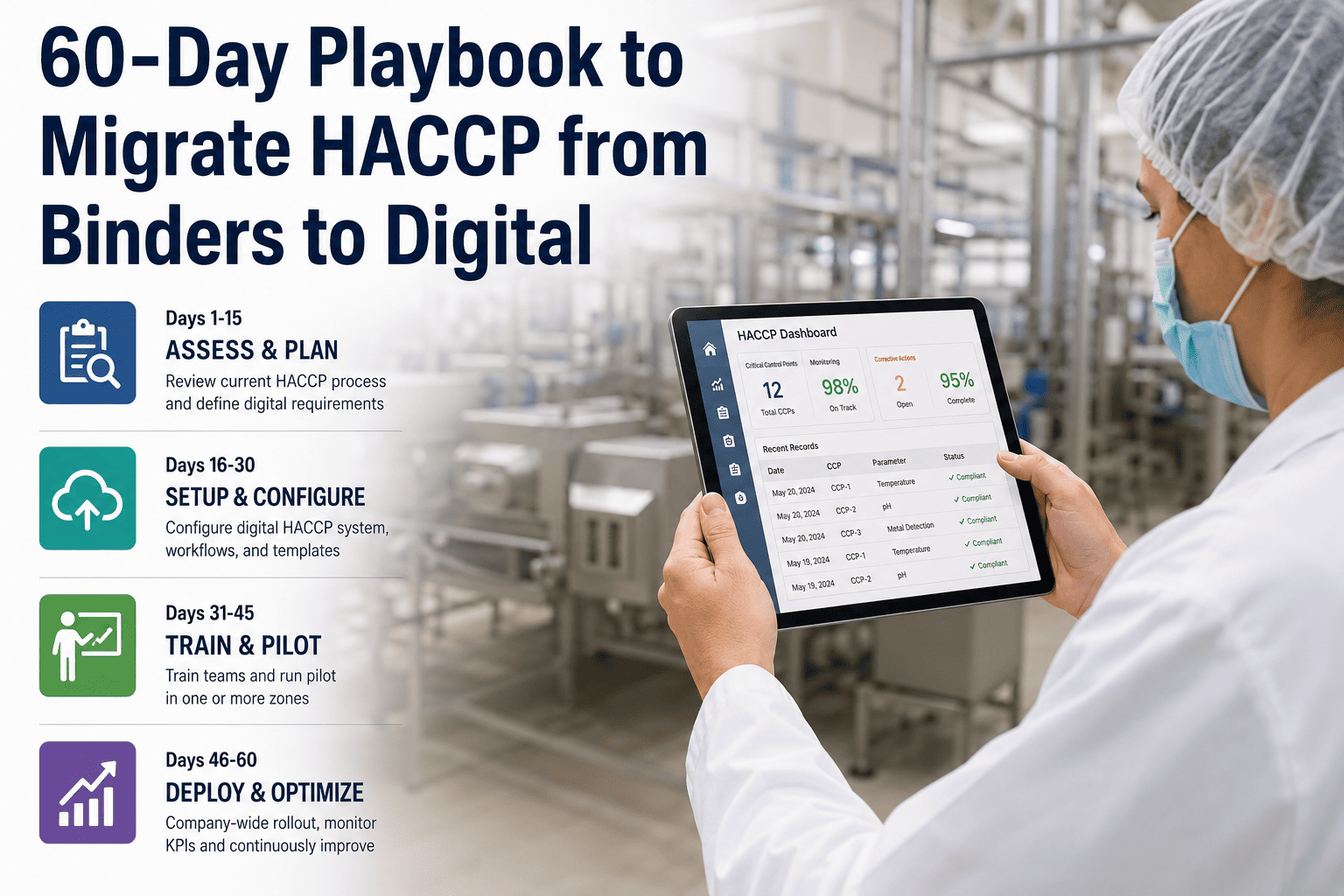
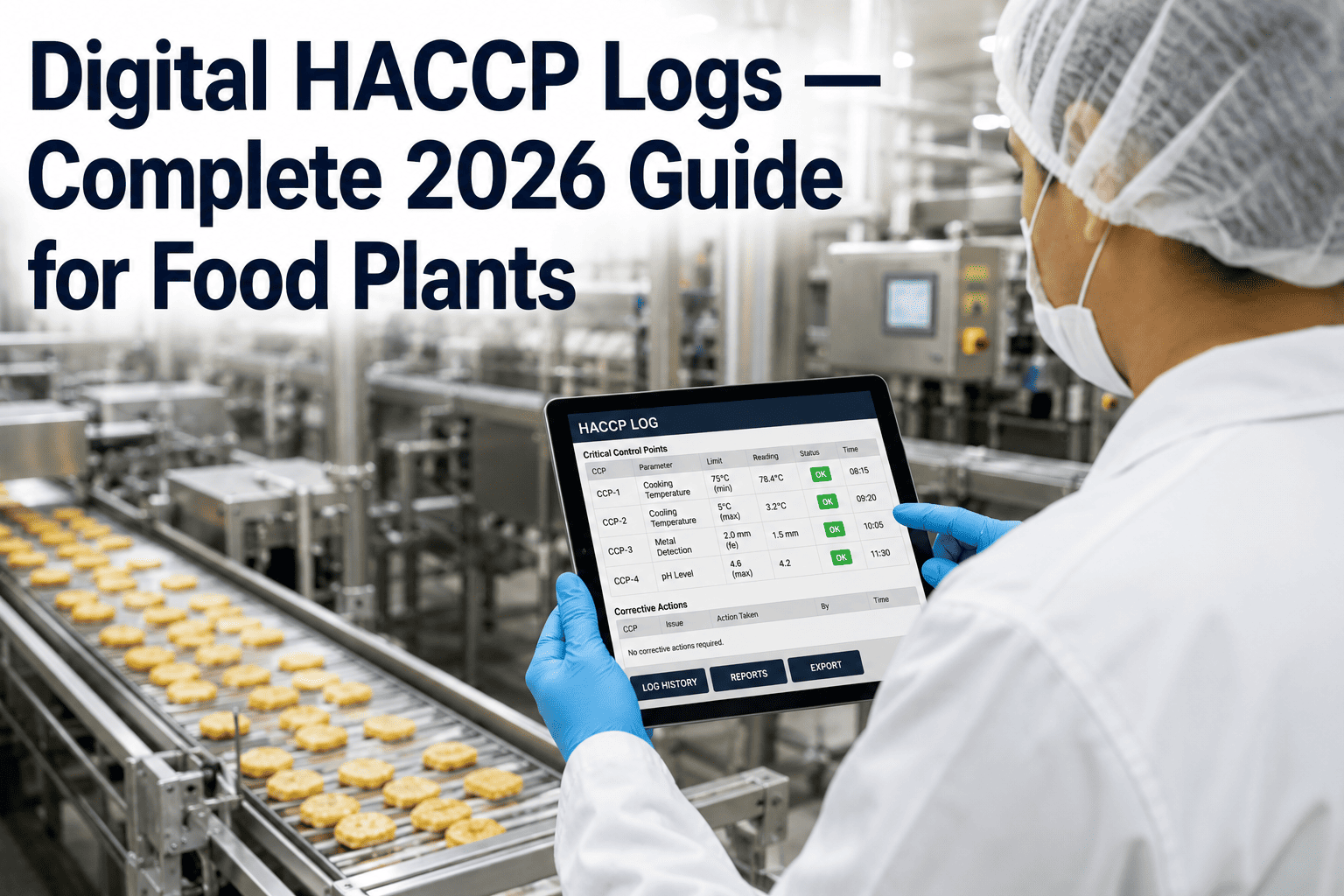
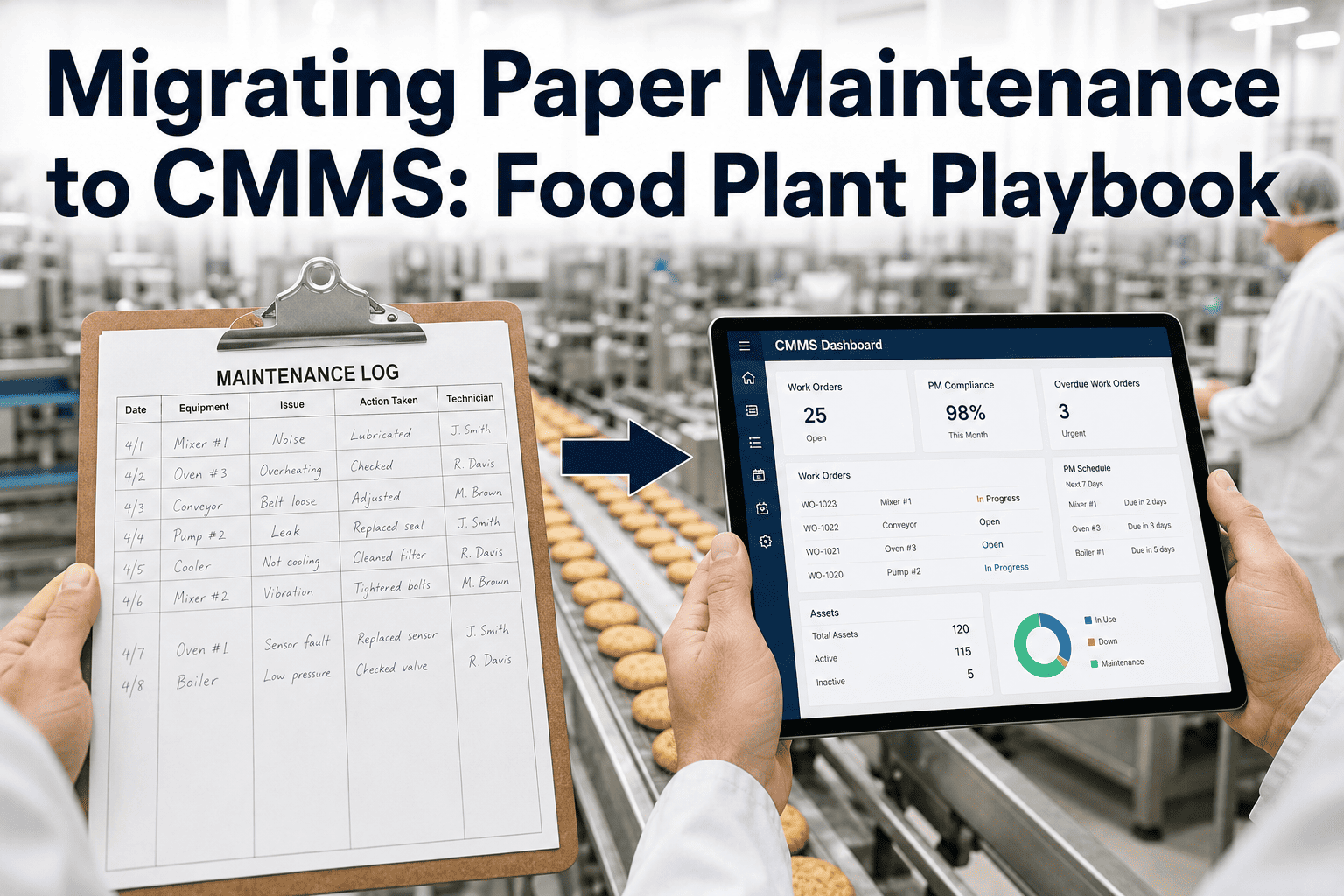
Somewhere in every food plant still running paper HACCP is a three-ring binder that has survived multiple ownership changes, two ERP migrations, and at least one flood scare in the records room — and it is still, today, the system of record an auditor will ask to see first. Moving off that binder is not a weekend project, and most plants that try to rush it end up with a parallel mess of half-digital, half-paper logs that satisfies nobody. What actually works is a sequenced 60-day plan that treats conversion, monitoring template design, training, and a parallel-run period as four distinct phases rather than one big cutover. See how a structured 60-day HACCP migration playbook moves a plant from binders to digital without a gap in food safety coverage.
Food Safety · HACCP Digitization
Sixty Days From Three-Ring Binder to Fully Digital HACCP
A phased migration playbook covering plan conversion, monitoring template design, operator training, and a parallel-run period — built so a food plant never loses food safety coverage during the switch.
Why Plants Delay This Migration
The Real Reason Binders Survive Longer Than They Should
Almost every food safety manager knows paper HACCP logs are the weaker system — harder to audit, easier to backfill after the fact, and slower to reveal a missed check until an auditor is standing in the room asking for it. Almost none of them get around to migrating quickly, and the reason is rarely disagreement about whether digital is better. It's that a full binder-to-digital conversion touches every CCP monitoring form in the plant at once, and a plant that gets the sequencing wrong risks a gap where neither the old system nor the new one is fully trusted — which is a far scarier outcome to a QA director than staying on paper one more audit cycle.
The plants that migrate successfully treat it as a project with distinct phases rather than a single conversion event, which is what a 60-day structured playbook is built around. Each phase has a clear exit condition before the next one starts, so the plant never has to bet the entire food safety program on one cutover weekend.
The Four-Phase Structure
How the 60 Days Break Down
Days 1–14
Plan Conversion
Every existing CCP, critical limit, monitoring frequency, and corrective action from the current HACCP plan is mapped into a digital equivalent, with QA reviewing each converted CCP against the original plan before it moves forward.
Days 15–28
Monitoring Template Design
Digital check templates are built for each CCP with the same fields operators currently record on paper, adjusted only where digital capture allows for tighter validation, like a temperature field that rejects an out-of-range entry without a required note.
Days 29–42
Operator Training
Line operators, supervisors, and QA staff train on the digital workflow using the plant's own converted CCPs rather than generic examples, with hands-on practice on the actual devices they'll use for live monitoring.
Days 43–60
Parallel Run
Digital and paper logs run side by side for a defined window, with any discrepancy between the two investigated before paper is retired, giving QA a verification period rather than a leap of faith.
Migrate Without a Coverage Gap
A Sequenced Plan Beats a Weekend Cutover
iFactory's migration playbook moves food plants off paper HACCP through four structured phases, with a parallel-run period that proves the new system before the old one is retired.
The Parallel-Run Period, Explained
Why the Overlap Window Matters More Than the Cutover Date
The single most common mistake in a HACCP digitization project is treating the go-live date as the finish line. In practice, the two-to-three-week parallel-run period that follows is where most of the actual risk gets retired, because it's the only point in the project where the digital system's output can be directly checked against a paper record everyone already trusts. Operators complete both logs during this window — not because the plant expects to keep running two systems long-term, but because any mismatch between them, whether a missed digital entry or a monitoring frequency that didn't convert correctly, surfaces while paper is still there as a safety net.
QA teams typically review the parallel data daily during the first week and then at a lighter cadence as confidence builds, watching specifically for CCPs where digital entries lag paper entries in timing, since a timing gap often indicates the digital workflow is harder to complete in real time than the paper version was — a sign the template needs simplifying before the plant fully commits to it.
What Changes Once Digital Is Live
What a Completed Migration Actually Fixes
Backfilled Entries
Paper logs are routinely completed after the fact when an operator gets behind during a busy shift; digital timestamps make a late entry visible rather than indistinguishable from a real-time one.
Audit Prep Time
Pulling a full CCP history for an auditor from paper binders can take hours of manual searching; a digital record returns the same history in a filtered query.
Missed Check Visibility
A missed monitoring interval on paper often isn't caught until the next scheduled review; a digital system can flag it the moment the window passes.
What QA Directors Get
What Changes for the Food Safety Team
01
A Verified Cutover, Not a Guess
The parallel-run period gives QA directors actual evidence the digital system captures every CCP correctly before paper is retired, rather than trusting a vendor's demo environment.
02
Operator Buy-In Built Early
Training on the plant's own converted CCPs during the actual migration, rather than a generic tutorial, means operators are already comfortable with the real workflow by go-live.
03
A Defensible Audit Trail From Day One
Every converted CCP carries a documented mapping back to the original paper plan, giving auditors a clear lineage rather than an unexplained system change mid-year.
04
A Repeatable Process for Future Plants
Multi-site operators get a documented playbook that can be reused for each additional facility, rather than re-inventing the migration approach plant by plant.
Who Owns Each Phase
Roles and Responsibilities Across the Migration
A 60-day migration touches more roles than just the QA team, and unclear ownership is one of the quieter reasons projects stretch past their planned timeline. Plan conversion needs a HACCP team member who actually wrote or maintains the current plan, since converting a CCP correctly requires understanding not just the documented limit but the reasoning behind how it was originally validated. Template design benefits from direct input by the operators who will use the templates daily, since a form that looks complete to a QA manager can still be impractical to fill out accurately during a fast-moving shift. Training works best when led by a combination of QA and a shift supervisor who commands day-to-day credibility with the line crew, rather than an outside trainer with no ongoing presence on the floor.
QA / Food Safety Team
Owns plan conversion accuracy, reviews parallel-run discrepancies, and makes the final call on when paper is retired for each CCP.
Line Operators
Provide practical feedback on template usability during design, and are the primary users completing both paper and digital logs during the parallel run.
Shift Supervisors
Co-lead training sessions, monitor real-time compliance during the parallel run, and are typically the first escalation point for a flagged discrepancy.
Plant/Operations Leadership
Approves the phase timeline, resolves resourcing conflicts between migration work and normal production demands, and signs off on the final cutover decision.
Common Missteps
Where Plants Most Often Get the Migration Wrong
The most frequent mistake is converting the CCP monitoring forms without also converting the corrective action workflow, leaving digital checks feeding into a paper-based deviation process that creates the exact disconnect the migration was meant to fix. A close second is skipping the parallel-run period entirely to move faster, which trades a two-to-three-week delay for the much larger risk of an unverified go-live during an actual audit cycle. Plants that rush training — treating it as a single all-hands session rather than hands-on practice on the plant's own converted CCPs — also tend to see the highest rate of early data entry errors, since operators default back to old habits under production pressure if the new workflow wasn't practiced enough to become automatic.
Common Questions
Frequently Asked Questions
Do we need to redesign our HACCP plan to migrate to digital?
No — the existing HACCP plan, including its CCPs, critical limits, and corrective actions, is what gets converted into digital form rather than redesigned. The plan itself stays under the plant's existing food safety governance and revalidation schedule; digitization changes how it's monitored and recorded, not the plan's underlying content.
Talk to support about how your specific plan structure maps to a digital template.
How long should the parallel-run period actually last?
Most plants run two to three weeks of parallel paper and digital logging, though the right length depends on how many distinct CCPs and monitoring frequencies the plant is converting — a facility with several fast-cycling CCPs may want a slightly longer window to build confidence across enough monitoring cycles before retiring paper.
What happens if an operator makes an error during the parallel-run period?
Discrepancies between paper and digital entries during the parallel run are expected and are exactly what the overlap period is designed to surface. Each discrepancy is reviewed to determine whether it reflects a template design issue, a training gap, or a genuine one-off error, and the resolution feeds back into refining the digital workflow before go-live.
Can this migration playbook work for a multi-site operation?
Yes — the four-phase structure is designed to be repeatable, and multi-site operators typically run the first facility as a template-building exercise, then apply the same converted templates and training materials to subsequent sites with a shorter timeline since much of the design work carries over.
Book a demo to discuss a rollout sequence across multiple facilities.
Does an auditor need to be notified before we migrate?
Requirements vary by certifying body and regulatory framework, so it's worth confirming with your specific auditor or certification scheme, but maintaining a clear documented mapping from the original paper plan to the converted digital templates, along with parallel-run records, generally gives auditors the traceability they need regardless of when in the audit cycle the migration occurs.
Sixty Days, No Coverage Gap
Move Off Paper HACCP With a Plan, Not a Leap
iFactory's structured migration playbook takes food plants from binders to fully digital HACCP in 60 days, with a verified parallel-run period before paper is ever retired.