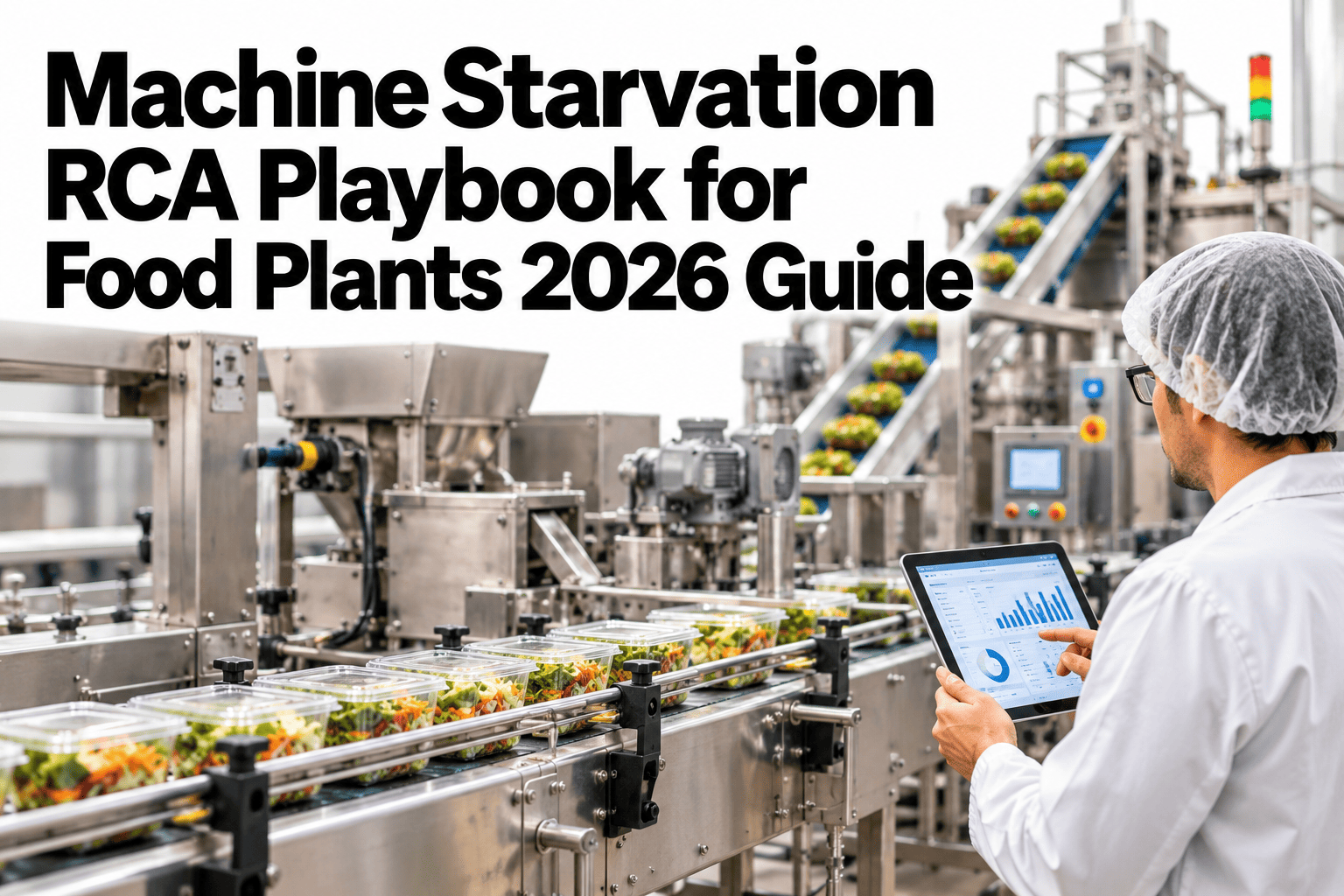
When a filler or packer stands idle waiting for product, the first reaction is to blame the machine upstream. It is usually the wrong call. Starvation is a symptom, and the machine feeding the line is often running fine while something else starves it: a slow ingredient transfer, a late film change, a conveyor jam or a pattern of replenishment that nobody tracked. A starvation root cause playbook gives the team a repeatable way to find which of five real causes is at work. Teams can trace a recent starvation event back to its real cause with their own data and see how often the first guess is wrong.
Starvation Rarely Means the Upstream Machine Is Broken
iFactory root cause tools separate the five real causes of machine starvation, so teams fix the supply gap instead of blaming the wrong machine.
How Starvation Spreads Down the Line
One supply gap creates idle time at the next machine, then the next. The visible stop is often far from the cause.
Conceptual cascade. Real lines include buffers that delay the effect.
The Five Real Causes of Starvation
Work through these in order. Most starvation events end up in one of them.
Evidence That Points to Each Cause
Each cause leaves a signature in the data. Match the signature before choosing a fix.
| Cause | Evidence to Look For | Typical Fix |
|---|---|---|
| Speed mismatch | Starvation at steady intervals, upstream never stops | Match speeds across the pair |
| Material feed gap | Hopper low alarms before the stop | Resize feed and refill triggers |
| Packaging supply | Stops after roll or case changes | Stage packaging earlier |
| Transfer fault | Short stops with jams at transfer points | Adjust guides and speeds |
| Replenishment timing | Stops cluster at breaks and changeovers | Reschedule tasks and cover |
Where Starvation Usually Comes From
Frequency varies by plant. Rank your own to decide where to dig first.
Illustrative frequency. Your own downtime log decides the real ranking.
Find the Real Cause of Your Last Ten Starvation Events
Share your stop log and line layout. We will classify recent events by cause and show where the first guess would have been wrong.
Blaming Upstream vs Tracing the Cause
The quick answer is rarely the right one.
A Four-Step Starvation RCA
Keep it short enough to use on the floor.
Building the Playbook Into Daily Work
A playbook helps only if it becomes habit.
Quick Triage Questions on the Floor
Operators can narrow the cause in a minute by asking a few questions.
Did the upstream machine stop?
If not, look beyond it for the gap
Is the feed low or empty?
Hoppers, tanks and magazines often hold the answer
Did a packaging change just happen?
Roll, case or label changes often cause a gap
Is something stuck between machines?
Look at transfers, guides and sensors
Fields Worth Recording for Every Starvation Event
A short record makes patterns visible later.
| Field | Why It Matters | Example |
|---|---|---|
| Machine starved | Locates the visible stop | Case packer |
| Duration | Shows the size of the loss | Minutes of idle time |
| Upstream state | Separates machine faults from supply gaps | Running or stopped |
| Cause code | Classifies the event | One of the five causes |
Escalation When Starvation Repeats
A repeat is a sign that the first fix did not reach the cause.
Time Lost by Cause Category
The category with the most minutes is not always the one with the most events.
Illustrative split of lost time. Your own log gives the real numbers.
One-Off Fix vs Permanent Fix
A quick fix restores flow. A permanent fix removes the cause.
What Experienced Reliability Leaders Look For in Starvation Analysis
Frequently Asked Questions
Why does the upstream machine usually get blamed?
Because it is the nearest visible suspect. The real cause is often a supply gap somewhere else. Starvation is felt at the machine that stops, which is why attention goes upstream first, but the first gap in the chain is where the fix belongs. A short tracing habit, such as walking back along the line from the starved machine to the first gap, usually finds the real cause faster than debate does. See how a tracing view points to the real gap on a sample of your own stops.
Do we need new sensors?
Often not. Existing machine states and stop reasons carry much of the evidence. Gaps are found during analysis, so sensors are added only where they would settle a cause. A cause code picked by the operator at the moment of the stop is often worth more than a new sensor, since it records what the person saw. Where sensors are added, choose points that settle a specific question, such as hopper level or pack presence at a transfer, so each sensor has a clear purpose.
How do we avoid arguments over cause codes?
Keep the list short, define each code with an example and review disputed events weekly. A weekly ten-minute review of unclear events keeps the list honest, and codes that nobody uses can be merged or removed. Share examples of correctly coded events in the shift briefing, since operators learn the categories fastest from real cases on their own line. Draft a cause list tailored to your line with our team.
How fast can starvation events be reduced?
Often within weeks for the largest category, since many fixes are procedural. The size of the gain depends on how much starvation you have now. Procedural fixes, such as staging packaging earlier or setting refill triggers, can be in place within days, while equipment changes take longer. Track recurrence after each fix for a few weeks, because a cause that returns usually means the fix addressed a symptom.
Can the same playbook work across lines?
Yes, with line-specific details. Keep the cause list the same across lines so results can be compared, and add line-specific examples to help operators pick the right code. A shared dashboard of starvation events by cause across lines helps managers see which lessons transfer and which problems are local. Plan how to roll it from one line to the rest in a short session.
Fix the Supply Gap, Not the Wrong Machine
Bring your stop log and line layout. We will show the five causes at work in your own data.