A PM compliance rate stuck in the 55 to 70 percent range isn't usually a technician motivation problem — it's almost always a visibility and workflow problem, where PMs get scheduled into a system nobody checks regularly, assigned without a clear reminder, or buried behind reactive work orders that always feel more urgent in the moment. The plants that push compliance above 95 percent don't do it by lecturing technicians about discipline — they do it by removing the friction that made PMs easy to skip in the first place. This walks through the specific practices, digital nudges, and mobile workflows that move the number, and move it fast. Book a session with iFactory to see what's actually holding your PM compliance rate down.
Food & Beverage · PM Compliance
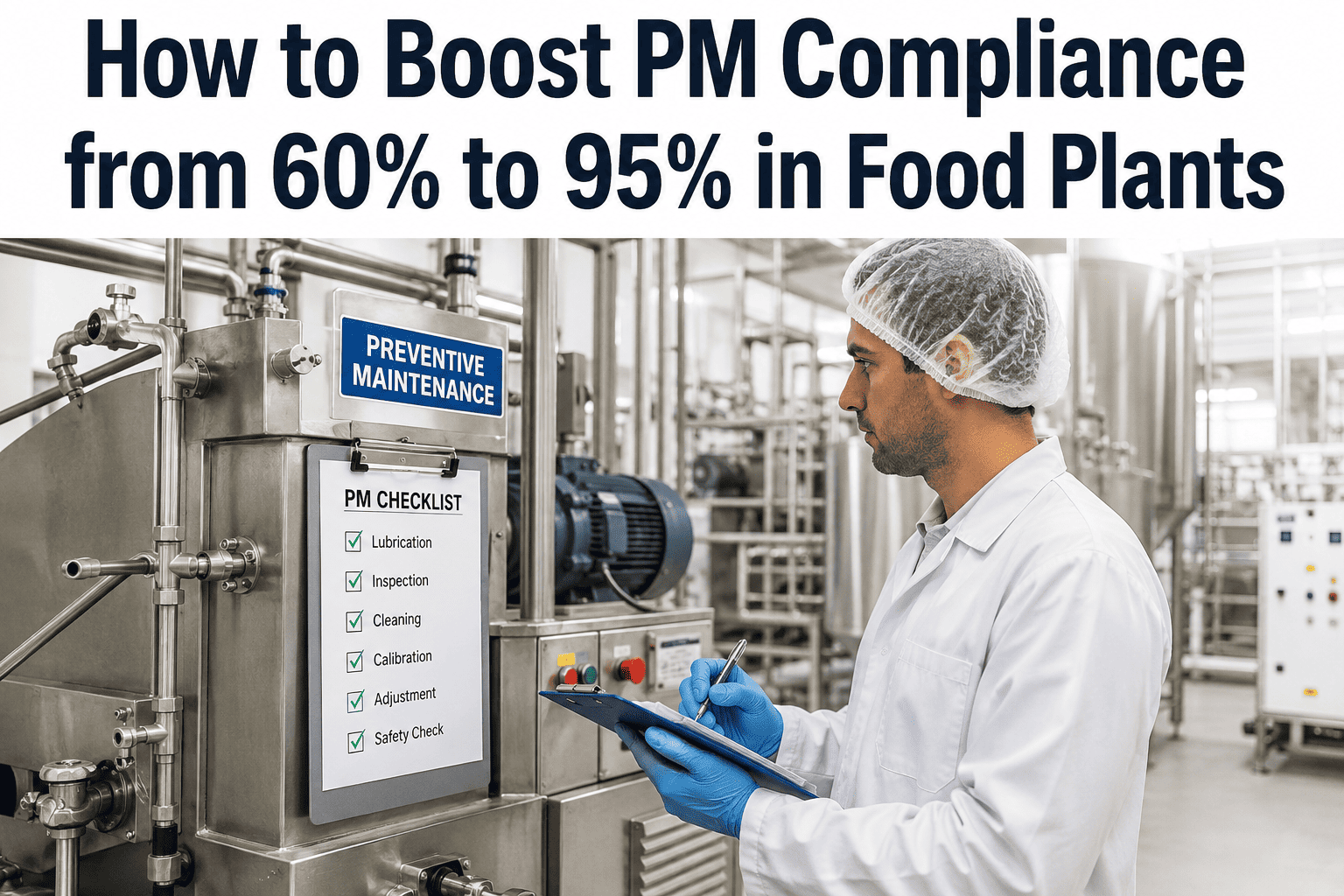
How to Boost PM Compliance From 60% to 95% in Food Plants
Stuck PM compliance is a workflow problem, not a discipline problem. Here is what actually moves the number, and moves it fast.
The Compliance Journey
What the Climb From 60% to 95% Actually Looks Like
Plants that make this jump don't do it in one leap — compliance climbs in stages as specific friction points get removed, and each stage typically unlocks a further improvement the previous stage made visible.
Starting Point
~60%
After Mobile Reminders
~78%
After Workload Balancing
~88%
After Manager Escalation
95%+
Find Your Specific Bottleneck
Get a PM Compliance Diagnostic for Your Current System
iFactory reviews your current PM scheduling and completion data to identify exactly which friction point is holding your compliance rate back.
The Core Practices
Four Changes That Drive the Improvement
Mobile PM Assignment
PMs appear directly on a technician's phone with clear due dates, removing the step of checking a separate schedule or whiteboard that's easy to forget.
Realistic Workload Balancing
PM schedules that overload a single shift guarantee some tasks slip — spreading due dates realistically across available technician time keeps the schedule achievable.
Automatic Overdue Escalation
A PM that slips past its due date automatically surfaces to a supervisor, rather than silently aging in a queue nobody is actively monitoring.
Visible Manager Dashboards
When compliance becomes a number a plant manager actually watches weekly, the accountability naturally follows down through the team.
Field Perspective
I've never seen a food plant fix a stuck PM compliance rate by giving technicians a stern talking-to about following the schedule — it just doesn't work, because the underlying problem usually isn't attitude. It's that the PM schedule was unrealistic for the actual staffing on a shift, or that a technician genuinely never saw the task because it was buried in a system nobody checked. The moment a plant makes PMs visible on a technician's phone with a realistic workload and gives supervisors a simple way to see what's slipping in real time, compliance tends to climb fast, often within the first month.
Adaeze Kristiansen-Ruiz
Maintenance Operations Consultant · 12 years improving PM programs in food and beverage manufacturing · Former Reliability Manager, food processing plant
Common Questions
PM Compliance Improvement — Frequently Asked
How quickly can a food plant realistically see PM compliance improve?
Many plants see meaningful movement within the first few weeks of implementing mobile reminders and workload balancing, though reaching a sustained 95 percent typically takes a couple of months as the new workflow becomes routine. Book a demo to review a realistic timeline for your current baseline.
Is a low PM compliance rate always a technician problem?
Rarely — low compliance is far more often a scheduling, visibility, or workload issue than an individual performance issue, and addressing the system usually resolves what looked like a discipline problem. Book a demo to diagnose the actual cause behind your current rate.
What's a realistic PM compliance target for a food plant to aim for?
Many well-run food plants sustain compliance in the 90 to 98 percent range, with the exact target depending on asset criticality and how much flexibility a plant needs to build in for legitimate production conflicts. Book a demo to set an appropriate target for your specific operation.
How do we balance PM completion against urgent production demands that keep bumping PMs?
Building PM windows with some built-in flexibility, combined with visibility into which PMs are being repeatedly bumped, lets managers address the actual scheduling conflict rather than letting the same PM slip indefinitely. Book a demo to review scheduling approaches that account for production pressure.
Does improving PM compliance actually reduce unplanned downtime, or is that a separate metric?
The two are closely linked — plants that move compliance from the 60s into the 90s consistently report fewer unplanned failures on the assets covered by those PMs, since preventive tasks are actually catching developing issues before they become breakdowns. Book a demo to see the connection specific to your asset base.
Move Past Chronic Underperformance
Get Your PM Compliance Rate Above 95%
iFactory brings mobile PM assignment, realistic workload balancing, and automatic escalation to your food plant's maintenance program.