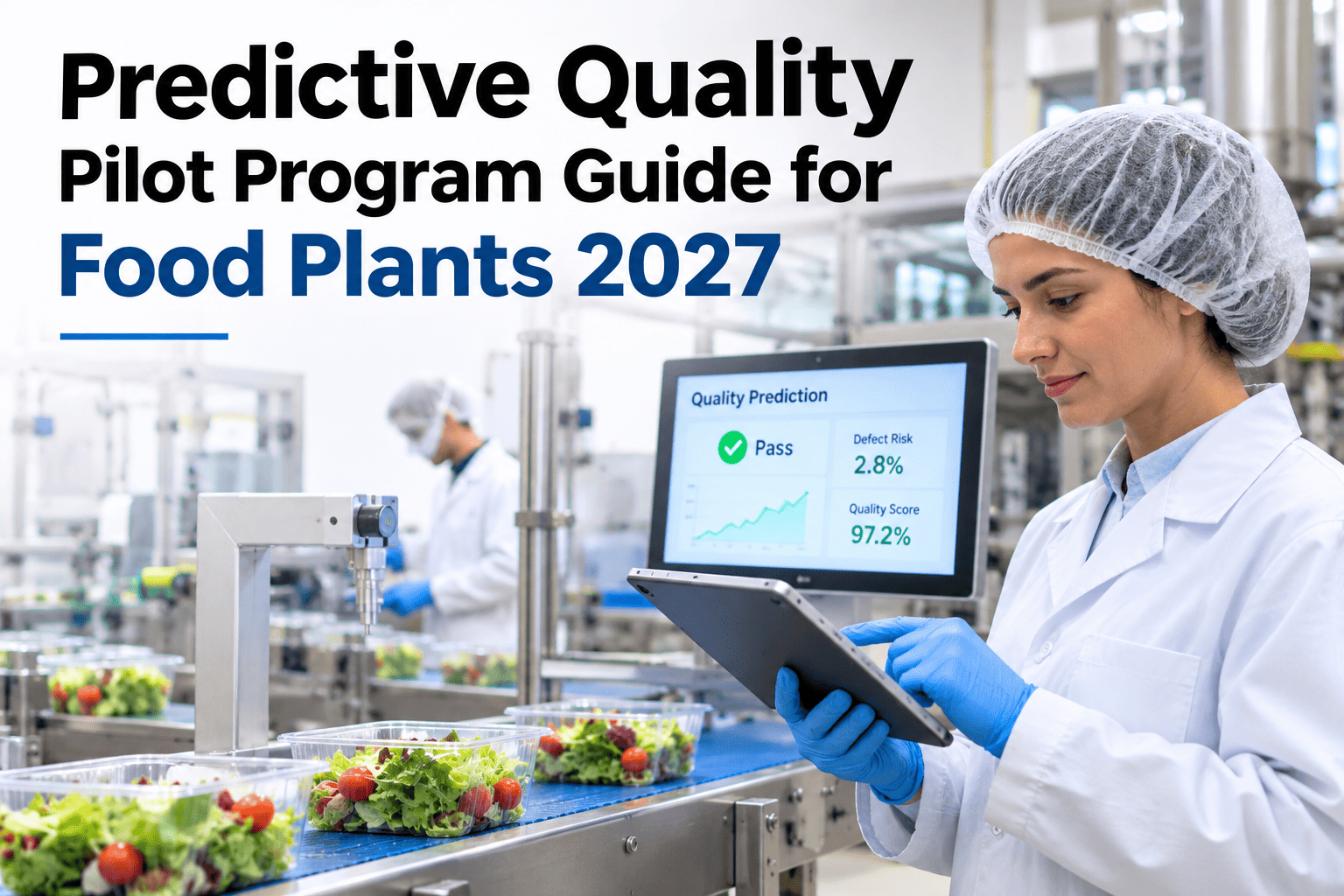
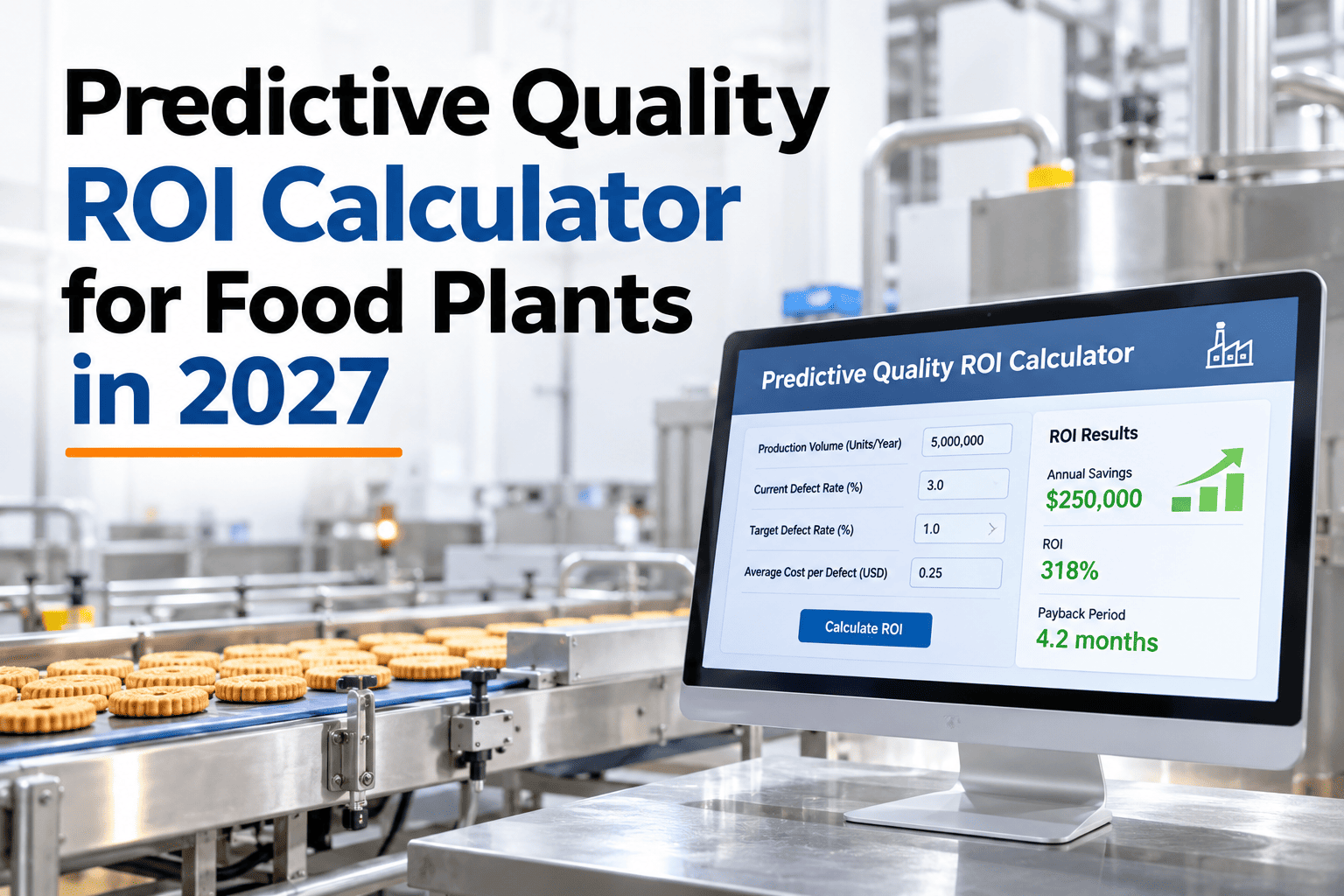
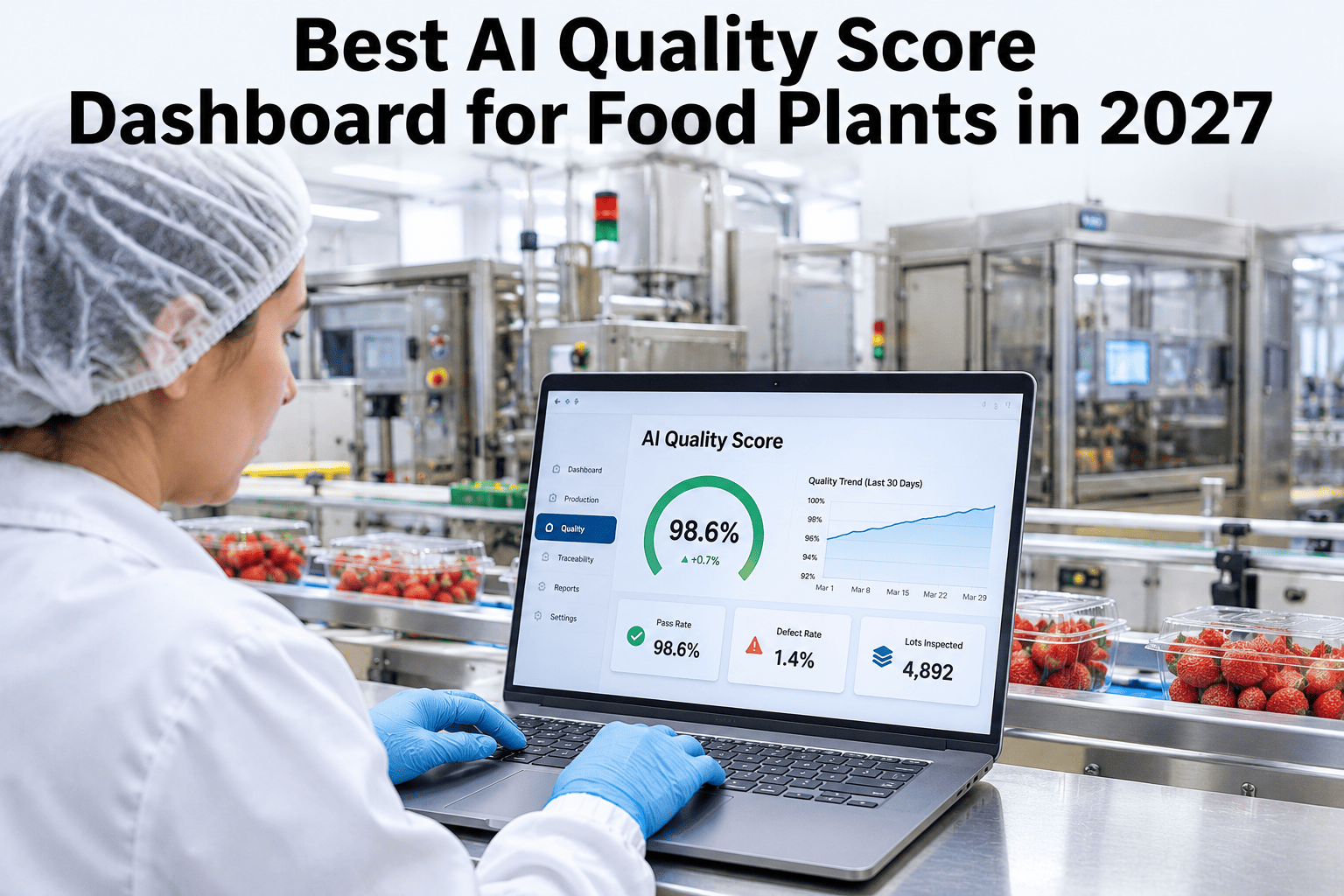
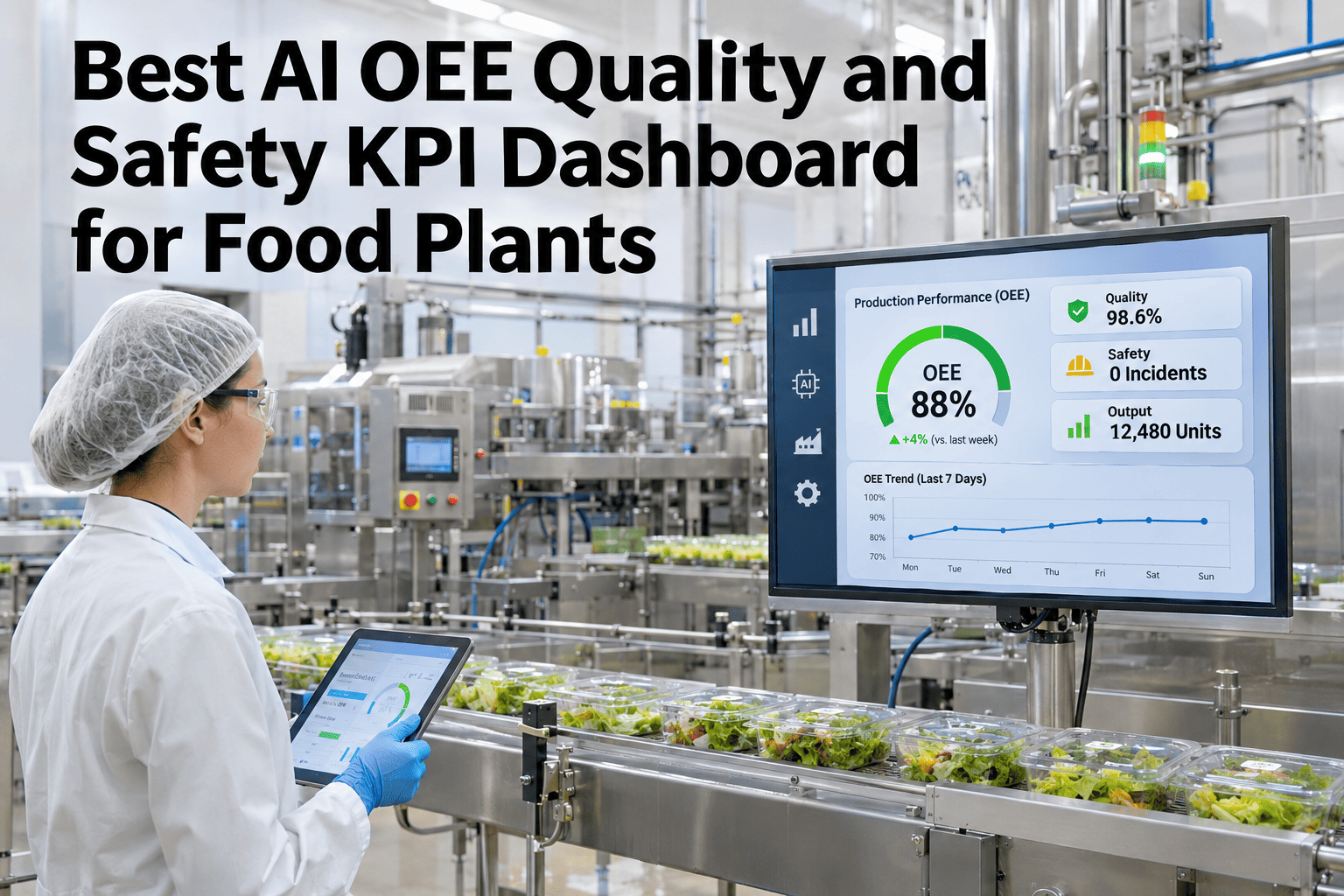
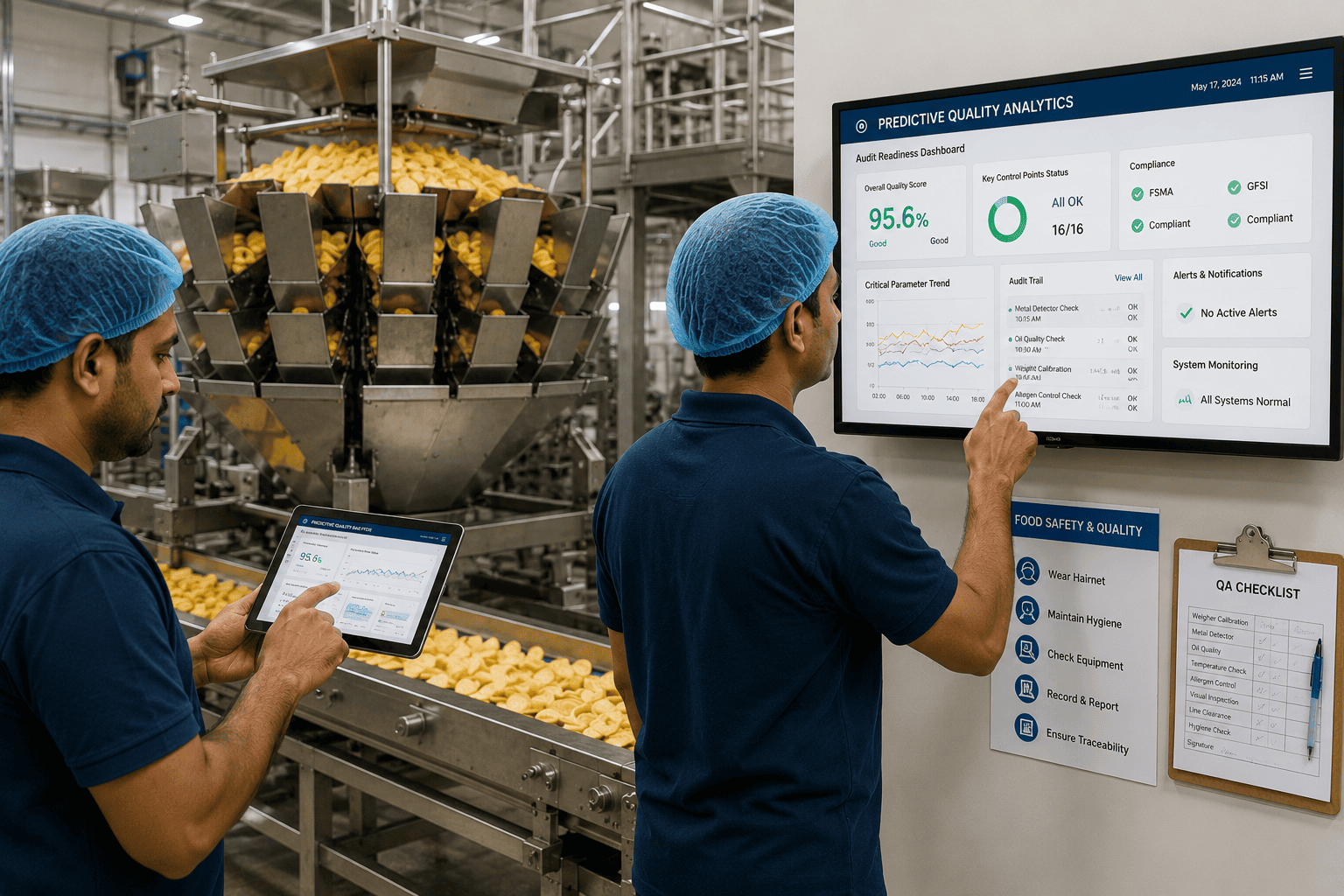
A predictive quality model trained on sensor data alone can see what happened but not why, since the lab results that confirm actual product outcomes and the maintenance records that explain equipment condition both live in separate systems that never connect to the sensor stream. Without unifying these three data sources, a model ends up learning correlations between sensor patterns and outcomes rather than the actual causal relationships that would let it generalize to new situations. Building a real data foundation across sensor, lab and CMMS data is what lets a model learn causes instead of coincidences, and our team can walk you through how this foundation gets built from your own plant's systems.
Food manufacturing, predictive quality data
Unify Sensor, Lab and CMMS Data So Your Model Learns Causes, Not Coincidences
iFactory AI connects sensor, lab and maintenance data into one foundation, so a predictive quality model can actually learn the causal relationships behind outcomes.
Why sensor data alone is not enough
A Model Trained on Sensors Alone Learns Patterns, Not Causes
Sensor data shows what the process was doing, but without lab results confirming the actual quality outcome and maintenance records explaining equipment condition at the time, a model can only find correlations between sensor readings and whatever label it was given, which often breaks down the moment conditions shift from what the model saw in training.
Sensor data alone
Shows process behavior but not confirmed outcomes
No lab result link
The model never sees the actual quality result to learn from
No equipment context
Maintenance condition that affected the outcome is invisible to the model
Model learns coincidence
Patterns that do not generalize to new conditions
Three data sources
What Needs to Be Unified
Sensor data
Continuous process measurements capturing what the equipment was actually doing.
Lab data
Confirmed quality outcomes from physical or chemical testing.
CMMS data
Maintenance records explaining equipment condition at the time of production.
Check Your Own Data Foundation Readiness
Share how your sensor, lab and maintenance data are currently stored and see what unification would take.
Unification table
What Each Source Contributes and Its Common Gap
| Data source | What it contributes | Common gap |
|---|
| Sensor data | Continuous process behavior | No link to confirmed quality outcome |
| Lab data | Ground-truth quality results | Often recorded separately with no timestamp link to sensor data |
| CMMS data | Equipment condition and maintenance history | Rarely connected to production timing at all |
Foundation-building pipeline
Four Steps to a Model-Ready Data Foundation
1
Inventory each data source
Document what sensor, lab and CMMS data currently exists and how it is stored.
2
Align by timestamp
Link lab results and maintenance events to the specific production time they relate to.
3
Build the unified structure
Combine all three sources into one structure a model can learn from.
4
Validate causal relationships
Confirm the model's learned patterns reflect known causal mechanisms, not coincidence.
Common pitfalls
Three Mistakes in Building a Predictive Quality Data Foundation
1
Training a model on sensor data before linking lab results
The model has no confirmed outcome to actually learn against.
2
Ignoring maintenance context entirely
A quality issue tied to equipment condition gets misattributed to the wrong cause.
3
No validation that learned patterns are actually causal
A model that fits historical data well can still be learning coincidence rather than cause.
Expert review
The biggest single improvement most predictive quality programs can make is connecting lab results to sensor data by timestamp, since this is what turns a pattern-matching exercise into genuine outcome prediction. Do this before investing heavily in model sophistication.
Watch for
A predictive quality project that starts modeling before lab results are reliably linked to the sensor data they confirm.
Do next
Confirm your lab results can be linked to sensor data by timestamp before investing further in model development.
— iFactory food quality specialists
Frequently asked questions
What Plants Ask About Predictive Quality Data Foundations
What if our lab results are recorded manually, not digitally?
Manual lab records can still be digitized and linked by timestamp, though the effort involved depends on volume and how consistently they were recorded, so starting with your most quality-critical tests is a reasonable way to prioritize.
Ask about digitizing manual lab records.
How important is CMMS data compared to sensor and lab data?
CMMS data matters most when equipment condition is a plausible contributor to quality variation, so its priority depends on your specific process, but it is often underweighted relative to how much it can explain.
Discuss your maintenance data.
Can we start modeling before the full foundation is built?
A model can start with whatever data is already linked, but its accuracy and ability to explain causes will improve as more of the foundation comes together, so this is often an iterative process rather than an all-or-nothing start.
Talk through a phased approach.
How is a causal relationship different from a correlation in this context?
A correlation is a pattern the model notices in historical data, while a causal relationship is one that holds up when checked against known process mechanics, such as a temperature change actually explaining a texture outcome rather than just coinciding with it.
Ask about causal validation.
How long does building this foundation typically take?
The timeline depends heavily on how fragmented your current data is across systems, with manual lab records and disconnected CMMS data typically taking the longest to unify.
Discuss your specific timeline.
From disconnected systems to a model that learns causes
Build the Data Foundation Your Predictive Quality Model Actually Needs
Book a session with iFactory AI to review your sensor, lab and CMMS systems and build a unified data foundation.