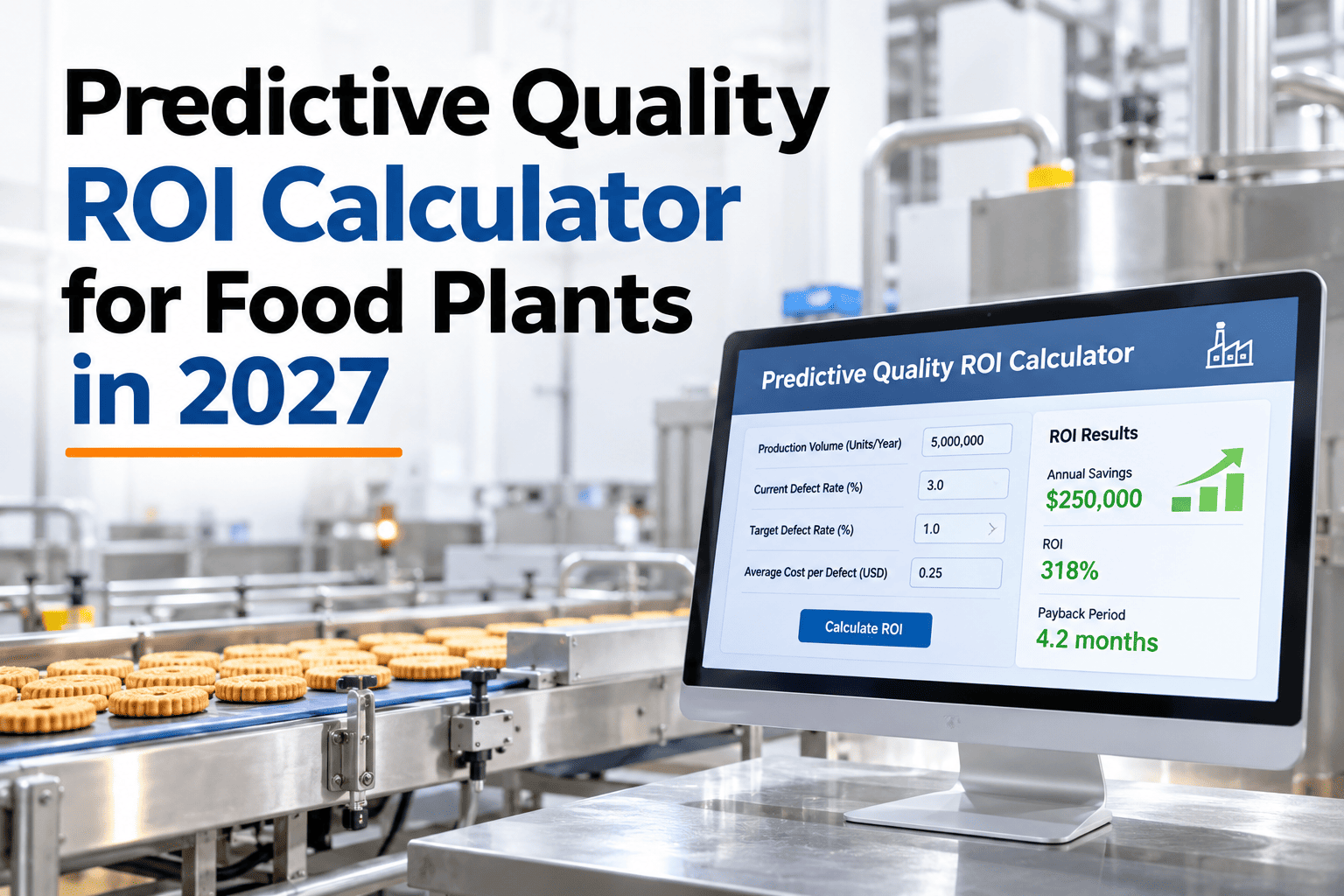
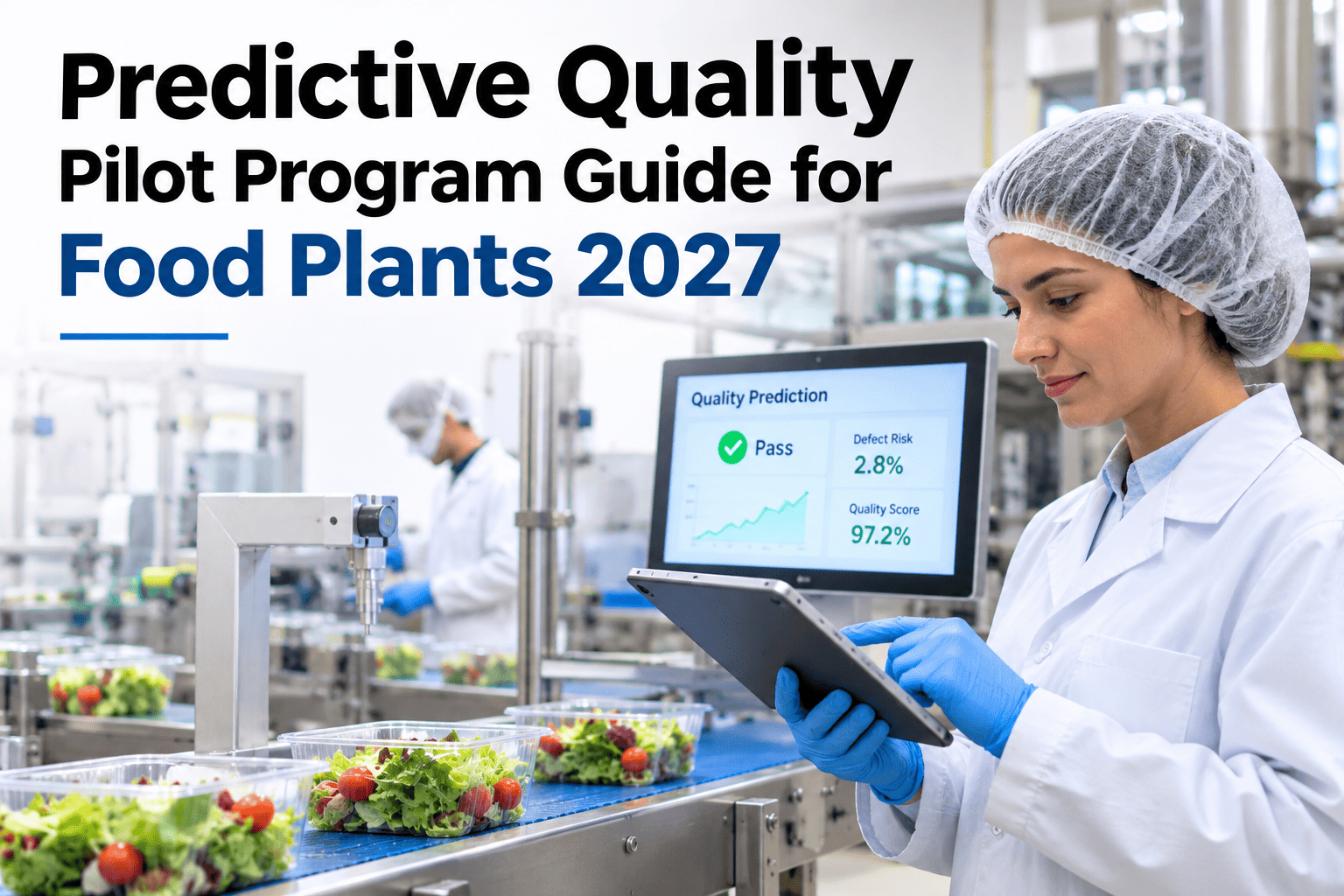
A predictive quality platform is easy to pitch with enthusiasm and much harder to justify with a number finance will actually sign off on. Scrap avoided, rework cut and giveaway reduction are all real sources of value, but each needs its own measurement before it belongs in a business case, and bundling them into one vague "fewer quality problems" claim rarely survives a budget conversation. Modeling these three value sources against the actual cost of the platform is what turns a promising pilot into a funded program, and our team can help you build this calculation around your own plant's numbers.
Food manufacturing, predictive quality business case
Model Scrap Avoided, Rework Cut and Giveaway Reduction Against the Platform's Real Cost
iFactory AI helps food plants calculate predictive quality ROI from their own scrap, rework and giveaway data, set against the actual cost of the platform.
Why vague ROI claims fail
"Fewer Quality Problems" Is Not a Number Finance Can Evaluate
A pitch built on general quality improvement promises gives finance nothing to check against their own numbers, while a case broken into specific, measurable value sources gives them exactly the kind of figure they can actually verify.
Vague pitch
"This will improve quality" with no attached number
No baseline cost
Current scrap, rework and giveaway costs were never measured
Competes poorly for budget
Other requests with real numbers win the conversation
Program stays unfunded
The case waits another budget cycle
Three value sources
What Actually Makes Up the ROI Calculation
Scrap avoided
Product that would have been discarded, caught and corrected before it became waste.
Rework cut
Labor and line time saved by catching issues before product reaches a rework step.
Giveaway reduction
Less overfill or over-spec product given away to stay safely within tolerance.
Build Your Own ROI Calculation
Share your current scrap, rework and giveaway figures and see what a predictive quality ROI model would show.
Calculation table
How Each Value Source Is Measured
| Value source | What to measure | Typical data source |
|---|
| Scrap avoided | Cost per scrapped unit times units caught early | Scrap logs and quality hold records |
| Rework cut | Labor and line time per rework event avoided | Rework tracking and labor cost data |
| Giveaway reduction | Average overfill or over-spec amount reduced | Fill weight and spec compliance records |
Calculation pipeline
Four Steps to a Defensible ROI Number
1
Baseline current costs
Measure current scrap, rework and giveaway costs from existing records.
2
Estimate the realistic reduction
Project a conservative percentage improvement for each value source.
3
Stack the total benefit
Combine all three value sources into one projected annual savings figure.
4
Compare against platform cost
Set the projected benefit against the cost and timeline of the platform.
Common pitfalls
Three Mistakes That Weaken a Predictive Quality ROI Case
1
Skipping giveaway as too small to matter
Giveaway accumulates across every unit produced and often adds up significantly.
2
Using industry benchmarks instead of your own data
A case built on your own records is far more defensible than a generic figure.
3
Overly optimistic reduction estimates
An unrealistic projection undermines credibility with finance reviewers.
Expert review
The strongest predictive quality ROI cases use conservative, well-documented estimates built from a plant's own cost data. A finance team can check your own scrap and rework records, which makes a self-derived number far more credible than an optimistic industry claim.
Watch for
An ROI estimate that leans on vendor-supplied industry averages instead of your own measured baseline.
Do next
Pull your last quarter of scrap, rework and giveaway data before estimating any of the three value sources.
— iFactory food quality specialists
Frequently asked questions
What Plants Ask About Predictive Quality ROI
How do we measure giveaway if we have never tracked it separately?
Fill weight or spec compliance data, even if not previously analyzed for this purpose, can often be used to estimate average giveaway against your target specification, giving a starting baseline without needing new measurement systems.
Ask about estimating your giveaway.
What is a realistic reduction percentage to assume?
A conservative estimate based on how much of your current scrap and rework is tied to detectable, preventable causes gives a more defensible projection than an optimistic industry-wide figure.
Discuss a realistic projection.
How long does it take to build this calculation?
Gathering accurate baseline data usually takes longer than the calculation itself, so the timeline depends mostly on how readily your scrap, rework and giveaway records can be pulled together.
Ask about your data availability.
Should all three value sources be presented together or separately?
Presenting each with its own calculation and then summing them is generally more persuasive than one bundled figure, since it lets finance verify each piece against their own records independently.
Talk through presenting your case.
Does this calculation change once the platform is actually running?
Yes, comparing the projected savings against actual measured results once the platform is live lets you validate and refine the model, which also strengthens the case for any future expansion.
Discuss measuring actual results.
From a vague promise to a verifiable number
Build a Predictive Quality Case Finance Can Actually Approve
Book a session with iFactory AI to review your quality cost data and build a defensible ROI calculation for your plant.