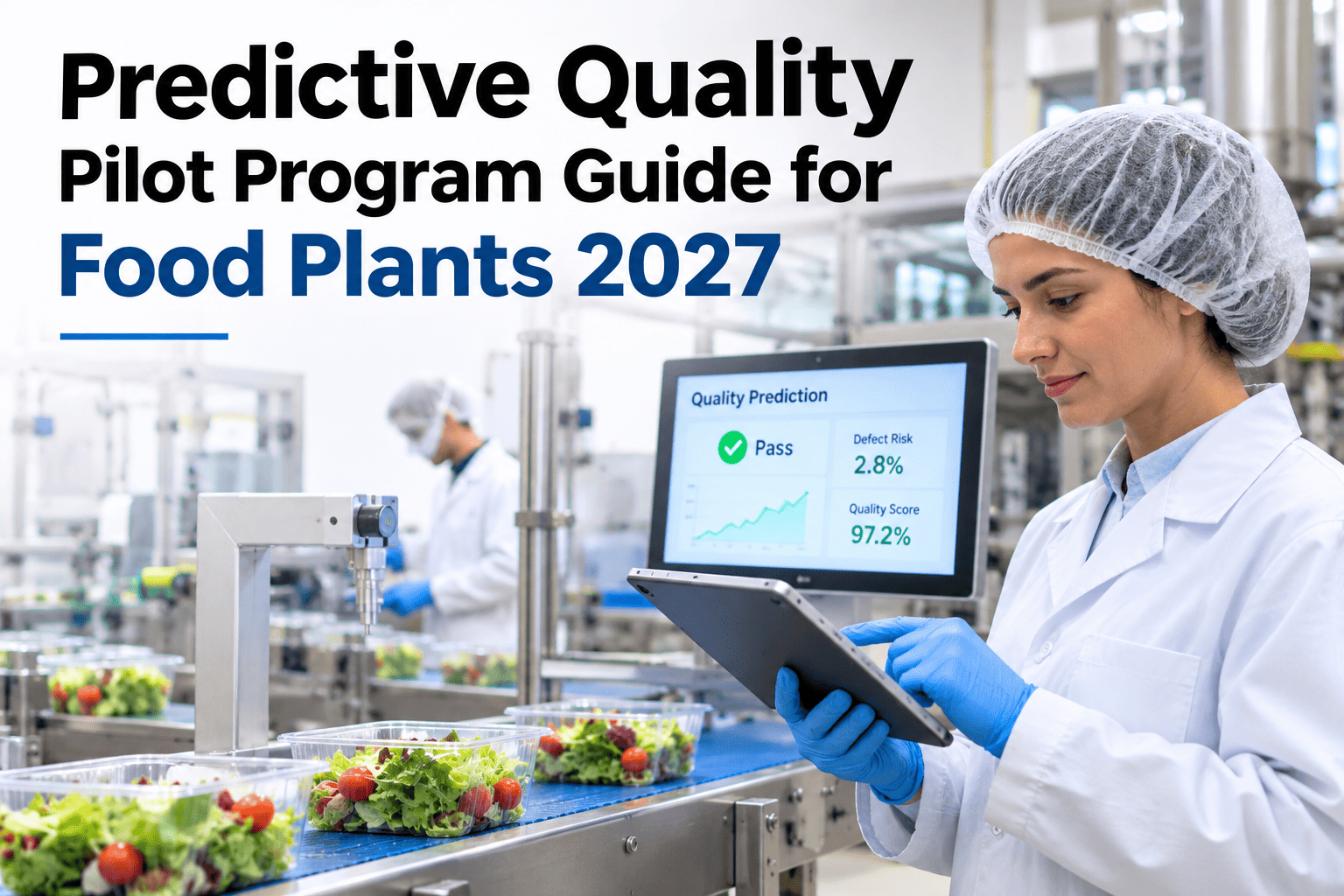
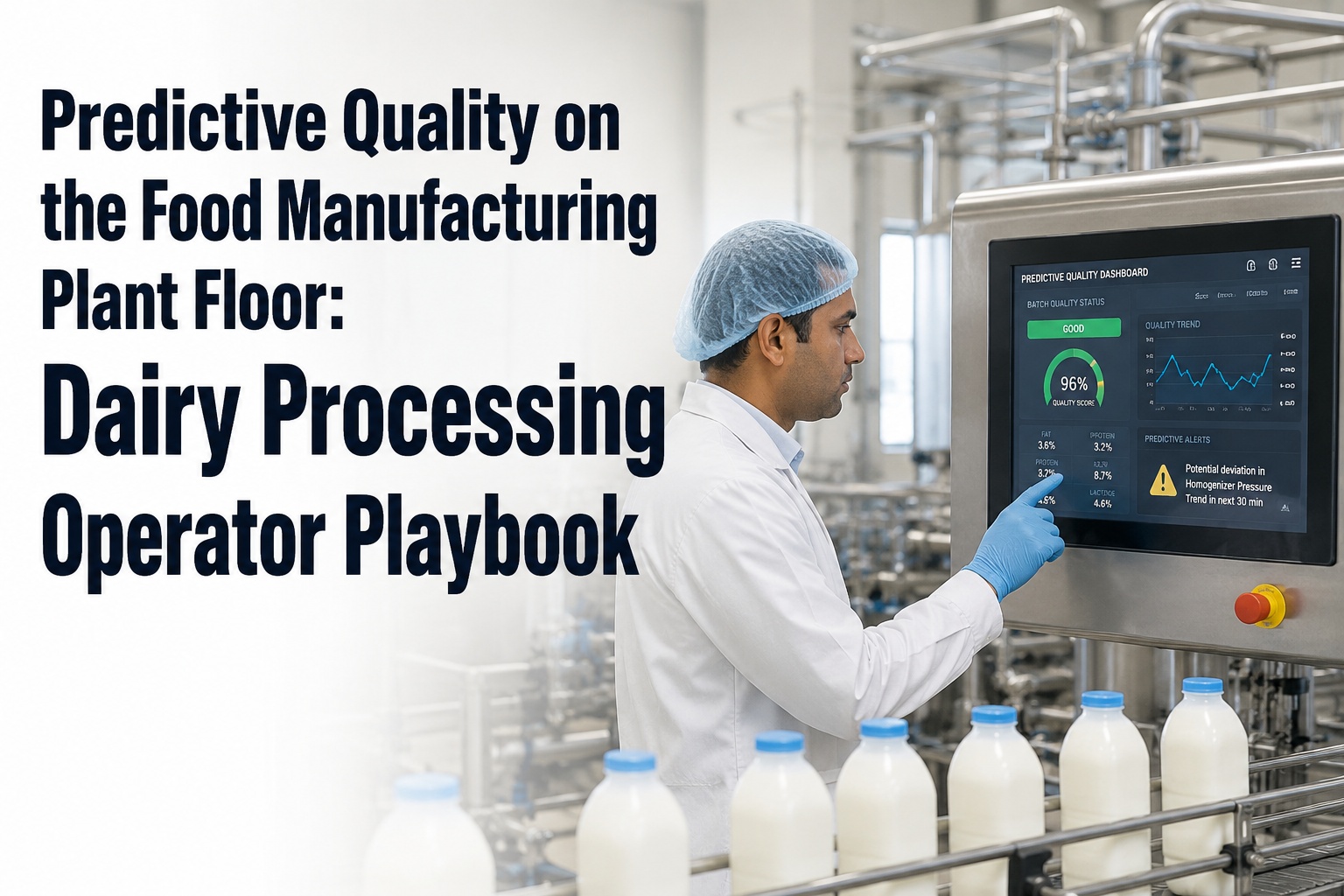
A predictive quality pilot that goes straight to live, automated decisions on day one is asking a plant to trust a model nobody has had the chance to validate yet, and a pilot that drags on for a year without a clear endpoint never produces the finance-verified result needed to justify expansion. A disciplined ninety-day path, moving from a data readiness assessment through a shadow mode period where the model's calls are checked against real outcomes before anything acts on them, is what gets a pilot to a defensible result on a predictable timeline. Structuring the pilot this way is what turns a promising idea into savings finance can actually verify, and our team can help you plan this path for your own plant.
Food manufacturing, predictive quality pilots
Move From Data Assessment to Finance-Verified Savings in Ninety Days
iFactory AI structures a predictive quality pilot through data assessment, shadow mode validation and a defensible savings calculation, all on a disciplined ninety-day timeline.
Why pilots stall or overreach
Going Live Too Fast or Running Too Long Both Waste the Opportunity
A pilot that lets a model make live decisions before anyone has checked its calls against real outcomes risks a costly mistake, while a pilot with no defined endpoint drifts indefinitely without ever producing the clear, finance-verified result needed to justify expanding it.
Going live too fast
The model acts on decisions nobody has validated yet
No shadow validation
Confidence in the model is assumed, not confirmed
No defined endpoint
The pilot drifts without a clear finish line
No defensible result
Expansion decisions have nothing concrete to stand on
Three pilot phases
What the Ninety-Day Path Actually Covers
Data readiness assessment
Confirming your sensor, lab and process data can actually support the model.
Shadow mode validation
The model makes calls that are checked against real outcomes without acting on them yet.
Finance-verified savings
Results calculated and checked against your own cost records before expansion.
Scope Your Own Ninety-Day Pilot
Share your current data readiness and quality priorities and see what a ninety-day pilot plan would look like.
The ninety-day timeline
From Data Assessment to Verified Savings
1
Days 1 to 20: Data assessment
Confirm sensor, lab and process data quality and coverage.
2
Days 21 to 50: Model build and shadow start
Build the model and begin shadow mode, checking its calls against real outcomes.
3
Days 51 to 75: Shadow mode validation
Accumulate enough shadow data to confirm the model's accuracy and reliability.
4
Days 76 to 90: Verified results
Calculate and verify the projected savings against your own cost records.
Common pitfalls
Three Mistakes in Predictive Quality Pilots
1
Skipping the data readiness assessment
Building a model on inadequate data wastes the entire pilot timeline.
2
Ending shadow mode too early
Not enough shadow data accumulates to confidently validate the model.
3
No finance involvement in verifying results
A savings claim nobody outside the project team checked is harder to defend for expansion funding.
Expert review
Shadow mode is the phase most often shortened when a pilot runs behind schedule, but it is also the phase that actually builds trust in the model before anything acts on its calls. Protect the shadow mode timeline even if other phases need to move faster.
Watch for
A pilot plan that compresses shadow mode to make up time lost in the data assessment phase.
Do next
Start your data readiness assessment immediately, since delays there are what most often squeeze shadow mode later.
— iFactory food quality specialists
Frequently asked questions
What Plants Ask About Predictive Quality Pilots
What happens if our data readiness assessment reveals gaps?
Identifying gaps early lets you address the most critical ones before building the model, which protects the rest of the ninety-day timeline rather than discovering the gap partway through shadow mode.
Discuss addressing data gaps.
How is shadow mode actually validated?
The model's predictions are logged and compared against the actual quality outcomes that occurred, without the model's calls influencing any real decision, giving a clean measure of how accurate it would have been if it had been acting.
Ask about shadow mode mechanics.
Who should be involved in verifying the final savings figure?
Involving finance or a plant controller in checking the savings calculation against your actual cost records gives the result credibility that a project team's own internal estimate would not carry on its own.
Talk through involving finance.
Can the ninety-day timeline be compressed for a simpler process?
A simpler process with clean, already-connected data may move faster through assessment, but shadow mode still needs enough time to accumulate a meaningful number of real outcomes to validate against, which puts a practical floor on how much the timeline can shrink.
Ask about your specific timeline.
What happens after the ninety days if the pilot succeeds?
A successful pilot with verified savings becomes the business case for moving the model into live, acting mode on the pilot line and for planning expansion to additional lines or products.
Discuss what comes after the pilot.
From a promising idea to a verified, fundable result
Run a Predictive Quality Pilot on a Timeline You Can Plan Around
Book a session with iFactory AI to scope your data readiness and build a ninety-day pilot plan for your plant.