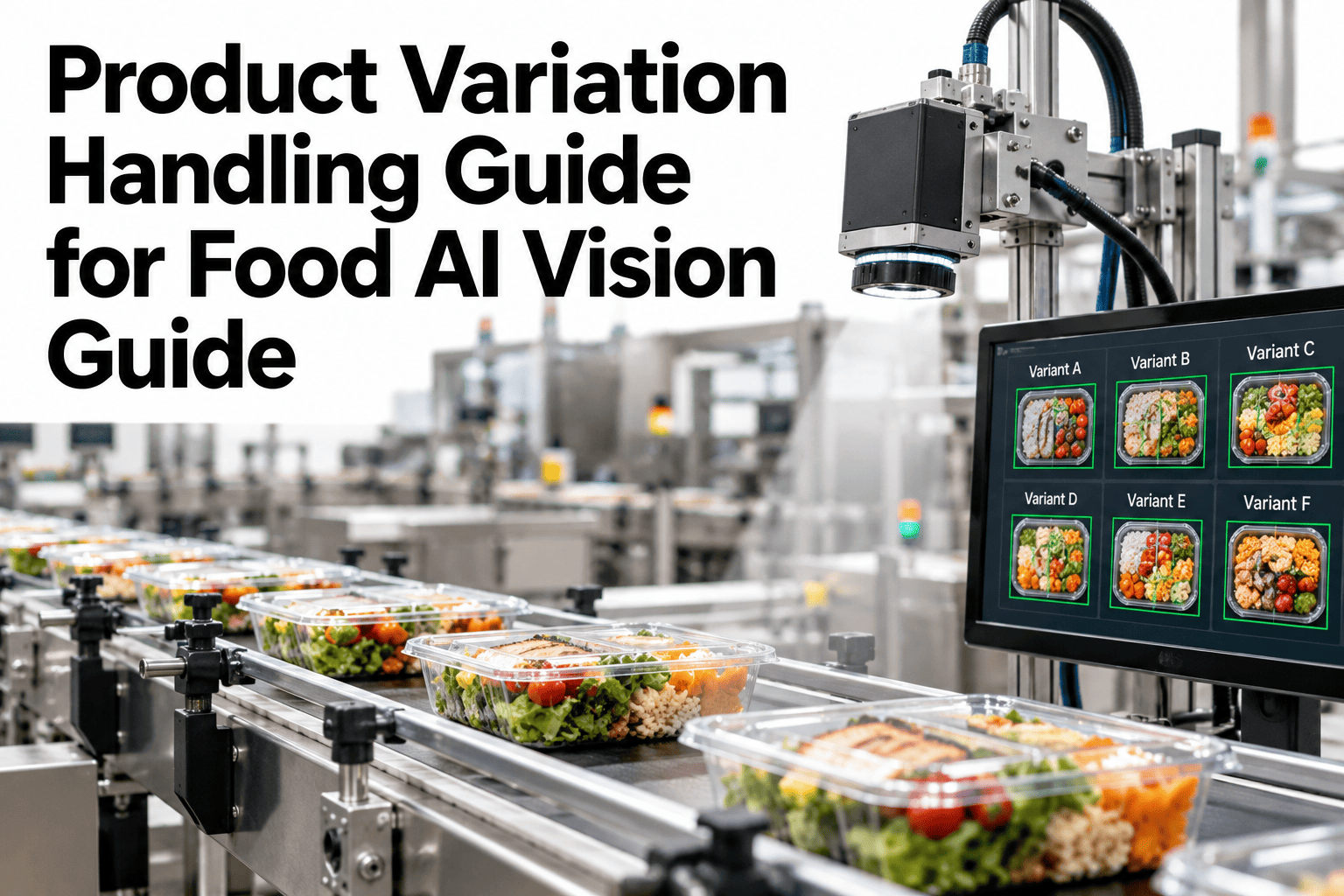
Fresh produce and many packaged foods don't look the same every month, and a vision model trained only on winter apples can genuinely struggle when summer apples arrive with different coloring, size distribution and surface texture, even though neither batch has a defect. Natural product variation is not noise to be eliminated, it's a real signal the model has to learn to tell apart from an actual quality problem. Handling this well is less about a smarter algorithm and more about deliberately building seasonal variation into training data and watching for drift as conditions change. Plants can review their own seasonal variation handling in a short session.
A Model Trained on Winter Apples Still Needs to Recognize Summer Apples
iFactory builds natural variation into training data so seasonal change doesn't get mistaken for a defect.
Why Natural Variation Breaks Narrow Models
A model trained on a narrow slice of product variation learns that slice as "normal" and flags anything outside it, including entirely healthy product from a different season, growing region or supplier lot.
| Variation Source | Example | Handling Approach |
|---|---|---|
| Seasonal change | Apple color and size shifting between harvest periods | Train on examples spanning the full growing season |
| Growing region | Same produce type, different climate-driven appearance | Include region-specific examples in training data |
| Supplier lot variation | Packaging or product variation between suppliers | Audit and label variation by supplier before training |
| Ripeness stage | Color and firmness changing as product ripens | Define acceptable ripeness range explicitly, not implicitly |
Get Your Current Model Checked for Seasonal Robustness
Book a 30-minute session and iFactory will review how your current model handles seasonal product variation.
Four Techniques for Robust Generalization
Data Augmentation
Synthetic variation, like controlled color and lighting shifts, expands what the model treats as normal without needing endless new real-world examples.
Seasonal Training Coverage
Deliberately collecting labeled examples across the full growing season or supplier cycle, not just launch-week product.
Drift Detection
Monitoring for a gradual shift in what the model is seeing lets a plant catch seasonal change before accuracy visibly degrades.
Scheduled Retraining
Retraining the model as new seasonal data accumulates keeps it current instead of relying on one training pass to last indefinitely.
Signals Seasonal Variation Is Affecting Accuracy
Where iFactory Fits
iFactory builds seasonal and supplier variation into model training from the start, with ongoing drift monitoring to catch change as it happens.
Full-Season Training Data
Models are trained on examples spanning the full seasonal or supplier variation range, not a single snapshot in time.
Automated Drift Detection
Gradual shifts in incoming product appearance are flagged before they show up as a noticeable accuracy decline.
Scheduled Model Refresh
Models are retrained on a defined cadence as new seasonal data accumulates, keeping generalization current.
Supplier-Level Monitoring
Reject rates are tracked per supplier, surfacing whether a specific source needs additional training coverage.
Reviewed by iFactory's Vision Systems team for alignment with current machine learning generalization practice. The variation ranges shown are illustrative; actual training data requirements depend on your specific product, growing regions and supplier base.
Frequently Asked Questions
How much training data do we need to cover seasonal variation?
It varies by product and how much natural variation it exhibits across the year, but representative examples from each major seasonal or supplier phase matter more than raw volume alone. Support can assess what your product's variation profile requires.
Can data augmentation fully replace collecting real seasonal examples?
Augmentation extends what real examples can cover, but it works best as a complement to actual seasonal data rather than a full substitute, since synthetic variation can't perfectly replicate every real-world change.
How does drift detection actually work?
It monitors statistical properties of incoming product imagery over time and flags when the distribution shifts meaningfully from what the model was trained on, before accuracy visibly declines. See drift detection applied to your own product in a short session.
Does this apply to packaged food, not just fresh produce?
Yes, packaging print variation between runs, label placement tolerance and seasonal packaging changes all create similar variation-handling needs, even though the specific drivers differ from fresh produce.
How often should retraining happen to stay ahead of drift?
This depends on how quickly your specific product's variation changes, but a defined cadence tied to known seasonal or supplier cycles works better than retraining only after accuracy has already declined. Ask support how to set a retraining schedule for your product.
Build a Model That Generalizes Across the Full Season
iFactory handles natural product variation with full-season training and ongoing drift detection. Book a walkthrough on your own product.