A sanitation crew mixing chemicals at the wrong concentration or storing incompatible products side by side is one of the fastest ways a food plant ends up with an injured employee, a chemical contamination event, or a shutdown that has nothing to do with the pathogen controls everyone spends most of their time worrying about. GHS classification and Safety Data Sheets exist specifically to prevent this, but only when the information in them actually reaches the people mixing and applying chemicals on the floor, not just the binder in the quality office. A sanitation chemical safety program needs SDS access at the point of use, correct labeling on every secondary container, and clear mixing and storage procedures that account for compatibility, not just individual product instructions. This guide covers what GHS and SDS compliance actually requires in a food plant sanitation program, with practical implementation guidance on our support page.
Why SDS Access Point Matters as Much as SDS Content
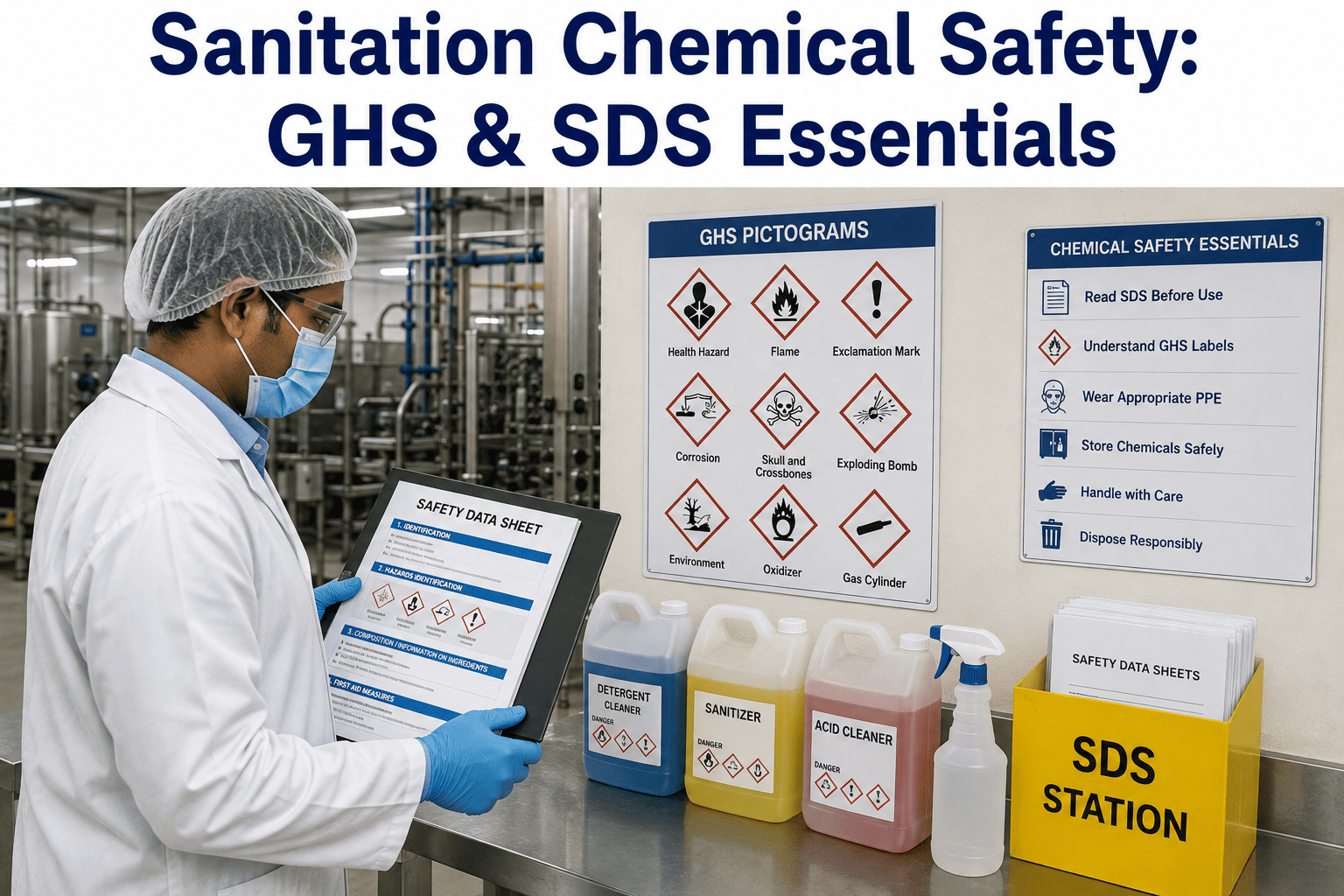
Most facilities have a complete binder or digital library of Safety Data Sheets somewhere in the building, and most facilities also have sanitation crews who have never actually opened one. GHS compliance is not satisfied by simply possessing the correct documents — it requires that employees handling a chemical can access its SDS within minutes, understand the hazard information it contains, and apply that information to how they store, mix, and use the product. A binder in a locked office three buildings away from the mixing station fails this requirement in practice even if it technically fulfills it on paper.
Identification, Hazards, Composition
First Aid, Firefighting, Accidental Release
Handling & Storage, Exposure Controls, Physical Properties
Stability, Toxicology, Ecological Information
Disposal, Transport, Regulatory, Other Information
Would your sanitation crew know exactly where to find an SDS mid-shift? Book a demo to see how digital SDS access works at the point of use.
Chemical Storage and Compatibility Requirements
Sanitation chemicals that are individually safe can become dangerous when stored or mixed together. Incompatible combinations can produce toxic gas, violent reactions, or degrade the effectiveness of the sanitizer itself — all outcomes that proper storage segregation prevents entirely.
| Chemical Class | Common Use | Never Store or Mix With |
|---|---|---|
| Chlorine-based sanitizers | Surface disinfection | Acidic cleaners, ammonia-based products |
| Quaternary ammonium compounds | Surface sanitizing | Anionic detergents, soap residue |
| Acidic cleaners | Mineral deposit and scale removal | Chlorine-based products, alkaline cleaners |
| Caustic (alkaline) cleaners | Grease and organic soil removal | Acidic products, aluminum surfaces |
Digitize SDS Access and Chemical Tracking
iFactory puts SDS information directly at the point of use, tracks chemical inventory and expiration, and flags incompatible storage before it becomes a hazard. Book a demo to see it in action.
PPE Requirements by Chemical Class
PPE requirements should be specific to the chemical being handled, not a single generic policy applied uniformly across every sanitation task regardless of the actual hazard involved.
Chlorine-Based Sanitizers
Chemical-resistant gloves, splash goggles, and adequate ventilation to avoid fume exposure during mixing.
Caustic Cleaners
Full face shield in addition to goggles, chemical-resistant apron, and gloves rated for high-pH exposure.
Acidic Descalers
Acid-resistant gloves and eyewear, with particular caution during dilution to avoid splash-back.
Foam and Gel Sanitizers
Standard chemical gloves and eye protection, with slip-resistant footwear given surface conditions during application.
Chemical Spill Response Steps
Alert and Evacuate
Immediately alert nearby personnel and clear the affected area before attempting any response action.
Consult the SDS
Reference the specific chemical's SDS for spill response guidance before selecting containment materials.
Contain and Neutralize
Use appropriate spill kit materials matched to the chemical class, never generic absorbents for reactive spills.
Document and Report
Log the incident, notify quality and safety leadership, and review whether storage procedures need adjustment.
Want a chemical compatibility review for your current sanitation product list? Schedule a demo or contact support for a walkthrough.
Frequently Asked Questions
Put Chemical Safety Information Where It's Actually Needed
iFactory brings SDS access, compatibility checks, and PPE requirements directly to the point of chemical use, closing the gap between having documentation and using it.