In modern food manufacturing, ingredient handling is the critical gateway between raw material receipt and production efficiency. Managing bulk powders, pneumatic conveying systems, silo storage, and precise dosing demands rigorous oversight to prevent contamination, downtime, and safety hazards. Traditional manual monitoring leads to unpredictable silo level errors, pneumatic line blockages, and inventory mismatches that directly impact yield and compliance. With Industry 4.0 technologies, plant managers can now leverage AI-driven predictive analytics to transform ingredient handling into a fully optimized, data-driven operation. This guide delivers a deep-dive technical roadmap for integrating smart sensors, machine learning models, and real-time dashboards across your entire ingredient flow — from receiving to dosing. Whether you oversee a multi-silo bakery or a high-volume snack plant, the insights here will help you reduce waste, prevent dust explosions, and achieve unprecedented accuracy in ingredient inventory. Book a Demo to see how iFactory can transform your ingredient handling with AI.
Transform Your Ingredient Handling with AI
Unlock real-time silo monitoring, predictive pneumatic maintenance, and AI-driven inventory optimization. Reduce waste and prevent downtime.
Critical Challenges in Food Ingredient Handling
Food plants face unique hurdles when handling bulk ingredients like flour, sugar, starches, and powders. Pneumatic conveying systems are prone to wear, moisture ingress, and line blockages that halt production. Silo inventory management often relies on manual dipstick readings, leading to over-ordering or stockouts. Dosing accuracy for minor ingredients can deviate by up to 5%, affecting product consistency. Dust explosion risks demand constant vigilance. These challenges compound with SKU proliferation and shorter production runs. A systematic, AI-driven approach addresses each pain point through continuous monitoring, predictive analytics, and automated corrective actions.
Pneumatic Conveying Reliability
AI models analyze pressure drops, flow rates, and vibration to predict blockages before they occur. Real-time alerts enable proactive cleaning, reducing unplanned downtime by 40%. Sensors detect wear in rotary valves and diverters, scheduling maintenance only when needed.
Silo Level Precision
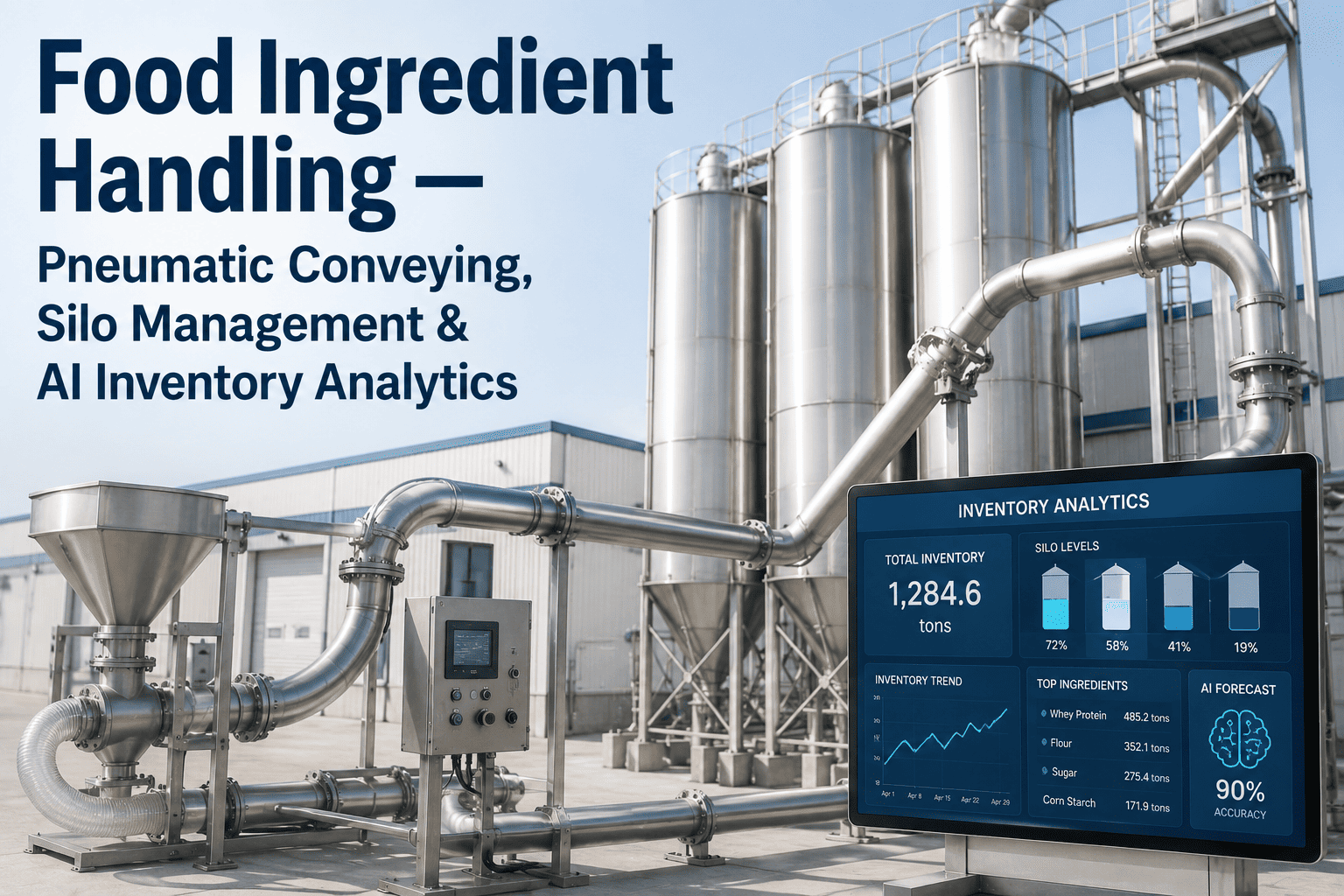
Radar and acoustic sensors combined with machine learning provide continuous, accurate silo level data. Inventory forecasts adjust for consumption patterns, ensuring just-in-time replenishment. Eliminates manual entry errors and overstocking.
Ingredient Dosing Accuracy
Closed-loop control systems integrated with AI adjust dosing parameters in real-time based on upstream variability. Achieve ±0.1% accuracy for critical ingredients, reducing giveaway and improving final product quality.
Implementation Roadmap for AI-Driven Ingredient Handling
Audit Current Infrastructure
Map all pneumatic lines, silos, dosing stations, and sensors. Identify data gaps and manual intervention points. Establish baseline KPIs for waste, downtime, and accuracy.
Deploy IoT Sensor Network
Install radar level sensors on silos, pressure transmitters on pneumatic lines, and load cells on dosing hoppers. Use edge computing for real-time data processing.
Train Predictive Models
Feed historical data into machine learning algorithms to predict blockages, dosing drift, and inventory depletion. Validate models with plant trial runs.
Integrate with MES/ERP
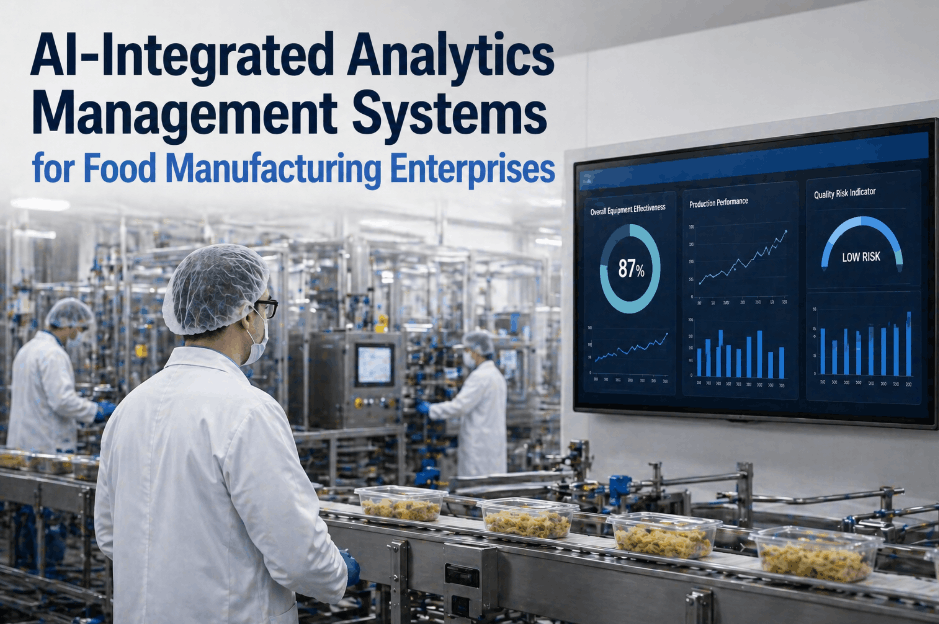
Connect AI insights to your manufacturing execution system and enterprise resource planning for automated replenishment, batch tracking, and compliance reporting.
Continuous Optimization
Monitor model performance, retrain with new data, and refine thresholds. Achieve a self-learning system that adapts to recipe changes and seasonal demand.
AI Impact on Key Ingredient Handling Metrics
| Metric | Before AI | After AI | Improvement |
|---|---|---|---|
| Pneumatic Conveying Downtime | 12 hrs/month | 5 hrs/month | 58% reduction |
| Silo Inventory Accuracy | 85% | 99.5% | +14.5% |
| Ingredient Dosing Deviation | ±3% | ±0.2% | 93% improvement |
| Dust Explosion Risk Incidents | 4 per year | 0 per year | 100% elimination |
| Changeover Time | 45 min | 18 min | 60% faster |
Ready to Optimize Your Ingredient Flow?
Leverage AI to eliminate waste, prevent downtime, and achieve precise dosing. See iFactory in action with a personalized demo.
Deep Dive: Predictive Maintenance for Pneumatic Conveying
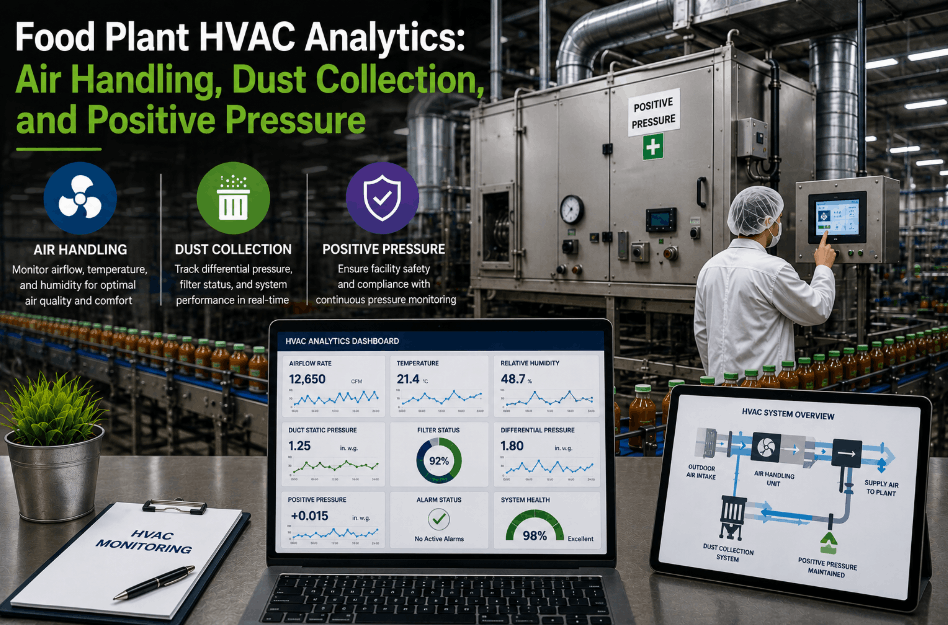
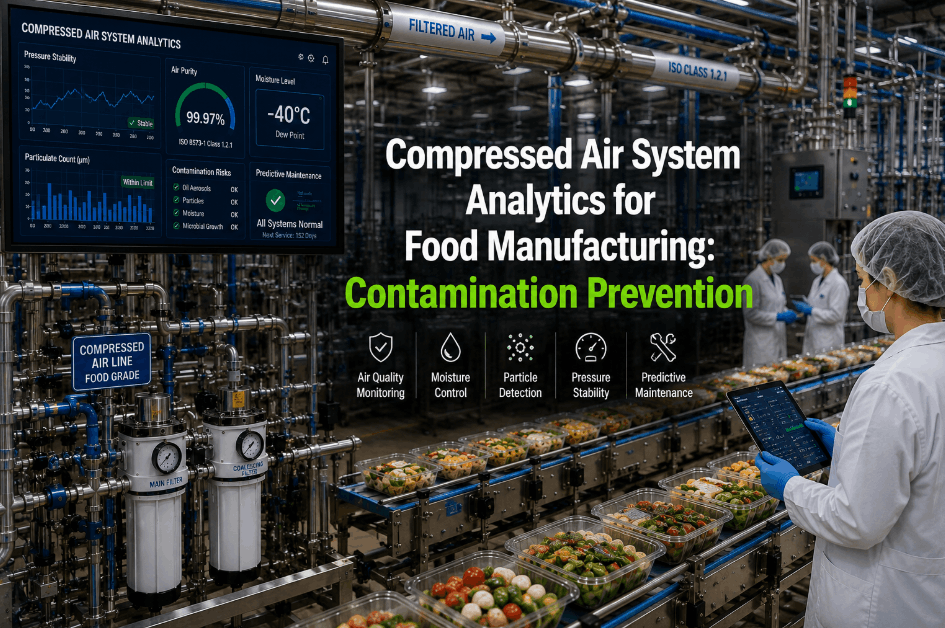
Pneumatic conveying systems are the backbone of bulk ingredient transport, but they are susceptible to wear from abrasive powders, moisture condensation, and filter clogging. AI-driven predictive maintenance uses sensor fusion—pressure, temperature, flow, and vibration—to build a digital twin of the system. Machine learning models detect early signs of degradation, such as increased pressure drop across filters or abnormal vibration patterns in fans. Alerts are sent to maintenance teams with recommended actions, like filter replacement or line purging. This approach reduces emergency repairs by 70% and extends equipment life by 30%. Integration with CMMS ensures work orders are automatically generated, streamlining the entire maintenance workflow.
Real-Time Silo Level Monitoring
Non-contact radar sensors provide continuous level measurement unaffected by dust or temperature. Data feeds into AI inventory models that predict depletion times and auto-generate purchase orders. Alerts for low levels prevent production stops.
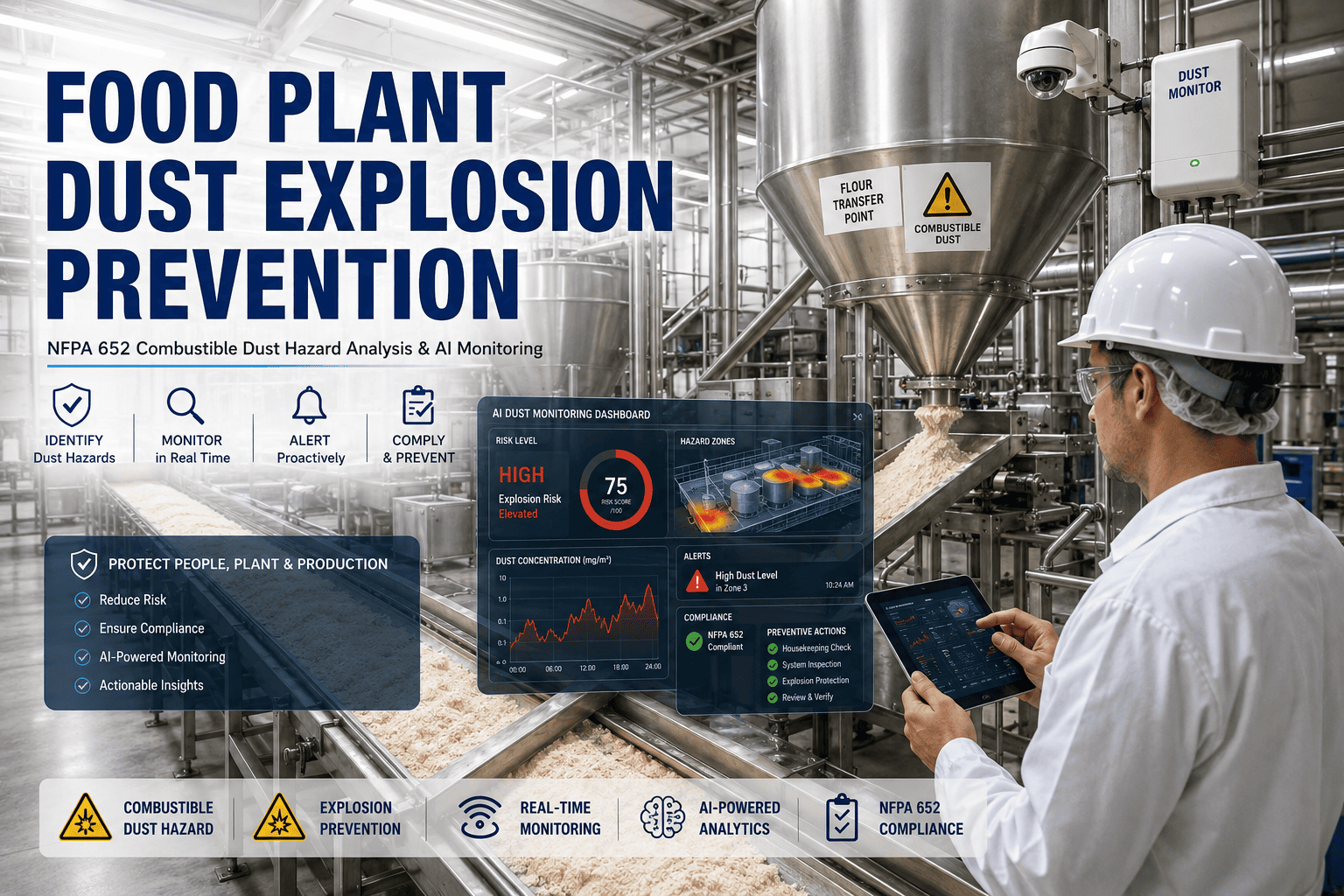
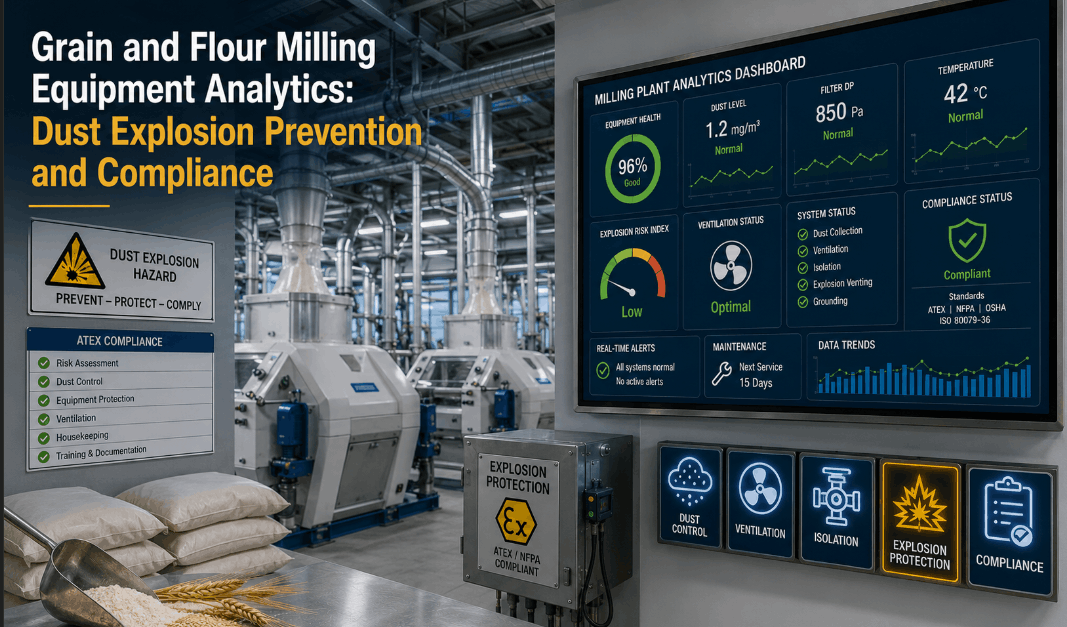
AI-Powered Dust Explosion Prevention
Machine learning analyzes dust concentration, humidity, and static electricity levels to predict explosion risks. Automated mitigation includes adjusting airflow, triggering suppression systems, and isolating zones.
Ingredient Traceability & Compliance
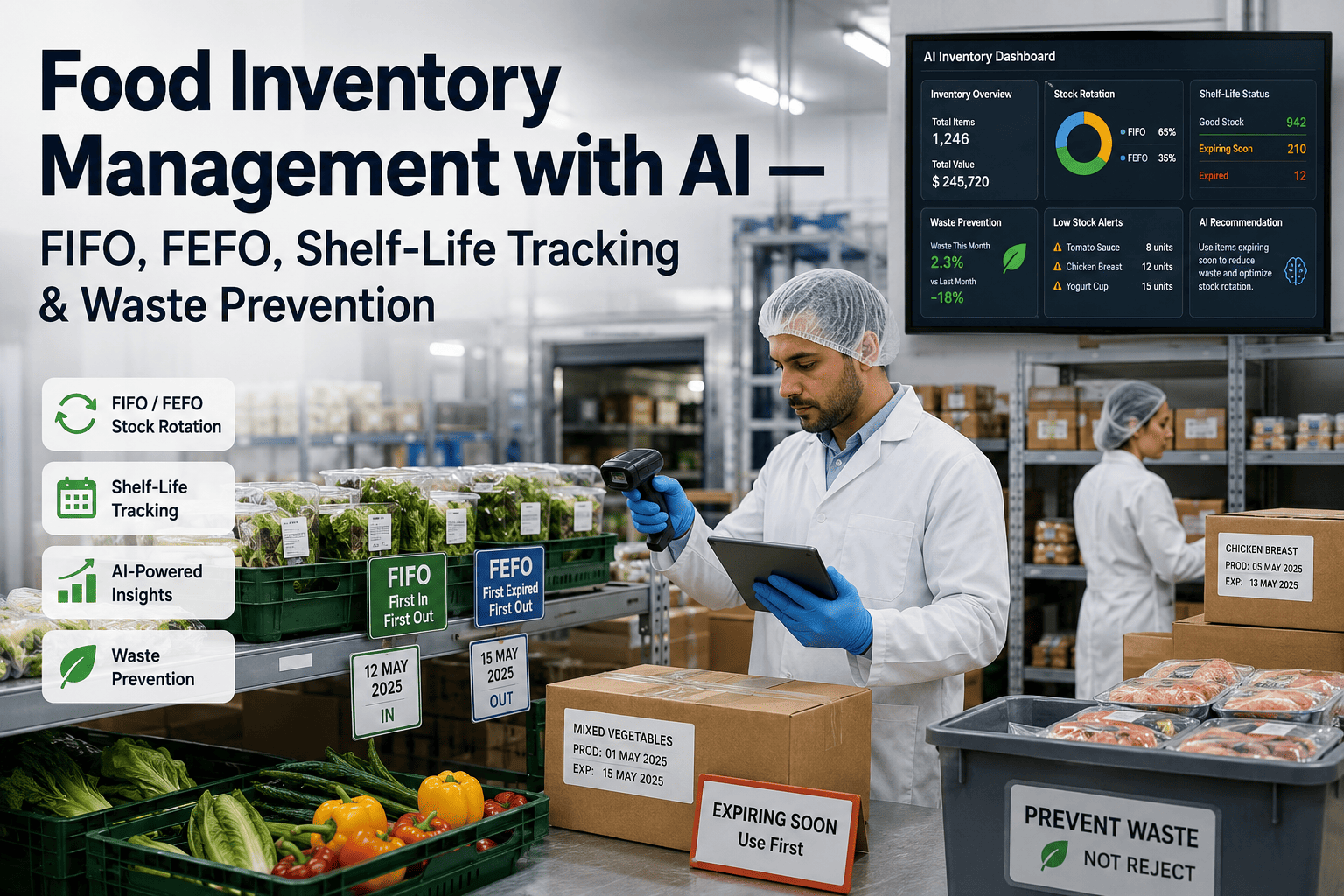
Blockchain-backed tracking from silo to mixer ensures full lot traceability. AI flags any deviation in ingredient origin or handling conditions, supporting FSMA and HACCP compliance with audit-ready reports.
Automated Replenishment
Inventory forecasts integrated with supplier systems trigger just-in-time deliveries. Reduces safety stock by 25% while eliminating stockouts. Dynamic reorder points adapt to production schedules.
Advanced Analytics for Ingredient Dosing Optimization
Dosing accuracy directly impacts product quality and cost. Traditional volumetric dosing is prone to errors from density variations and equipment wear. AI-driven gravimetric systems use load cells and feedback loops to adjust feed rates in real-time. Machine learning models correlate dosing deviations with upstream variables like humidity and particle size, enabling proactive corrections. This reduces ingredient giveaway by up to 2% of total usage, translating to significant cost savings for high-volume plants. Moreover, automated documentation of dosing parameters simplifies regulatory audits and ensures consistent batch quality.
Frequently Asked Questions
How does AI improve pneumatic conveying reliability?
AI models analyze real-time sensor data from pressure transmitters, flow meters, and vibration sensors to detect early signs of blockages or equipment wear. For example, a gradual increase in pressure drop across a filter indicates clogging, prompting proactive cleaning before a production stop. These models learn from historical failure patterns and can predict issues up to 48 hours in advance. Integrating AI with your CMMS automates maintenance scheduling, reducing unplanned downtime by over 50%. Book a Demo to see how iFactory can enhance your pneumatic system reliability.
What sensors are needed for silo level monitoring?
For food-grade silos, non-contact radar sensors are recommended due to their accuracy in dusty environments and resistance to temperature fluctuations. Guided wave radar is suitable for silos with narrow geometries. Acoustic sensors can be used for large, open silos. All sensors should be food-grade certified and connected to an edge gateway for real-time data transmission. AI models then process this data to provide continuous level readings, trend analysis, and automated reorder alerts. Contact Support for guidance on sensor selection for your plant.
Can AI prevent dust explosions in ingredient handling?
Yes, AI significantly reduces dust explosion risks by continuously monitoring key parameters such as dust concentration, relative humidity, static electricity, and temperature. Machine learning models identify conditions that precede explosions, like a rapid rise in dust concentration due to a filter failure. The system can automatically trigger mitigation actions, such as increasing ventilation, activating suppression systems, or isolating affected zones. Historical incident data trains the model to recognize subtle patterns, enabling early warnings that give operators time to intervene. Book a Demo to learn about our explosion prevention module.
How does AI improve ingredient dosing accuracy?
AI enhances dosing accuracy through closed-loop control systems that adjust feed rates based on real-time feedback from load cells and flow meters. The system compensates for variations in ingredient density, moisture content, and particle size by learning from historical batch data. For example, if a particular lot of flour has higher moisture, the AI adjusts the dosing speed to maintain precise weight. This results in dosing deviations as low as ±0.1%, reducing giveaway and ensuring consistent product quality. Automated data logging also simplifies compliance with FDA and EU regulations. Contact Support for integration details.
What is the ROI of implementing AI in ingredient handling?
ROI varies by plant size and current inefficiencies, but typical payback periods range from 12 to 18 months. Key savings come from reduced ingredient waste (up to 35%), lower maintenance costs (30% reduction), improved production uptime (20% increase), and labor savings from automated inventory management. For a mid-sized plant processing 50,000 tons annually, total annual savings can exceed $500,000. Additionally, enhanced traceability reduces recall risk and compliance costs. Book a Demo to get a personalized ROI analysis for your facility.
Elevate Your Ingredient Handling with AI
Achieve unprecedented accuracy, safety, and efficiency. Let iFactory’s experts guide you through implementation. Start your transformation today.