SQF certification is the price of entry for any food manufacturer that wants to sell into major retail, foodservice, or branded-product supply chains in 2026. More than 13,000 facilities across six continents hold active SQF certificates, and for buyers at the enterprise level — retailers, restaurant chains, co-packing customers — it is not a differentiator but a prerequisite. The certification comes in three levels, but the conversation that matters for most food manufacturing facilities is the difference between Level 2 and Level 3: Level 2 certifies that the facility has a GFSI-benchmarked food safety management system in place, while Level 3 adds a comprehensive quality management system on top of the safety foundation. The difference between the two is not just scope — it determines which buyers will consider your facility qualified and which audit findings your team must be prepared to address. iFactory supports SQF compliance by automating the monitoring, recording, and verification data that auditors evaluate — from CCP logs and environmental monitoring results to corrective action tracking and management review documentation. See how the platform maps to your SQF system with a Book a Demo.
The Audit Is Not the Hard Part. Maintaining the System Between Audits Is.
iFactory digitizes the daily monitoring, corrective action documentation, and verification records that SQF auditors evaluate — so the system your facility presents on audit day is the same system that runs every other day of the year.
Safe Quality Food — the GFSI-Benchmarked Certification That Buyers Require
SQF stands for Safe Quality Food. It is a food safety and quality management certification program administered by the SQF Institute, which operates under FMI — The Food Industry Association. The program is built on HACCP principles but extends beyond hazard analysis to encompass prerequisite programs (GMPs, sanitation, pest control, allergen management), management system requirements (document control, management review, internal audit), and at Level 3, a full quality management overlay covering product specifications, process validation, and customer complaint resolution. SQF is one of the certification schemes recognized by the Global Food Safety Initiative, meaning an SQF certificate is accepted by retailers and buyers worldwide who require GFSI-benchmarked food safety certification from their suppliers. Unlike minimal compliance programs that address only specific regulatory requirements, SQF covers the entire supply chain from farm to fork — primary production, manufacturing, packaging, storage, distribution, retail, and foodservice. The current audit standard is SQF Code Edition 9, with Edition 10 published in March 2026 and expected to become the audit basis from January 2027 once GFSI benchmarking is completed. For food manufacturers, the practical significance of SQF is that it provides a structured, auditable framework for demonstrating food safety competence to buyers who cannot individually verify every supplier's operations — the certificate serves as a trusted signal that the facility has been independently evaluated against a rigorous, internationally recognized standard.
Level 1, Level 2, and Level 3 — What Each Level Requires and Who Needs It
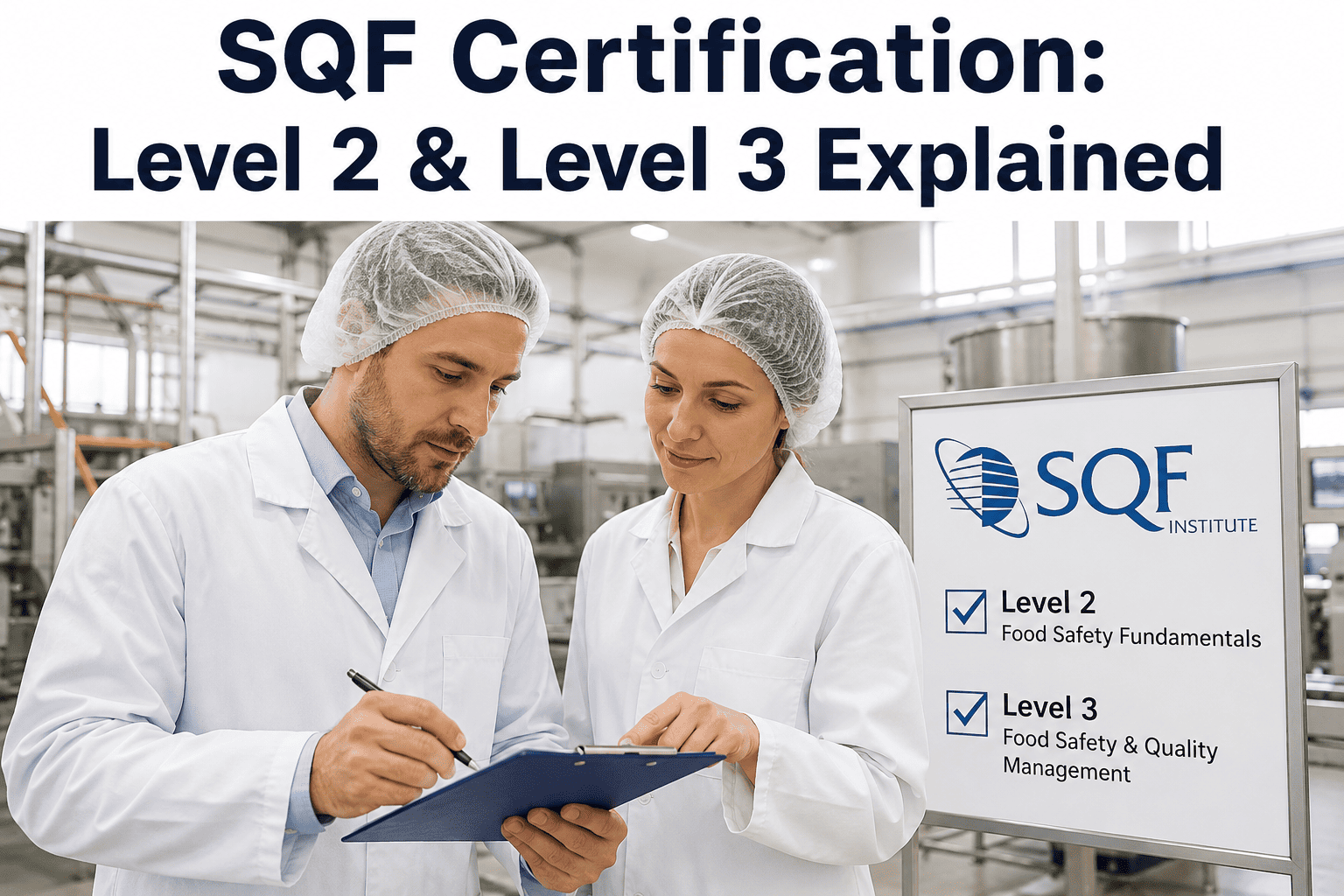
SQF certification is structured in three progressively rigorous levels, each building on the requirements of the previous level. Level 1 is the entry point designed for small businesses building their food safety foundation, but it is not GFSI-benchmarked and does not satisfy the certification requirements of most major retail buyers, foodservice distributors, or branded food companies. Level 2 is where most food manufacturers begin their SQF journey — it is the first GFSI-benchmarked level, requires a fully validated HACCP-based food safety plan, and represents the minimum standard most buyers require from their supplier base. Level 3 adds a comprehensive quality management system on top of Level 2's food safety foundation and is increasingly demanded by premium buyers, private-label brand owners, and retailers who require demonstrated quality management capability beyond baseline food safety compliance.
Entry-level certification covering basic food safety controls. Requires Good Manufacturing Practices (GMPs), basic prerequisite programs, and a preliminary food safety plan. Does not require a full HACCP plan and is not GFSI-benchmarked.
Suitable for small businesses, startups, and facilities that are building their food safety program and plan to upgrade to Level 2 within 12 to 18 months. Not sufficient for selling to major retailers or branded food companies.
Requires a fully developed, validated, and verified HACCP-based food safety plan covering all products and processes within scope. Includes comprehensive prerequisite programs encompassing sanitation standard operating procedures, pest control and exclusion, allergen management with segregation protocols, food defense and intentional adulteration prevention, chemical control, water safety, and supplier approval with risk-based assessment criteria. The management system elements include document control with version management, management review meetings with documented minutes and action tracking, internal audit programs, corrective and preventive action (CAPA) systems with root cause analysis requirements, product traceability and recall procedures, and a designated SQF Practitioner with defined authority and responsibilities. This is the GFSI-benchmarked level that satisfies the food safety certification requirement of major retail, foodservice, and co-packing buyers across North America and internationally.
Required for food manufacturers, processors, and co-packers selling to major retailers (Walmart, Costco, Kroger), foodservice distributors (Sysco, US Foods), or branded food companies that mandate GFSI-benchmarked certification from suppliers.
Includes all Level 2 requirements plus a comprehensive quality management system covering product specifications and standards, process validation and capability studies, in-process and finished product quality testing, customer complaint handling and trend analysis, product release procedures, and a quality management plan that runs parallel to the food safety plan. The quality elements address consistency, specification compliance, and customer satisfaction — not just hazard prevention.
Required or preferred by premium brand owners, private-label manufacturers producing for quality-sensitive retailers, and facilities where buyers specify product quality requirements beyond food safety — including sensory consistency, packaging appearance standards, and shelf-life performance specifications. The Level 3 upgrade from a mature Level 2 system typically takes 3 to 6 months because the quality management components build on processes that many facilities already perform informally but have not yet formalized, documented, and integrated into their SQF system with the rigor that auditors evaluate.
Building Toward Level 2 or Upgrading to Level 3? iFactory Automates the Records That Auditors Verify.
CCP monitoring logs, corrective action records, environmental monitoring results, and management review documentation — all generated automatically from your production data.
The Role That Makes or Breaks Your Certification — Requirements, Responsibilities, and Common Mistakes
Every SQF-certified facility must designate an SQF Practitioner — a directly employed individual responsible for overseeing the development, implementation, review, and maintenance of the entire SQF system. This is not a title that can be assigned to an external consultant, and it is not a role that can be delegated to a quality manager who already carries a full-time workload without adjusting their responsibilities. Auditors verify the practitioner's employment status, training currency, and active involvement in the food safety system during every certification and surveillance audit. Discovering that the designated practitioner is a contractor, that their training has lapsed, or that they cannot demonstrate active oversight of the system's daily operations is treated as a major nonconformance. The practitioner is the single person who owns the food safety system's daily operations and its audit readiness — and the quality of the practitioner's engagement with the system is the strongest predictor of audit outcomes.
Qualification Requirements
Must be directly employed by the facility. Must have documented competency in HACCP principles through formal training or demonstrated experience. Must complete SQF Practitioner training (strongly recommended to include an SQF implementation course). Must have a designated backup who meets the same qualification standards in case the primary practitioner is unavailable during an audit or incident.
Monthly Responsibilities
Prepare and present the SQF program status report to senior management (this is a documented, auditor-verified requirement). Review internal monitoring data including CCP log trends, environmental monitoring results, and customer complaint patterns. Update or review prerequisite programs covering GMPs, sanitation, pest control, allergen management, and food defense plans. Ensure all corrective actions from internal audits and incidents are closed within required timeframes.
Incident Response Authority
When a CCP deviation occurs, a foreign material is found, or a supplier nonconformance is identified, the practitioner determines whether the incident requires a product hold, a CAPA investigation, or escalation to senior management. This authority must be documented in the organizational chart and understood by production staff — auditors will ask operators who they report food safety concerns to and verify the answer matches the documented practitioner designation.
Common Practitioner Mistakes
Treating the role as a part-time addition to another full-time job without adjusting workload expectations. Failing to maintain current training certifications. Not conducting or documenting the required monthly management review. Building a system that depends entirely on the practitioner's personal knowledge rather than documented procedures that any trained replacement could follow — a critical vulnerability that auditors test by asking other staff members to explain food safety procedures.
Seven Readiness Categories to Review Before Your SQF Audit
SQF audits evaluate both the documented system (policies, procedures, plans, records) and the operational reality on the production floor. The most common audit failures occur when the documented system does not match what is actually happening in the facility — when SOPs describe one cleaning procedure but operators perform a different one, when CCP monitoring records show no deviations over six months but no verification evidence exists to support that claim, or when required records exist but contain gaps, inconsistencies, or entries that were clearly backfilled before the audit rather than maintained continuously throughout the year. Auditors are trained to identify these patterns, and the findings they generate from documentation gaps are typically more damaging to audit scores than isolated facility condition issues. The following seven categories represent the areas where audit findings are most concentrated across food manufacturing facilities seeking or maintaining SQF certification.
HACCP Plan and CCP Records
Validate that the HACCP plan reflects current products and processes, all CCPs have defined critical limits with scientific justification, monitoring records are complete with no gaps, and all CCP deviations have documented corrective actions with root cause analysis and verification of effectiveness.
Prerequisite Programs
Confirm that GMPs, sanitation SOPs, pest control programs, allergen management plans, and food defense plans are current, documented, followed on the floor, and subject to regular verification. Master sanitation schedules must show no overdue tasks without documented justification.
Document Control
Verify that all SOPs, policies, and plans carry revision dates, version numbers, and approval signatures. Obsolete documents must be removed from circulation. The document master index must be current and include every controlled document in the SQF system.
Management Review
Ensure that the documented management review has occurred within the required period, covers all SQF Code elements including food safety performance KPIs, and minutes are signed and retained. Auditors verify that the review produces action items and that those action items are tracked to completion.
Training Records
Confirm that all personnel have documented training on their specific food safety responsibilities, that training is delivered in languages staff can understand, and that training effectiveness is verified through competency assessments rather than just attendance records.
Supplier Approval Program
Verify that all ingredient and packaging suppliers are approved under a documented risk-based supplier approval program, that incoming materials are inspected or verified against specifications, and that supplier nonconformances are tracked with corrective actions.
Facility Conditions
Inspect that the physical facility meets SQF requirements for exterior maintenance, zone segregation, lighting adequacy, equipment condition, and pest exclusion. Physical facility conditions are directly evaluated during the audit walk-through, and infrastructure deficiencies are among the most common sources of major nonconformances.
Our first SQF Level 2 audit resulted in four major nonconformances — three of them were documentation gaps where the monitoring was happening but the records were incomplete, inconsistent, or stored in a way the auditor could not verify. After deploying iFactory to automate CCP logging, corrective action tracking, and environmental monitoring documentation, our recertification audit twelve months later came back with zero majors and two minor findings. The auditor specifically noted that the consistency and completeness of our records had improved more than any other element of the system.
Frequently Asked Questions
Q: How long does it take to achieve SQF Level 2 certification from scratch?
Most food manufacturing facilities require 6 to 12 months from initial gap analysis to certification audit, depending on the maturity of their existing food safety programs. Facilities that already have a HACCP plan and basic prerequisite programs in place can typically compress the timeline to 4 to 6 months, while facilities starting without any formalized food safety system may need the full 12 months to develop, document, implement, and verify all required elements before the certification audit. iFactory accelerates the implementation timeline by automating the monitoring and record-keeping systems that consume the most practitioner time during system development — schedule a Book a Demo to see the compliance automation features.
Q: What is the difference between SQF and other GFSI-benchmarked schemes like BRC, FSSC 22000, and IFS?
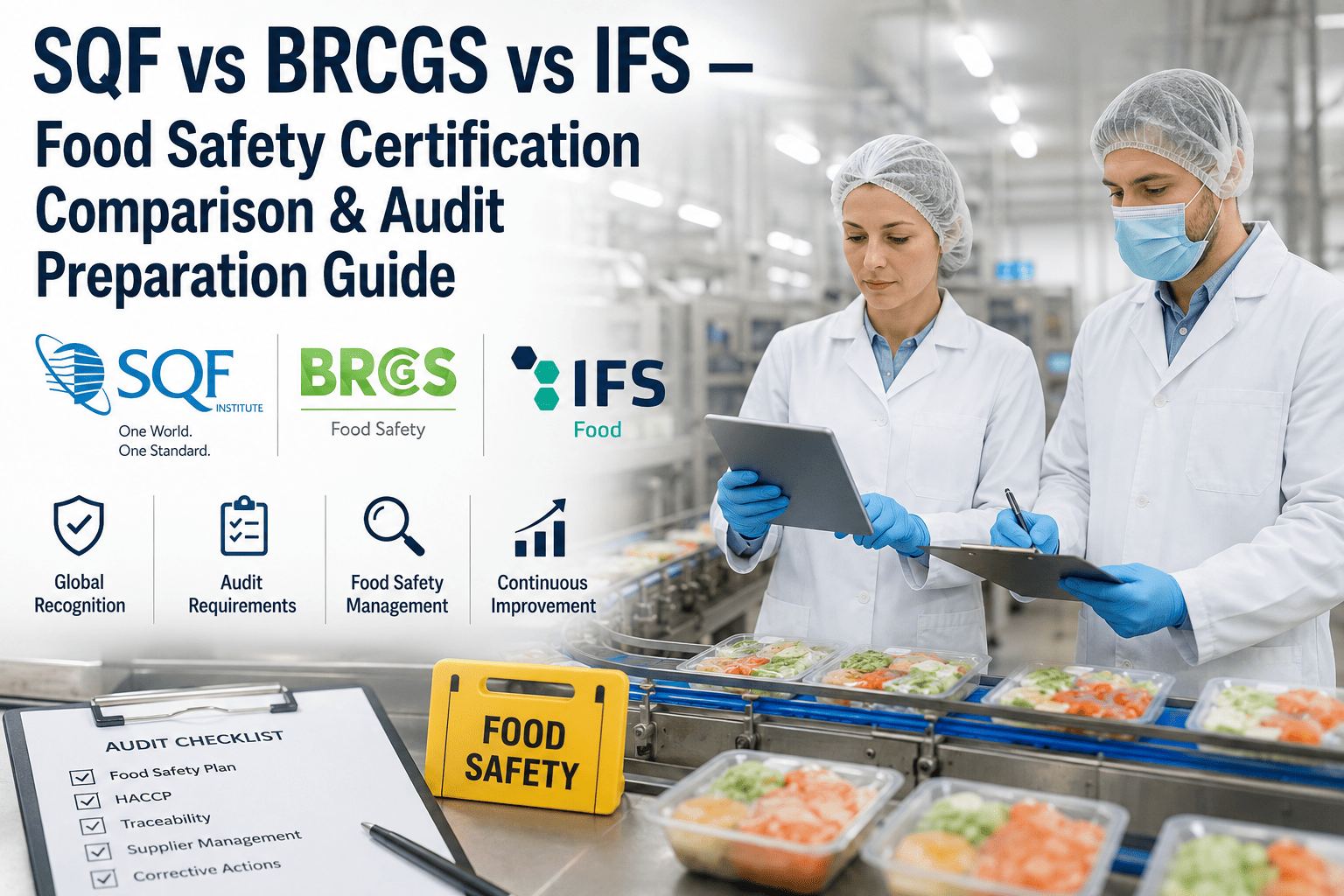
All GFSI-benchmarked schemes share the same foundational requirements — HACCP-based food safety plans, prerequisite programs, management system elements, and third-party audit verification. The differences are primarily in structure, emphasis, and geographic prevalence. SQF is the only GFSI scheme that covers every sector of the food supply chain from primary production through retail and foodservice. BRC (now BRCGS) is predominant in the UK and European market. FSSC 22000 builds on ISO 22000 and is common in multinational manufacturing environments. IFS is widely used in Germany and France. From a buyer perspective, any GFSI-benchmarked certificate satisfies the requirement — the choice between schemes is usually determined by the buyer's specific preference or the facility's geographic market. Contact Support Contact for guidance on which scheme best fits your market.
Q: How does iFactory specifically support SQF audit readiness?
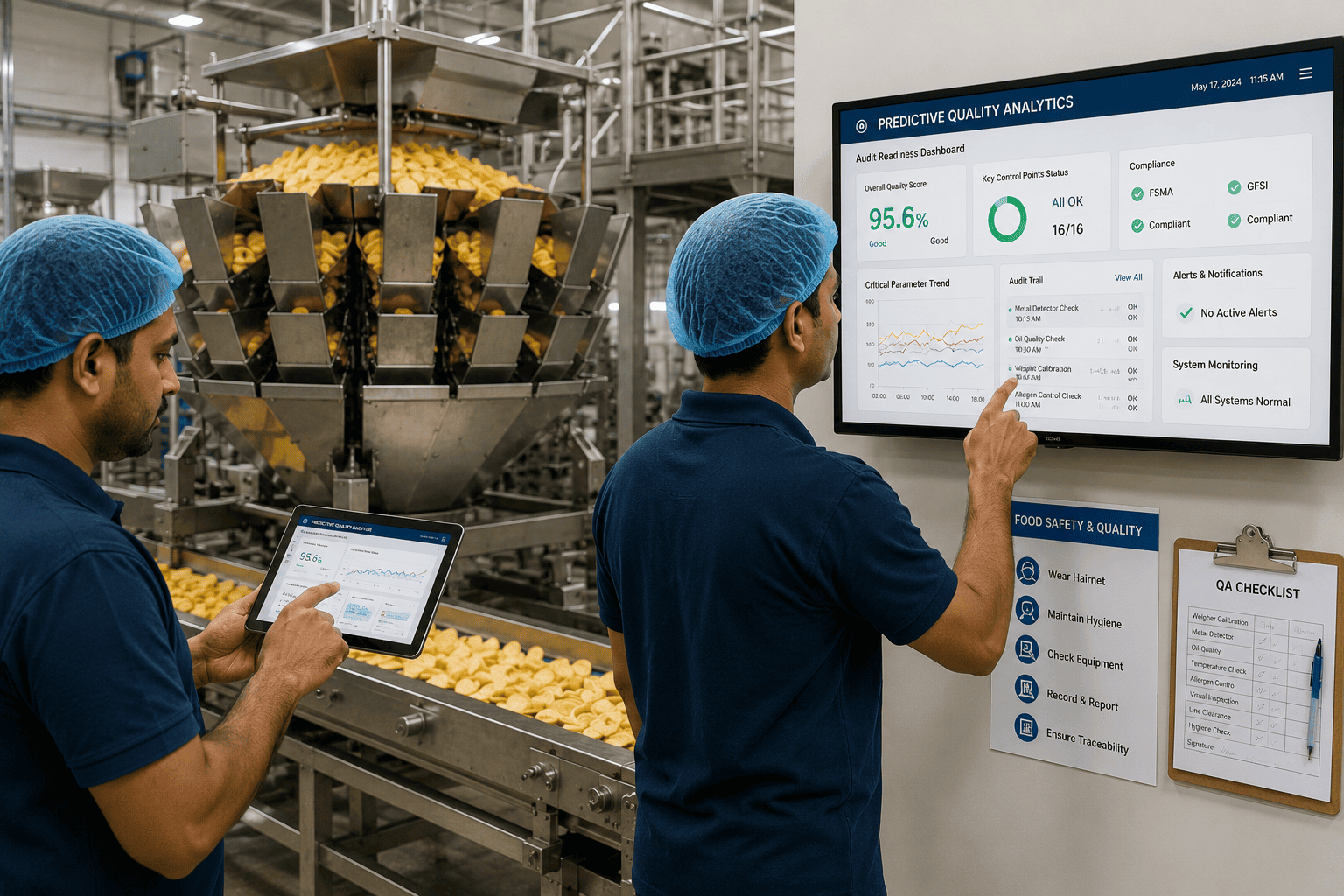
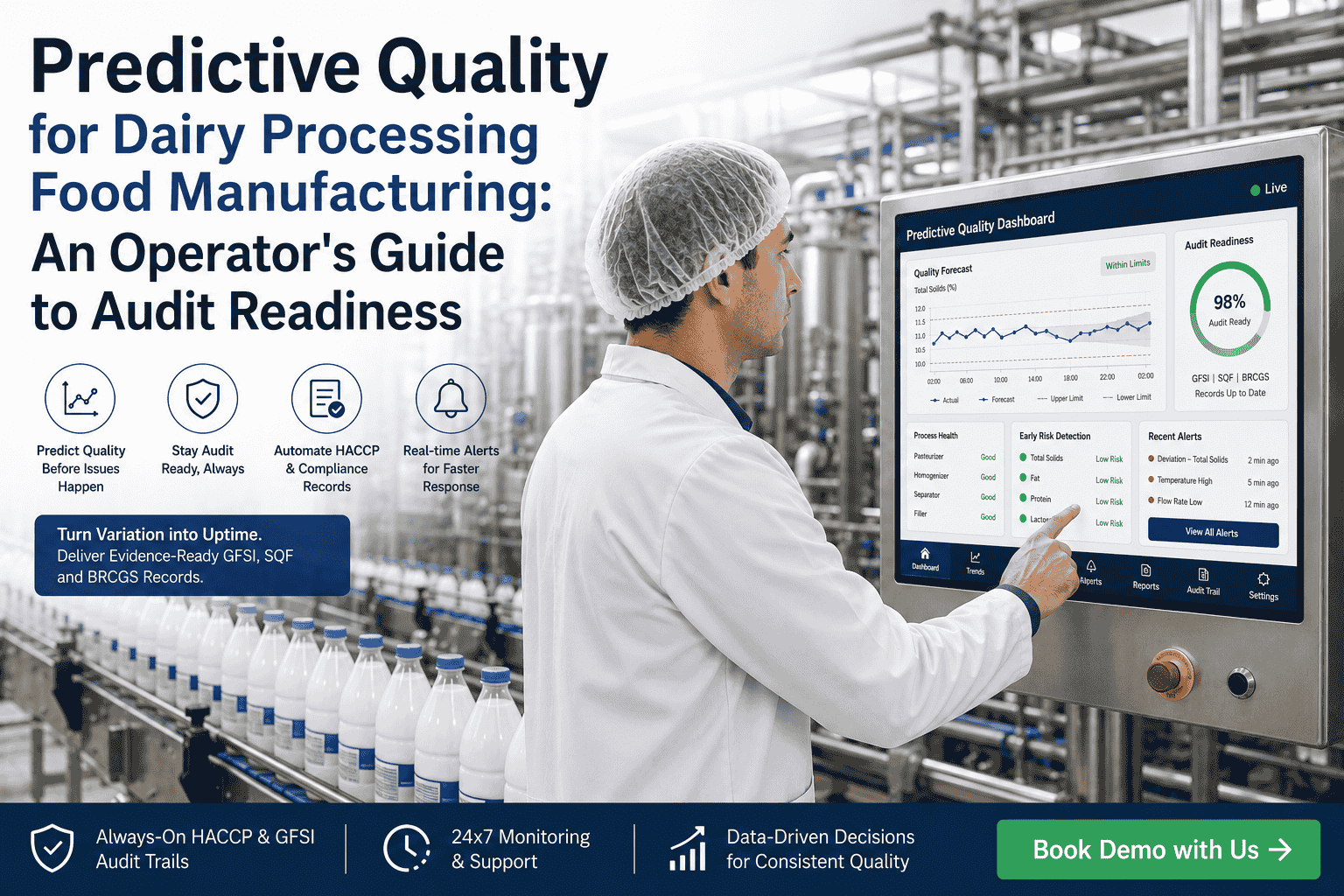
iFactory automates the three categories of records that account for the majority of SQF audit findings: CCP monitoring logs (continuous, timestamped, with automatic deviation flagging and corrective action prompts), prerequisite program verification records (sanitation verification, environmental monitoring, temperature monitoring), and management system documentation (corrective action tracking with root cause analysis, internal audit findings, and management review agendas and action items). The platform generates these records automatically from production sensor data and operator inputs, eliminating the manual paper-based recording that creates the gaps, inconsistencies, and backfilling patterns that auditors identify as nonconformances. Schedule a Book a Demo to see the SQF compliance dashboard.
Q: What happens if we fail the SQF audit — do we have to start over?
SQF audits are scored based on the severity of nonconformances found, categorized as minor, major, or critical. Minor nonconformances require documented corrective action within 30 days. Major nonconformances require corrective action and may require a follow-up audit to verify resolution. Critical nonconformances — typically involving direct food safety hazards — can result in certification denial or suspension. If the audit results in nonconformances but no critical findings, the facility implements corrective actions within the specified timeframes, submits evidence of resolution to the certification body, and may receive a conditional certificate or require a partial re-audit. You do not start over from zero — the system you built remains, and the corrective actions address specific gaps rather than requiring wholesale redesign. Reach out via Support Contact for audit remediation assistance.
Q: Is SQF certification required by law, or is it a voluntary program?
SQF certification is voluntary — no federal or state regulation in the United States or any other country mandates SQF certification specifically. However, the practical reality is that major retailers, foodservice distributors, and branded food companies increasingly require GFSI-benchmarked certification as a condition of doing business. For food manufacturers, the choice is not between compliance and non-compliance with a regulation, but between having market access to the buyers who require GFSI certification and being limited to buyers who do not. The regulatory requirements under FSMA (Food Safety Modernization Act) cover some of the same ground as SQF — preventive controls, hazard analysis, supplier verification — but FSMA compliance alone does not satisfy the buyer requirement for third-party certified food safety management systems that SQF provides. Learn how iFactory supports both FSMA and SQF compliance simultaneously with a Book a Demo.
Your SQF System Runs Every Day. Your Records Should Too.
iFactory replaces the paper logs, manual checklists, and spreadsheet-based tracking that create the documentation gaps SQF auditors find — with automated, continuous, audit-ready records generated directly from your production data.