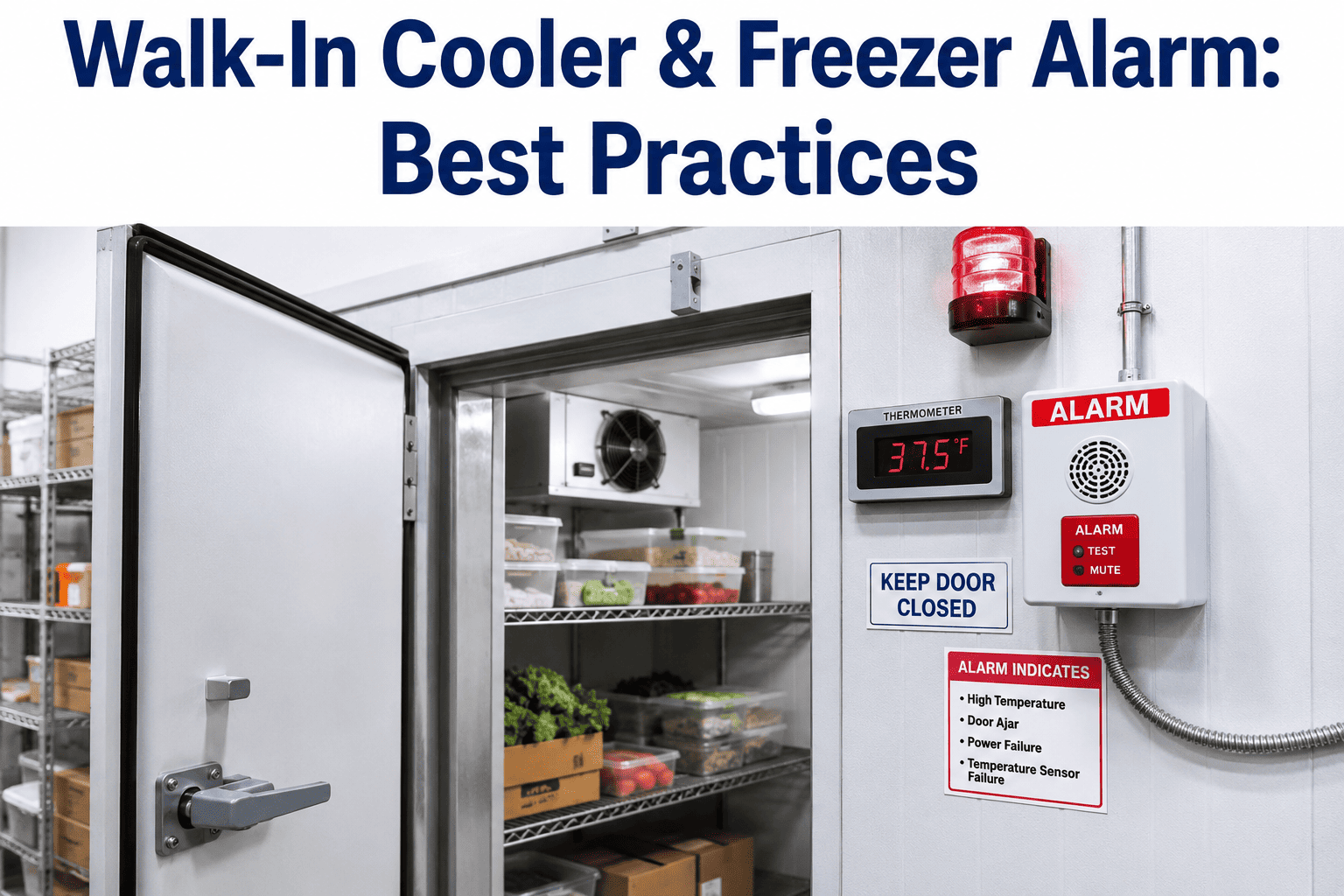
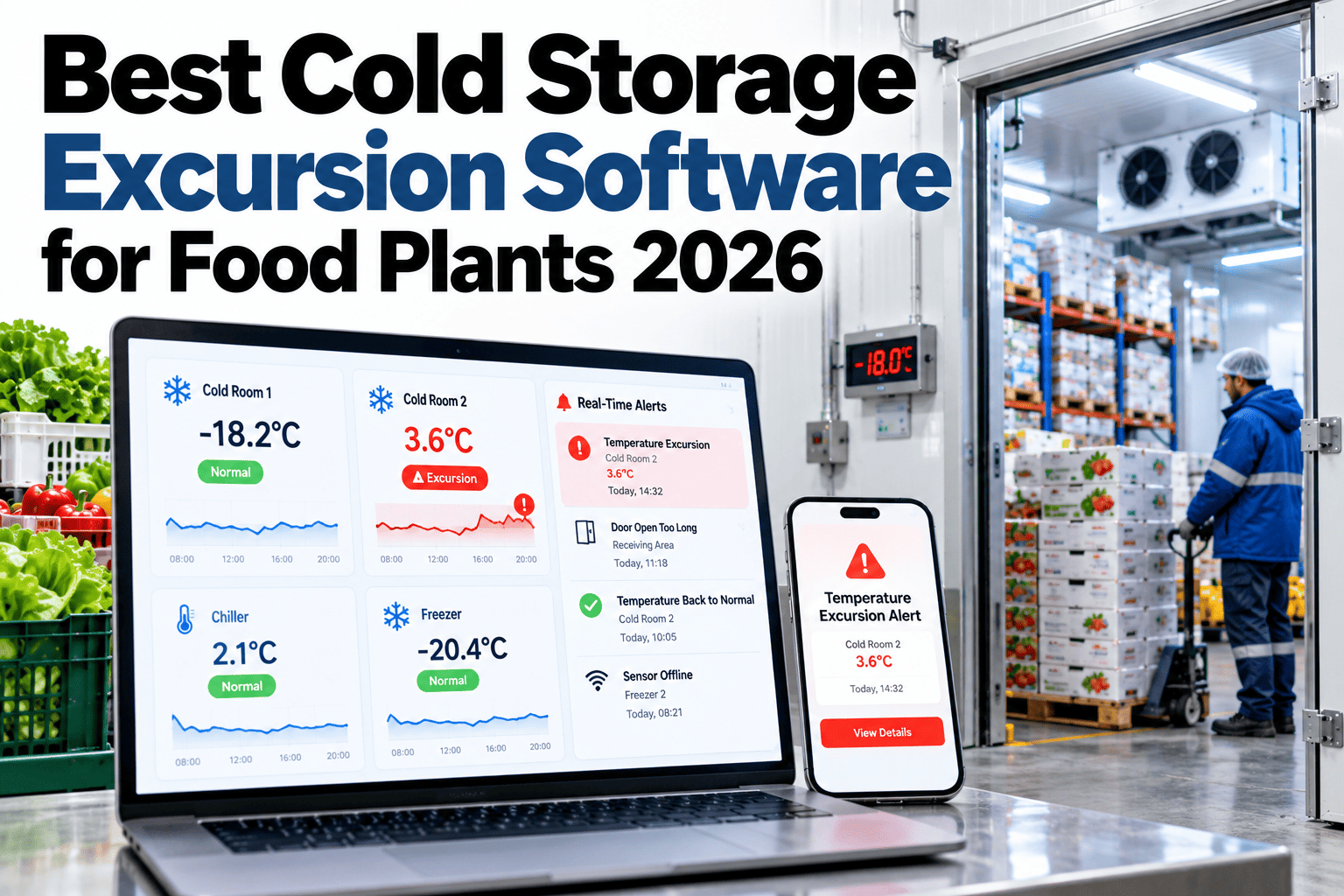
A walk-in cooler that fails at two in the afternoon on a busy Tuesday gets noticed within minutes. The same cooler failing at eleven on a Sunday night, or over a three-day holiday closure, can quietly climb ten or fifteen degrees before anyone opens the door again, and by then the loss is not a maintenance ticket, it is a full inventory write-off and a food safety incident. Alarm management for cold storage is not just about having an alarm, it is about setting thresholds that catch real problems early, routing alerts to someone who can actually respond, and avoiding the alarm fatigue that causes staff to start ignoring notifications altogether. See how AI-driven alarm management protects your cold storage around the clock when you book a demo.
COLD STORAGE · ALARM MANAGEMENT · WALK-IN COOLER & FREEZER MONITORING
The Failure That Costs the Most Is the One Nobody Was There to Hear
iFactory's AI monitors every walk-in cooler and freezer continuously, escalating alerts intelligently so a genuine failure reaches someone who can act, day or night, weekday or holiday.
THE COST OF A MISSED ALARM
What Actually Happens When Cold Storage Fails Unnoticed
Refrigeration failures rarely announce themselves loudly. Compressors fail gradually, door seals degrade slowly, and defrost cycles occasionally run long enough to push internal temperature into unsafe territory for a period that a once-per-shift manual check will never catch. The financial and safety cost of an unnoticed failure compounds every hour it goes unaddressed.
$5,000+
Typical inventory loss from a single unnoticed walk-in cooler or freezer failure spanning an overnight or weekend period.
6-12 Hrs
Average unmonitored window during overnight and weekend periods in facilities relying on manual temperature checks alone.
50%+
Share of refrigeration alarm notifications reported as false positives in poorly tuned systems, driving alarm fatigue.
Minutes
Detection-to-alert time achievable with continuous AI monitoring versus hours with a fixed manual check schedule.
ALARM THRESHOLD TIERS
Building an Escalation Structure Instead of a Single On-Off Alarm
A single fixed threshold alarm treats a minor, self-correcting temperature blip the same way it treats a genuine compressor failure, which is exactly what trains staff to start ignoring alerts. A tiered escalation structure separates normal variation from a real developing problem.
TIER 1 · WATCH
Early Deviation
Temperature drifts a small amount above the normal operating band, often from a door left open briefly or a defrost cycle. Logged for trend tracking, no immediate alert sent, since most Tier 1 events self-correct within minutes.
TIER 2 · NOTIFY
Sustained Drift
Temperature remains outside the normal band for a defined sustained period, indicating the unit is not self-correcting on its own. A notification reaches the on-duty staff member's device for a same-shift check.
TIER 3 · ESCALATE
Approaching Danger Zone
Temperature continues climbing toward a level that puts stored product at risk. Alert escalates to a manager or on-call lead if the Tier 2 notification was not acknowledged within a set response window.
TIER 4 · CRITICAL
Threshold Breach
Temperature has crossed the compliance threshold. Alert reaches every contact on the emergency escalation list simultaneously, including after-hours and holiday contacts, regardless of prior acknowledgment.
Replace One Alarm That Fires Too Often With a System Staff Actually Trust
iFactory's tiered alerting learns each unit's normal behavior and only escalates when a deviation is genuinely developing into a problem, cutting false alarms while never missing a real one.
AFTER-HOURS AND HOLIDAY COVERAGE
The Periods Where Alarm Management Matters Most
The highest-consequence refrigeration failures tend to happen exactly when the fewest people are present to notice, which makes after-hours and holiday coverage the single most important design consideration in any alarm management program.
Overnight Closures
Between closing and reopening, a walk-in unit can fail hours before the first staff member arrives, and by the time a compressor issue is discovered visually, product loss and food safety risk have already accumulated well past the point of easy recovery.
Multi-Day Holiday Closures
Extended closures around major holidays remove staff presence entirely for days at a time, turning a routine maintenance issue into a total loss event if no automated alert reaches someone capable of responding during the closure.
Weekend Skeleton Staffing
Reduced weekend staffing means fewer people passing by a walk-in unit throughout the day, extending the gap between incidental visual checks and increasing reliance on an automated system to catch a developing failure.
Multi-Site Operations
Operators managing several locations cannot physically be present at every site, and a centralized alert system that routes notifications to the right on-call contact for each specific location becomes essential rather than optional.
TRADITIONAL VS AI ALARM MANAGEMENT
What Changes When Alarm Logic Moves From Fixed Thresholds to AI
The comparison below reflects the operational differences reported by multi-site food operators after moving from a fixed single-threshold alarm to an AI-managed tiered escalation system.
| Alarm Factor |
Fixed Threshold Alarm |
AI-Managed Escalation |
| False Alert Rate |
High, triggers on every brief deviation |
Low, distinguishes normal variation from real drift |
| Response Routing |
Same contact every time regardless of urgency |
Escalates to the right contact based on severity |
| After-Hours Coverage |
Often unmonitored or manually checked |
Continuous, with automatic escalation lists |
| Staff Trust in Alerts |
Declines over time due to alarm fatigue |
Remains high due to fewer, more meaningful alerts |
| Historical Trend Visibility |
Limited to individual alarm events |
Continuous trend data across every unit |
FREQUENTLY ASKED QUESTIONS
What Facility and Multi-Site Teams Ask About Cold Storage Alarms
How is alarm fatigue actually reduced without risking a missed real failure?
Alarm fatigue is reduced by tiering alerts based on severity and duration rather than firing an identical notification for every deviation, combined with AI pattern recognition that learns what normal variation looks like for each specific unit, including expected fluctuations during defrost cycles or high-traffic door openings. This means staff only receive notifications that genuinely warrant attention, which keeps trust in the system high rather than training people to dismiss alerts.
Book a demo to see tiered alerting configured for your specific units.
Who should be on the after-hours and holiday escalation list?
Most facilities build a rotating on-call list that includes a manager or facilities lead as the primary contact, with a secondary and sometimes tertiary contact set to receive the alert if the primary contact does not acknowledge within a defined window, ensuring a critical alert never depends on a single person's availability.
Contact our support team to set up an escalation list tailored to your staffing structure.
Can the system distinguish between a door left open and an actual compressor failure?
Yes, AI pattern analysis looks at the shape and speed of the temperature change, a door-open event typically shows a fast rise followed by an equally fast recovery once the door closes, while a compressor failure shows a slower, sustained climb with no recovery, allowing the system to apply different escalation logic to each situation rather than treating both the same way.
Book a demo to see this pattern distinction applied to real unit data.
How does alarm management work across multiple locations with different staff at each site?
Each location can have its own independent escalation configuration and contact list within a single centralized dashboard, so a regional manager overseeing several sites can monitor all locations at once while alerts for a specific site route only to the staff and on-call contacts responsible for that location.
Contact our support team to discuss multi-site alarm configuration.
What documentation does the system provide after an alarm event for insurance or audit purposes?
Every alarm event generates a timestamped record showing when the deviation began, when it was detected, when the alert was sent, when it was acknowledged, and the temperature trend throughout the event, providing the kind of detailed documentation insurance claims and health inspections typically require but manual logging rarely captures in full.
Book a demo to see an example alarm event record.
The Failure That Ends Up Costing the Most Is the One That Goes Unnoticed the Longest
iFactory's AI alarm management watches every walk-in unit continuously and escalates intelligently, so a real failure never sits unnoticed through a night, a weekend, or a holiday. Book a demo and see it protecting cold storage like yours.