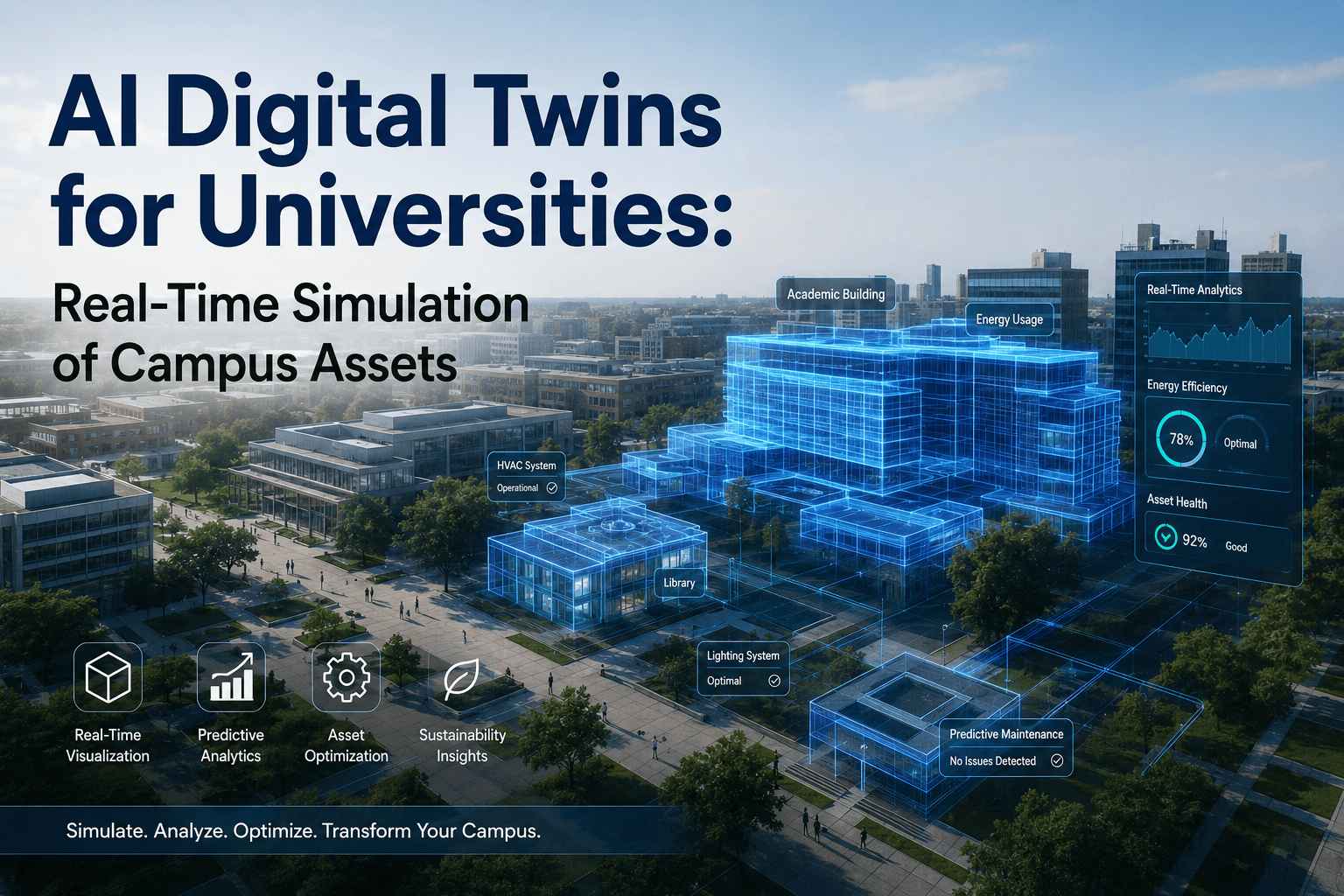
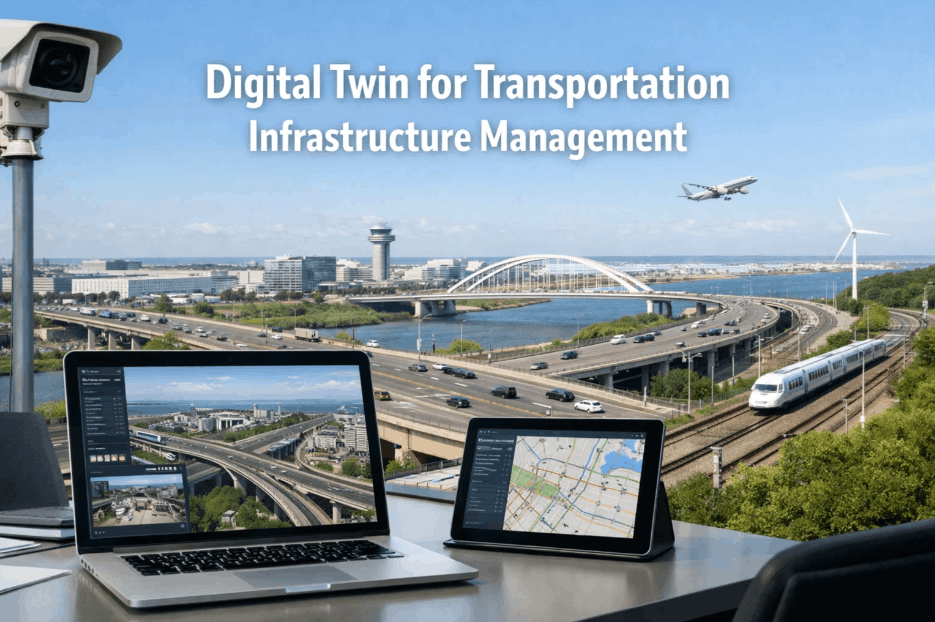
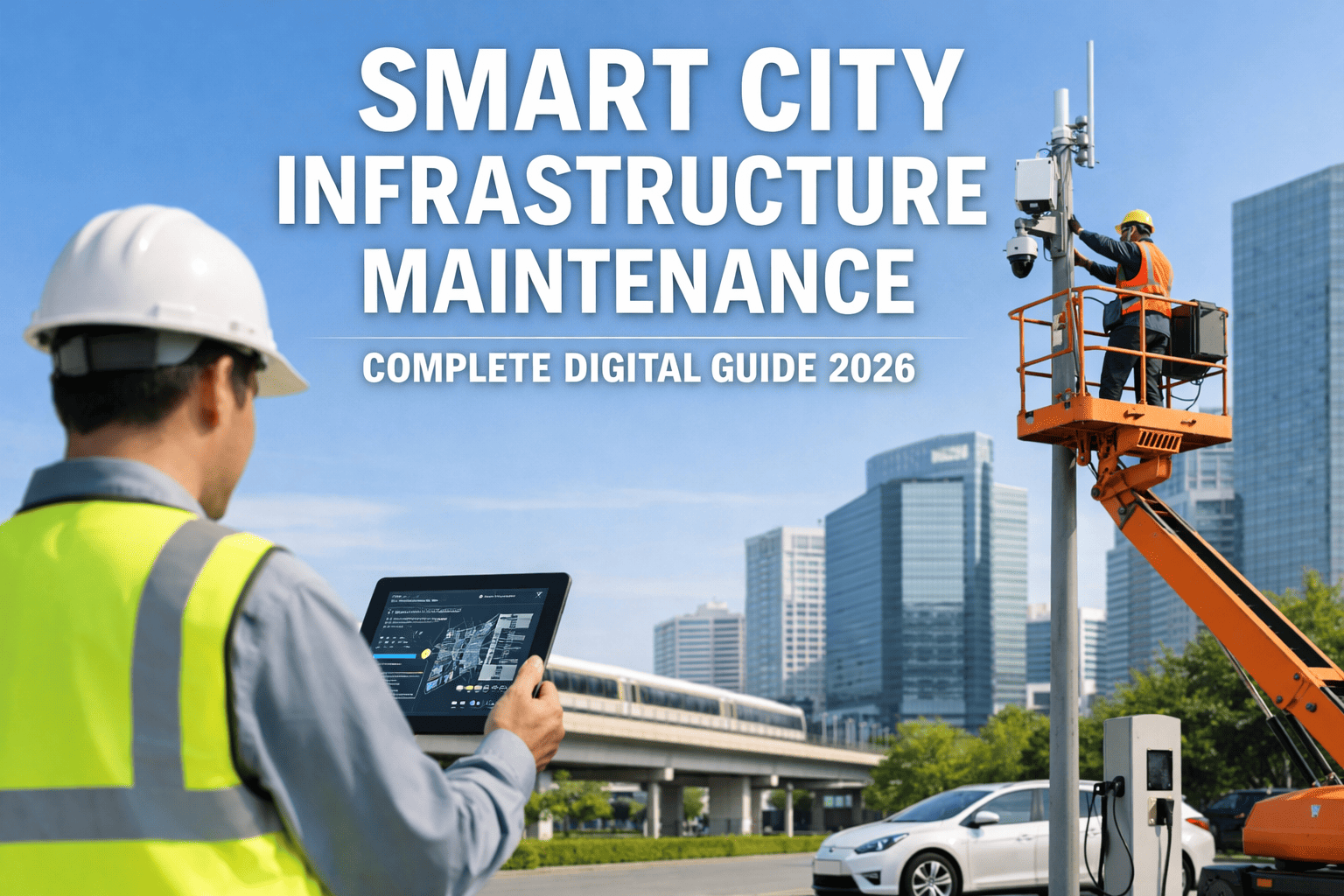
Digital Twin Technology for Government Infrastructure Management
By oxmaint on March 9, 2026
Aging bridges, crumbling water mains, and overburdened transit systems cost governments billions in emergency repairs every year. Digital twin technology is changing how public agencies manage these assets by creating real-time virtual replicas that predict failures before they happen, simulate investment scenarios, and extend infrastructure lifecycles by decades. With the global digital twin infrastructure market projected to grow from $15 billion in 2025 to $55 billion by 2033 and over 500 urban digital twins already deployed worldwide, government agencies that delay adoption risk falling behind on efficiency, safety, and fiscal responsibility. Schedule a free demo to see how digital twin monitoring works for your agency's infrastructure.
What Is a Digital Twin for Government Infrastructure?
A digital twin is a dynamic, data-connected virtual replica of a physical infrastructure asset—a bridge, water treatment facility, highway network, or public building—that mirrors its real-world condition in real time. Unlike static 3D models or CAD drawings, a digital twin continuously ingests live sensor data, inspection records, environmental inputs, and operational metrics to create a living representation that evolves alongside the physical asset it mirrors.
For government infrastructure, this means every crack in a bridge deck, every pressure drop in a water main, and every energy spike in a public building is captured, analyzed, and turned into actionable intelligence. The technology combines IoT sensor networks, BIM models, GIS mapping, and AI-powered analytics into a single platform that supports the full asset lifecycle—from construction through decades of operation and eventual rehabilitation or replacement.
$428B
Projected global digital twin market by 2034, growing at 41.4% CAGR
30%
Improvement in capital and operational efficiency for public sector projects
35%
Average gain in operational and maintenance efficiency through adoption
50%
Potential carbon emission reduction in public buildings using digital twins
How Digital Twins Improve Public Asset Lifecycle Management
Traditional government infrastructure management operates on fixed inspection cycles and reactive repairs—a bridge gets inspected every two years regardless of condition, a pipe gets replaced after it bursts. Digital twins fundamentally change this equation by providing continuous visibility into asset health and enabling condition-based decision-making across the entire portfolio.
Live Data
Continuous Condition Assessment
Instead of biennial snapshots, digital twins deliver 24/7 structural health data. Strain gauges, vibration sensors, and corrosion monitors feed real-time condition scores to the virtual model, flagging deterioration the moment it begins—not months later during a scheduled walk-through.
AI-Powered
Predictive Failure Modeling
Machine learning algorithms trained on historical maintenance records, material science data, and environmental conditions forecast when each component will reach failure thresholds. Agencies shift from costly emergency responses to planned interventions at the optimal time.
Simulation
Scenario-Based Capital Planning
Test multiple rehabilitation strategies virtually before committing public funds. Compare outcomes of repair-now versus defer-and-replace across thousands of assets simultaneously to maximize the impact of every budget dollar on service reliability and public safety.
Integration
Cross-System Data Unification
Digital twins break down silos between transportation, utilities, public works, and facilities departments. A single federated data layer gives every stakeholder access to the same asset truth—eliminating duplicated inspections, conflicting records, and blind spots in shared infrastructure.
Stop spending 60% of your maintenance budget on emergency repairs. Get Support to see how digital twin monitoring shifts your agency to predictive maintenance—cutting reactive costs and extending asset life by years.
Real-Time Infrastructure Monitoring with IoT and Digital Twins
The backbone of any infrastructure digital twin is its sensor network. IoT devices installed across bridges, pipelines, roadways, and buildings generate the continuous data stream that makes virtual replicas truly "live." Understanding the monitoring architecture helps agencies plan effective deployments.
Infrastructure Monitoring Architecture
Five technology layers that power government digital twins
L1
Physical Sensor Layer
Structural health sensors (strain, vibration, tilt), environmental monitors (temperature, humidity, seismic), flow and pressure meters for water systems, and energy sub-meters for buildings capture raw data from infrastructure assets at intervals ranging from milliseconds to minutes depending on asset criticality.
L2
Edge Computing Layer
On-site edge devices aggregate, filter, and pre-process sensor data locally. Initial anomaly detection runs at the edge to trigger immediate alerts for critical events—like a sudden displacement in a bridge span—without waiting for cloud processing round-trips.
L3
3D Geometric Model Layer
BIM models, LiDAR point clouds, and GIS spatial data form the geometric foundation of the digital twin. Sensor data is mapped onto precise 3D representations so engineers can visualize exactly where stress, corrosion, or thermal anomalies are occurring within the physical structure.
L4
AI Analytics Layer
Machine learning models analyze data patterns against historical baselines, material degradation curves, and environmental correlations. Neural networks detect subtle efficiency declines invisible to human inspectors and predict remaining useful life for each monitored component.
L5
Decision & Action Layer
Insights flow directly into CMMS platforms, work order systems, capital planning tools, and executive dashboards. Automated triggers generate maintenance requests, compliance reports, and budget recommendations. Book a demo to see how predictive work orders are auto-generated from digital twin insights in your existing government systems.
Predictive Maintenance for Bridges, Roads, and Water Systems
Predictive maintenance is the highest-impact application of digital twins in government infrastructure. By analyzing real-time sensor data against historical degradation patterns, AI models forecast exactly when each asset or component needs attention—replacing both wasteful time-based schedules and costly reactive emergency repairs.
Minimize flood damage through proactive capacity management
Want to prevent the next $5M bridge emergency closure at your agency? Schedule a demo to see how AI predicts failures in bridges, water mains, and roads months before they happen—so you fix on your timeline, not in a crisis.
Digital Twin vs Traditional Infrastructure Inspection: What Changes?
The shift from traditional inspection-based management to digital twin-enabled intelligence represents the largest operational transformation in public infrastructure management in decades. Here is how the two approaches compare across the metrics that matter most to government agencies.
Comparison Metric
Traditional Inspection
Digital Twin-Enabled
Data Frequency
Every 1-5 years per asset
Continuous, real-time streaming
Failure Detection
After visible deterioration occurs
Predicted months before occurrence
Capital Planning
Based on asset age and condition grade
Risk-optimized with scenario simulation
Cross-Agency View
Siloed department-level records
Unified federated data platform
Emergency Spending
40-60% of maintenance budget
Reduced to under 15% of budget
Compliance Reporting
Manual report assembly, weeks of effort
Automated generation, audit-ready
Smart City Infrastructure: How Governments Are Using Digital Twins Today
Digital twin adoption among government agencies is accelerating worldwide. From water system optimization in Nevada to traffic congestion modeling in Tennessee, public agencies are deploying virtual replicas to solve infrastructure challenges that traditional methods could not address.
Water Systems
Carson City, Nevada
Deployed a digital twin of its municipal water system to address water shortages and optimize distribution. The virtual model identifies leaks, predicts demand patterns, and helps plan infrastructure upgrades to ensure reliable water service despite growing climate pressures.
Traffic & Mobility
Chattanooga, Tennessee
Built a city-scale digital twin integrating data from over 500 sources—traffic cameras, 911 records, radar detectors, and weather stations—to model and alleviate congestion. The platform simulates traffic scenarios to optimize signal timing and route planning.
Urban Planning
Victoria, Australia
Creating a state-wide digital twin integrating real-time data and advanced spatial technologies across physical and social infrastructure. The program aims to reduce regulatory complexity, improve government services, and build community resilience through enhanced disaster response capabilities.
Energy & Carbon
New York City, USA
Building virtual models of downtown districts to develop strategies for reducing carbon emissions and improving energy efficiency in public buildings—targeting the city's goal of significant emission reductions by 2030 through data-driven building management optimization.
Transform Public Infrastructure with Digital Twin Intelligence
iFactory connects digital twin analytics with your maintenance management workflows—centralizing asset condition data, automating predictive work orders, and delivering simulation-backed capital planning that helps government agencies extend infrastructure life while maximizing every public dollar.
How to Implement Digital Twin Technology for Public Infrastructure
Successful digital twin deployment in government follows a phased approach designed around public sector procurement cycles, inter-agency coordination requirements, and the need to demonstrate measurable value early. Here is a proven roadmap that balances quick wins with long-term scalability.
1
Month 1-3
Infrastructure Audit & Pilot Selection
Conduct a comprehensive asset inventory, assess existing sensor and data infrastructure, and select 3-5 high-priority assets for pilot deployment. Priority criteria include asset criticality, existing data availability, and potential for measurable savings.
2
Month 3-6
Sensor Deployment & Model Creation
Install IoT monitoring hardware on pilot assets, create 3D digital models from BIM data and LiDAR scans, integrate GIS spatial layers, and migrate historical inspection and maintenance records into the digital twin platform.
3
Month 6-9
AI Training & Predictive Analytics Activation
Train machine learning models on accumulated sensor data and historical patterns. Calibrate anomaly detection thresholds, activate predictive maintenance alerts, deploy operator dashboards and automated reporting. Schedule a demo to see AI-powered predictive dashboards and how they integrate with government maintenance workflows.
4
Month 9+
Portfolio Expansion & Continuous Optimization
Scale from pilot assets to the full infrastructure portfolio. Integrate cross-agency data feeds, activate scenario simulation for capital planning, and continuously refine AI models as they learn from each asset's unique degradation patterns and operating conditions.
Get a deployment plan built for your agency's budget cycle. Book a demo and our team will map a phased digital twin rollout—showing which assets to pilot first and the ROI you can expect within 6 months.
ROI of Digital Twins in Government Infrastructure Programs
The return on investment from digital twin technology spans multiple value streams—from direct maintenance cost reductions to improved public safety, extended asset service life, and reduced environmental impact. Government agencies worldwide are documenting measurable outcomes that justify the technology investment within the first budget cycle.
20-30%
Improvement in capital and operational efficiency across public infrastructure projects
35%
Gain in operational and maintenance efficiency through digital twin-enabled workflows
$259B
Projected savings from digital twin-optimized urban planning globally by 2030
50%
Carbon emission reduction achievable in government buildings through digital twin optimization
Digital twins are becoming operational tools integrated into work orders, inspections, and budgeting processes. They are no longer just design artifacts. Models are becoming smarter, embedding code checking, carbon tracking, and resilience scoring directly into maintenance workflows.
— Infrastructure Digital Transformation Research, ASCE 2025
Find out exactly how much your agency can save with digital twins. Get Support for a free infrastructure assessment—we will model the projected ROI for your specific asset portfolio and maintenance budget.
Overcoming Barriers to Digital Twin Adoption in Government
Government agencies face specific hurdles when modernizing infrastructure management—from procurement complexity and inter-agency data governance to cybersecurity mandates and workforce readiness. Addressing these barriers proactively accelerates implementation and protects public investment.
Government Adoption Challenge Guide
Barrier
Why It Matters
Proven Strategy
Incomplete asset records
Many agencies lack digitized condition histories for older infrastructure
Start with available data; AI-assisted gap filling from sensors and mobile inspection tools improves quality over time
Procurement complexity
Multi-year funding cycles and RFP requirements slow technology acquisition
Structure pilots as small-scale procurements with built-in scale provisions; demonstrate ROI within a single budget cycle
Inter-agency data silos
Transportation, water, and facilities departments maintain separate systems
Deploy federated data architectures with standardized APIs and role-based access controls that respect agency autonomy
Cybersecurity mandates
Critical infrastructure data requires FedRAMP and NIST compliance
Edge computing keeps sensitive operational data on-premises; encrypted transmission and zero-trust architectures
Workforce skill gaps
Inspection teams may lack digital tool experience
Intuitive dashboard interfaces, role-specific training, and phased feature rollout that builds confidence incrementally
Build Resilient Infrastructure with Digital Twin Intelligence
Your inspection spreadsheets cannot predict which bridge deck will fail next winter or simulate how a 100-year flood impacts your water network. iFactory helps government agencies deploy digital twin technology that monitors every critical asset in real time, predicts maintenance needs before failures occur, and turns infrastructure data into investment decisions that protect public safety while maximizing every budget dollar.
What is the cost of implementing a digital twin for government infrastructure?
Implementation costs vary based on asset complexity, sensor requirements, and existing data infrastructure. Pilot programs on 3-5 priority assets typically range from $150K-$500K including hardware and software. Agencies generally see payback within 6-12 months through avoided emergency repairs and optimized maintenance scheduling. The phased approach allows agencies to start small and scale investment based on demonstrated returns. Schedule a demo to get a custom pricing and ROI estimate for your specific portfolio.
How does a digital twin differ from BIM or GIS systems we already use?
BIM models represent design-time geometry and specifications. GIS systems map spatial relationships and locations. A digital twin adds a critical third dimension—real-time operational data from IoT sensors that makes the model "live." It continuously updates to reflect actual asset condition, enables AI-powered predictions, and supports scenario simulation. Think of BIM and GIS as the foundation layers that a digital twin builds upon, adding dynamic intelligence on top.
Can digital twins work with our existing CMMS and asset management software?
Yes. Digital twin platforms are designed to integrate with industry-standard systems through APIs and pre-built connectors. The twin feeds predictive insights directly into your existing CMMS to auto-generate work orders, while pulling inspection and maintenance history back into the model. This means your teams keep using familiar tools while gaining digital twin intelligence in the background. Get Support to check compatibility with your CMMS platform and start your integration.
What cybersecurity standards do digital twin platforms meet for government use?
Enterprise-grade platforms support FedRAMP compliance, NIST Cybersecurity Framework alignment, and SOC 2 Type II certification. Edge computing architectures keep sensitive operational data on-premises while using encrypted channels for cloud analytics. Role-based access controls, comprehensive audit logging, and multi-factor authentication protect data integrity across agency boundaries.
How long before a government agency sees measurable results from digital twins?
Most agencies identify significant improvement opportunities within the first 30-60 days of sensor deployment—often discovering previously invisible conditions like slow water leaks, HVAC inefficiencies, or accelerated structural degradation. Full predictive capability develops over 6-9 months as AI models accumulate enough data to generate reliable forecasts. Research indicates that digital twins can improve public sector operational efficiency by 20-30 percent. Book a demo to see projected results for your infrastructure and get a customized deployment timeline.