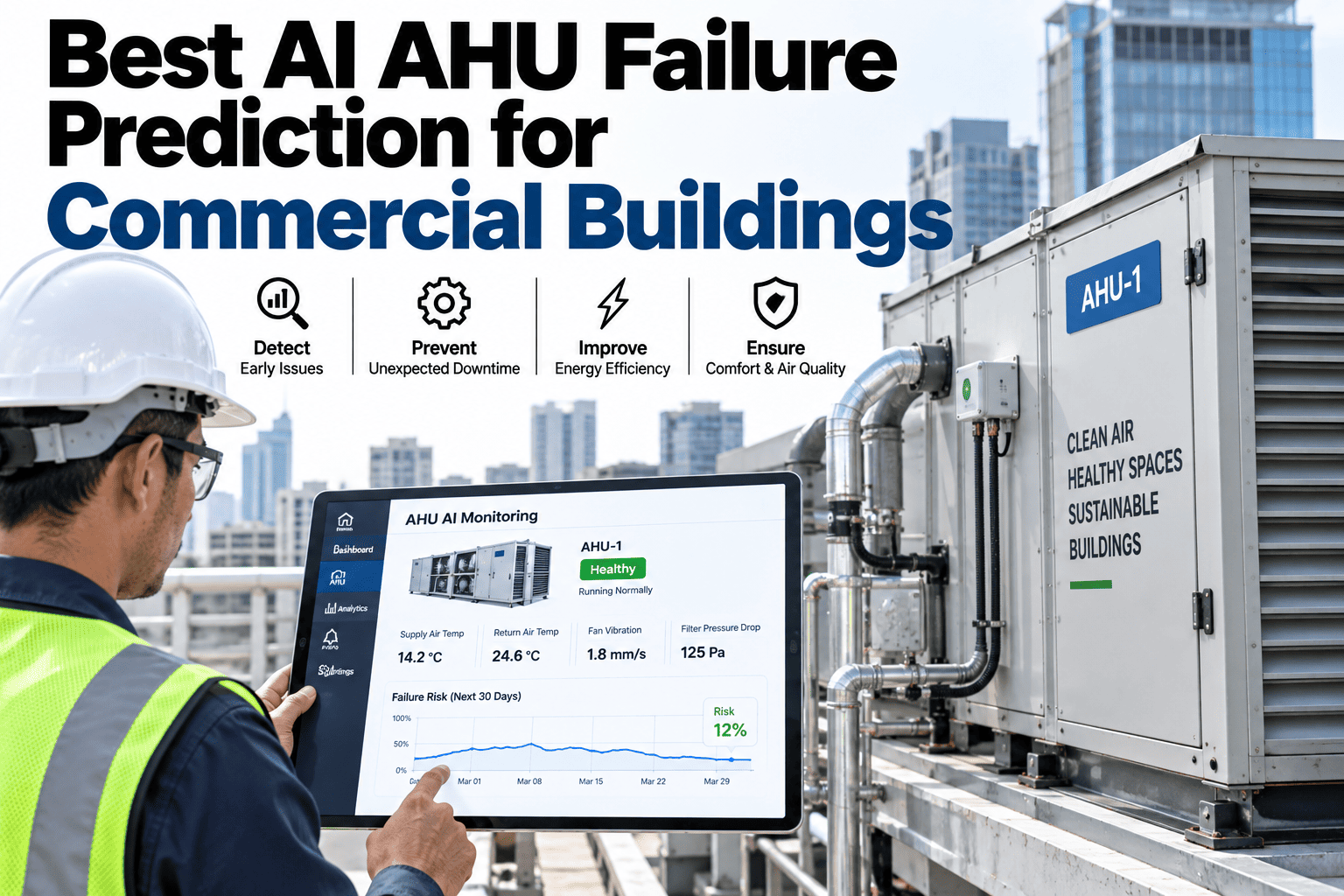
An air handling unit fails one component at a time, and belt slip, bearing degradation, and coil fouling each announce themselves differently in the data an AHU already generates — vibration signature, airflow versus static pressure relationship, and energy consumption trend, respectively — well before any of them produce the comfort complaint that would otherwise be the first sign anyone notices something is wrong. Catching these three failure modes early matters more for AHUs than it might for other equipment because a comfort complaint on an occupied floor is immediate and visible in a way that a slow efficiency loss in a chiller plant is not, putting real pressure on facilities teams to close the gap between when a fault starts and when it becomes a tenant-facing problem. Teams wanting to see this kind of AHU-specific detection running on their own building data can start with a conversation with iFactory's support team about what component-level AHU monitoring actually looks like.
Belt Slip, Bearing Wear, and Coil Fouling All Show Up in the Data Before They Show Up as a Complaint
Vibration signature, airflow-to-static-pressure relationship, and energy trend reveal AHU component failures 14 to 21 days before anyone on the affected floor notices.
Why AHU Faults Are Especially Costly to Catch Late
A chiller efficiency loss can often go unnoticed for a while because it manifests as a slightly higher energy bill rather than an immediate occupant-facing symptom, but an AHU serving a specific floor or zone translates a developing fault directly into a comfort complaint from someone sitting under that unit's diffusers. That immediacy means the cost of catching an AHU fault late is not just the eventual repair bill but the tenant relationship and reputational cost of a comfort complaint that could have been avoided with a couple weeks of advance warning.
The Three Failure Modes and Their Data Signatures
Each failure mode leaves a distinct trace in data the AHU is already generating, and recognizing the specific pattern is what lets a model point toward the likely component rather than a generic alert.
Belt Slip
Shows as a growing mismatch between commanded fan speed and actual airflow delivered, often accompanied by a distinctive vibration signature as belt tension degrades progressively.
Bearing Degradation
Produces a characteristic vibration frequency signature that shifts as wear progresses, typically detectable well before the bearing noise becomes audible to anyone nearby.
Coil Fouling
Appears as a gradual rise in energy consumption relative to the cooling or heating output delivered, since a fouled coil forces the system to work harder for the same result.
Catch the AHU Fault Before the Floor Calls Facilities
Book a 30-minute walkthrough of how iFactory tracks belt, bearing, and coil signatures across your AHU fleet.
Detection Signals Compared
Different signals reveal different failure modes, and a monitoring approach limited to just one or two signals leaves blind spots for the modes it does not cover.
| Signal | Best Detects | Limitation if Used Alone |
|---|---|---|
| Vibration Signature | Bearing wear, belt slip | Does not directly reveal coil fouling or airflow efficiency loss |
| Airflow vs Static Pressure | Belt slip, filter loading, duct restriction | Cannot distinguish between several possible causes on its own |
| Energy Consumption Trend | Coil fouling, general efficiency loss | Slow to reveal a rapidly developing mechanical fault |
Prioritizing an AHU Fleet for Monitoring Coverage
A large building portfolio can have hundreds of AHUs, and rolling out monitoring to all of them simultaneously is rarely necessary to capture most of the available value. A staged rollout based on risk and occupancy typically delivers faster returns.
High-Occupancy, Comfort-Sensitive Zones
Units serving densely occupied floors or spaces with strict comfort expectations, like the unit in the scenario above, carry the highest cost for a late catch and justify monitoring first.
Units With a History of Repeat Issues
AHUs that have needed frequent reactive repairs in the past are statistically more likely to develop another fault, making them a high-value early monitoring target.
Remaining Fleet
Lower-priority units are typically added once the value of the first two tiers is demonstrated, often as part of a broader building automation upgrade.
A Composite Scenario: The Bearing Signature That Was Caught Before the First Complaint
An office building's AHU serving a high-occupancy floor had no history of comfort complaints and had passed its most recent quarterly inspection, giving facilities staff no particular reason for concern. An AI model monitoring the unit's vibration signature flagged a gradual shift in frequency pattern consistent with early-stage bearing wear, weeks before any noise or airflow symptom would have been detectable to occupants or staff.
Facilities scheduled a bearing inspection during an off-hours maintenance window based on the flagged signature, confirming early wear that had not yet progressed far enough to affect performance or generate any complaint. Replacing the bearing during that planned window avoided what would likely have eventually become a comfort complaint followed by an emergency repair on an occupied floor, along with the more extensive damage a fully failed bearing can cause to surrounding components if left unaddressed.
Mistakes That Undermine AHU Fault Detection
Monitoring Only Energy Consumption
Energy trend alone would not have caught the bearing wear in the scenario above nearly as early as vibration signature analysis did, since bearing faults show up in vibration well before they meaningfully affect energy consumption.
Assuming a Passed Inspection Means No Developing Fault
A recent inspection finding nothing wrong, as in the scenario above, only reflects that moment, and a fault can begin developing at any point afterward.
Waiting for a Comfort Complaint to Trigger Investigation
By the time a comfort complaint arrives, a fault has typically already progressed well past the point where early, low-cost intervention was possible.
Treating All Three Failure Modes as a Single Generic "AHU Issue"
Belt, bearing, and coil faults call for different inspection and repair approaches, and a generic alert without a likely component identified slows down the response.
Is Your AHU Fleet Monitored Closely Enough to Catch This Early
Vibration, airflow, and energy data are all tracked, not just one signal
Covering all three signals avoids the blind spots that a single-signal monitoring approach would leave for the other two failure modes.
Flagged anomalies trigger investigation before any occupant complaint arrives
Acting on the signature alone, as facilities did in the scenario above, is what preserves the weeks of lead time the detection actually provides.
High-occupancy zones get priority monitoring given the higher cost of a late catch
Prioritizing units serving the most occupied or sensitive areas focuses monitoring resources where a comfort complaint would be most costly.
Frequently Asked Questions
How does vibration signature analysis detect bearing wear before it becomes audible?
Bearing wear produces characteristic changes in vibration frequency at a specific point in its progression, and sensitive monitoring can detect this shift well before the vibration amplitude grows large enough to be perceived as audible noise or felt as a physical vibration, exactly the gap that let the bearing issue in the scenario above be caught with zero symptoms present.
What is the difference between belt slip and bearing wear in terms of detection signals?
Belt slip typically shows up as a growing mismatch between commanded fan speed and actual delivered airflow, since a slipping belt transfers less rotational energy to the fan than intended, while bearing wear shows up primarily as a vibration frequency signature shift, meaning the two failure modes are distinguishable by which signal deviates first, letting a model point toward the more likely cause.
Why does coil fouling show up in energy consumption rather than vibration?
Coil fouling is a heat transfer efficiency problem rather than a mechanical wear problem, so it does not produce a vibration signature the way belt or bearing issues do, instead forcing the system to run longer or harder to deliver the same heating or cooling output, which shows up as a gradual rise in energy consumption relative to output over time.
How much does catching an AHU fault early actually save compared to a reactive repair?
Beyond the direct cost difference between a planned off-hours repair and an emergency service call, catching a fault early, as in the scenario above, avoids the secondary damage a fully failed component can cause to surrounding parts, and it avoids the tenant relationship cost of a comfort complaint that a planned repair during off-hours never generates in the first place. Book a demo to see how iFactory quantifies this kind of avoided cost from historical AHU data.
What is the first step for a building wanting to add AHU-specific fault detection?
The first step is prioritizing AHUs serving the highest-occupancy or most comfort-sensitive zones for monitoring first, since these are where a late catch carries the highest cost, exactly the reasoning that made the unit in the scenario above worth monitoring closely even without any prior complaint history. Teams wanting help prioritizing their AHU fleet can reach iFactory support directly.
Catch the AHU Fault Before It Reaches the Floor
iFactory tracks belt, bearing, and coil signatures across your AHU fleet, flagging faults 14 to 21 days before a comfort complaint. Book a walkthrough to see it running on live building data.