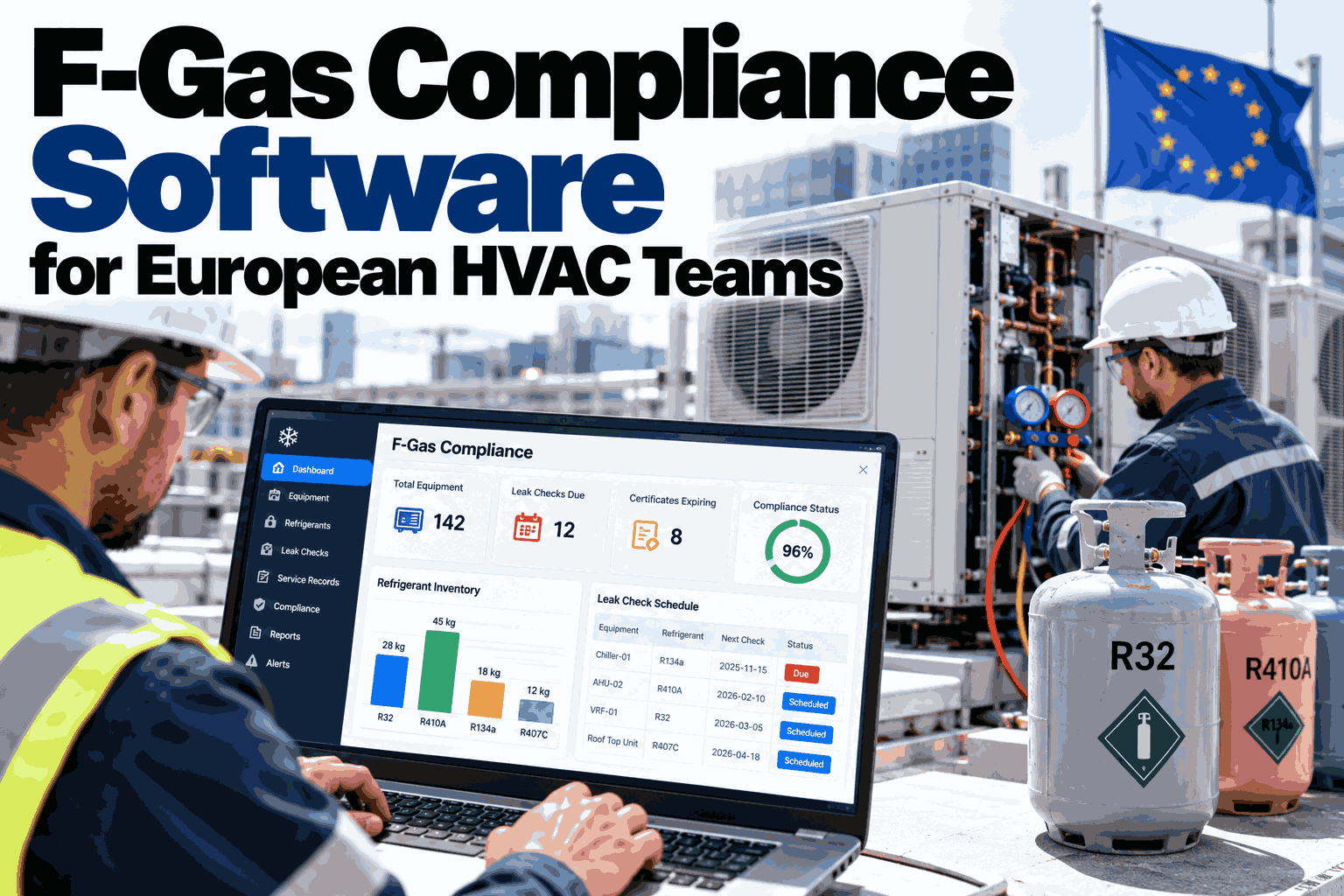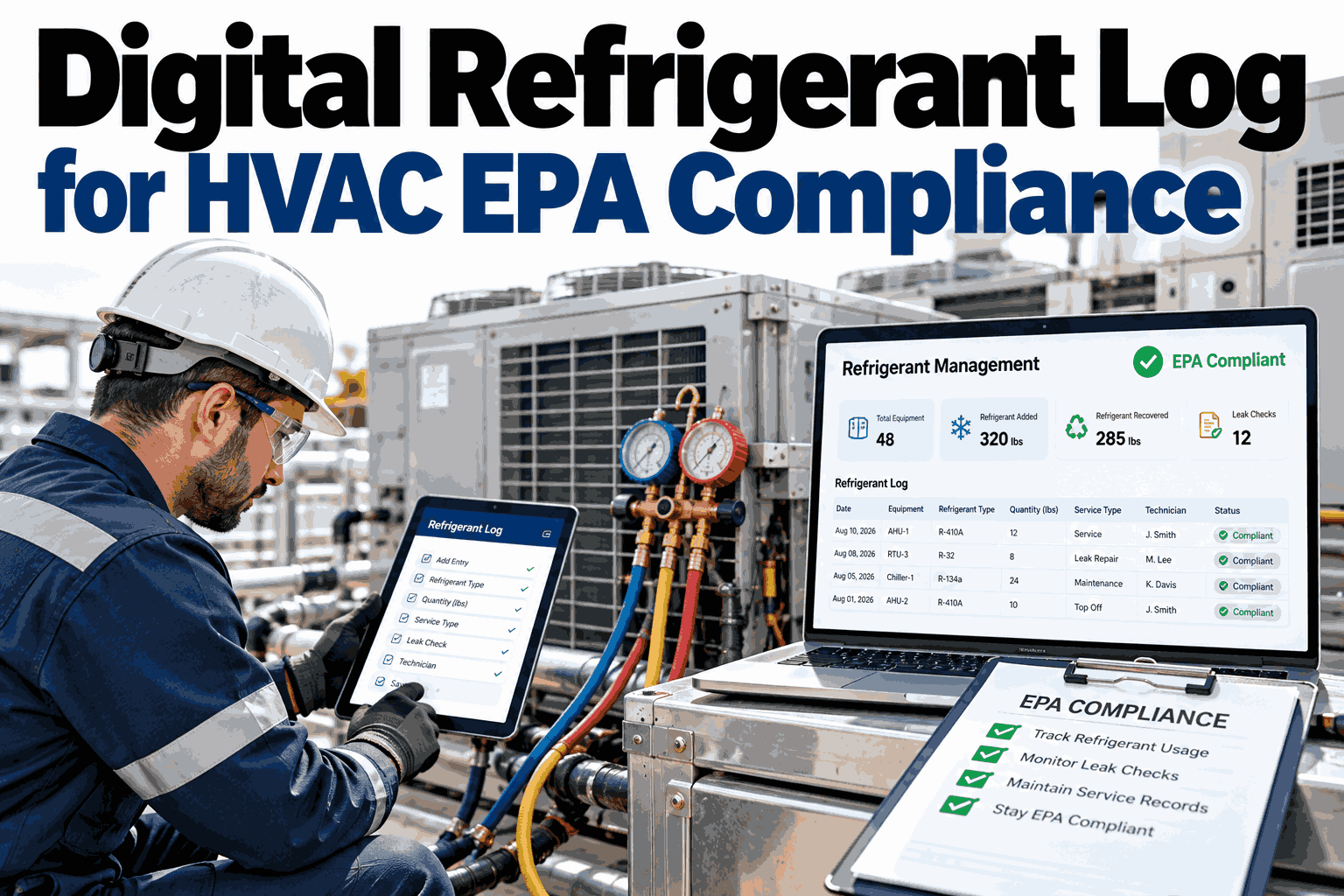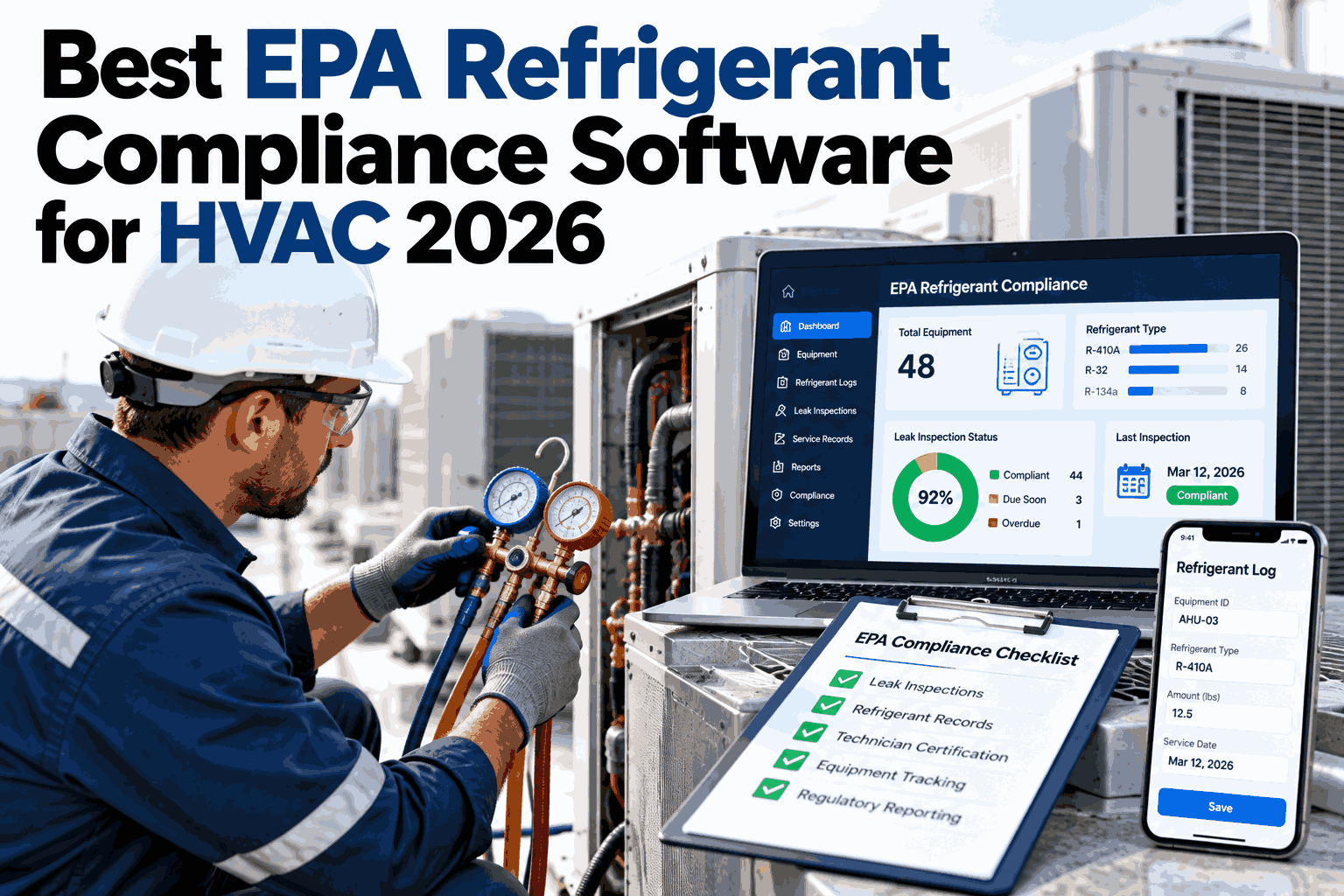
A missed leak inspection, a refrigerant purchase logged in the wrong register, or a technician certification that lapsed without anyone noticing are the three most common reasons HVAC companies get flagged during an EPA audit. Section 608, the AIM Act, and growing state-level rules now overlap in ways that make a single spreadsheet nearly impossible to keep current. Compliance software replaces memory and paper trails with enforced leak thresholds, automatic register entries, and reports that are ready before an inspector asks for them. Teams can review their current refrigerant tracking setup with the iFactory AI team.
EPA Refrigerant Compliance Software Built for Section 608, AIM Act, and F-Gas
iFactory AI tracks every refrigerant purchase, leak check, and technician certification against the rules that actually apply to your fleet, so your leak register is audit-ready every day of the year, not just in the weeks before an inspection is scheduled.
Where HVAC Companies Actually Get Flagged
Most violations do not come from a single dramatic failure. They come from small gaps between a service call, a paper log, and a filing deadline, repeated across dozens of technicians and hundreds of appliances spread over a service territory that no single person can watch at once.
Missed Leak Inspections
An appliance crosses its leak rate threshold and the follow-up inspection window quietly passes because no one was tracking the countdown against the date of the last repair, especially across a busy service season with multiple crews.
Incomplete Refrigerant Logs
Purchases, recovery, and disposal are supposed to reconcile by type and weight. A paper log with gaps cannot show an inspector where every pound of refrigerant actually went, and the gap itself often looks worse than the underlying mistake.
Lapsed Technician Certification
A Section 608 certification that expired mid-year is easy to miss until a technician is already on a job site, which puts both the service call and the company at risk.
None of these gaps need a dramatic cause. They happen because a deadline depended on someone remembering it at the right moment.
Three Frameworks, One Fleet: Know Which Rules Apply
A company servicing equipment across regions, exporting units, or supplying multinational customers often has to satisfy more than one framework at once. Each one regulates a different part of the refrigerant lifecycle, and overlap between them is where gaps are easiest to miss.
Section 608
US EPA rule governing service practices: leak repair, recordkeeping, technician certification, and recovery requirements for stationary equipment.
AIM Act / HFC Phasedown
US rule phasing down HFC production and consumption, affecting which refrigerants are available and driving transition planning for existing fleets.
EU F-Gas Regulation
EU rule covering leak checks, certification, and labeling for fluorinated greenhouse gases, with its own phasedown schedule and equipment thresholds.
The register you keep should reflect every framework your fleet touches, which is why a configurable rule set matters more than a single hard-coded checklist. Teams can map which frameworks apply to their equipment list in a short working session.
Leak Rate Thresholds and Inspection Intervals
Once an appliance's annualized leak rate crosses its threshold, the clock starts on both repair and follow-up inspection. Missing either step, even by a few days, is one of the most commonly cited violations during a routine compliance review.
| Appliance Category | Typical Leak Rate Trigger | Repair Window | Follow-Up Check |
|---|---|---|---|
| Comfort Cooling | Above 10 percent annualized | Within 30 days of discovery | Verification test after repair |
| Commercial Refrigeration | Above 20 percent annualized | Within 30 days of discovery | Verification test after repair |
| Industrial Process Refrigeration | Above 30 percent annualized | Within 30 days of discovery | Verification test after repair |
| Small Appliances | Charge-based thresholds apply | Varies by charge size | Per applicable charge rule |
Thresholds and windows vary by jurisdiction and appliance definition, so plants and service companies should confirm current figures against their own compliance program. Software exists to track the countdown once the rule is set, not to set the rule, which is why a configurable threshold table matters more than a fixed one built into the platform.
What a Defensible Refrigerant Leak Register Needs
A register that satisfies an inspector on the first pass has the same structure every time, regardless of which technician or site entered the data.
Each field above answers a question an inspector is likely to ask directly, which is why a register missing even one of them slows an audit down.
Record Retention: How Long Evidence Must Survive
A register that only covers the current year is not enough on its own. Most frameworks expect service and leak records to be retrievable for several years after the event, which means storage and searchability matter as much as capture.
Service and Leak Records
Leak inspection results, repair dates, and verification tests are typically expected to be retained for multiple years from the date of the service event, not just the current reporting period.
Refrigerant Purchase Records
Purchase, recovery, and disposal records should reconcile across the same retention window, so an auditor reviewing one year can also trace the prior cycle if a discrepancy appears.
Exact retention periods vary by framework and should be confirmed against your own compliance program. A digital register makes the practical difference, since a record kept for years is only useful if it can still be found quickly when it is needed, rather than located somewhere in a filing cabinet at a branch office that closed two reorganizations ago.
See a Leak Register Pulled Up in Seconds
Book a 30-minute session and watch iFactory AI assemble a complete, audit-ready leak register for a sample appliance, from first service call to disposal.
Technician Certification and Reclaim Rules
Equipment records are only half of compliance. The people handling refrigerant, the machines they use to recover it, and the refrigerant itself after recovery all carry their own separate set of requirements that need to be tracked just as closely.
Certification Must Stay Current
Section 608 certification is specific to the equipment type a technician services, and an expired or mismatched certification invalidates the service record even if the work itself was done correctly.
Recovery Equipment Must Be Certified
Recovery machines used on the job need to meet the applicable performance standard for the refrigerant type, and that equipment record should be traceable alongside the technician's own certification.
Reclaimed Refrigerant Needs Its Own Trail
Refrigerant sent to a reclaimer should be tracked from recovery through shipment, with records showing where it went and confirming it was not vented or improperly disposed of.
Sales Restrictions Apply by Refrigerant Type
Some refrigerants can only be sold to certified technicians or companies, which means a register also needs to confirm the buyer's certification status at the point of sale.
These rules are straightforward individually and hard to sustain together across a growing technician roster, which is exactly where enforced software earns its place.
A Composite Scenario: One Service Company, One Audit Season
A regional HVAC service company managing refrigerant records on paper and spreadsheets moved to a structured digital register before its next EPA audit cycle. The figures below are an illustrative composite shown as a relative index, with the starting point set at 100.
The same audit that once took a technician a full week to prepare for was ready to open in under a day once every record lived in one searchable register instead of several binders and spreadsheets spread across branch offices. The company also found, during the transition, two appliances whose paper records had simply gone missing after a technician change, which the new register caught before an inspector ever would have.
What iFactory AI Adds to Refrigerant Compliance
iFactory AI is smart manufacturing and field service software built for HVAC teams managing refrigerant compliance across fleets, frameworks, and technician rosters that change faster than a spreadsheet can keep up with.
iFactory AI arrives pre-configured on an NVIDIA server that ships racked and ready with software pre-loaded. Rack it, connect power and Ethernet, and register tracking starts. Scope covers cabling, network, field data integration, historical record migration, team training, and 24x7 remote monitoring, so the rollout does not depend on an in-house IT team being available full time.
Refrigerant Compliance Self-Check
Use these checks to find where your current program depends on someone remembering a deadline rather than a system tracking it, and where a paper trail might not survive contact with an actual audit request.
Each unchecked item is a place where an inspector, or a missed repair window, could find a gap before your team does.
Frequently Asked Questions
What is the biggest reason HVAC companies fail an EPA refrigerant audit?
Incomplete recordkeeping is the most common issue, usually a missed follow-up inspection or a refrigerant log that does not reconcile between purchase and disposal. See how an automated register closes these gaps in a short walkthrough.
Does software replace the need to understand EPA rules?
No. Compliance software enforces thresholds and tracks deadlines, but confirming which rules apply to your fleet and jurisdiction remains a decision for your compliance team. Ask how framework rules are configured in the platform.
Can one system track Section 608, AIM Act, and F-Gas requirements together?
Yes. The register is configurable by framework, appliance type, and region, so a fleet operating across jurisdictions keeps one source of truth instead of separate spreadsheets per rule set. Talk through your fleet's framework coverage with the iFactory AI team.
How does the system track technician certification expiry?
Certification numbers and expiry dates are tied to each technician profile, and a certification is checked automatically against the equipment type before a service event is logged. See certification tracking on a live technician roster.
How long does implementation take?
iFactory AI is delivered turnkey and is typically live in 6 to 12 weeks, with leak thresholds and certification rules configured during that period. Plan a rollout timeline for your fleet in a 30-minute call.
Make Your Refrigerant Register Audit-Ready Year-Round
iFactory AI tracks leak rates, reconciles refrigerant records, and monitors technician certification so your team is never scrambling before an inspection. Book a walkthrough with your own fleet data.