A European HVAC team running commercial refrigeration and air conditioning across several sites is now tracking leak check intervals, technician certifications, and quota-linked refrigerant records under a rewritten regulation, often still on the same spreadsheet that covered the old rules. The 2024 update to the EU F-Gas Regulation tightened the phase-down schedule, extended equipment bans, and kept the leak check and record-keeping obligations that catch out teams who miss a renewal date or a periodic inspection window. A missed leak check on a single site is a compliance gap, but across a multi-site estate it becomes a pattern an inspector can find in minutes. Digital tracking replaces the renewal date buried in an inbox with a system that flags it before it lapses. Teams managing refrigerant records across several sites can review their current leak register with the iFactory AI team.
F-Gas Compliance Software for European HVAC Teams
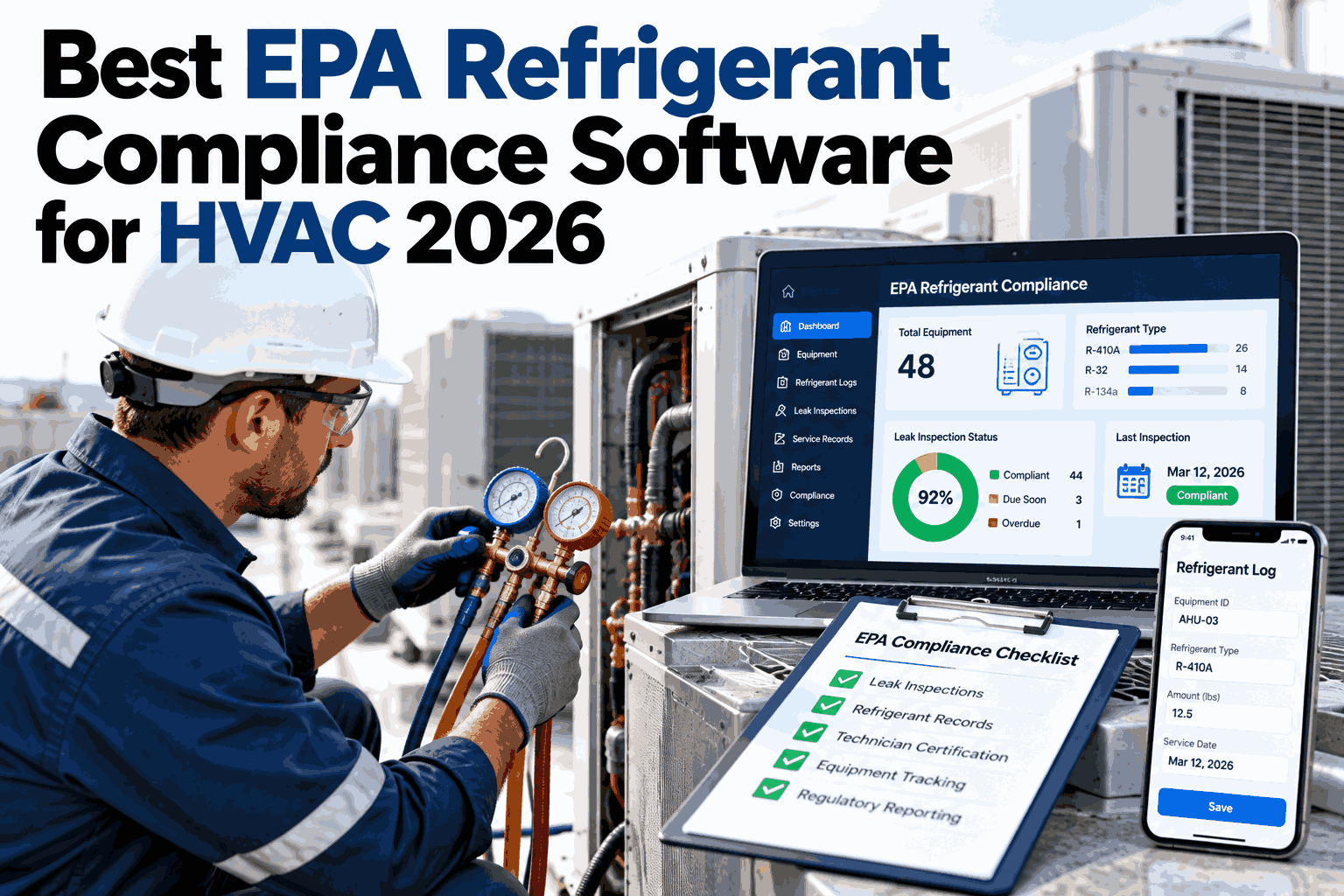
iFactory EPA Refrigerant Compliance and Leak Register tracks leak check intervals, technician certification, and refrigerant records to the EU F-Gas Regulation rewrite, site by site.
What Changed in the 2024 Rewrite
Regulation (EU) 2024/573 replaced the earlier F-Gas Regulation and kept its core obligations while tightening the schedule around them. These are the shifts that matter most for a working HVAC team.
A Steeper Phase-Down
The HFC quota available to the market tightens across further checkpoints beyond the original schedule, pushing more equipment toward lower-GWP alternatives sooner.
Wider Equipment Bans
Bans that previously targeted specific equipment types extend to more stationary refrigeration, air conditioning, and heat pump categories on a staged timeline.
Leak Checks and Records Remain Core
Periodic leak checks, certified technician requirements, and multi-year record retention carry over largely unchanged, and stay the part most teams fall behind on.
The rewrite changes the destination for refrigerant choice, but the day-to-day compliance burden still comes from leak checks and records that someone has to remember on schedule.
Phase-Down Pressure Across the Schedule
The quota available for placing HFCs on the market steps down at defined checkpoints, and each step narrows the refrigerant options teams can plan around.
Exact checkpoint dates and reduction steps sit in the official regulation text, so a service plan should be confirmed against the current quota schedule rather than a general summary.
Leak Check Frequency by System Size
Leak check intervals scale with how much CO2 equivalent a system holds, not a flat calendar date, which is exactly why a spreadsheet struggles to keep up across a mixed estate.
| System Size (CO2 Equivalent) | Typical Check Frequency | With Leak Detection System | Record Required |
|---|---|---|---|
| Below Reporting Threshold | No periodic check mandated | Not applicable | Equipment still logged in the register |
| Small Hermetically Sealed Systems | Reduced obligation where labeled and sealed | Not applicable | Labeling and charge record kept |
| Medium Systems | Checked on a regular annual-range interval | Interval can extend with a working detection system | Leak check date and result logged |
| Large Systems | Checked on a shorter, more frequent interval | Interval can extend with a working detection system | Leak check date, result, and corrective action logged |
| Very Large Systems | Checked on the shortest mandated interval | Interval can extend with a working detection system | Full history retained for the minimum retention period |
Bands and exact intervals are set in the regulation and its implementing guidance, so a site's own CO2 equivalent calculation should set its actual schedule.
Certification Tracking That Does Not Wait for an Audit
A technician working on F-gas equipment needs a valid certificate for the task performed, and a lapsed certificate on a live job is a compliance gap that is hard to explain after the fact.
Certificate Logged at Hire
Each technician's certification type and expiry date is recorded against their profile before they are scheduled on F-gas work.
Renewal Window Flagged
A certificate approaching expiry is flagged well ahead of the date, instead of being discovered during a job assignment.
Job Assignment Checked
Scheduling checks certification validity against the task type before confirming the technician for that specific job.
Renewal Completed and Logged
Once renewed, the updated certificate and date are logged immediately, closing the flagged item automatically.
Certification gaps are one of the easiest findings for an inspector to catch, because the proof either exists with a valid date or it does not.
See Your Leak Check and Certification Schedule in One View
Book a 30-minute session and bring your current site list. iFactory AI will show how leak intervals, certifications, and records come together in one register.
Spreadsheet Records vs a Digital Leak Register
Most teams did not choose a spreadsheet on purpose. It accumulated one site at a time until nobody could say with confidence what was current.
Spreadsheet Records
Digital Leak Register
The shift is not about adding more rules, it is about making the existing rules impossible to quietly miss.
A Composite Scenario: Twelve Sites, One Missed Renewal
A commercial HVAC service provider managing twelve sites found a lapsed technician certificate during a routine internal review. The figures below are an illustrative composite, indexed to a starting point of 100.
Nothing had been reported to a regulator yet, but the gap was close enough that the provider moved the entire register off spreadsheets within the quarter.
What iFactory EPA Refrigerant Compliance and Leak Register Adds
iFactory AI is smart manufacturing and industrial software that extends to field HVAC operations, keeping refrigerant compliance tied to real site and technician data.
iFactory AI is configured for your site list and refrigerant equipment inventory, with scope covering data migration from existing spreadsheets, technician onboarding, and 24x7 remote monitoring of the register.
Compliance Self-Check
Use these checks to see how much of your F-gas compliance still depends on someone remembering a date.
Each unchecked box is a place where an inspector, or a renewal deadline, could find a gap before your team does.
Frequently Asked Questions
Does the 2024 rewrite change existing leak check obligations?
The core leak check structure, scaled to system size, carries over from the earlier regulation, while the rewrite focuses more on quota reduction and equipment bans. Confirming your own system bands against current guidance is still worth doing. Ask how your current schedule maps to the regulation.
How long do refrigerant and leak check records need to be kept?
The regulation sets a multi-year minimum retention period for equipment records, and most teams keep the full history for the life of the system rather than only the minimum window. See how retention is handled in the register.
Can one register cover sites across multiple countries?
Yes, though national implementation details can vary slightly across EU member states, so the register is configured to reflect each country's specific requirements where they differ from the baseline regulation.
What happens if a technician's certificate lapses mid-job?
The goal is to never reach that point. Certification checks run at assignment, and renewal flags fire well ahead of expiry so a lapse is caught during scheduling rather than discovered during or after a job. Talk through certification workflows with the team.
How quickly can an existing spreadsheet-based register be migrated?
Most migrations complete within the standard rollout window, since existing site, system, and technician data can be imported directly rather than rebuilt from scratch. Plan a migration timeline for your estate.
Move Your F-Gas Register Off Spreadsheets
iFactory EPA Refrigerant Compliance and Leak Register tracks leak checks, certifications, and records across every site your team services. Book a walkthrough using your own site list.