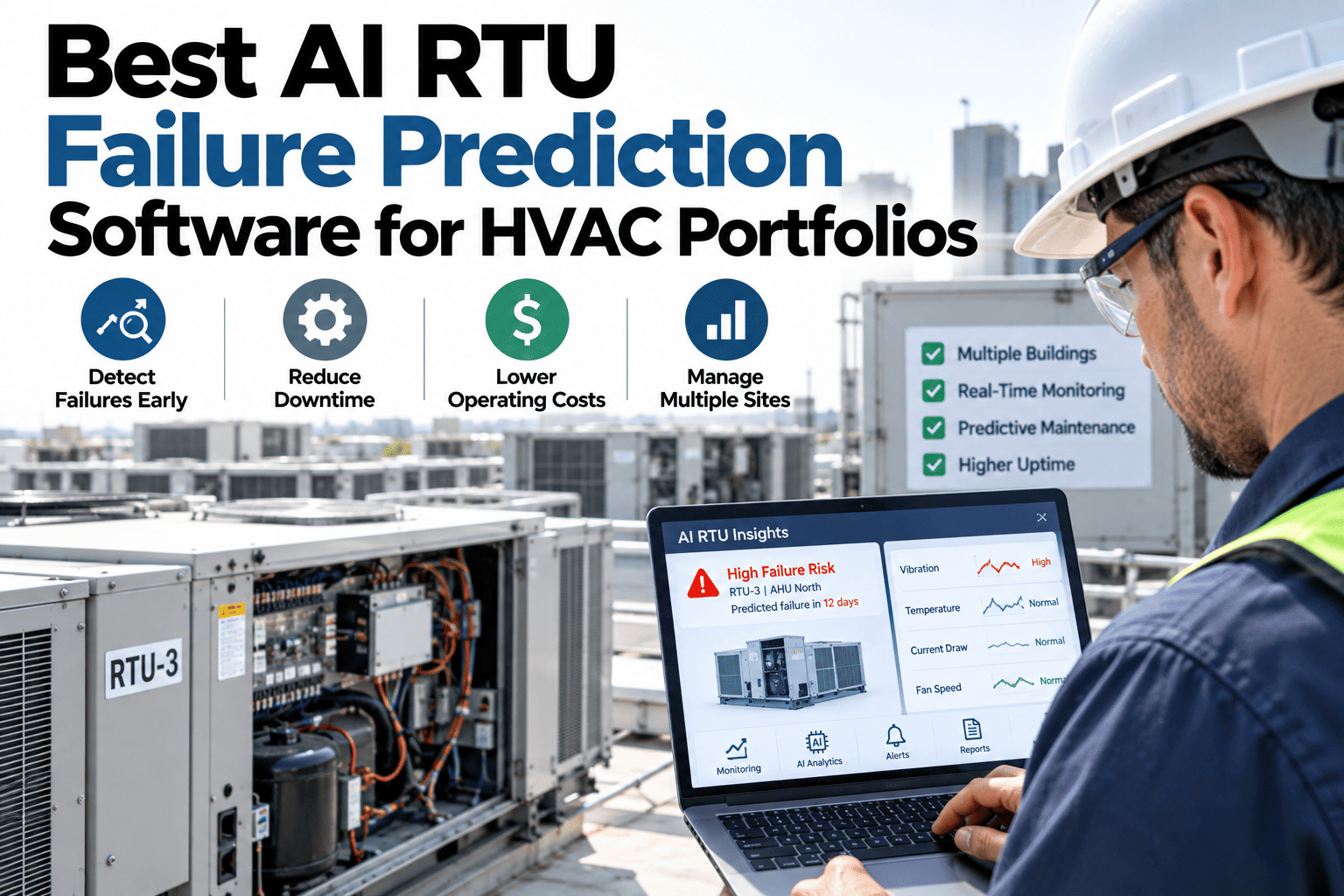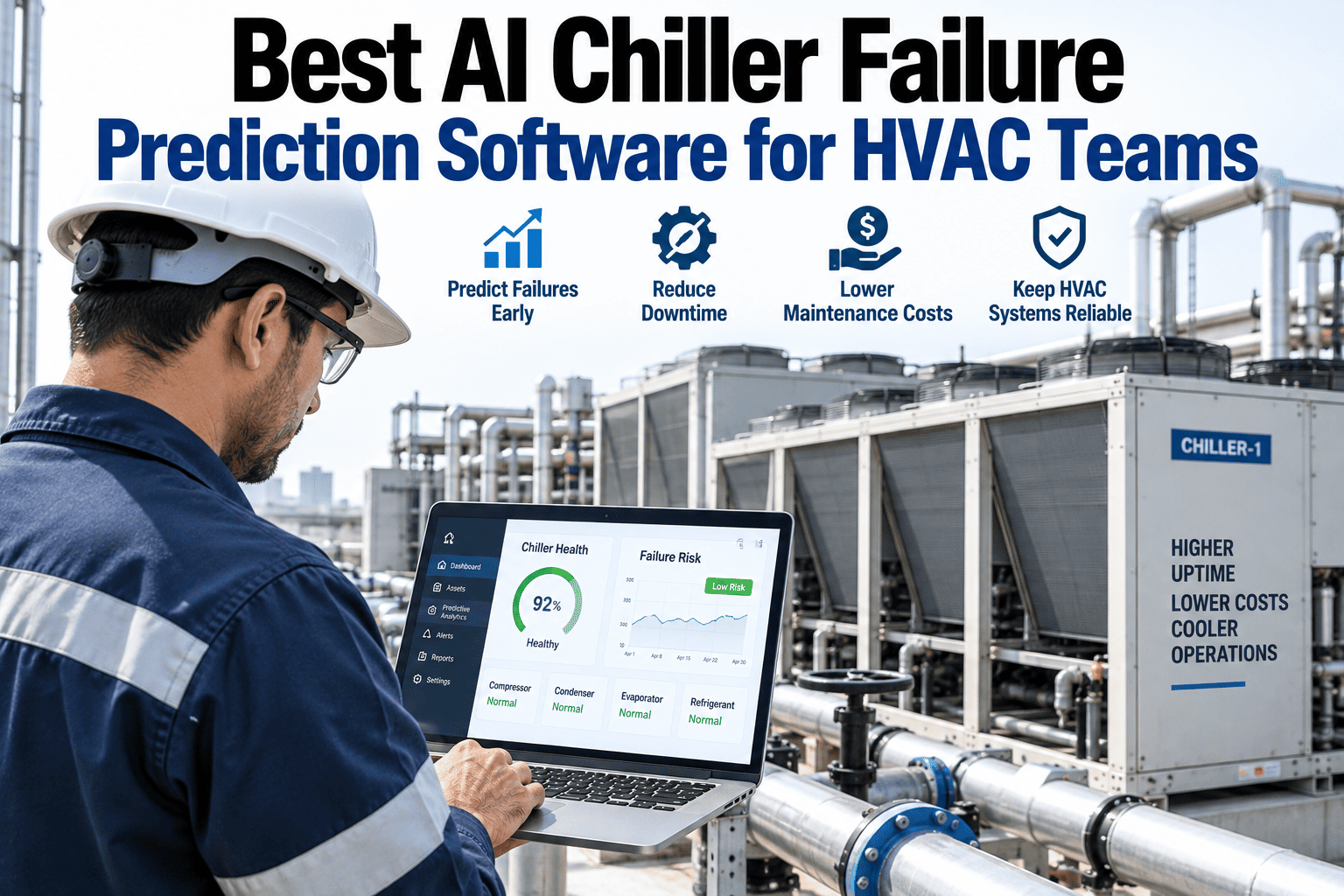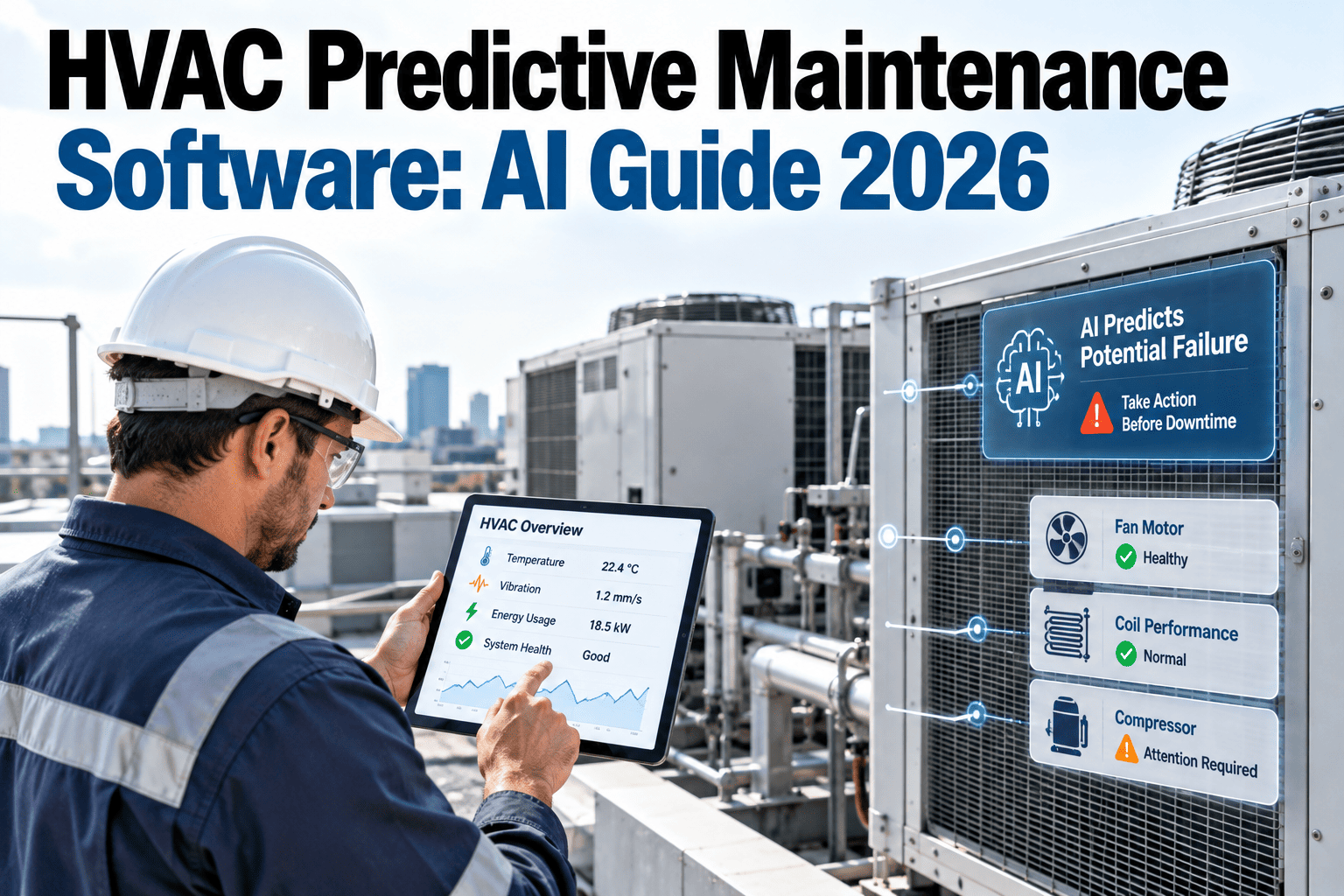
Traditional preventive maintenance schedules HVAC service on a calendar, checking a chiller or air handler on the same interval whether it needs attention or not, while a genuine failure can develop and progress entirely between two scheduled visits without anyone noticing until a comfort complaint or a full breakdown forces an emergency call. AI-driven predictive maintenance replaces that calendar guess with a continuously learned model of what normal equipment behavior looks like, flagging the specific pattern of drift that precedes a chiller compressor fault, an AHU bearing failure, or an RTU short-cycling problem, typically with two to four weeks of lead time before the equipment would have failed outright. Facilities teams evaluating what this actually looks like on their own portfolio can start with a conversation with iFactory's support team about how machine learning models are trained against a building's specific equipment behavior.
A Comfort Complaint Is the Last Warning Sign, Not the First One
Machine learning models trained on chiller, AHU, and RTU behavior catch the pattern of drift that precedes a failure, typically 14 to 28 days before anyone would have noticed anything wrong.
Drift begins
AI flags anomaly
Failure without PdM
Why Calendar-Based Maintenance Misses Real Failures
A quarterly PM schedule checks equipment at fixed intervals regardless of what is actually happening to it between visits, which means a bearing that starts degrading the day after a scheduled inspection has almost three full months to progress toward failure before the next check has any chance of catching it. AI-driven predictive maintenance instead watches equipment continuously, comparing current behavior against a learned baseline of normal operation and flagging deviation the moment it starts, regardless of where that moment falls on the maintenance calendar.
The Equipment Types AI Models Are Trained Against
Chillers, AHUs, and RTUs each have distinct failure signatures, and a model built for one equipment type does not automatically transfer to another without its own dedicated training.
Chillers
Compressor current signature, refrigerant pressure, and delta-T patterns reveal developing compressor and refrigerant circuit faults well ahead of a capacity loss or outright failure.
Air Handling Units
Belt slip, bearing vibration signatures, and coil fouling trends show up in airflow and energy consumption data before they reach the point of a comfort complaint.
Rooftop Units
Compressor short-cycling patterns, economizer damper stall, and refrigerant loss signatures are especially valuable to catch early across a large, distributed RTU fleet.
See Failure Prediction Running on Your Own Equipment Data
Book a 30-minute walkthrough of how iFactory's AI models learn normal behavior for chillers, AHUs, and RTUs across a commercial portfolio.
Maintenance Strategies Compared
Predictive maintenance does not replace every other maintenance strategy, but it fills a specific gap that reactive and calendar-based approaches cannot address on their own.
| Strategy | When Service Happens | Main Limitation |
|---|---|---|
| Reactive Maintenance | After a failure or comfort complaint | Highest cost, unplanned downtime, tenant impact |
| Calendar-Based Preventive | Fixed interval regardless of actual condition | Misses faults developing between scheduled visits |
| AI-Driven Predictive | Triggered by detected behavioral drift | Requires continuous data and model training time |
What a Predictive Maintenance Alert Actually Contains
A useful alert does more than flag that something looks off — it gives a facilities team enough context to act on the finding quickly rather than starting an investigation from scratch.
Specific Equipment and Component
The alert identifies which specific unit and, where possible, which component is showing the anomalous pattern, rather than a general equipment-level warning.
The Deviating Signal
Showing exactly which sensor reading or signature has drifted from baseline, such as the compressor current pattern in the scenario above, gives technicians a concrete starting point for inspection.
Estimated Urgency
A confidence or urgency indicator helps prioritize which flagged anomaly needs immediate investigation versus which can be scheduled into the next planned maintenance window.
A Composite Scenario: The Chiller That Would Have Failed on the Hottest Week of the Year
A commercial property's central plant chiller had passed its most recent quarterly inspection without any flagged issues, and facilities staff had no reason to expect a problem heading into the summer cooling season. A predictive maintenance model running on the building's chiller data flagged a gradual but consistent change in compressor current signature roughly three weeks before the region's hottest forecast week of the year.
Investigation of the flagged pattern found early-stage compressor bearing wear that the most recent manual inspection had not caught, since the degradation had begun shortly after that inspection and would not have been due for another check until well into the summer under the standard quarterly schedule. Scheduling a planned repair during a mild-weather window, rather than waiting for the standard interval, avoided what would very likely have been a chiller failure during the property's highest-demand week, when an emergency repair would have meant both a costly rush service call and a significant tenant comfort impact.
Mistakes That Undermine Predictive Maintenance Programs
Assuming a Recent Inspection Rules Out a Developing Fault
A quarterly inspection only reflects equipment condition at that moment, and a fault beginning shortly after, as in the scenario above, has months to progress before the next scheduled check.
Applying a Generic Model Instead of Building-Specific Training
A model trained on generic industry baselines rather than the specific equipment's own operating history is less able to distinguish genuine drift from normal variation for that unit.
Ignoring an Early Warning Because Equipment "Seems Fine"
Dismissing a flagged anomaly because the equipment shows no obvious symptoms yet misses exactly the lead-time advantage predictive maintenance is meant to provide.
Treating Predictive Maintenance as a Replacement for All Other Maintenance
AI-driven prediction complements rather than replaces routine inspection and calendar-based servicing, and a program relying on only one approach leaves gaps the other would have covered.
Is Your Portfolio Ready to Catch Failures Before They Happen
Equipment data is captured continuously, not just at scheduled inspection points
Continuous data capture is what allowed the compressor drift in the scenario above to be caught weeks before the next scheduled inspection would have occurred.
Flagged anomalies are investigated promptly, not dismissed without symptoms
Acting on a flagged pattern before visible symptoms appear is what captures the lead-time advantage predictive maintenance is designed to provide.
Predictive maintenance runs alongside, not instead of, routine inspection
Combining both approaches covers a wider range of failure modes than either strategy running alone.
Frequently Asked Questions
How much lead time can AI-driven predictive maintenance actually provide?
Lead time varies by failure mode and equipment type, but commercial building portfolios commonly see fourteen to twenty-eight days of advance warning across chillers, AHUs, and RTUs, similar to the three weeks of lead time that allowed the chiller repair in the scenario above to be planned during mild weather rather than during peak summer demand.
How is an AI model trained to recognize a specific building's normal equipment behavior?
The model learns from historical operating data specific to each piece of equipment, including current draw, pressure, temperature, and other sensor readings under a range of normal operating conditions, building a baseline that reflects how that particular unit actually behaves rather than a generic industry average, which is what allows it to distinguish a genuine developing fault from ordinary day-to-day variation.
Does predictive maintenance eliminate the need for scheduled inspections entirely?
No, predictive maintenance and scheduled inspection address different gaps and work best together, since predictive maintenance catches developing faults between inspection intervals, as it did in the scenario above, while routine inspection catches issues that may not manifest as a detectable behavioral drift, such as certain physical wear patterns.
What happens when an AI model flags an anomaly that turns out to be a false alarm?
A well-tuned model reduces false positives over time as it accumulates more data specific to each piece of equipment, and even an investigation that turns out to be a false alarm is generally far less costly than missing a genuine developing fault, similar to the chiller failure that was avoided by investigating the flagged pattern in the scenario above rather than dismissing it. Book a demo to see how iFactory's models improve accuracy over time for specific equipment.
What is the first step for a portfolio wanting to add AI-driven predictive maintenance?
The first step is establishing continuous data capture on the highest-priority equipment, typically central plant chillers given their high failure cost and impact, since this continuous data is exactly what enabled the early warning in the scenario above and is a prerequisite before any model can be trained. Teams wanting help prioritizing which equipment to start with can reach iFactory support directly.
Catch the Failure Weeks Before It Becomes an Emergency Call
iFactory's AI models learn normal behavior for chillers, AHUs, and RTUs across your portfolio, flagging drift 14 to 28 days before failure. Book a walkthrough to see it running on live building data.