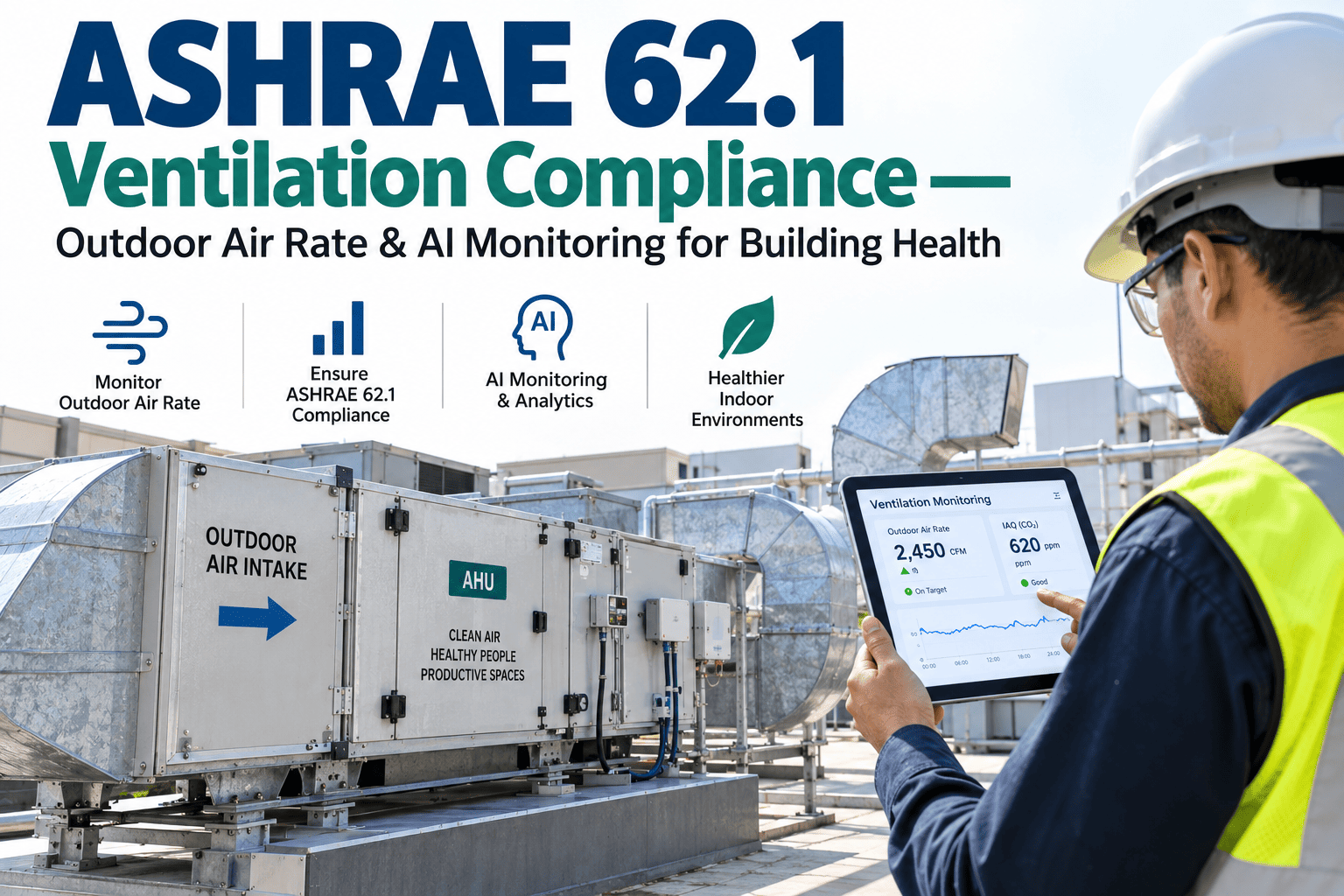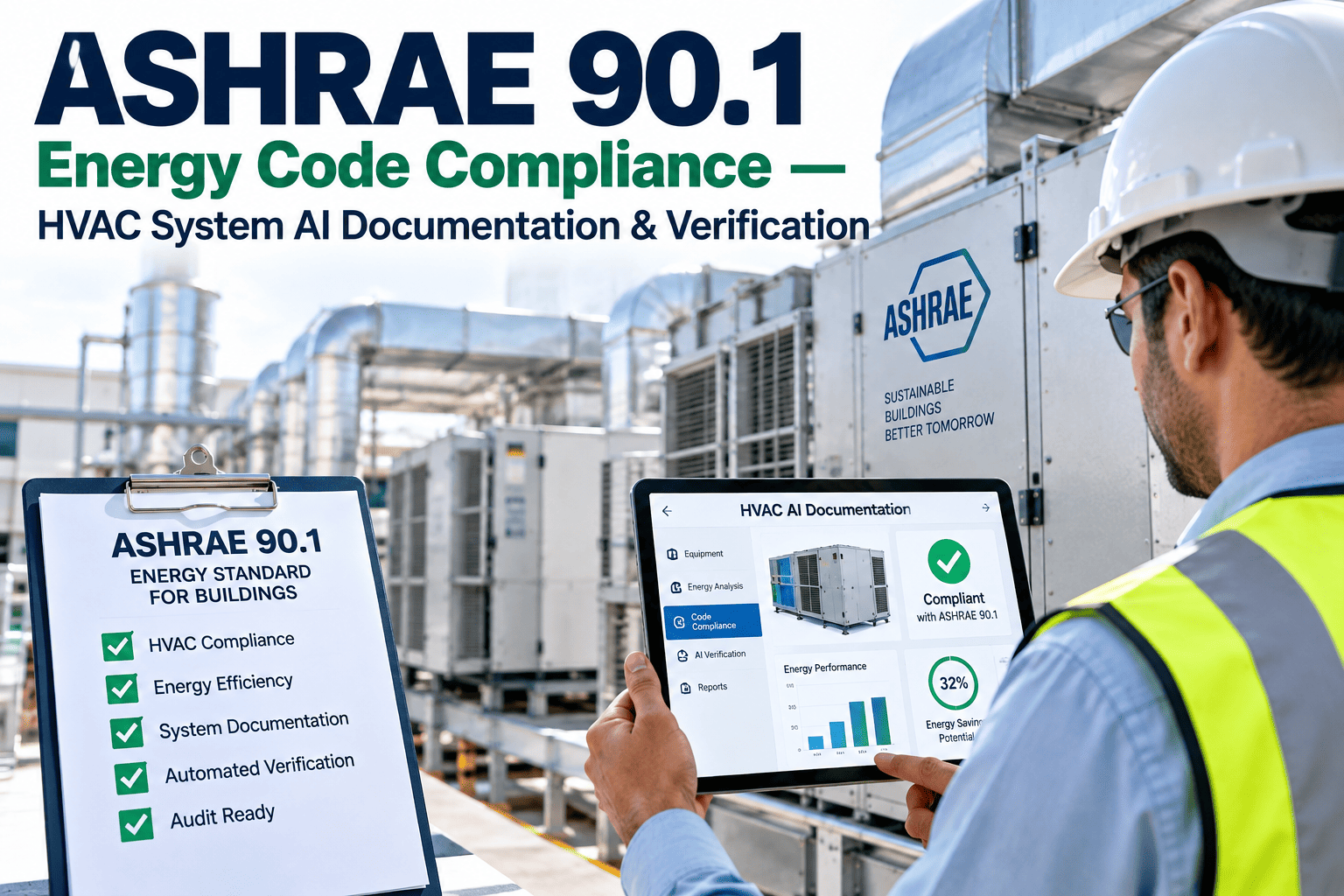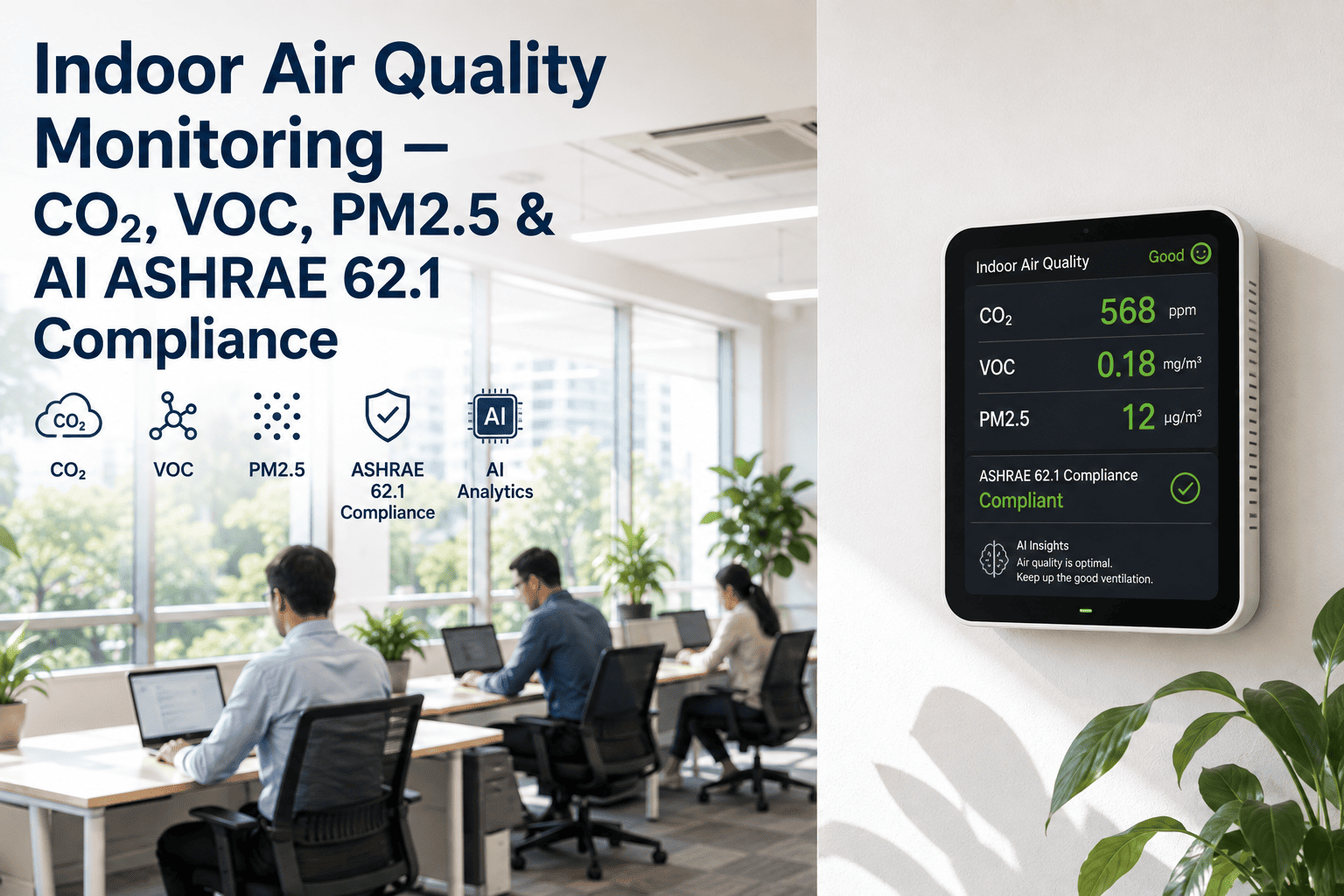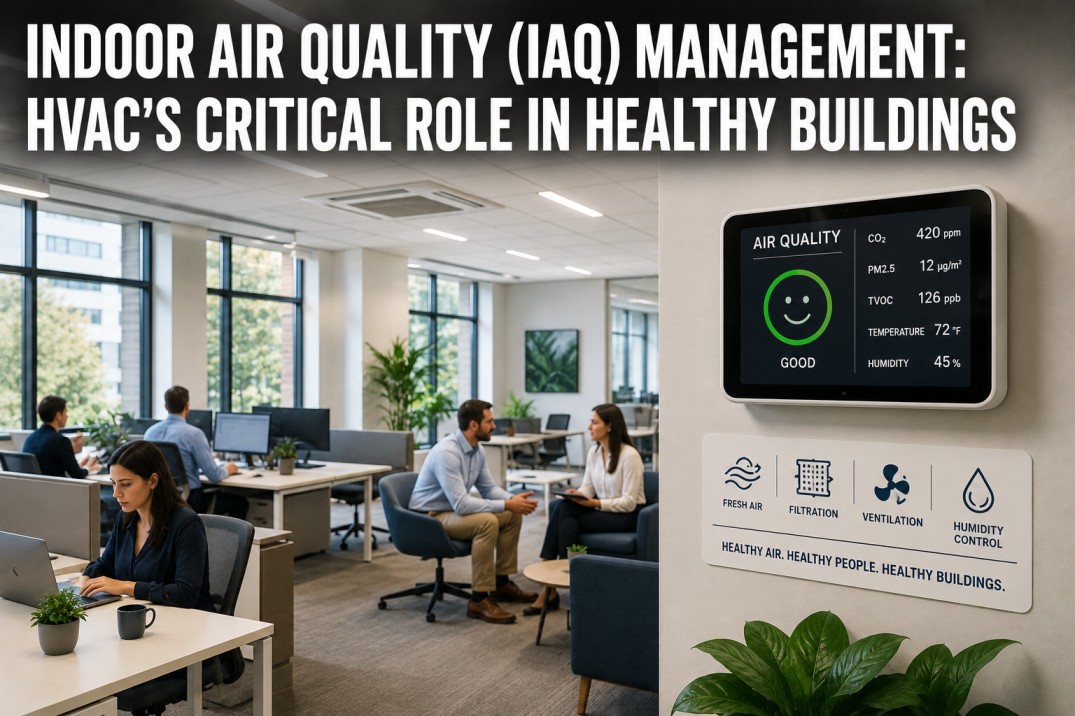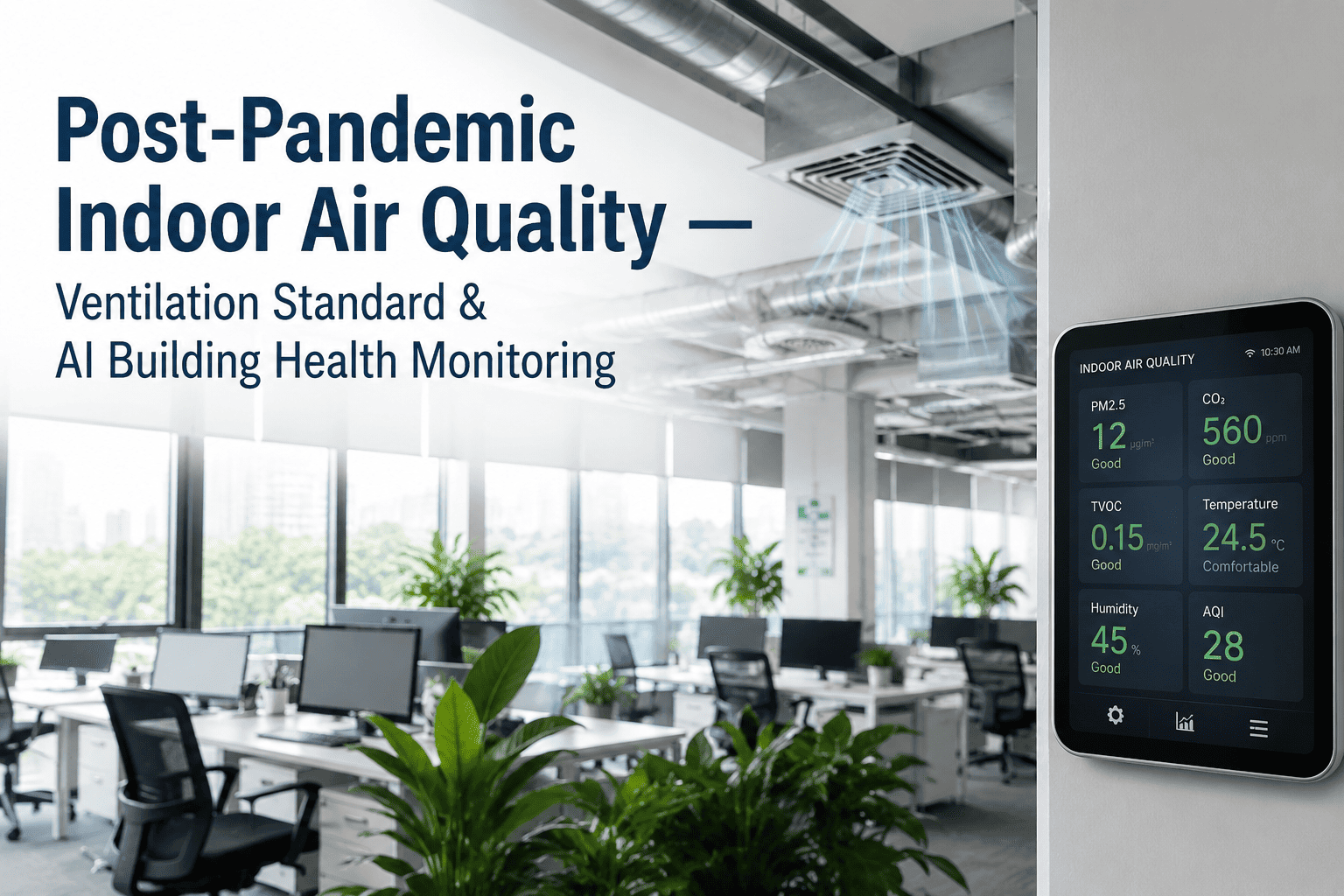
Ventilation compliance used to mean a single number: air changes per hour, checked once a year during a mechanical inspection. That number never captured whether a building was actually protecting occupants from airborne pathogens, and the pandemic made the gap impossible to ignore. ASHRAE 241 and a wave of local ordinances now expect building owners to demonstrate continuous ventilation performance, not a once-a-year snapshot, and compliance officers are the ones expected to produce that documentation on demand. Manually logging airflow readings across dozens of air handlers on a spreadsheet was never built to survive an audit request for twelve months of continuous data. AI-based building health monitoring closes that gap by turning ventilation performance into a continuously logged, instantly reportable record. See what continuous IAQ documentation looks like for your buildings.
The Ventilation Standard Changed. Has Your Documentation?
ASHRAE 241 and local pathogen-risk ordinances expect continuous, auditable ventilation records. Annual spot checks and paper logs no longer satisfy what regulators and tenants are asking to see.
the ASHRAE standard now referenced by a growing number of state and local ventilation ordinances
the documentation window regulators expect for buildings claiming continuous compliance, not a single annual reading
of commercial buildings still rely on manual spot-check logs as their primary ventilation compliance record
How Ventilation Expectations Shifted
Understanding where the standard came from helps explain why continuous monitoring, rather than periodic inspection, is now the baseline regulators and insurers expect.
Pre-2020 Baseline
ASHRAE 62.1 minimum air-change rates, verified through periodic mechanical inspections and rarely revisited between cycles.
Emergency Response Phase
Buildings scrambled to increase outdoor air fractions and upgrade filtration, often without a system to verify the changes held.
ASHRAE 241 Publication
Formalized equivalent clean airflow targets and introduced the concept of a documented, ongoing infection-risk mitigation plan.
Continuous Compliance Era
Local ordinances and tenant lease requirements now expect real-time or near-real-time ventilation performance records on demand.
What Continuous IAQ Monitoring Actually Tracks
Three data streams together form a defensible compliance record, each addressing a different part of what ASHRAE 241 and most local ordinances ask a building to demonstrate.
Air Change Rate Verification
Airflow sensors on supply and return ducts confirm delivered air changes per hour match the design target continuously, not on inspection day alone.
Filtration Efficiency Tracking
Pressure-drop sensors across filter banks flag degraded MERV or HEPA performance before filtration quality drops below the documented target.
CO2 & Occupancy-Linked Risk Monitoring
CO2 concentration trends against occupancy counts provide a practical proxy for equivalent clean airflow performance in occupied spaces.
See Where Your Buildings Stand Against ASHRAE 241
iFactory reviews your current ventilation documentation against ASHRAE 241 and local ordinance requirements to show exactly where a continuous monitoring layer closes the gap.
Documentation Method and Audit Readiness
Not every documentation method holds up equally well when a regulator, insurer, or tenant asks for twelve months of continuous ventilation records on short notice.
Building a Defensible Compliance Record
A rollout is less about adding sensors and more about connecting existing building data into a record that holds up when someone actually asks to see it.
Step 1 — Map current sensor and BMS coverage
Most buildings already have some airflow, CO2, and filter-pressure data flowing through the BMS; the first step inventories what exists and where gaps sit before any new hardware is discussed.
Step 2 — Fill critical monitoring gaps
Zones without airflow or CO2 sensing get instrumented first, prioritized by occupancy density and the specific ordinance language that applies to that building type.
Step 3 — Automate the compliance record
Continuous data feeds directly into an audit-ready report format, so producing twelve months of documentation on request takes minutes rather than a week of spreadsheet reconciliation.
What Changes When Monitoring Becomes Continuous
Figures reflect typical results reported within the first two quarters after deploying continuous ventilation monitoring across a commercial portfolio.
A Compliance Officer's View on Continuous Records
Before, an audit request meant pulling technicians off other work for a week to reconstruct ventilation history from paper logs and half-complete spreadsheets, and we still couldn't always answer questions about specific zones. Now that data streams continuously into one system, a request that used to take a week takes an afternoon, and I can actually stand behind the numbers because they were never re-typed by hand.
The Bottom Line on Post-Pandemic Ventilation Compliance
Ventilation compliance stopped being a once-a-year checkbox the moment ASHRAE 241 and local ordinances started asking for continuous, defensible records. Manual logs and annual inspections were never designed to answer a twelve-month audit request on short notice, and the gap between what regulators now expect and what most buildings can actually produce keeps widening. Continuous AI-based monitoring closes that gap by turning ventilation performance into a record that documents itself.
Frequently Asked Questions
Does ASHRAE 241 apply to all commercial buildings or only certain types?
ASHRAE 241 was written with a focus on spaces with higher infection-risk potential, including healthcare, schools, and high-occupancy assembly spaces, but a growing number of jurisdictions are referencing it more broadly in local ventilation ordinances. Whether a specific building falls under a mandatory requirement depends on occupancy type and local adoption, which varies by state and municipality. Book a review to check where your building portfolio stands.
What counts as an audit-ready ventilation record?
An audit-ready record typically includes continuous or high-frequency airflow and filtration data tied to specific zones and time periods, rather than a single annual reading. Regulators and insurers increasingly expect the ability to show performance over any requested time window, which is difficult to produce reliably from manual logs kept on paper or disconnected spreadsheets.
How does CO2 monitoring relate to pathogen risk if it doesn't detect pathogens directly?
CO2 concentration is a practical, widely used proxy for how much outdoor air is diluting an occupied space relative to the number of people breathing in it, since both CO2 and exhaled aerosols accumulate under similar ventilation conditions. It does not detect specific pathogens, but rising CO2 trends reliably flag zones where the equivalent clean airflow rate is falling behind occupancy, which is exactly the condition ASHRAE 241 asks buildings to manage.
Can existing BMS data be used instead of installing new sensors?
In many buildings, a meaningful share of the required data already exists in the BMS and simply needs to be validated, standardized, and connected into a continuous compliance record rather than replaced. New sensors are typically added only where genuine coverage gaps exist, most often in zones without dedicated CO2 or filter-pressure monitoring today.
Who typically needs to see this documentation besides regulators?
Insurers increasingly request ventilation performance history when underwriting commercial property risk, and commercial tenants — particularly healthcare, education, and corporate office tenants — are adding ventilation performance clauses into lease agreements. Talk to a specialist about structuring reports for the specific audiences your buildings need to satisfy.
Turn Ventilation Compliance Into a Record, Not a Scramble
Book a 30-minute assessment. iFactory maps your current ventilation data against ASHRAE 241 and shows exactly what a continuous, audit-ready record would look like.